
Review · WROCLAW TOURS
Famous Islands of Wroclaw – Cathedral Island and Sand Island Private Tour
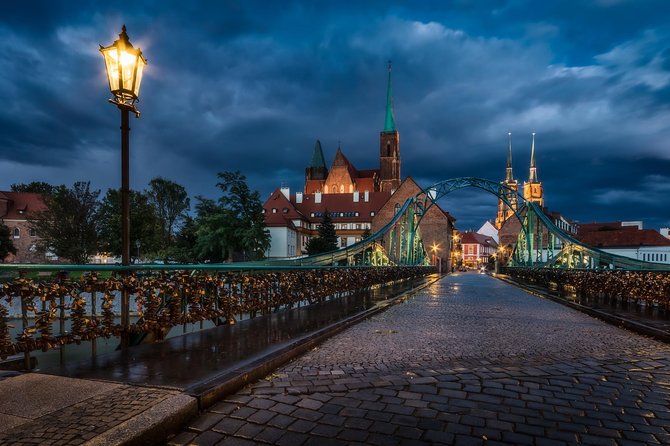
Churches with stories, not just sights. This private tour stitches together Wroclaw’s Cathedral Island and Sand Island with clear guide explanations, so you understand why this part of town mattered. I love how the route centers on Cathedral Island and the medieval ideas around power and justice, and I like the way the stops connect into one flowing narrative instead of random photo stops. The main drawback to plan around is that it’s best in good weather, and you do have a fair amount of walking.
You’ll meet at the front of Wrocław Cathedral (Plac Katedralny 18) and finish near Sand Bridge (most Piaskowy). In about 1 hour 40 minutes to 2 hours, you’ll hit multiple landmarks close together, including several major churches plus a couple of neighborhood “story stops” that make Wroclaw feel more real.
Expect an English guide, a mobile ticket, and a private format where only your group goes along. If you like religious architecture and political history, this tour has both, including a memorable tale tied to the Solidarity movement.
In This Review
- Key things I’d plan around
- Cathedral Island and Sand Island: why this part of Wroclaw feels different
- Meeting point, timing, and how the walk stays easy
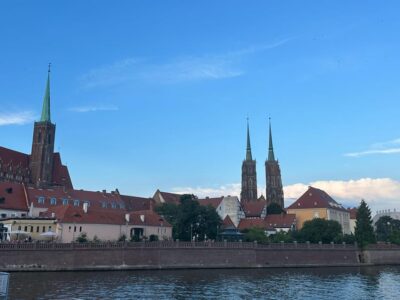
- Stop 1: Around Wrocław Cathedral Island and its escape-from-justice legend
- Church of St. Giles, the Leaning Tower, and the Dumpling Gate area
- Archbishop’s Palace and the 1980 Solidarity money story
- Church of the Holy Cross and Bartholomew, Turin shroud copy, and Orphanotropheum
- Crossing Tumski Bridge to Sand Island’s big Gothic finish
- Price and value: what $75 buys you on this private walk
- Who should book this Cathedral Island to Sand Island tour
- Should you book this private island tour?
- FAQ
- How long is the Famous Islands of Wroclaw – Cathedral Island and Sand Island Private Tour?
- How much does the tour cost?
- Is this tour private?
- Where do we meet and where does it end?
- Is the tour offered in English?
- Does the tour run in any weather?
- What is the cancellation policy?
Key things I’d plan around
- Private group walk through Cathedral Island and Sand Island in about 2 hours
- Medieval jurisdiction details like where wrongdoers could escape justice
- Four church moments you’ll connect with context, not just dates and names
- Solidarity 80 million zloty story at the Archbishop’s Palace stop
- Turin shroud copy inside the Church of the Holy Cross and Bartholomew
- End at Sand Island’s Gothic highlight, Church of Our Lady on the Sand
Cathedral Island and Sand Island: why this part of Wroclaw feels different
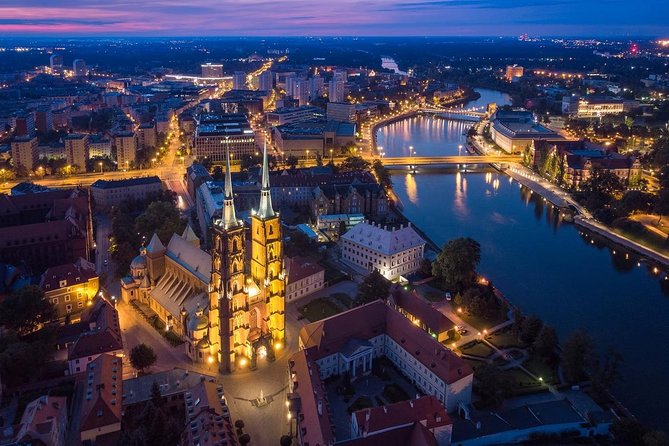
If Wroclaw is the big picture, Cathedral Island and Sand Island are the close-ups. This area is where you see how faith, politics, and the daily business of power overlapped in older centuries. The islands are also a reminder that rivers and shorelines change. So when you hear that Cathedral Island is not an island anymore, it lands fast, because you’re walking right through the places where that story used to be visible.
What I like about this tour layout is that it doesn’t treat churches like isolated monuments. You’ll see how each church fits into the neighborhood, and how the guide connects the buildings to the people who lived, ruled, and hid things here.
And yes, you’ll get plenty of impressive architecture, but the payoff is understanding why these structures mattered to the city, not just admiring the stone.
A few more Wroclaw outings to weigh up
- Wroclaw: E-Car Tour and Audio Guide
★ 4.6 · 1,738 reviews - Wroclaw: 2-Hour Private Guided Tour by Electric Car
★ 4.8 · 805 reviews - Wroclaw: Ticket for Old Town Boat Cruise
★ 3.9 · 361 reviews
Meeting point, timing, and how the walk stays easy
The tour starts outside Wrocław Cathedral, at Plac Katedralny 18, and ends at Sand Bridge near most Piaskowy. It’s close to public transport, which matters in a city where you might want to hop between sights without spending extra time crossing town.
Time-wise, plan for 1 hour 40 minutes to 2 hours. That’s short enough to keep your legs from turning into soup, but long enough for the guide to make the history click. The walking is described as suitable for most travelers, so this is a good “first taste” tour if you’re new to Wroclaw and you want orientation quickly.
One practical note: because the experience depends on good weather, check the forecast the day of. If it looks sketchy, you’ll want a flexible plan anyway, since the tour may be moved or refunded if conditions are poor.
Stop 1: Around Wrocław Cathedral Island and its escape-from-justice legend
You’ll begin outside the Cathedral main entrance and walk around Cathedral Island. This opening move is smart because it sets the theme early: power and consequences.
The guide points out where, in medieval times, wrongdoers could escape justice. That’s the kind of detail that makes a location feel alive. You stop thinking of the area as scenery and start seeing it as a system, where rules were enforced and sometimes worked around.
You also learn why dukes and clergy chose to live on the island, and why Cathedral Island is not an island anymore. Those two ideas help you connect the geography to the politics. When the guide explains it while you’re physically moving around the space, it becomes a real mental map, not just trivia.
This is also a great start for photos, because the Cathedral setting gives you a strong visual anchor right away. Just remember it’s a walking tour, so keep your phone ready but don’t let picture-taking break the flow.
Church of St. Giles, the Leaning Tower, and the Dumpling Gate area
From Cathedral Island, you’ll move to the Church of St. Giles, described as the oldest existing church in Wrocław. That claim matters, because it turns the stop from “pretty church” into “this is part of the city’s deeper backbone.”
In the same neighborhood, you’ll also see the Leaning Tower of Wrocław and the Dumpling Gate. Even if you only know these from glimpses on social media, seeing them in context changes how you notice the skyline. The tower isn’t just a curiosity here. It sits in a cluster of buildings where the guide helps you understand how streets, gates, and religious sites shaped movement and identity.
There’s another smart bonus near this stop: a nearby entrance to the 19th-century Botanical Gardens. If you enjoy parks and nature, you can decide on the spot whether to add a little walk before or after your guided route. It’s not the main focus of the tour, but it’s the kind of convenient option that makes your time in Wrocław feel flexible.
Still in reach of Wroclaw, but a different sort of day:
- Wrocław: Old Town and Ostrów Tumski Walking Tour in English
★ 4.8 · 311 reviews - Wroclaw: Private Old Town Guided Walking Tour (2 hours)
★ 4.8 · 275 reviews - Old Town Wrocław Walking Tour
★ 5.0 · 249 reviews - Group city tour (walking tour) through Wroclaw in German
★ 4.9 · 203 reviews
Archbishop’s Palace and the 1980 Solidarity money story
One of the standout segments is the stop by the Archbishop’s Palace. This is where the tour shifts from architecture into a more personal, human-style political story.
You’ll hear about one brave cardinal who in 1980 hid 80 million zloty for the Solidarity movement, and then what happened to the money afterward. That’s a dramatic thread, and the key is that it isn’t just told as a fact dump. The guide uses it to connect the role of religious figures to real events in Poland’s recent history.
For you, the value here is perspective. Many old cities focus on centuries-old battles, but this story ties the same kinds of power and moral choices to a modern turning point. It makes the whole “church in public life” theme feel consistent from medieval times to the 20th century.
If you like tours where history has emotion, this is the moment you’ll remember when you look back on the day.
Church of the Holy Cross and Bartholomew, Turin shroud copy, and Orphanotropheum
Across the street, you’ll see a two-tier Gothic church: the Church of the Holy Cross and Bartholomew. It’s highlighted as one of the most beautiful Gothic churches in the Silesia area. That’s not just marketing, because the guide also shows you what to look for as you move.
A particularly memorable detail is a copy of the Turin shroud hidden inside the church. Even if you’re not a religious-history expert, this kind of artifact detail makes you slow down. It gives the stop a “seek and find” quality, and it turns the church into something more than a stop on a list.
The guide also talks about nearby buildings, including the Orphanotropheum, a former orphanage. That’s a useful reminder that cities are built not only by power and worship, but also by care systems for ordinary people. When you see it paired with churches, it gives you a more complete picture of what institutions did in daily life.
This portion is especially good if you want variety without leaving the walking radius. You get Gothic church beauty, a surprising artifact-related detail, and social history in quick succession.
Crossing Tumski Bridge to Sand Island’s big Gothic finish
Your tour wraps up by passing Tumski Bridge, which represents the border for the church’s jurisdiction, and then you head to Sand Island. This transition is valuable because it explains why a bridge is more than a crossing point. Here, it’s tied to authority, boundaries, and the way church influence shaped space.
Once you reach Sand Island, you’ll see the monumental Church of Our Lady on the Sand, described as the biggest Gothic church in Wrocław. This is a strong “finale church” stop. It’s the kind of sight that works even if you’re tired, because the scale and presence take over your attention right away.
You’ll also see the former Augustinians monastery and charming tenement houses. The tenement houses are described as the only remains of the old residential buildings on Sand Island. That detail changes how you read the street. Instead of seeing surviving buildings as random leftovers, you see them as the last traces of a lost everyday neighborhood.
Price and value: what $75 buys you on this private walk
At $75 per person for a private tour lasting roughly 1 hour 40 minutes to 2 hours, you’re paying for three things: time efficiency, guide storytelling, and a low-pressure format.
First, the route is built for walking between close landmarks, so you’re not spending your limited sightseeing energy on transit. Second, the guide is doing real work connecting facts, especially at the Cathedral Island medieval-jurisdiction details, the Archbishop’s Palace Solidarity money story, and the Turin shroud copy reveal. Those are not the kind of details you reliably pick up just by wandering.
Third, private format matters here because churches can be distracting in a crowd. In a smaller group, it’s easier to hear explanations, ask quick questions, and keep moving at a pace that suits you. Since it’s only your group, you’re not waiting for others to finish a photo angle.
Also, it’s currently offered in English and includes a mobile ticket. Add in the fact that this tour gets a 4.9 rating from 13 reviews, and you have a decent signal that the experience quality is holding up.
If you’re traveling solo or as a couple and you want a guided “orientation plus highlights” day, this looks like good value. If you’re extremely budget-sensitive and only want the churches from the outside, self-guided can be cheaper, but you’ll likely miss the stronger story threads.
Who should book this Cathedral Island to Sand Island tour
This private walk is a great match if you:
- Like church architecture but want the surrounding context, not just postcard shots
- Enjoy stories that connect medieval settings to more recent history, like the Solidarity money episode
- Want an efficient 2-hour plan that gives you a clear sense of two key historic areas
- Prefer private pacing and easier listening over large-group tours
It may feel less ideal if you’re extremely limited on walking. Most travelers can participate, but you still have multiple stops and a continuous route. Also, because it depends on good weather, you’ll want to be flexible on the day.
Should you book this private island tour?
I’d book it if you want Wroclaw in a focused dose, with a guide who helps the landmarks make sense. The Cathedral Island opening is strong for setting the theme, the Archbishop’s Palace stop gives you a story you won’t forget, and the Sand Island finish lands with a big Gothic payoff at Church of Our Lady on the Sand.
If you’re short on time, it’s also a smart way to cover two famous areas without turning your day into a rushed map chase. And since it’s private, you’ll get more of the explanation, not just the sights.
If you’d like, tell me your travel month and your walking comfort level, and I can suggest the best time of day to do this route and what to pair it with nearby.
FAQ
How long is the Famous Islands of Wroclaw – Cathedral Island and Sand Island Private Tour?
The tour lasts about 1 hour 40 minutes to 2 hours.
How much does the tour cost?
It costs $75.00 per person.
Is this tour private?
Yes. It is a private tour, so only your group participates.
Where do we meet and where does it end?
You start outside Wrocław Cathedral at Plac Katedralny 18, and you finish on Sand Bridge at most Piaskowy.
Is the tour offered in English?
Yes, it is offered in English.
Does the tour run in any weather?
The experience requires good weather. If it is canceled due to poor weather, you will be offered a different date or a full refund.
What is the cancellation policy?
Free cancellation is available. You can cancel up to 24 hours in advance for a full refund. If you cancel less than 24 hours before the start time, you do not get a refund.
Fresh listings from Wroclaw
- Private “Top Attractions Of Wroclaw” Tour★ 5.0 · 11 reviews
- Small Group Boat Tour in Wroclaw★ 5.0 · 5 reviews
- The Grand E-Scooter (3 wheeler) Tour of Wroclaw – everyday tour at 9:30 am★ 5.0 · 61 reviews
- Wroclaw Pub Crawl★ 4.5 · 83 reviews
- Wrocław’s Old Town: A Self-Guided History Tour★ 4.5 · 10 reviews
- CITY QUEST WROCLAW: unlock the mysteries of this city!★ 5.0 · 3 reviews
- The Classic E-Scooter (3 wheeler) Tour of Wroclaw – everyday tour at 6:00 pm★ 5.0 · 24 reviews
- Segway Tour Wroclaw: Old Town & Ostrów Tumski – Full Tour★ 5.0 · 9 reviews
Wroclaw Tours, compared.
Old Town and Ostrów Tumski Walking Tour in English
Read our review →
Private Old Town Guided Walking Tour (2 hours)
Read our review →
Group city tour (walking tour) through Wroclaw in German
Read our review →
Ticket for Old Town Christmas Cruise by Heated Ship
Read our review →Browse the lists this tour appears in