
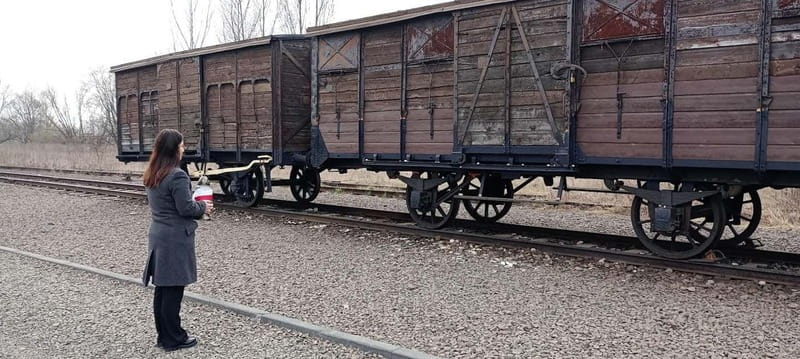
Review · AUSCHWITZ-BIRKENAU TOURS
From Kracow: Auschwitz Complex Alternative Tour
Auschwitz has many layers, and this tour connects them. It focuses on the parts of the camp system that sit outside the usual, iconic loop, from Auschwitz-Monowitz through the surrounding ramps and execution sites.
I love how the route follows the logic of the machinery of persecution, with stops like the Old Jewish Ramp and the Zyklon B storage theater. I also like the human touch on the day, including driver Ollie making sure everyone is comfy and ready before you roll, while the guide stays polite and answers your questions.
The key tradeoff is that you do not visit the Auschwitz I and Auschwitz II-Birkenau main camps, so if that classic route is your must-see, this may feel like it is skipping something important.
In This Review
- Key things you will notice on this Auschwitz Complex tour
- Why this Auschwitz route feels different than the usual one
- K+R bus stop start, round-trip timing, and what 8 hours really means
- Auschwitz-Monowitz memorial and the story of the final victims
- The camp extension: SS barracks, the last women’s camp, and a site of final public execution
- The pre-war theater and Zyklon B storage, then the ramps that decided arrivals
- Commandant’s villa and gravel pits where executions took place
- “Interest Zone” through 1944 maps and aerial photos
- Seeing the first crematorium and gas chamber, then tracing the logic forward
- Birkenau’s Death Gate and main SS barracks
- Extermination zone stops: Bunker 1, Bunker 2, Soviet POW cemetery, and dressing rooms remains
- The sauna building and belongings processing
- Price and value at around $55 for an 8-hour guided day
- Who should book this tour, and who might prefer something else
- Should you book this Auschwitz Complex Alternative Tour?
- FAQ
- Does this tour include Auschwitz I or Auschwitz II-Birkenau main camps?
- How long is the tour?
- Where is the meeting point in Krakow?
- Is the tour guided in English?
- What major Auschwitz-related sites are included?
- How much does it cost?
- Is the tour wheelchair accessible?
Key things you will notice on this Auschwitz Complex tour
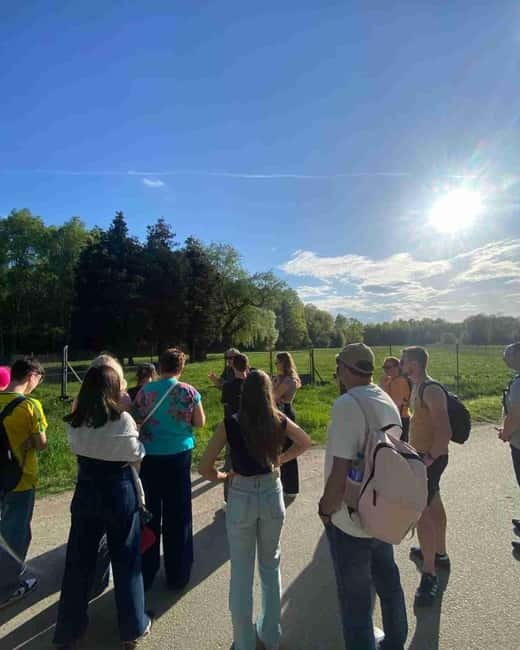
- Krakow round-trip transport keeps the day focused and less stressful
- Monowitz (Auschwitz III) and the memorial for final victims anchor the story
- Camp extension sites show the SS footprint beyond the main camp maps
- Ramps and selection points explain how people were sorted for imprisonment and murder
- Birkenau extermination zone remains cover specific locations like bunkers and dressing rooms
- Skip-the-line entry via a separate entrance saves time when you arrive
Why this Auschwitz route feels different than the usual one
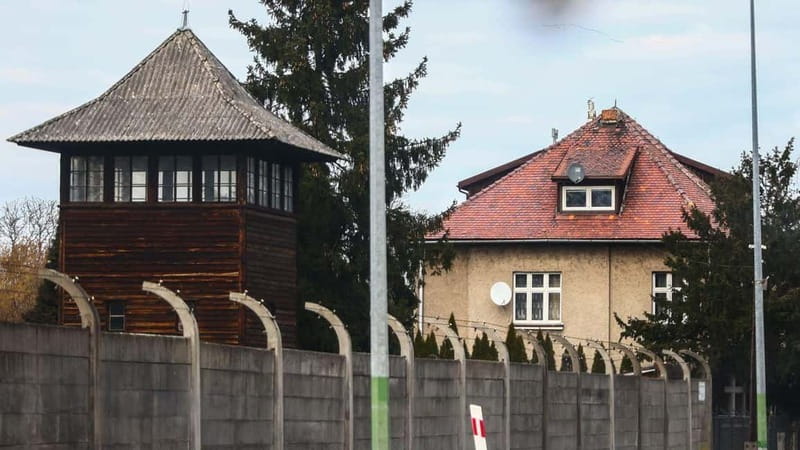
This is an alternative Auschwitz complex tour, and the big reason to choose it is the emphasis. Instead of centering on the two main visitor loops, you concentrate on the surrounding areas that help you understand how the system functioned as a whole.
You will see the parts of Auschwitz that connect to arrivals, processing, punishment, and execution. That focus matters because it turns the day from a set of “spot visits” into a timeline, even if everything you see is hard to face.
You also get a blend of “camp infrastructure” and “victim geography.” The places are grim, but they are also specific, like ramps and buildings tied to Zyklon B storage and the death machinery in Birkenau.
More Auschwitz-Birkenau visits:
- From Krakow: Auschwitz-Birkenau Guided Tour & Hotel Pickup
★ 4.5 · 33,358 reviews - From Krakow: Auschwitz-Birkenau Guided Tour & Hotel Pickup
★ 4.5 · 29,340 reviews - Krakow: Auschwitz Guided Tour with Optional Hotel Pickup
★ 4.5 · 15,280 reviews
K+R bus stop start, round-trip timing, and what 8 hours really means
The tour starts and ends in Krakow with round-trip transportation, and it runs about 8 hours. The meeting point is the K+R bus stop, so you will want to arrive a little early, not at the last second.
This kind of day is paced around multiple sites and a lot of ground. Plan on comfortable walking shoes and take it slow at the first stops, because your body has to handle the distance before the heavier parts of the story hit.
There is also a practical benefit in the morning setup. One of the things I appreciate here is that the ride begins with a comfort check and a professional, friendly tone from driver Ollie, which helps when you are heading into a very intense setting.
Auschwitz-Monowitz memorial and the story of the final victims
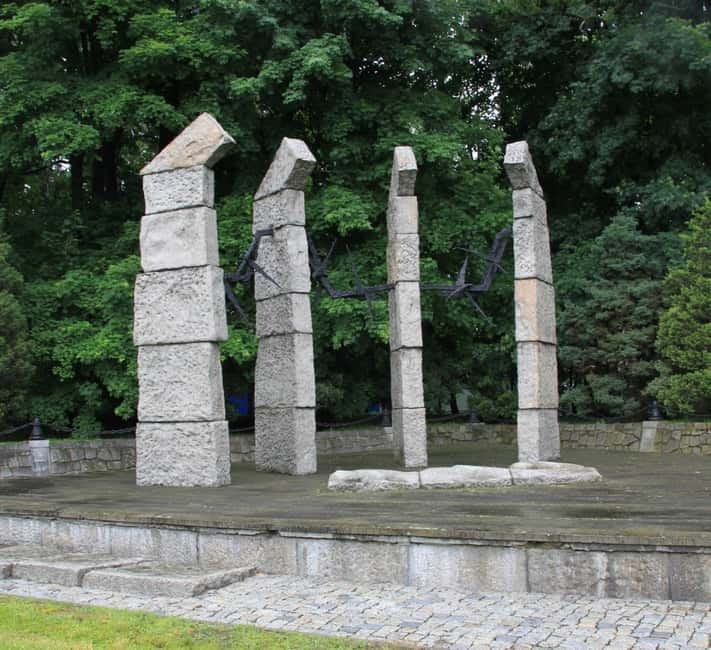
Your day includes the memorial to the final victims of Auschwitz-Monowitz, and that opening framing changes the emotional weight. You are not just looking at the camp as it existed earlier, you are looking at what happened toward the end.
A key detail is the mass grave of 700 prisoners shot during the camp evacuation in January 1945. That fact alone gives you a clearer sense of how violence did not stop, even when the Nazi regime was losing control.
This stop is also a reminder to keep your eyes on the meaning of what you are seeing. Memorials are not decorations, they are place-based accountability, and the guide’s context is what turns locations into understanding.
The camp extension: SS barracks, the last women’s camp, and a site of final public execution
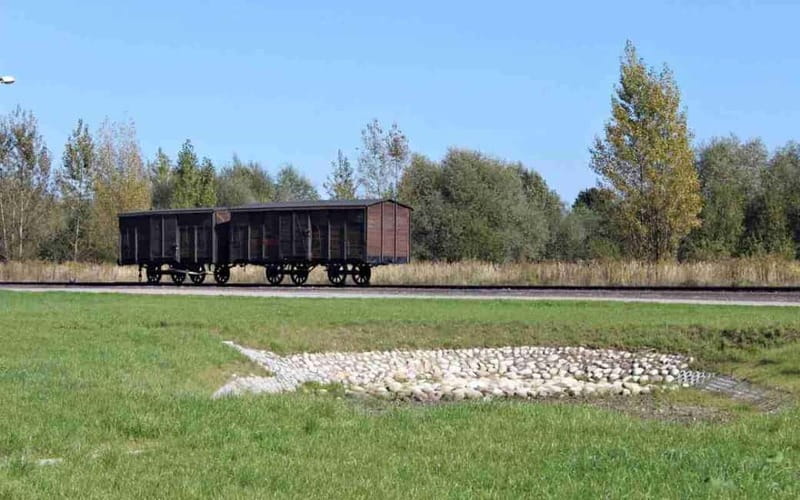
After the memorial framing, the route moves into the area often described as a camp extension. This is where you can feel how the Auschwitz system kept expanding and reconfiguring itself.
You will explore places tied to new SS barracks and the last women’s camp. That is valuable because it breaks the mental habit of thinking of Auschwitz as one fixed layout, frozen in time.
The tour also includes the site of the final public execution. Seeing a place associated with that kind of public terror is brutal, and it is the sort of stop where the guide’s pacing matters.
Try to give yourself permission to pause. When the scene is emotionally overwhelming, you do not need to sprint to the next point on the map, you need to absorb what the location represents.
A few more Krakow outings to weigh up
- Krakow: Wieliczka Salt Mine Tour with Entry Ticket
★ 4.6 · 10,927 reviews - Krakow–Zakopane: Cable Car, Chocholow Baths, Cheese & Vodka
★ 5.0 · 10,720 reviews - Krakow: Auschwitz-Birkenau Guided Tour with Pickup & Lunch
★ 4.5 · 9,800 reviews - From Krakow: Wieliczka Salt Mine Tour
★ 4.6 · 9,393 reviews
The pre-war theater and Zyklon B storage, then the ramps that decided arrivals
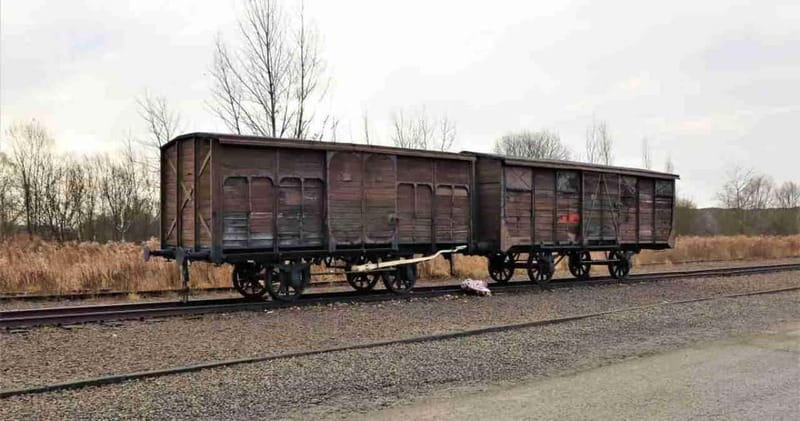
One of the more unsettling stops is the pre-war theater used later to store Zyklon B. The significance is not just the material itself, it is the way ordinary civic space was repurposed for mass murder.
Then you move into the ramp world, where the camp system shaped bodies long before any “processing” could happen. You will stop at the Polish Ramp, described as the first prisoner transport platform.
From there, you will also visit the Old Jewish Ramp, identified as the main selection site for European Jews. Even if you already know the basics, it hits harder when you are standing in the exact area connected to sorting and decisions.
This is where a guided explanation adds real value. Ramps can look like industrial platforms from a distance, but with context you understand how quickly life was reduced to categories.
Commandant’s villa and gravel pits where executions took place
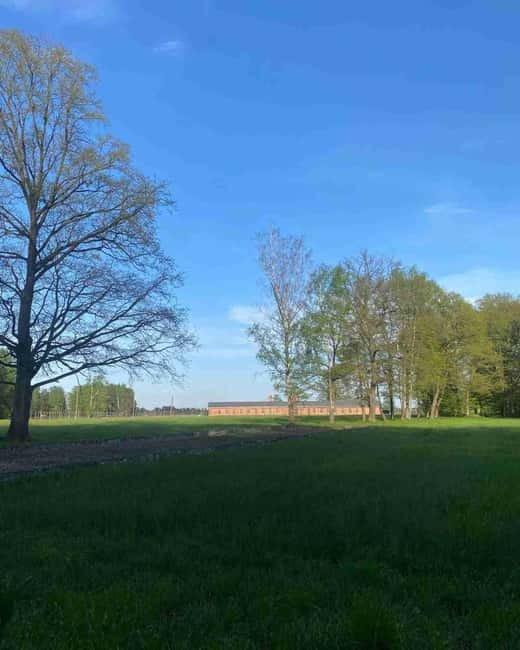
The tour includes views of the commandant’s villa and the gravel pits where executions took place. These are not the postcard-like “big landmarks,” but they often feel more direct because they point to power and control, in physical form.
The gravel pits are connected with executions of clergy and members of the Polish intelligentsia. That detail matters because it widens the victims beyond one group, showing how Nazi persecution targeted multiple categories of people.
If you are someone who likes to connect locations to motives, this is one of the strongest stretches of the day. You can start to see how intimidation operated at different levels, from public spectacle to private killing.
Go slowly here and watch for where the guide places your focus, because the emotional punch depends on seeing how specific the setting is.
“Interest Zone” through 1944 maps and aerial photos
You also get a chance to understand the Interest Zone using maps and aerial photographs from 1944. That helps you picture Auschwitz not as an isolated fenced camp, but as a system spilling into nearby areas.
This kind of visual context is useful because the scale can otherwise feel confusing. With maps and imagery, the guide can point out how boundaries and proximity shaped operations.
For many people, this is where the day shifts from “I saw buildings” to “I understand how the machine worked.” Even a few minutes of aerial views can clarify why certain sites were placed where they were.
Seeing the first crematorium and gas chamber, then tracing the logic forward
The tour includes viewing the first crematorium and gas chamber. Even without adding extra myths or dramatic interpretations, this stop is important because it shows how killing became industrialized.
What I like about including this element is that it gives you a bridge. You can connect earlier arrivals and selection points to what happened later in the extermination process.
Because the subject matter is sensitive, you may need a moment to collect yourself after this segment. Bring water, sit when the guide allows it, and let the information settle instead of forcing yourself through.
Birkenau’s Death Gate and main SS barracks
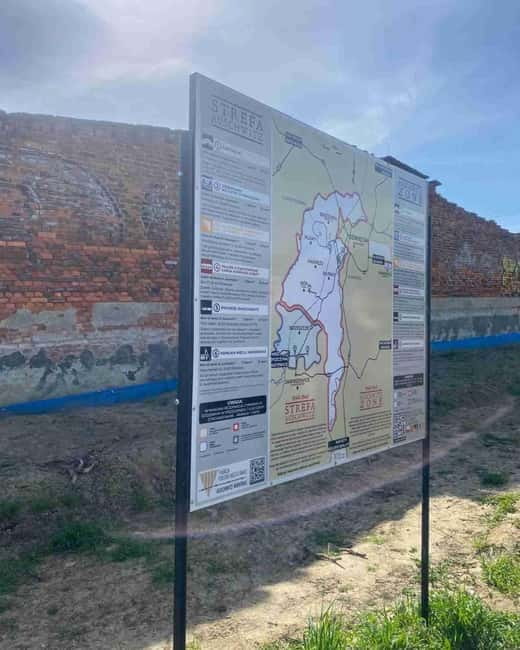
Later, you visit Birkenau, including Death Gate and the main SS barracks. The point of this part of the route is to connect the wider camp complex story you have been building all day.
Death Gate is one of those locations that changes the tone instantly. It is not just a name, it is a marker of how people were funneled into the extermination area.
The main SS barracks help you understand the camp as an administrative and coercive space, not just a killing site. Again, context is what keeps the visit from becoming a list of structures.
If you have limited time in Krakow and only want one Auschwitz-focused day, this combination helps you see more than the obvious highlights.
Extermination zone stops: Bunker 1, Bunker 2, Soviet POW cemetery, and dressing rooms remains
The tour includes specific extermination zone elements in Birkenau. You will see Bunker 1, also called the Red House, and Bunker 2, also called the White House.
You will also see the remains of dressing rooms for victims and a cemetery of Soviet POWs. Those details matter because they add layers to what you might otherwise picture as a single uniform killing process.
The cemetery element is especially important for broadening your understanding of victim groups. The camp system was used to imprison, exploit, and kill multiple populations.
Try not to rush through this part. With locations like bunkers and the remains of rooms, the guide’s explanation helps you interpret what you are seeing and why it was there.
The sauna building and belongings processing
Another included stop is the sauna building used for prisoner disinfection and belongings processing. This is the kind of detail that makes the system feel unbearably procedural.
You get a view into the “processing” side of the camp, not just the final outcome. That is useful for understanding how the Nazis built routines around dehumanization.
This is also a practical reminder: the day is long, and you will want to keep your energy up. If you feel yourself getting overwhelmed, taking a short pause can help you keep your attention instead of going on autopilot.
Price and value at around $55 for an 8-hour guided day
At $55 per person for about 8 hours, this tour can be good value if you want strong guidance and direct transportation between multiple sites. You are not paying only for walking, you are paying for a structured route, interpretation, and logistics that would be hard to assemble on your own in one day.
You also benefit from skip-the-line access through a separate entrance. In a place like this, time matters, not because you want to rush, but because you want fewer interruptions between stops.
The main “value question” is what you want your Auschwitz experience to cover. If you already know the classic Auschwitz I and Birkenau main-camp route and want the surrounding system, this alternative focus can feel more complete.
If you were hoping for the most standard highlights and photo-famous areas, the omission of Auschwitz I and Auschwitz II-Birkenau main camps is the big gap you should plan for.
Who should book this tour, and who might prefer something else
I think this tour suits you best if you like guided context, want to understand selection and processing, and appreciate the “camp complex” perspective. The itinerary is heavy, but it is built to be specific, like the ramp stops and the mapped Interest Zone view.
You may also like it if you only have one day and want to cover both Monowitz-related memorial areas and Birkenau extermination-related sites. It is a compact way to see a broad cross-section of the system.
You might want a different tour if your priority is the classic Auschwitz I and Birkenau main-camp route. Since those main areas are not included, it is better to choose based on what you want to learn, not just what you have heard is the default.
Should you book this Auschwitz Complex Alternative Tour?
If you want an Auschwitz day that focuses on how the machinery worked across multiple connected zones, I would lean toward booking this. The route includes Monowitz final victims, camp extension areas, the ramps tied to selection, Zyklon B storage context, and Birkenau extermination zone locations.
If you are expecting the most familiar Auschwitz I and Birkenau main camp experience, then you might feel disappointed by what is missing. In that case, match your expectations first, because you only get one day and your time should serve your learning goals.
One more practical point: this is a sensitive visit with significant walking, so it is worth bringing water and dressing for comfort. When you take care of the basics, you can give the guide your full attention and get more out of every stop.
FAQ
Does this tour include Auschwitz I or Auschwitz II-Birkenau main camps?
No. This tour does not include entrance to Auschwitz I and Auschwitz II-Birkenau main camps.
How long is the tour?
The duration is listed as 8 hours.
Where is the meeting point in Krakow?
The meeting point is the K+R bus stop.
Is the tour guided in English?
Yes, it includes a live tour guide in English.
What major Auschwitz-related sites are included?
Included stops cover Auschwitz-Monowitz (Auschwitz III) memorial, camp extension areas, pre-war theater used for Zyklon B storage, Polish Ramp, Old Jewish Ramp, commandant’s villa views, gravel pits, and Birkenau areas including Death Gate, main SS barracks, extermination zone sites, a sauna building, and the Birkenau cemetery of Soviet POWs.
How much does it cost?
The price is listed as $55 per person.
Is the tour wheelchair accessible?
Yes, wheelchair accessible is listed as a feature.
Fresh listings from Krakow
- Zakopane & Gubalowka Funicular – Private Winter Tour from Krakow★ 5.0 · 10 reviews
- ZALIPIE – painted village, unique PRIVATE tour from Krakow★ 5.0 · 20 reviews
- stag dog chase Krakow prank★ 5.0 · 4 reviews
- Full-Day Zalipie Painted Village Guided Tour★ 4.0 · 3 reviews
- Sleigh Ride & Bonfire in Zakopane with Funicular – Private Trip★ 5.0 · 48 reviews
- ZALIPIE – painted village, unique small group tour from Krakow★ 5.0 · 7 reviews
- Zakopane PRIVATE TOUR from Krakow★ 5.0 · 18 reviews
- Zakopane Funicular Hill & Thermal Springs regular tour★ 5.0 · 9 reviews
Auschwitz-Birkenau Tours, compared.
Auschwitz-Birkenau Guided Tour & Hotel Pickup
Read our review →Auschwitz-Birkenau Guided Tour & Hotel Pickup
Read our review →
Auschwitz Guided Tour with Optional Hotel Pickup
Read our review →
Auschwitz-Birkenau Guided Tour with Pickup & Lunch
Read our review →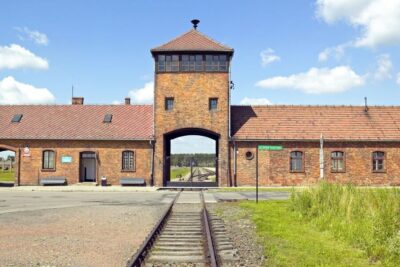
Krakow to Auschwitz Birkenau Guided Tour with Transfer and Ticket
Read our review →
Auschwitz-Birkenau Guided Tour or Self-Guided Tour
Read our review →Browse the lists this tour appears in