
Review · GOLF CART TOURS
Krakow: City Sightseeing Tour Eco Electric Buggy Golf Cart
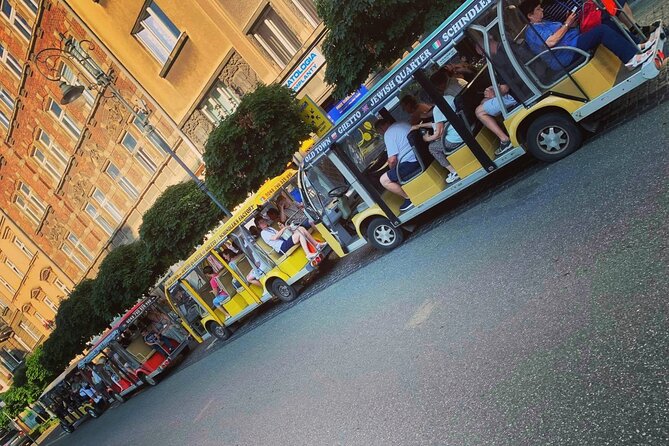
Kraków rolls by on an electric buggy. This tour is interesting because you get nearly 24 sights in about 1 hour 30 minutes, with a steady ride that saves your legs for later. I also love the Kazimierz synagogue circuit, which moves through major historic places with clear context. The possible drawback is that the buggy ride can be bumpy, and crowding or headphone quirks can happen on busier departures.
In This Review
- Key things to know before you start
- Value, Duration, and Why This Beats Walking in the Cold
- Price and What You Actually See in 90 Minutes
- Finding the Pickup Point Without Stress
- Skałka, Church on the Rock: Small Rock, Big History
- Kazimierz Through Plac Wolnica and the Church Grounds
- The Synagogue Circuit: Tempel to Remah Without the Marathon
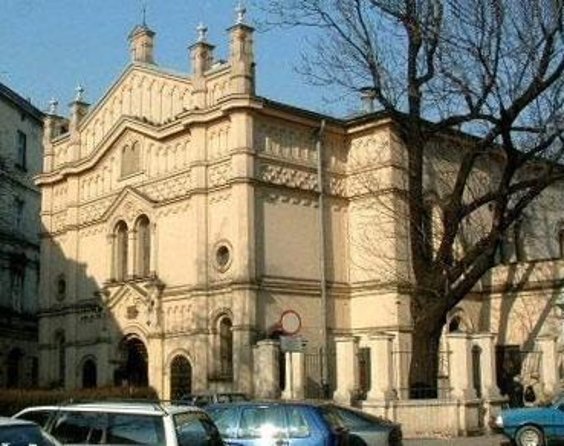
- Tempel Synagogue
- Kupa Synagogue
- Izaak Synagogue
- High Synagogue
- Old Synagogue (Alta Shul)
- Wolf Popper Synagogue (Bociana)
- Augusta Rubinstein reference point
- Remah Synagogue
- Podgórze and the Ghetto Story: Heroes Square, Pharmacy, Factory
- Ghetto Heroes Square (Bohaterów Getta Square)
- Eagle Pharmacy Museum
- Oskar Schindler’s Enamel Factory
- Old ghetto wall
- St. Joseph’s Church
- Getting the Most From Your Stops: Audio, Photos, and Timing Reality
- Who Should Book This Buggy Tour, and Who Might Skip It
- Should You Book This Kraków Electric Buggy City Sightseeing Tour?
- FAQ
- How long is the Kraków City Sightseeing eco electric buggy tour?
- What does the tour cost?
- Is pickup offered, and where is the meeting point?
- Is the tour in English?
- Do I need a paper ticket?
- What is the group size limit?
- Will I be warm during the ride?
- Are service animals allowed?
- What is the cancellation policy?
- Does this tour include both Kazimierz and Podgórze sites?
Key things to know before you start
- Nearly 24 stops in 90 minutes means you get broad orientation without the sore-feet marathon
- English-guided with mobile ticket keeps things simple when you’re hopping between districts
- A Kazimierz and Podgórze mix ties synagogues to the ghetto story in the right neighborhoods
- Warm comforts for cold weather (blankets and heating are mentioned) make winter touring more pleasant
- Small-ish group size with a max of 50 helps the tour feel manageable
- You get both driver explanation and audio to fill in the details as you roll past landmarks
Value, Duration, and Why This Beats Walking in the Cold
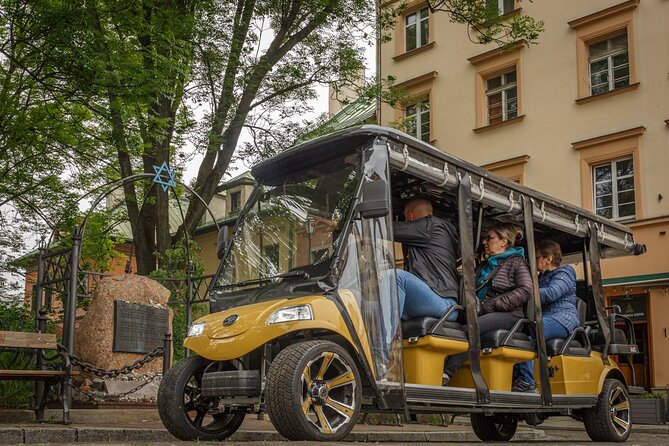
At $28.88 per person for about 1.5 hours, this is one of those Kraków tours that feels like practical sightseeing, not a long lecture. The big selling point is time efficiency: you cover a large chunk of the city without constantly stopping and restarting like you might on your own. If your goal is to get your bearings fast, this fits.
It also runs with a mix of guided talking and an audio component, so you’re not relying on just one person to explain everything. On a cold or rainy day, that matters. Several people highlight the warmth on board, including blankets and heating, which makes the ride comfortable enough that you do not dread the next stop.
Group size is capped at 50 travelers, which is important for a buggy-style tour. You will not feel like you are in a huge bus crowd, but you still need to be realistic: it is shared transport, so if you are very sensitive to cramped seating or if headphones do not work perfectly, that could affect your enjoyment.
More Golf Cart Tours in Krakow
- Krakow: City Sightseeing Tour by Electric Golf Cart
★ 4.5 · 3,264 reviews - Krakow: City Sightseeing Tour Eco Electric Buggy Golf Cart
★ 4.7 · 3,143 reviews - Krakow: Extended City Sightseeing Tour – Eco Buggy Golf Cart
★ 4.7 · 794 reviews
Price and What You Actually See in 90 Minutes
This tour is priced for momentum. You are not paying for time sitting in a single museum. You are paying to keep moving through multiple areas while an on-board guide and audio fill in the context.
The stops cover:
- the religious and historical layers of Kazimierz (including Church on the Rock and multiple synagogues),
- then the far more serious Podgórze story (including Ghetto Heroes Square and the Eagle Pharmacy Museum),
- plus the industrial reminder of Oskar Schindler’s Enamel Factory and nearby ghetto-related sites.
That combination is why it can feel like good value. You get both “this is where it happened” and “this is what it meant,” without spending the whole day in transit or searching for addresses on your own.
If you can do only one guided city intro, I think this is a strong pick because you leave with a mental map of Kraków’s layout and its big historical zones. If you want only casual scenic photo time, you might prefer something more lightweight. Here, the focus is educational and place-based.
Finding the Pickup Point Without Stress
Your start is at Parking 24H Kraków old town car park, near Mikołaja Zyblikiewicza 2 (31-029 Kraków), and the tour ends back at the meeting point.
The easiest way to avoid getting flustered is to treat this like a “find a landmark, not a GPS dot” situation. One helpful practical hint is to look around Zyblikiewicza St and the area near Westerplatte, then orient to the nearby Zabka shop for the pickup area. That kind of local clue saves time when streets are busy.
If you arrive early, you also give yourself room for one small upgrade: warm up a bit before you board. People mention that the buggy ride is cozy once you get going, but you still want to start the tour feeling ready.
Skałka, Church on the Rock: Small Rock, Big History
The tour’s first featured stop is Church on the Rock (Kosciol na Skalce), also known as Skałka. It sits on a small outcrop above Kraków, where a Pauline monastery is located. This is not just a dramatic spot for a photo. It is tied to a major historical moment.
You’ll hear the story of Saint Stanislaus, bishop of Kraków, who was slain in 1079 by order of Polish king Bolesław II the Bold. The aftermath includes the king’s exile and the eventual canonization of the slain bishop.
Practical note: this stop is listed with free admission, which is a nice bonus when you are trying to keep costs down. Even if you do not linger long, the scale of the site and its location give you an immediate sense of why Kraków’s history often feels tied to specific ground and specific buildings, not just dates in a book.
If you are doing this late in your trip, you might miss the benefit. I recommend doing this kind of tour earlier so the rest of your sightseeing clicks faster.
More golf cart rides around Krakow:
- Krakow: Jewish Quarter and Ghetto Electric Golf Cart Tour
★ 4.6 · 348 reviews - Krakow Grand City Tour by golf cart – All 3 districts
★ 5.0 · 311 reviews - Krakow: City Tour by Electric Golf Cart
★ 4.9 · 310 reviews - Krakow: Jewish Quarter and Former Ghetto Tour by Golf Cart
★ 4.5 · 93 reviews
Kazimierz Through Plac Wolnica and the Church Grounds
Kazimierz is where the tour’s personality really forms. You are moving through a neighborhood with its own rhythms, and the stops connect squares, markets, and religious buildings.
One stop focuses on Plac Wolnica, linked to the original market square of Kazimierz, created when Kazimierz was founded in 1335. The square functioned like a trade hub, and it includes references to structures that once supported commerce and administration, like a town hall and areas associated with trade and regulation. The name Plac Wolnica is tied to the Latin idea of a free trade forum, and it has existed in its current form since the late 1700s after Kazimierz gained a free-trade privilege.
Nearby, you also get context around church grounds associated with a basilica erected in stages from 1340 into the mid-1400s. The description you hear frames it as a monastery church, with a large plot of land and a monastic cemetery next to it. In 1404, it’s connected to King Władysław II Jagiełło transferring the church to the Canons Regular of the Lateran, a congregation he brought in from Kłodzko.
Another stop in this area points out the older street-and-building layout known as Libuszhof, which had a complex of streets and buildings until the 19th century. The current square shape dates to regulatory projects in 1808 and 1844. You also get mention of houses along the defensive walls of Kazimierz that belonged to the Jewish hospital at the Kupa synagogue.
Why this matters: Kazimierz can feel like a maze if you walk it on your own. This tour gives you anchors. You do not just see buildings, you learn what those streets and squares used to do.
The Synagogue Circuit: Tempel to Remah Without the Marathon
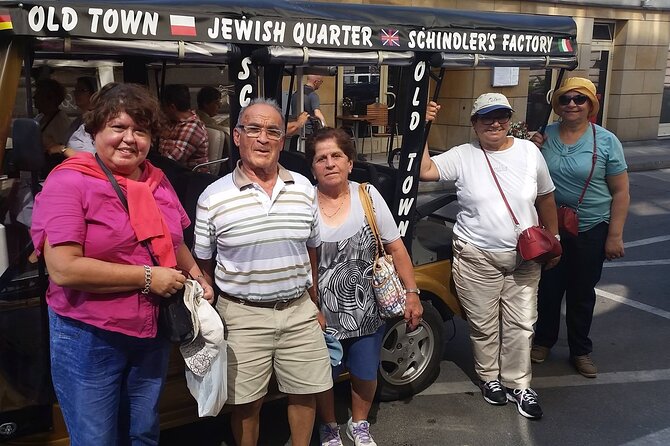
Kazimierz on foot is doable, but it can also turn into a long, cold slog if you are bouncing between multiple synagogues. This is where the electric buggy pays off. You get the chance to learn the differences between places without sacrificing half your day.
Here are the synagogue stops you’ll encounter, each with a specific angle:
Tempel Synagogue
This is described as a major place of worship and also a center of Jewish culture, hosting concerts and meetings, especially during a festival. It is a reminder that these sites are not just historic shells. They are living institutions in certain periods and contexts.
Kupa Synagogue
This 17th-century synagogue is tied to the former Jewish quarter of Kazimierz. The neighborhood was developed from an area earmarked for Jewish residents and transferred from the Old Town. Like Tempel, Kupa functions as a community venue for religious ceremonies and cultural festivals, including the annual Jewish Culture Festival.
Izaak Synagogue
The Izaak Synagogue is an Orthodox Jewish synagogue from 1644. It is named for its donor, Izaak Jakubowicz, described as Isaac the Rich, a banker connected to King Ladislaus IV. The stop also notes the architect: Francesco Olivierri, born in Italy. That kind of detail helps you see the synagogues as part of broader European architectural influence, not only local tradition.
High Synagogue
Known as the “Tall Synagogue,” it is an inactive 16th-century Orthodox Jewish synagogue. The explanation here is practical: the name connects to its height and also to the prayer hall being upstairs. It is described as Late Renaissance architecture, which makes it worth paying attention to even if you only see it from the outside.
Old Synagogue (Alta Shul)
The Old Synagogue is noted as the oldest synagogue building still standing in Poland, and one of the most precious landmarks of Jewish architecture in Europe. It was central to the Kraków Jewish community until the Second World War. When a stop includes that long arc, it changes how you interpret the building. It becomes less about style and more about continuity and loss.
Wolf Popper Synagogue (Bociana)
This synagogue is described as one of the splendid houses of prayer in Kazimierz, founded by Wolf “The Stork” Popper in the early 17th century. There’s also an evocative detail about decorative doors with symbols of traits of a devout man, including an eagle, leopard, lion, and buck deer.
In the present day, it is described as a bookshop and an art gallery in the women’s area upstairs. That is one of those “history with a pulse” details that makes the stop feel current, not frozen in time.
Augusta Rubinstein reference point
The tour includes a stop tied to Augusta Rubinstein, one of eight daughters born to Polish Jews. The information given connects her to broader intellectual circles, including that philosopher Martin Buber was her cousin. Even if you have never heard the name before, it’s a reminder that Kraków’s Jewish history includes people who shaped ideas, not just events.
Remah Synagogue
The Remah Synagogue is described as the smallest of the historic synagogues in Kazimierz and named after Rabbi Moses Isserles (ReMA). The reference here is religious scholarship: Isserles wrote commentaries and additions that complement Rabbi Yosef Karo’s Shulchan Aruch. The stop also notes that it is currently one of two active synagogues in the city.
A practical takeaway: try to listen for the contrasts. Each synagogue in this circuit has a slightly different purpose, timeline, architecture, or modern role. That is where the tour feels worth more than a “see a bunch of buildings” checklist.
Podgórze and the Ghetto Story: Heroes Square, Pharmacy, Factory
After Kazimierz, the tone shifts sharply. You go into the Podgórze district where some of Kraków’s darkest history is tied to specific locations.
Ghetto Heroes Square (Bohaterów Getta Square)
This square sits in the 13th district, in Podgórze. Its earlier names include Mały Rynek around 1880 and Plac Zgody from 1917 to 1948. From 1941 to 1943, it was within the Kraków ghetto.
The description makes clear what happened there: it was a place of concentration of the Jewish population before they were transported to concentration camps. You’ll also hear about Pharmacy Under the Eagle at number 18, run by Tadeusz Pankiewicz, identified as the only non-Jewish inhabitant of the ghetto.
Eagle Pharmacy Museum
The tour then links that location to the Eagle Pharmacy Museum, described on the southwest edge of the square under number 18. It includes specifics about the family: Jozef Pankiewicz owned it from 1910, and his son Tadeusz Pankiewicz ran it from 1933.
Before WWII, it was one of four pharmacies in Podgórze, serving both Polish and Jewish residents. The details also mention charitable connections, including Bikkur Cholim, and how the pharmacy became a lifeline during the ghetto period. In March 1941, the Germans established a ghetto in Podgórze, and the pharmacy was described as the only one within the ghetto borders, with Pankiewicz noted as the only Pole with rights to stay in the area.
This stop is emotionally heavy, so it helps that the information is place-specific. You are not just hearing about history in the abstract.
Oskar Schindler’s Enamel Factory
Next is Oskar Schindler’s Enamel Factory, described as a former metal item factory now hosting two museums. One is the Museum of Contemporary Art in Kraków on the former workshops. The other is a branch of the Historical Museum of the City of Kraków at ul. Lipowa 4, inside the administrative building of the former DEF enamel factory.
You get the industrial setting where the work happened, which makes the story less like a film scene and more like a real building in real streets. Even if you do not go inside, the tour provides enough context to understand why this site matters.
Old ghetto wall
You’ll also pass by an old ghetto wall, which helps you picture the physical boundaries of the ghetto story.
St. Joseph’s Church
The tour finishes this Podgórze stretch with St. Joseph’s Church on Podgórski Square. It’s described as a historic Catholic church located on the northern slopes of the Krzemionki foothills. That stop can feel like a release valve after heavier material, but it also reminds you that everyday faith and community space existed right alongside tragedy.
Getting the Most From Your Stops: Audio, Photos, and Timing Reality
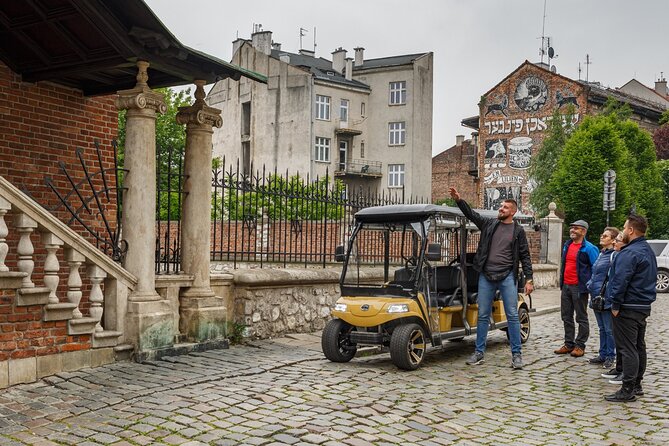
This kind of buggy tour is built for motion, which means you should adjust your expectations about how deep you go at each stop. You are likely to get brief time at multiple locations, and your best “win” is learning the big picture while staying warm and not wasting energy.
A few practical tips based on what people experience on this style of tour:
- Do it earlier in your visit if you can. It gives you a map in your head for later sightseeing.
- Plan for photos, not full museum time. The tour format is about seeing a lot of places in one run.
- If you’re going in the dark, visibility can suffer. Some people found it harder to see details at night.
- Expect a bumpy ride sometimes. The buggy moves through city streets, so dress for comfort rather than style.
- Pay attention to the headphone setup. There have been issues reported, like parts of the audio not working for some people, so bring a backup plan: rely on the driver explanations when possible.
One more thing: while the route is designed to cover a lot, your exact experience can vary by timing and how stops are handled. If Schindler-related sites are a top must-see for you, make that clear to the operator on the day so you can manage your time.
Who Should Book This Buggy Tour, and Who Might Skip It
I think this is a strong match if you:
- want an easy way to see Kraków’s major historical districts without tiring out,
- like learning as you go, with a driver explanation plus audio,
- are visiting in winter or bad weather and want warmth and blankets on board,
- want a guided orientation that helps you plan what to do next on your own.
It might not be ideal if you:
- hate feeling squeezed in shared transport,
- are very dependent on headphones working perfectly every time,
- only want a light, postcard version of Kraków and not the ghetto-focused portion.
The tour’s strength is that it takes you to specific places, including places that require a serious tone like Ghetto Heroes Square and the Eagle Pharmacy Museum. That is not optional here. If that fits your travel style, you’ll get a lot out of it.
Should You Book This Kraków Electric Buggy City Sightseeing Tour?
If your priority is getting a smart overview of Kraków fast, with comfortable transport and a strong mix of Kazimierz and Podgórze, I’d book it. At around 90 minutes and a price under 30 dollars, it is a practical way to turn scattered buildings into a connected story.
I would book it especially if you travel in cold months. The heated, blanket-friendly buggy ride is a real comfort advantage. And if you want the history placed in real locations, this route does that, from Skałka to the synagogue circuit and into the ghetto sites.
One last decision helper: if you are short on time and want the maximum “where am I and what matters here” payoff, this is one of the better uses of your first day in Kraków.
FAQ
How long is the Kraków City Sightseeing eco electric buggy tour?
It runs for about 1 hour 30 minutes.
What does the tour cost?
The price is listed as $28.88 per person.
Is pickup offered, and where is the meeting point?
Pickup is offered. The meeting point is Parking 24H Kraków old town car park at Mikołaja Zyblikiewicza 2, 31-029 Kraków, Poland. The tour ends back at the same meeting point.
Is the tour in English?
Yes, it is offered in English.
Do I need a paper ticket?
No. A mobile ticket is provided.
What is the group size limit?
The tour has a maximum of 50 travelers.
Will I be warm during the ride?
It can be warm, with blankets on the cars and heating mentioned in the provided information.
Are service animals allowed?
Yes, service animals are allowed.
What is the cancellation policy?
Free cancellation is available. You can cancel up to 24 hours in advance for a full refund, and cancellations within 24 hours are not refunded.
Does this tour include both Kazimierz and Podgórze sites?
Yes. It includes Kazimierz stops such as Skałka and multiple synagogues, and it also includes Podgórze stops such as Ghetto Heroes Square, the Eagle Pharmacy Museum, Oskar Schindler’s Enamel Factory, an old ghetto wall, and St. Joseph’s Church.
Fresh listings from Krakow
- Zakopane & Gubalowka Funicular – Private Winter Tour from Krakow★ 5.0 · 10 reviews
- ZALIPIE – painted village, unique PRIVATE tour from Krakow★ 5.0 · 20 reviews
- stag dog chase Krakow prank★ 5.0 · 4 reviews
- ZALIPIE – painted village, unique small group tour from Krakow★ 5.0 · 7 reviews
- Full-Day Zalipie Painted Village Guided Tour★ 4.0 · 3 reviews
- Sleigh Ride & Bonfire in Zakopane with Funicular – Private Trip★ 5.0 · 48 reviews
- Zakopane Funicular Hill & Thermal Springs regular tour★ 5.0 · 9 reviews
- Zakopane to Chocholow Thermal Pools 3h Ticket with Hotel Transfer★ 5.0 · 9 reviews
Golf Cart Tours, compared.
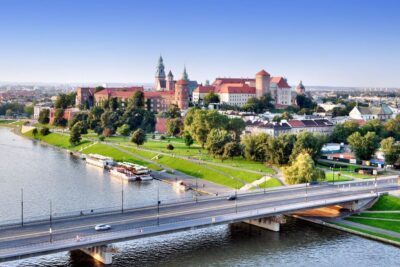
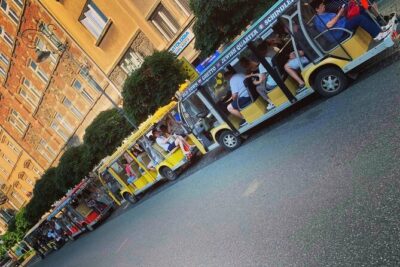
City Sightseeing Tour Eco Electric Buggy Golf Cart
Read our review →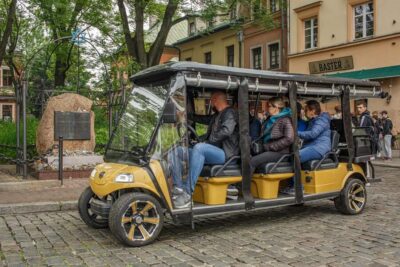
Extended City Sightseeing Tour – Eco Buggy Golf Cart
Read our review →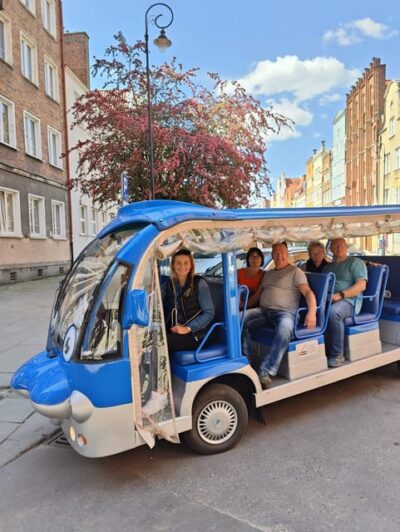
Shared or Private City Tour Sightseeing by Golf Cart
Read our review →
City Tour Live Guided by Golf Cart/Buggy Sightseeing
Read our review →
Shared/Private Golf Cart City Tour with Local Guide
Read our review →
NO LIMIT BEER City Tour by Golf Cart Private/Shared
Read our review →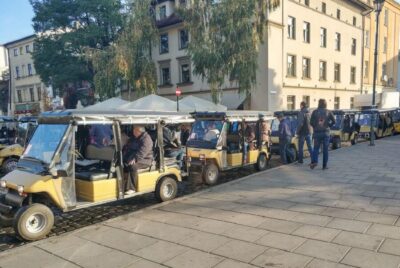
Jewish Quarter and Ghetto Electric Golf Cart Tour
Read our review →Browse the lists this tour appears in