Review · KRAKOW TOURS
Kraków Holocaust Tour
Krakow’s ghetto still looks like 1942. This 2-hour Spanish tour takes you through the entire Jewish ghetto area as it largely appears today, with stops that help explain how Nazi rule was built into daily life. For many people, that mix of geography and history is what makes the walk feel so real.
I especially love how the route is designed to cover the whole district, not just the most famous corners. I also like the way the guide, trained with a graduate background in Geography and History, connects locations to the system behind them, including the ghetto’s purpose and how it functioned.
One possible drawback: it is a heavy, emotionally serious topic, and the tour does not include food or drinks. If you tend to get worn out fast, plan to pace yourself and keep a water plan ready.
In This Review
- Key things I’d expect from this Kraków Holocaust Tour
- Meeting your guide, and why the details matter
- Entering the Krakow ghetto as it survives today
- Two wall fragments and the Square of Chairs, where geography becomes control
- Understanding the Judenrat and other institutions that ran the ghetto
- Police agencies, meetings, and resistance-linked places
- Hospitals, prison, and the cost of survival
- Synagogue, factories, orphanages, and the everyday texture
- The location of old doors: how checkpoints shaped movement
- Pharmacy under the Eagle: why the museum ending lands
- Price value: why $16 can be a smart spend in Krakow
- Who this tour suits best, and who should think twice
- Should you book the Krakow Holocaust Tour?
- FAQ
- How long is the Kraków Holocaust Tour?
- What is the price per person?
- What language is the live guide?
- What does the tour include?
- Is food or drinks included?
- Where is the meeting point?
- What should I bring?
- Is the tour wheelchair accessible?
- Is there free cancellation?
- Can I reserve now and pay later?
Key things I’d expect from this Kraków Holocaust Tour
- The only tour focused on the entire ghetto route in Krakow, using a historian-led approach
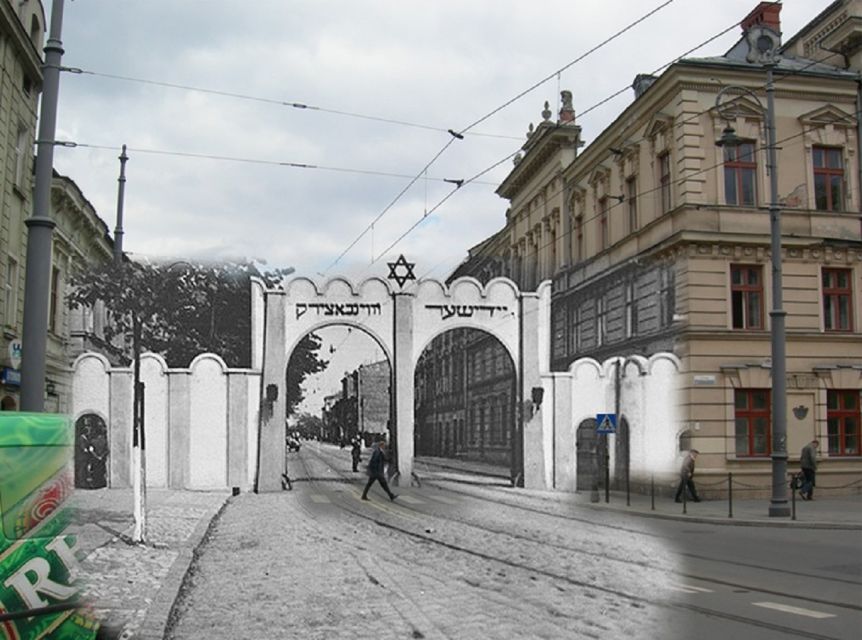
- Buildings and organization sites that are still standing, many looking close to 1941-1943
- A clear explanation of how ghettos were designed to control daily life
- Stops that map the ghetto’s structure, from walls and doors to police and resistance-related locations
- A museum finish at the Pharmacy under the Eagle, one of the city’s key ghetto-related exhibits
- Spanish-language guiding with a graduate Geography and History background
Meeting your guide, and why the details matter
You meet at the start of the walk with the clue that the guide will be holding a gray umbrella. That simple detail matters more than you think. In places with so many streets and tour groups, you want a clear handhold so you can settle in quickly and focus on the content, not navigation.
From the beginning, the tour is set up for walking and attention. Comfortable shoes are a must, because this is a district tour with multiple stops. The good news is the duration is only 2 hours, so you can get a structured education without turning the day into a marathon.
Also, if you’re wondering about logistics like mobility, the tour is listed as wheelchair accessible. That means the route is planned with access in mind, which is a big deal for a neighborhood where the historical layout can be tricky.
A few more Krakow outings to weigh up
- From Krakow: Auschwitz-Birkenau Guided Tour & Hotel Pickup
★ 4.5 · 33,358 reviews - From Krakow: Auschwitz-Birkenau Guided Tour & Hotel Pickup
★ 4.5 · 29,340 reviews - Krakow: Auschwitz Guided Tour with Optional Hotel Pickup
★ 4.5 · 15,280 reviews
Entering the Krakow ghetto as it survives today
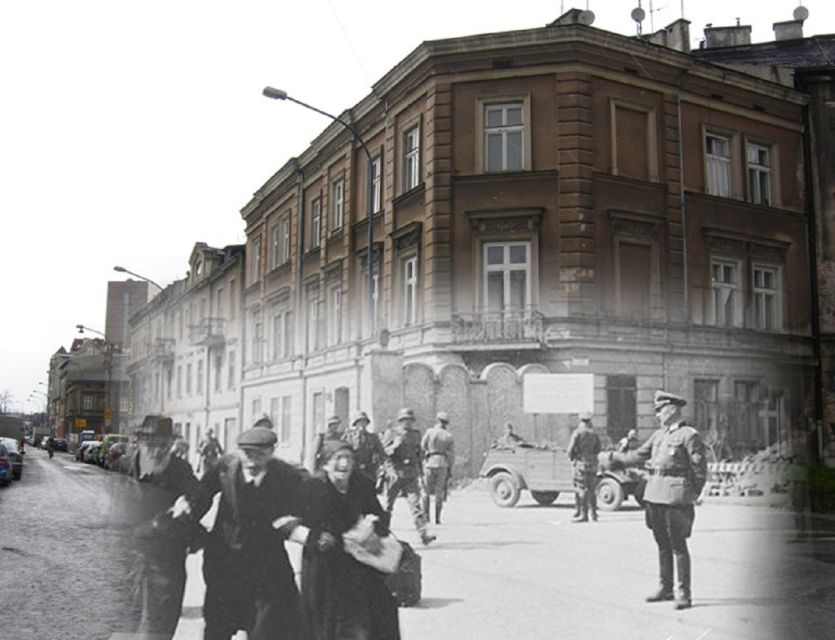
What makes this tour different in Krakow is the preservation. The Jewish ghetto area has largely survived to the present in an appearance close to the end of the war. It is not just a few iconic facades. A large part of the old houses and many institutional buildings remain.
Walking those blocks changes your sense of time. When buildings are still there, you can visually connect the Nazi occupation system to the physical spaces that made it work. The tour leans into that, describing the dramatic atmosphere of the period and explaining how the Nazis used the ghetto concept as part of their broader policy.
This is also where the historian approach earns its keep. You are not only seeing old walls and streets. You’re learning how the ghetto’s layout, institutions, and restrictions were meant to function day to day. That’s the difference between a sightseeing walk and something that actually teaches you how the system worked.
Two wall fragments and the Square of Chairs, where geography becomes control
The tour includes two fragments of the wall, a stop that sets the tone fast. Walls are not symbolic here. They were practical tools for isolation, surveillance, and control. Even small surviving sections can help you picture how confinement shaped movement and opportunities.
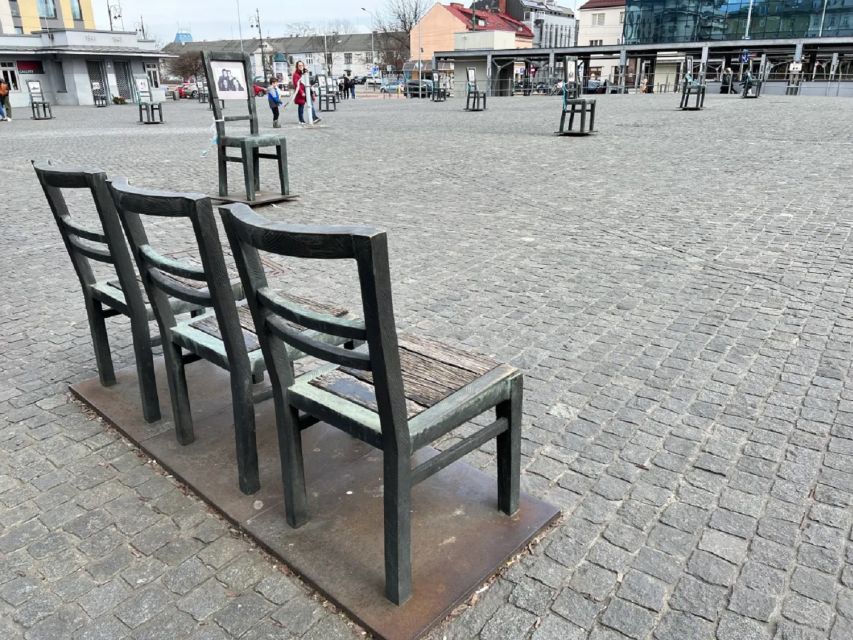
Next comes Ghetto Heroes Square, also known as the Square of Chairs. This location gives you a human anchor while staying connected to the place itself. It helps shift your focus from the architecture of control toward the people who lived, resisted, and endured inside it.
The value of these two stops together is clarity. The wall fragments teach you what the Nazis built to limit movement. The square helps you understand how memory and courage are tied to specific spaces, not just dates in a book.
Understanding the Judenrat and other institutions that ran the ghetto
One of the hardest parts of ghetto history to grasp is how everyday life continued under extreme oppression. This tour tackles that by mapping institutions that shaped decisions inside the ghetto.
You’ll see key locations connected to the Judenrats. That term refers to bodies the Nazis used to help administer certain aspects of life in the ghetto. The tour places these sites in context, explaining their role within Nazi occupation policies and the ghetto system’s purpose.
You’ll also learn about labor organizations, and the way work was structured as part of the ghetto’s control. When you hear the explanation while standing in the district, the ideas land differently. You start connecting the dots between restriction, dependency, and coerced labor.
If you like history that feels grounded in real places, this section is one of the strongest. It turns abstract concepts into a spatial story.
Still in reach of Krakow, but a different sort of day:
- Krakow: Wieliczka Salt Mine Tour with Entry Ticket
★ 4.6 · 10,927 reviews - Krakow–Zakopane: Cable Car, Chocholow Baths, Cheese & Vodka
★ 5.0 · 10,720 reviews - Krakow: Auschwitz-Birkenau Guided Tour with Pickup & Lunch
★ 4.5 · 9,800 reviews - From Krakow: Wieliczka Salt Mine Tour
★ 4.6 · 9,393 reviews
Police agencies, meetings, and resistance-linked places
The itinerary includes important buildings connected to intellectual meetings, resistance, and police agencies. That mix matters. It keeps the picture from being one-note.
It’s too easy to think of the ghetto only as a machine of punishment. The tour shows the tension of the reality: people organized, debated, resisted, and tried to keep community life alive, even under brutal constraints.
At the same time, you also get the shadow side, the enforcement side. Seeing different types of buildings close together helps you understand how Nazi control operated alongside the human drive to survive and resist.
In plain terms, you get a more honest map of how things worked. Not just who suffered, but how the system tried to shape behavior, information, and daily choices.
Hospitals, prison, and the cost of survival
This tour does not avoid the grim parts. It includes stops connected to hospitals and a prison. That gives you a more complete picture of what confinement meant physically, not just socially.
Hospitals in this context were not a normal healthcare story. You’re learning how the ghetto system handled illness, injury, and medical need under restrictions. Prison sites highlight the coercive side of the occupation, reinforcing how quickly daily life could shift from routine to punishment.
This portion is heavy, so I’d treat it like a focused segment, not something to rush through. If your energy is limited, use the walk pace to pause in your own way, even if the group keeps moving. You’re not meant to sprint through this topic.
Synagogue, factories, orphanages, and the everyday texture
The tour expands beyond institutions of control and punishment. You’ll also visit or pass key locations tied to a synagogue, factories, and orphanages.
These stops matter because they show that ghetto life was not only about oppression. There were religious practices, work systems, and the presence of children and family structures, even when everything around them was being destroyed.
Factories and labor-related locations help explain how economic exploitation and forced work were part of the Nazi occupation logic. The synagogue location adds the religious and cultural dimension that persecution targeted. And orphanage-related stops bring you back to the human reality of children living in a place designed to break lives.
If you are the kind of person who wants “how did people live” answers, this is where you get them. It’s not a random checklist of suffering sites. It’s a structured look at daily texture under extreme conditions.
The location of old doors: how checkpoints shaped movement
The itinerary includes the location of old doors. Even without a huge, obvious structure, doorways and access points are powerful. They show you that control was not only walls and guards. It was also entry points and limits on what was allowed, when it was allowed, and who could move.
This is the kind of detail that makes the district feel like a system. In a normal city, doors are just doors. In a ghetto, doors are part of the mechanism.
If you tend to remember places by physical cues, this stop can help you “read” what you see afterward. You start understanding how movement through the neighborhood was restricted and monitored.
Pharmacy under the Eagle: why the museum ending lands
The walk finishes at the famous Pharmacy under the Eagle, described as one of the most important museums in Krakow on the subject.
Ending here works well because it shifts you from outside spaces to a dedicated space for context. If you’ve been trying to assemble the story as you walk, the museum stop is where the pieces are organized for you. It’s also a place where you can slow down and focus without the movement pressure of a walking tour.
I like museum endings because they give you an opportunity to convert walking impressions into understanding. You’ve seen the ghetto’s geography and key institutions. Now you can connect that to exhibits and interpretation.
Price value: why $16 can be a smart spend in Krakow
At $16 per person for a 2-hour guided tour with a graduate-level Geography and History guide, this is solid value in Krakow. You’re not just paying for a route. You’re paying for interpretation, and the tour’s claim to cover the ghetto in its entirety is a big part of that value.
A short, focused tour often makes more sense than half-day alternatives because it reduces decision fatigue. You get a clear structure: the district walk, the system explained through locations, and then the museum finish. If you’re budget-minded, this is the kind of cost that leaves room for another paid experience later, rather than swallowing the day.
One reminder: food and drinks are not included. So if you’re trying to avoid spending more later, plan a simple snack or water strategy before you start.
Who this tour suits best, and who should think twice
This tour is a strong fit if you:
- Want the full ghetto story in one structured walk, not only a highlight section
- Prefer a guided explanation that connects places to the Nazi ghetto system’s purpose
- Speak or read Spanish, since the live guide is in Spanish
It might be less ideal if you:
- Want a lighter, casual sightseeing day
- Need breaks more frequently during emotionally heavy topics
If you go, go prepared. This is history you will feel in your body. Shoes on, pace steady, and expect a serious tone.
Should you book the Krakow Holocaust Tour?
If your goal is to understand how the Krakow ghetto worked, this is one of the best ways to do it because the route covers the ghetto comprehensively and ties daily life to specific places. The standout praise in the provided booking details centers on the guide being very good, and the explanations being interesting and easy to follow. That matters, because in a topic this intense, clarity and pacing are not optional.
Book it if you want a structured, Spanish-guided, historian-led walk that ends with a major museum stop. Skip it if you’re looking for a quick, upbeat overview of Krakow, or if you’re sensitive to difficult history without much time to decompress.
In short, this tour offers strong educational value for the price, with a district that is still visually present. If you choose to spend 2 hours here, you’ll leave with a far more connected understanding of how the ghetto system was built into daily life.
FAQ
How long is the Kraków Holocaust Tour?
The tour lasts 2 hours.
What is the price per person?
The price is listed as $16 per person.
What language is the live guide?
The tour is guided live in Spanish.
What does the tour include?
It includes a graduate guide in Geography and History.
Is food or drinks included?
No. Food and drinks are not included.
Where is the meeting point?
The meeting point is where the guide will be carrying a gray umbrella.
What should I bring?
You should wear comfortable shoes.
Is the tour wheelchair accessible?
Yes, the tour is listed as wheelchair accessible.
Is there free cancellation?
Yes. You can cancel up to 24 hours in advance for a full refund.
Can I reserve now and pay later?
Yes. The booking offers a reserve now, pay later option.
Fresh listings from Krakow
- From Krakow: Zalipie and Painted Village Guided Tour★ 4.0 · 4 reviews
- From Krakow: Zakopane Full-Day Tour with Lunch Option★ 4.4 · 62 reviews
- From Krakow: Zakopane, Quad & Buggy Thermal Baths Tour★ 4.9 · 31 reviews
- Zakopane: Snowmobiles (or Quads), Thermal Pools & Tasting★ 5.0 · 4 reviews
- From Krakow: Zakopane and Gubałówka Cable Car Private Tour★ 4.3 · 12 reviews
- From Krakow: Zakopane Tatra Mountains & Hot Springs Tour★ 3.0 · 29 reviews
- From Krakow: Hot Springs and Zakopane with Gubałówka★ 4.7 · 25 reviews
- From Krakow: Zakopane and the Tatra Mountains★ 4.7 · 36 reviews
Krakow Tours, compared.
Auschwitz-Birkenau Guided Tour & Hotel Pickup
Read our review →Auschwitz-Birkenau Guided Tour & Hotel Pickup
Read our review →
Auschwitz Guided Tour with Optional Hotel Pickup
Read our review →
Zakopane: Cable Car, Chocholow Baths, Cheese & Vodka
Read our review →
Auschwitz-Birkenau Guided Tour with Pickup & Lunch
Read our review →