
Review · WALKING TOURS
Main Town Gdańsk Walking Tour
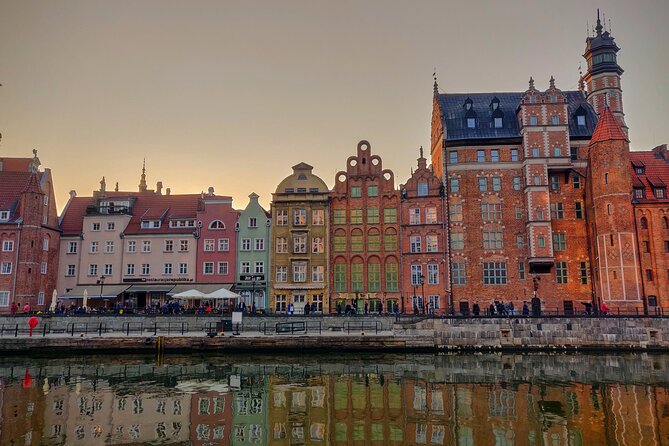
Gdansk tells its story in brick and stone. I love how this Old Town walk gives you an instant sense of where everything sits, with the Golden Gate as your early anchor. I also love that the guide ties what you see to the bigger story, including the WWII shock tied to the Polish Post Office.
The main thing to consider is simple: it’s a group walk in the open air for about 2.5 hours. If you hate standing around in wind or cold, plan on layers and a hat, because the city does not pause for comfort.
In This Review
- Key points worth knowing before you go
- A Gdansk Old Town walk that helps you read the city
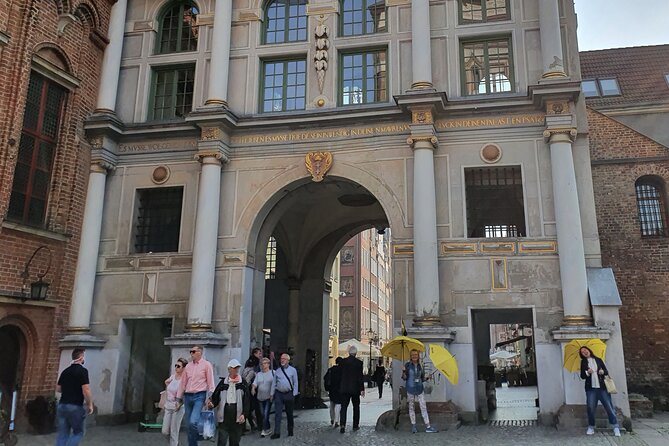
- Meeting at Targ Węglowy, then Langgasser Tor (Goldenes Tor)
- Dluga Street on the Royal Route: stories you can walk through
- St. Mary’s Church: the biggest brick church in the world
- Dlugi Targ Square: Neptune, Arthus’ House, and the Fahrenheit scale
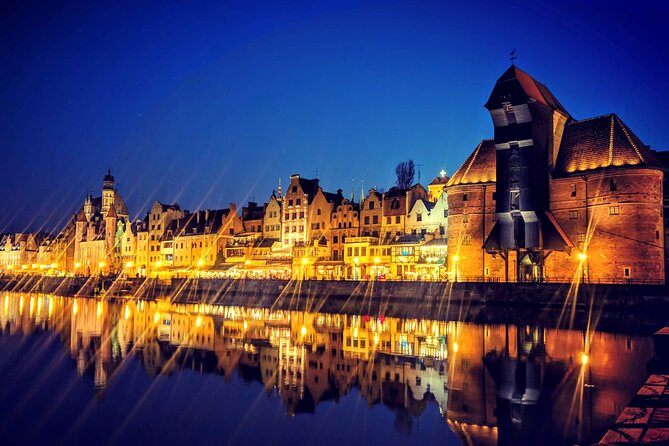
- The Crane (Żuraw): trade history you can actually see
- The Museum of the Polish Post Office: the WWII turning point stop
- What I’d expect from the guide, based on the tour style
- Price and value: $26.59, and how pay-what-you-wish fits in
- Logistics that make or break a walking tour
- Who this tour is best for
- Should you book the Main Town Gdańsk Walking Tour?
- FAQ
- How long is the Main Town Gdańsk Walking Tour?
- What language is the tour offered in?
- Where does the tour start and end?
- Is admission included for the stops?
- What is included in the price?
- What is the pay-what-you-wish note for this tour?
- Is there a mobile ticket, and what should I look for on arrival?
Key points worth knowing before you go
- Start with Langgasser Tor basics: You meet at Langgasser Tor, also known as Goldenes Tor, then get the city backstory fast.
- Long Street on the Royal Route: You get a guided line through Dluga Street, not just a random stroll.
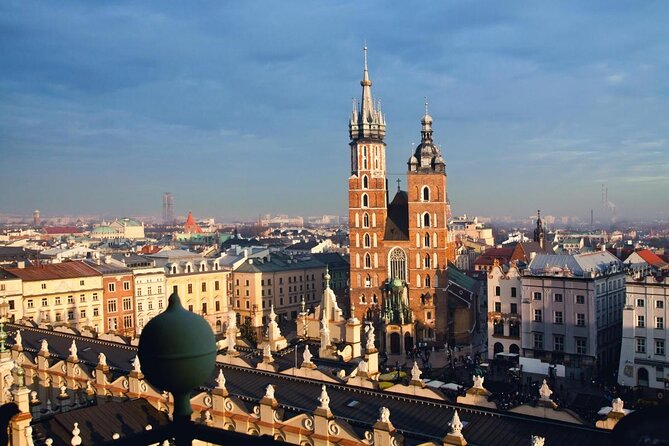
- St. Mary’s Church is a highlight: The route includes the biggest brick church in the world, in a way that helps you understand why it mattered.
- Dlugi Targ Square has crowd-stopper details: You’ll see Arthus’ House, the Neptune fountain, and the Fahrenheit scale.
- Żuraw Crane brings the trade story to life: It’s the largest medieval crane of its kind, perfect for visual learners.
- End at the Polish Post Office WWII monument: The tour’s final stop focuses on the first strikes on Poland that helped trigger WWII.
A Gdansk Old Town walk that helps you read the city

If this is your first time in Gdansk, you need two things: good orientation and a way to make the sights click. This tour is built for that. You spend about 2 hours 30 minutes on foot, starting near Targ Węglowy 1 and ending at the Monument to the Defenders of the Polish Post Office. You’ll cover the core medieval streets and landmarks without trying to do everything on your own.
You also get something many walking tours miss. The guide doesn’t just point at buildings. The tour puts local history into context and introduces famous inhabitants, so the Old Town becomes more than a pretty backdrop. It’s especially helpful around the WWII stop, where the story is heavy and specific, not vague.
One practical win: the walk is short enough that you can still do an afternoon of your own choosing. You start and finish fairly close to each other, so the ending point does not trap you far from the rest of town.
More Walking Tours in Gdansk
- Gdańsk City Sights & History Guided Walking Tour in English
★ 4.8 · 876 reviews - Discover Gdansk Walking Tour
★ 5.0 · 495 reviews - Gdańsk: Old Town Private Walking Tour with Legends and Facts
★ 4.9 · 245 reviews
Meeting at Targ Węglowy, then Langgasser Tor (Goldenes Tor)
You begin at Targ Węglowy 1. This part matters because the guide can set the stage before you move. Your first stop is Langgasser Tor, also called Goldenes Tor.
This is where you get the basics. Think of it as the city’s intro chapter. You’ll learn what you should be looking for as you go, so the next streets make sense instead of feeling like a list of monuments.
Two things to keep in mind here:
- Arrive a few minutes early, because the group needs to gather and move together.
- Watch for the yellow umbrella. It’s your quick visual cue in a busy Old Town area.
Admission at the first stop is listed as free, so you’re not juggling ticket steps right away.
Dluga Street on the Royal Route: stories you can walk through
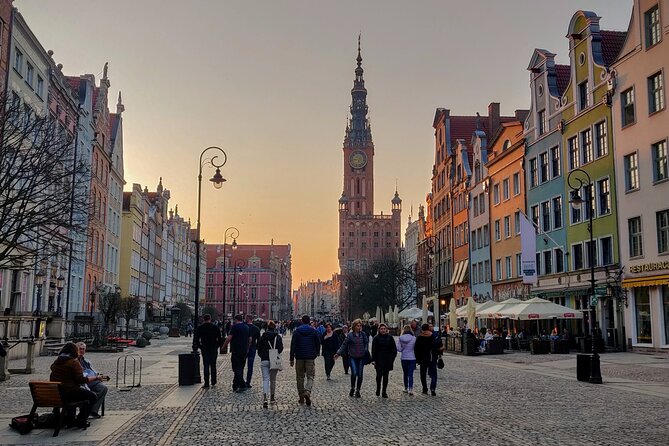
Next you move to Gdansk Dluga Street, part of the Royal Route. This segment is all about momentum and meaning. Instead of treating the street like a corridor of shops, the guide turns it into a story line.
You’ll hear about famous inhabitants tied to the places along the way. Even if you do not memorize names, this helps you see why these buildings and corners became important. It’s the difference between seeing a pretty street and understanding why it was a stage for power, commerce, and daily life.
The tour time at this stop is about 10 minutes. That can feel quick, but it works for your brain. Short stop, clear story, then you keep walking toward the next big visual.
If you get the urge to stop for photos here, do it, but do not get too far ahead. The value of this tour comes from moving as a group, so the guide can keep the pacing tight.
St. Mary’s Church: the biggest brick church in the world
St. Mary’s Church is a real centerpiece on this route. The tour highlights it as the biggest brick church in the world, and you’ll spend about 15 minutes there.
This stop is more than a photo break. A good guide will connect the church to what Gdansk people valued, including how the city’s wealth and civic pride showed up in stone and brick. You’ll also learn enough background that the architecture does not feel like random ornament.
Here’s the main practical consideration: this is a walking tour, and churches can mean stairs, open space, and cold air if you’re not dressed right. Dress for the weather first, then enjoy the sightseeing.
One extra tip from the way the tour is often timed: you may catch the church clock show if the schedule aligns with your group’s timing. It’s not something to rely on for planning, but it can be a nice bonus.
Admission at this stop is also listed as free, so you can focus on the experience without extra ticket confusion.
Still in reach of Gdansk, but a different sort of day:
- Gdansk: City Cruise on Historical Polish Boat
★ 4.8 · 2,913 reviews - Gdańsk: Sunset Cruise on a Historic Polish Boat
★ 4.9 · 977 reviews - Gdansk: Firearm Shooting Experience with Instructor
★ 4.8 · 866 reviews - Gdansk: Guided Round-Trip Cruise to Westerplatte
★ 4.3 · 865 reviews
Dlugi Targ Square: Neptune, Arthus’ House, and the Fahrenheit scale
Długi Targ (Long Market) is the classic medieval square in Gdansk. You’ll spend about 20 minutes here, which is enough time to actually look instead of sprinting.
What you’ll see is concrete and memorable:
- Decorative merchants’ Arthus’ House
- The fountain of Neptune
- The Fahrenheit scale, an unusual detail that grabs attention fast
This is the part of the tour where you’ll likely understand why the guide cared about famous locals earlier. Squares like this were not just for strolling. They were for meeting, trade, and civic life. When you can connect the objects in front of you to the way the city used to function, your photos start telling a better story.
Drawback to watch for: squares attract people. If your group hits the area during a busy moment, it can get noisy and crowded. Still, the guide’s role is useful here, because you’ll know what to look for and how to see it, even when it’s a bit hectic.
The Crane (Żuraw): trade history you can actually see
Then comes the Crane, or Żuraw. You’ll spend about 10 minutes here, and it is an easy stop to love because it’s instantly readable. You can see what it is and why it mattered.
The tour frames Żuraw as the largest medieval crane of its kind, and that’s not just trivia. It’s a visual reminder of how the city’s wealth connected to ports, shipping, and moving goods. Even if you’re not a history buff, the structure does the explaining.
It’s also a good change of pace. After churches and squares, you get something industrial and practical. You’ll probably leave this stop thinking more about how people worked than how they posed.
Admission is listed as free at this stop as well, so this is a straightforward add-on rather than a ticket-heavy detour.
The Museum of the Polish Post Office: the WWII turning point stop
The final major stop is the Museum of the Polish Post Office, also referred to as Museum of Gdansk, and it’s tied to the Monument to the Defenders of the Polish Post Office.
This is where the tour goes from sightseeing to context. The guide focuses on the very first strikes of Germany against Poland, leading to the outbreak of World War II on 1 September 1939.
It’s an emotionally serious stop. The setting is meant to be faced, not skimmed. Your guide’s job is to place the event in context without turning it into a lecture. In practice, this usually means you’ll get a clear timeline and the meaning of the site, not just dramatic words.
Practical note: this is the end point. You finish at the Monument to the Defenders of the Polish Post office area, about 15 minutes from where you started. That makes it easy to plan your next steps. You can head to a restaurant or keep exploring without needing a long return trip across town.
Admission at this stop is listed as free in the tour details. That’s good value, especially because the content at the WWII site is often what people remember most.
What I’d expect from the guide, based on the tour style
This tour is run by a local guide with excellent language skills. The pacing is part of the experience, too. Guides tend to keep things well-timed across the Old Town sights, with enough explanation to connect the dots.
You can also expect the tour to be question-friendly. Several named guides come up with praise for being entertaining while staying informative, plus being accommodating to group needs. Names you might hear include PK, Sandra, Kate (often referred to as Dynamite), Tufi, Czarek, Philip, Kasha, and Marvin. You should not assume you will get a specific guide, but it does tell you the training bar is high.
For you, the payoff is simple. If you’re new to Poland or new to Gdansk, asking a question about why something is built a certain way, or what a symbol means, can turn a quick stop into a lasting memory.
Price and value: $26.59, and how pay-what-you-wish fits in
The price is $26.59 per person for an experience that runs about 2 hours 30 minutes with a maximum group size of 35.
On paper, that’s a fair walking tour rate. Here’s why it feels like good value in real life:
- You get a local guide who is handling timing, routing, and context.
- You hit multiple major sights in a single morning-length window: Goldenes Tor, Dluga Street, St. Mary’s Church, Dlugi Targ Square, Żuraw Crane, and the Polish Post Office WWII monument.
- The stops are listed as admission free, so you’re not stacking extra costs sight by sight.
One more detail matters. The tour uses a general pay-what-you-wish model, where the amount you pay covers a reservation fee and the guide’s payment. In other words, you’re not just buying access. You’re funding the guiding effort, and you can reward what you feel was worth it.
If you like to travel light and do one high-quality guided block early in your trip, this setup is a good match.
Logistics that make or break a walking tour
A few practical points will help your day go smoothly:
- It’s offered in English.
- It includes a mobile ticket.
- Confirmation is received at booking.
- Service animals are allowed.
- It’s near public transportation.
- Look for the yellow umbrella at the start.
- The tour is capped at 35 travelers, which helps keep the group from feeling chaotic.
Weather is the wild card. One of the most common realities of walking tours is cold air and wind in open streets. Dress like you plan to be outside the whole time, not like you’re rushing between indoor stops.
Also, bring comfortable shoes. The route covers several landmark-to-landmark sections, and you will want your feet on your side.
Who this tour is best for
This is a strong choice if:
- You’re visiting Gdansk for the first time and want to get your bearings fast
- You want history explained in context, not as disconnected facts
- You prefer walking with a small map in your head, created by a guide’s route
- You’re interested in how Gdansk connects to both civic life and major WWII events
It might be less ideal if you:
- Want a completely self-paced, quiet experience with no group structure
- Are traveling with mobility limits that make constant walking hard
- Hate being in a group environment where timing matters
Should you book the Main Town Gdańsk Walking Tour?
I’d book it if you want one guided morning that turns Gdansk from a postcard into a place with meaning. The mix is smart: you get the Big Sights, the fun details like the Neptune fountain and the Fahrenheit scale, and the serious WWII anchor at the Polish Post Office monument. And because the pacing is designed to cover major landmarks without dragging, you can still enjoy the rest of your day on your own terms.
If you care about history but you also care about time, this is an efficient way to spend it.
FAQ
How long is the Main Town Gdańsk Walking Tour?
It lasts about 2 hours 30 minutes.
What language is the tour offered in?
The tour is offered in English.
Where does the tour start and end?
It starts at Targ Węglowy 1, 22-100 Gdańsk, Poland, and ends at the Monument to the Defenders of the Polish Post office area at Obrońców Poczty Polskiej, Gdańsk.
Is admission included for the stops?
The tour details list admission ticket free for the stops on the route.
What is included in the price?
The tour includes an expert, friendly local guide with excellent language skills.
What is the pay-what-you-wish note for this tour?
When you book, you join a general pay as you wish tour. The amount you pay covers the reservation fee and the guide’s payment.
Is there a mobile ticket, and what should I look for on arrival?
You’ll receive a mobile ticket. On-site, you should look for a yellow umbrella. Service animals are allowed as well.
Fresh listings from Gdansk
- Wolf’s Lair and St. Lipka Private Tour from Gdansk★ 4.5 · 5 reviews
- Private WW2 Tour of Westerplatte,Gdansk and Stutthof Including Lunch★ 5.0 · 12 reviews
- 6 Hours Teutonic Castle Tour in Malbork★ 3.5 · 3 reviews
- Westerplatte – 2h private trip by luxury car|★ 5.0 · 4 reviews
- Undercover City Games: Gdynia★ 5.0 · 34 reviews
- Westerplatte private tour led by Expert-Guide (door to door)★ 5.0 · 5 reviews
- Aiport Gdansk Transfer to Malbork Castle or Stutthof★ 5.0 · 3 reviews
- Torun – City of Copernicus Private Tour★ 4.5 · 5 reviews
Walking Tours, compared.




Gdańsk City Sights & History Guided Walking Tour in English
Read our review →

Old Town & Wawel Castle Walking Tour in English
Read our review →Browse the lists this tour appears in