
Review · CITY TOURS
Private walking city tour in Poznan
Noon in Poznan comes with goat theatrics. This private walking tour puts you right into the historic center, with the Town Hall clock performance and strong context for what shaped the city. I like that you are not just looking at buildings, you are understanding why they matter.
I also love the balance: you get a slow, thoughtful stop at the Cathedral of St. Peter and Paul, plus a guide who ties the present to big moments like June 1956. One possible drawback is that the price is listed per group, so solo travelers may feel it more than a couple or small group sharing the cost.
In This Review
- Key Highlights You Should Care About
- A Private 3-Hour Poznan Walk That Actually Has Answers
- Where You Start on the Map, and Why That Matters
- Old Market Square: Your First Lesson in Poznan’s Center
- Ratusz Poznanski: Watch the Noon Show, Then Understand It
- June 1956 Events Monument: The History Layer You Should Not Skip
- Cathedral of St. Peter and Paul: A Timeless Ending at Ostrów Tumski
- What Makes the Guides Shine, and Why You Feel It
- Small Group Size, Personal Attention, and the Pace You Want
- Price and Value: $306.19 Per Group for a Focused Morning
- Who This Tour Suits Best (and Who Should Think Twice)
- Quick Planning Tips Before You Go
- Should You Book This Private Walking Tour in Poznan?
- FAQ
- How long is the Poznan private walking city tour?
- What is the price?
- How many people are in a group?
- What language is the tour offered in?
- Are other languages possible besides English?
- What is the start and end location?
- Is admission required for the stops?
- Is there a mobile ticket?
- What are the operating hours?
- What is the cancellation policy?
Key Highlights You Should Care About
- Mechanical goats from the Town Hall clock at noon make the center feel theatrical in the best way.
- Cathedral of St. Peter and Paul gives you a major historic stop in just 30 minutes.
- Old Market Square helps you orient fast, so the rest of Poznan clicks.
- June 1956 Events Monument adds the political layer behind the stones.
- English-speaking private guidance keeps explanations clear and question-friendly.
- Small group size helps you move at a human pace and get real answers.
A Private 3-Hour Poznan Walk That Actually Has Answers
If you like history, but you hate wandering with zero context, this is a smart match. The format is a private walking city tour in Poznan, run for up to 10 people per group, with a strong emphasis on explanation. You are walking, not cramming. And the tour is built for a focused timeframe, around 3 hours.
The biggest win here is the guide factor. In the feedback I saw, guides like Mateus, Karolina, and Ola were singled out for knowing their stuff and answering questions fully. That matters in a city where the details are the story. You can stare at a clock tower all day, but you get more out of it when someone tells you what to watch, and what it meant to the people who lived with it.
You will also be working with a clear language setup: English is offered, and other languages may be possible if you request them in advance and they are available. One more practical point, you get a mobile ticket, so you are not hunting for paper confirmations.
More Walking Tours in Poznan
- Poznań Experience 2-Hours Guided Walking Tour
★ 5.0 · 155 reviews - Old Town Poznan: Guided Walking Tour in English
★ 4.6 · 78 reviews - Poznan: Spy-Themed Walk & Game with Host
★ 4.8 · 37 reviews
Where You Start on the Map, and Why That Matters
The tour meets at Adam Mickiewicz Square, Święty Marcin, 61-809 Poznań, Poland. That location is handy because it puts you near the core of the action, so you can start walking without a long commute. It also gives you an early sense of the city’s layout, which helps if this is your first time in Poznan.
The tour ends at Poznań Cathedral, Ostrów Tumski 17, 61-001 Poznań. That end point is not accidental. Ostrów Tumski is the cathedral area, and finishing there gives the walk a natural arc, from the civic heart into the spiritual and older historic layers of the city.
Timing-wise, the experience window listed is 9:00 AM to 12:00 PM, running across the date range provided. Since the tour is about 3 hours, you will want to pick a start time that lets you finish comfortably without feeling rushed.
Old Market Square: Your First Lesson in Poznan’s Center
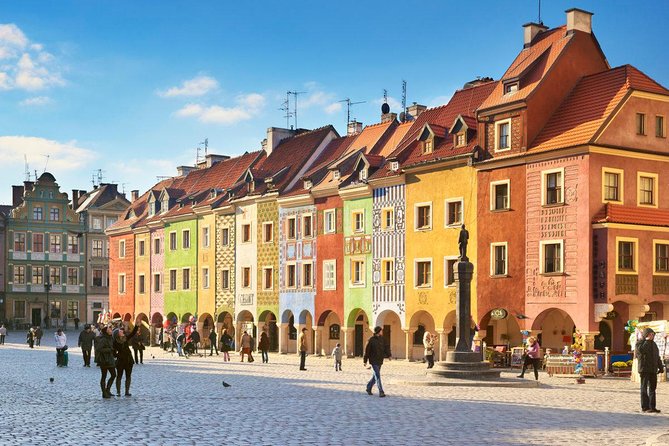
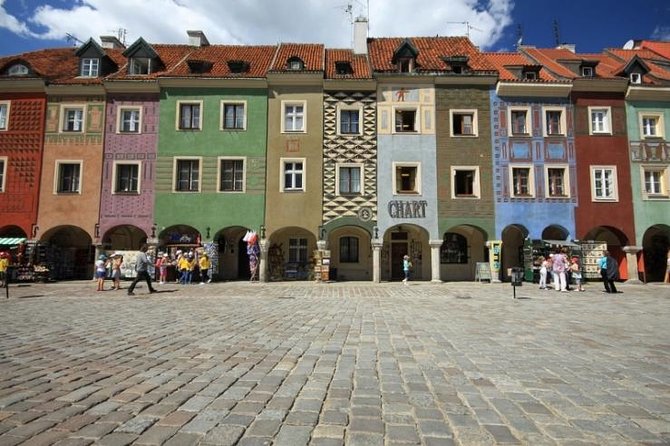
Your first stop is Old Market Square, a compact, high-impact introduction to Poznan. The tour time there is about 20 minutes, so you are not getting lost in a museum setting. Instead, you are getting an orientation. And in a place like this, orientation is half the value.
Old Market Square works like a living reference point. It is the kind of space where everyday life meets big events. Even without a lot of extra stops early on, the guide can help you connect what you see now with how the city organized itself in the past. It is also a good place for first questions, because it is early enough that you are still building your mental map.
A practical consideration: since this is the first stop, it is where you benefit most from being awake and paying attention. If you are tired, you can still see the sights, but you will miss the “why” that turns a quick square into a meaningful start.
Ratusz Poznanski: Watch the Noon Show, Then Understand It
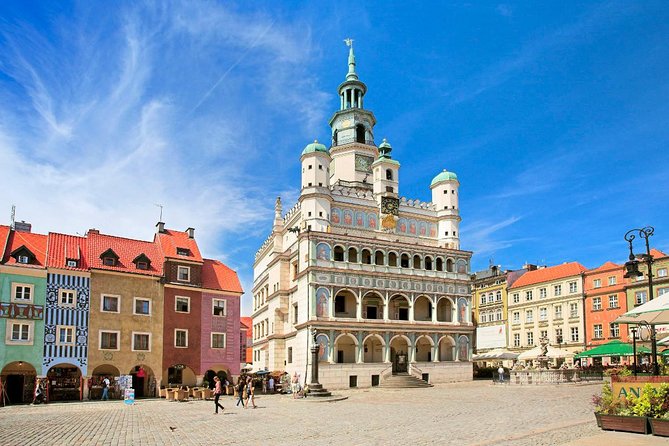
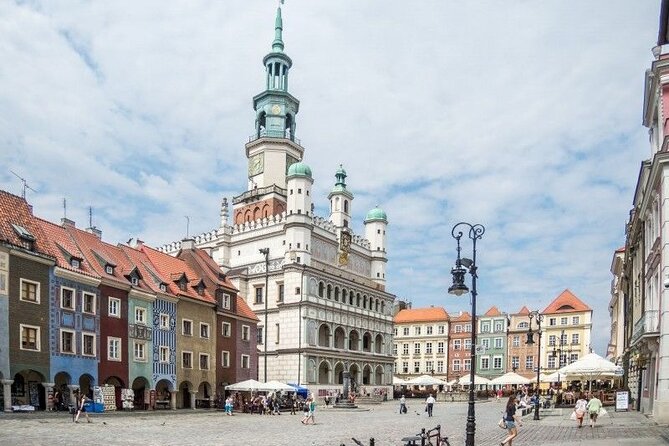
Next comes Ratusz Poznanski, with a focus on one of Poznan’s most fun traditions. The highlight is the mechanical goats that emerge from the Town Hall clock to strike noon.
This is the part of the tour that feels like a performance, but it is not just cute. The clock display gives you a way to experience the city’s public rhythm. You are standing in a civic space where a time signal becomes a ritual. It is also a great contrast point after Old Market Square, because it shifts you from general city life into a very specific symbol of the Town Hall.
The tour time here is about 20 minutes. That is enough time to arrive, settle your position, and watch the clock without needing to camp out all morning. Since the striking happens at noon, plan your expectations around that. If you want the goats moment to be the center of your memory, be ready to focus during the last few minutes before noon.
As with many historic town halls, it can get crowded depending on the day and local schedules. In a small group, you are less likely to end up stuck at the edge. Still, I recommend you choose a spot where you can both see and hear, because the whole point is the moment when the mechanism acts like a clock becomes theater.
Still in reach of Poznan, but a different sort of day:
- Undercover City Games: Poznan
★ 5.0 · 88 reviews - Poznań: Private or Public Highlights Tour with a local guide
★ 5.0 · 66 reviews - Poznan Old Town and Top Attractions Private Walking Tour
★ 4.8 · 24 reviews - Poznan Private City Walking Tour from Cathedral Island
★ 4.5 · 24 reviews
June 1956 Events Monument: The History Layer You Should Not Skip
One reason this tour feels more satisfying than a standard “walk and look” is that you do not stop at architecture. You also learn about Poznan’s history at sites connected to the June 1956 events, including the June 1956 Events Monument.
This is an important piece of context for anyone trying to understand why cities in central Europe have the monuments they do. The 1956 events are part of the story of life under political pressure and the ways people pushed back. A good guide can translate what the monument represents, and how it fits into the city’s timeline.
I like including moments like this because it helps you read the city like a book. Without it, you might see monuments and assume they are just decorative memorials. With it, you start to notice how public space records emotion, memory, and the politics of the era.
A small caution: this is still a walking tour, so you are not getting a lecture that lasts for hours. You will get enough to understand the significance, but if you want every historical detail, you might want to follow up afterward with a book or a quick self-guided read.
Cathedral of St. Peter and Paul: A Timeless Ending at Ostrów Tumski
The final stop is Poznan Cathedral of St. Peter and Paul, with about 30 minutes of time. The tour highlights describe it as one of Poland’s oldest churches, which is a big deal in terms of longevity and cultural weight.
Finishing here makes the whole tour feel purposeful. The walk transitions from civic identity to spiritual and older historic grounding. You get to end your morning in a place that likely gives you a different pace of attention. Cathedrals often reward slower looking, especially when you understand that you are seeing a continuum of worship and meaning, not just a one-time photo spot.
This stop is also where the tour can pay off the most if you are the type of traveler who likes atmosphere and texture. Even if you are not deep into architecture, the guide can help you notice what matters, like why this church is remembered as one of the oldest, and how it connects to the city’s longer story.
Another practical note: since this is where the tour ends, you can use it as a launchpad. If you want to keep exploring afterward, you are already at the main cathedral area, so you do not need to reposition.
What Makes the Guides Shine, and Why You Feel It
The repeated praise for guides like Mateus, Karolina, and Ola points to the same quality: a guide who can answer questions and explain without rushing. That is a big difference between a “script tour” and a real walking conversation.
From what I learned, the best guides do two things:
- They give context as you walk, not after the fact.
- They connect history to everyday life, so the city feels lived in.
Ola was mentioned as someone who talked about Poznan history reaching from before the 10th century through the Soviet era in the late 20th century. That kind of sweep is exactly what turns a few stops into a coherent storyline. Even in a short walk, it gives you a timeline you can keep using during the rest of your day.
I also love when a guide gives practical recommendations. One of the notes I saw included a restaurant suggestion, which is a quiet but real value add. You finish a tour with a next step, not an empty calendar slot.
Small Group Size, Personal Attention, and the Pace You Want
This tour is built for small groups, with up to 10 people per group listed. That matters more than you might think. In bigger groups, you often spend time waiting or trying to hear around shoulders. In a small group, you can keep a more natural pace, and the guide can actually adjust based on your interests.
It also makes questions easier. If you wonder why something is positioned where it is, or what a monument represents, you are more likely to get a direct answer. That is a core reason private walking tours can feel worth it even when you could read a brochure on your own.
One practical consideration to keep in mind: because the tour is private, your experience can depend on who is available on the day and how the schedule fits. The language flexibility is possible, but only on special request and subject to availability.
Price and Value: $306.19 Per Group for a Focused Morning
The price listed is $306.19 per group, for up to 10 people, with an approximate duration of 3 hours. That pricing structure is the key to understanding value.
If you are traveling as a couple or a small group, the cost can feel very reasonable because you split the group rate. If you are traveling solo, the per-person value can drop, because you are still paying for the group allocation. The good news is that the tour is designed to be worthwhile for a single booking, but your sense of value will depend on whether you are comparing it to other solo-friendly options.
Also, the stops you visit have free admission listed for each segment. That matters because it means your money is paying for the guided time and the thinking behind the route, not fees layered on top.
So here is the real math I recommend you do before booking:
- If you will use a guide’s storytelling to plan your next moves in the city, the rate makes sense.
- If you just want photos with minimal explanation, you might find a self-guided route cheaper.
The bottom line: this is priced like a service, not like an attraction. It is best when you want the “why,” not only the “what.”
Who This Tour Suits Best (and Who Should Think Twice)
This tour is ideal if you:
- Want a first-time grasp of Poznan’s center without walking in circles.
- Like history that connects politics, public monuments, and daily life.
- Enjoy moments like the mechanical goats at noon, but you also care about what they represent.
- Prefer a guide who can answer questions clearly in English.
It is less ideal if you:
- Are on a tight schedule and cannot fit the morning window.
- Prefer a fully self-paced visit where you can linger for long stretches without a set flow.
- Expect a deep architectural or museum-style explanation for every minute. This is a walking tour with clear time blocks, so it stays focused.
If you like a guided approach but still want autonomy, this hits a nice middle ground. You finish the walk with a stronger map in your head and a better sense of what to chase next on your own.
Quick Planning Tips Before You Go
A few small things can help you get more from the 3 hours:
- Aim to be ready for the noon moment at the Town Hall clock, because that is a centerpiece.
- Bring a charged phone for the mobile ticket and quick photos.
- Wear comfortable walking shoes, since the tour is a city walk with several stops.
- If you care about a specific angle of history, note it before you start, so your guide can steer examples to your interest.
Should You Book This Private Walking Tour in Poznan?
I think you should book it if you want Poznan to click fast. The best versions of this experience are guided, question-friendly, and packed with meaning that you can carry into the rest of your day.
Book it especially if you are excited by the Town Hall clock goats at noon, but you also want the serious layer, like the June 1956 Events Monument and the cathedral ending at Ostrów Tumski. This is a strong combination of fun and context.
If you are traveling solo and price is your biggest concern, weigh that against the value of having someone connect the dots for you. For couples and small groups, it usually feels like an efficient, money-smart way to see the city’s historic heart with real explanation.
FAQ
How long is the Poznan private walking city tour?
The tour lasts about 3 hours.
What is the price?
The price is $306.19 per group.
How many people are in a group?
The tour is up to 10 people per group, with a maximum of 15 people per booking.
What language is the tour offered in?
The tour is offered in English.
Are other languages possible besides English?
Yes, other languages are possible on special request in advance and upon availability.
What is the start and end location?
It starts at Adam Mickiewicz Square, Święty Marcin, 61-809 Poznań, Poland, and ends at Poznań Cathedral, Ostrów Tumski 17, 61-001 Poznań.
Is admission required for the stops?
Admission is listed as free for each stop included.
Is there a mobile ticket?
Yes, the tour includes a mobile ticket.
What are the operating hours?
The listed opening hours are 9:00 AM to 12:00 PM, Monday through Sunday, for the date range 02/21/2024 to 12/07/2026.
What is the cancellation policy?
Free cancellation is available if you cancel at least 24 hours in advance for a full refund. If you cancel less than 24 hours before the start time, the amount paid is not refunded.
Fresh listings from Poznan
- 2 Hour Poznan Highlights Tour★ 5.0 · 12 reviews
- The Best of Poznan 4 Hour Guided Private Walking Tour★ 5.0 · 7 reviews
- The Birthplace of Poland: A Self-Guided Audio Tour of Poznań★ 4.5 · 13 reviews
- Poznan private tailor made tour with a local guide-driver★ 5.0 · 6 reviews
- Highlights of Poznań Private 2 Hour Tour with a local Guide★ 5.0 · 6 reviews
- Private 3-hour Poznan Old Town Tour★ 5.0 · 5 reviews
- Old Town Poznan Walking Tour★ 4.0 · 16 reviews
- Palace, Castle and Ancient Oaks – Rogalin and Kórnik guided tour from Poznan★ 5.0 · 4 reviews
City Tours, compared.

City Sightseeing Tour Eco Electric Buggy Golf Cart
Read our review →
Gdańsk City Sights & History Guided Walking Tour in English
Read our review →
Extended City Sightseeing Tour – Eco Buggy Golf Cart
Read our review →
Shared or Private City Tour Sightseeing by Golf Cart
Read our review →Browse the lists this tour appears in