
Review · OLD TOWN TOURS
Gdansk 1 Hour Guided Tour through the Heart of the Old Town
Gates, churches, and cranes in one cozy hour. This private guided loop through Gdansk Old Town keeps things relaxed, with short, story-filled stops along the Royal Route, Motława river, and toward the shipyard area. It is a smart way to get your bearings fast without wearing blisters into your vacation.
I especially like the comfort factor, the quiet Melex ride that makes the whole outing feel easy, even when you are hopping between big landmarks. I also like how the tour mixes big-name sights with smaller, specific details, so you come away with more than just photos. Guides like Christian and Przemek are mentioned for being friendly, expressive, and genuinely interesting to listen to.
One consideration: the route covers a lot of ground, so most places are stops for orientation and highlights, not long museum time. If you want deep entry tickets and long gallery hours, plan to add that on your own after the tour.
In This Review
- Key highlights you will feel right away
- How the 1-hour Old Town loop actually works
- From Shakespeare roots to Highland Gate: the fortifications start fast
- Golden Gate, Grainy details, and a quick dose of modern art
- The Great Armoury and royal monuments: power in stone
- Crane views and riverfront structure at Zuraw and Długie Pobrzeże
- When the tour turns to WWII and shipyard memory
- Churches, included entry at St. Bridget’s, and the Bread Bridge story
- Science and sea symbolism to end at Neptune and the Royal Route core
- Price and value, plus who this Melex tour is for
- Should you book this Gdansk Old Town guided tour?
- FAQ
- How long is the Gdansk 1 hour guided tour?
- Is this tour private?
- What language is the guide?
- Where is the meeting point?
- What is included in the price?
- Are tickets included for the other stops?
- Is coffee, soda, or meals included?
- Can I cancel for a full refund?
- Are there any timing limits for when the tour runs?
Key highlights you will feel right away

- A warm, quiet Melex ride that avoids long, punishing walking in winter or between major sights
- A tight Old Town loop that hits the Royal Route, fortification gates, and riverside landmarks
- Standout storytelling stops at places like the Golden Gate and the medieval prison areas
- Church included on the schedule with an entrance to St. Bridget’s Church
- WWII and shipyard remembrance nearby so the history is not only medieval
- Flexible, group-friendly pacing that feels organized, not rushed
How the 1-hour Old Town loop actually works
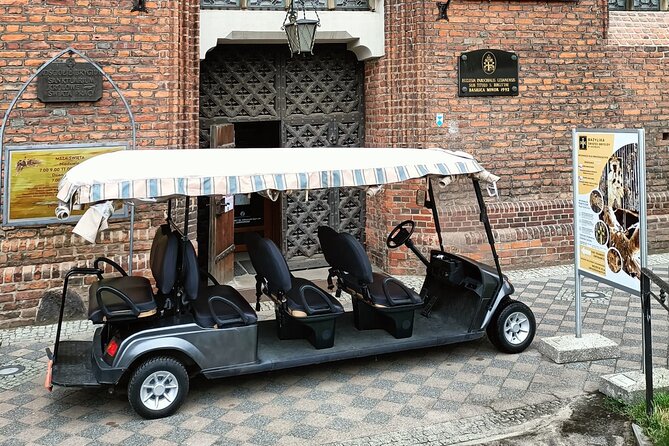
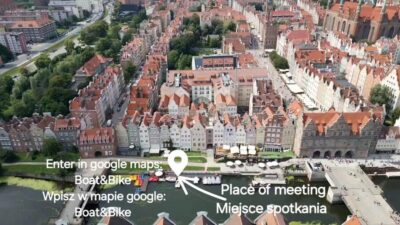
You start at Długi Targ 1, 80-828 Gdańsk, and the tour ends back at the same meeting point. The timing is typically 1 hour to 1 hour 15 minutes, which is ideal when you want a concentrated overview but still want free time afterward.
This is offered in English, and it is private, meaning only your group goes along. You also get a mobile ticket, so you can show up without digging for paper.
The big practical win is that you see a wide spread of Old Town sights without doing a full-day march. Even when a stop is “only” a couple of minutes, the guide usually gives you the why behind what you are looking at, so you are not just counting buildings.
More Old Town Tours in Gdansk
- Gdańsk: Sightseeing EcoCruise around the Old Town of Gdansk
★ 4.6 · 719 reviews - Gdańsk: Old Town Private Walking Tour with Legends and Facts
★ 4.9 · 245 reviews - Gdansk Old Town 2-Hour Walking Tour
★ 4.5 · 94 reviews
From Shakespeare roots to Highland Gate: the fortifications start fast
The first stop is the Gdansk Shakespeare Theatre, tied to the site of an older 17th-century theatre that English travelling players used in the Renaissance era. You get the idea that Gdansk was never just a backwater port town, it connected to wider European culture. The newer theatre opened in September 2014, built by architect Renato Rizzi, and it also references research that linked the earlier fencing-school stage design to London’s Fortune Playhouse.
Next you move to Brama Wyżynna, the Highland Gate, once the main entrance with a defensive job. It was built in 1574 to 1576 from designs by Jan Kramer. The guide’s angle here matters: you are not only seeing a gate, you are seeing a political stage, where kings were welcomed and city keys handed over.
Then comes the darker medieval layer: the Prison Tower and the torture-chamber complex on Długa Street. The Torture Chamber and Prison Tower were part of a gatehouse system, built in the second half of the 14th century. Later on, in the 16th century, it shifted roles into court, prison, and places of execution, and it was rebuilt between 1593 and 1604 with rich sculptural decoration.
Practical tip: this part is intense. Even if you do not love grim topics, it is worth it, because it explains why Gdansk’s Old Town looks the way it does. Fortifications and street gates were not background decor, they were the city’s security and justice systems.
Golden Gate, Grainy details, and a quick dose of modern art
After the medieval stops, you hit the Langgasser Tor, also called the Golden Gate. It is a Renaissance city gate created between 1612 and 1614, replacing an earlier Gothic gate. It sits on the Royal Route, right where visitors naturally want their “main street” photos, so this is a good moment to orient yourself.
Then you get a small breather with the Millennium Tree, a contemporary monument made of polished stainless steel. It commemorates the 1000th anniversary of Gdansk, and it includes branch-and-leaf elements plus tiny animal details. It is a quick reminder that the Old Town is not frozen in time, it keeps adding new layers.
Next the tour points you toward the Wybrzeże Theatre area and the older trade-square story tied to Coal Market Square. Even though you might just pause briefly, the guide usually connects the square’s trading roots to the way the Royal Road developed. Then you move to the Baszta Slomiana (Strohturm), an octagonal brick tower from the second half of the 14th century, likely named for the thatched-roof idea that came before the present tile look.
If you like architecture, this middle stretch gives you variety. You see defensive towers, a grand gate, and then a practical trade-world backdrop that helps the bigger monuments make sense.
The Great Armoury and royal monuments: power in stone

One of the more visually impressive secular buildings is the Great Armoury (Wielka Zbrojownia), also known as the arsenal. It is described as the city’s most impressive secular Mannerist building, inspired by the Meat Market in Haarlem. The timing matters here: rising threat from Sweden pushed Gdansk to prepare for war, and the town built a purpose-built armory between 1602 and 1605.
From there you move to the Jan III Sobieski Monument, unveiled on November 20, 1898. It shows the king in national dress, jumping over a destroyed Turkish cannon on a battle steed while holding a mace. Even if you do not think about monuments often, this one helps you track how different historical eras got celebrated in the public space.
Then you get a church stop that is specifically baroque Catholic context in the Main Town: St. Mary’s Church, focused on the baroque royal chapel built between 1678 and 1681. It was a Catholic chapel initiative at a time when St. Mary’s Church was in Protestant hands. For many people, this is the first time the guide clearly explains how religious control shaped Gdansk’s religious buildings and community life.
If you are visiting on a day with cloudy light, pay attention here. The baroque forms and the surrounding Old Town textures read better when you slow down for ten seconds and actually look.
More Old Town walks in Gdansk:
- Sunset on the Shipyard and Old Town Evening Cruise
★ 4.5 · 86 reviews - Asian Dinner Above the Rooftops of Gdańsk Old Town
★ 4.5 · 72 reviews - Electric Scooter Tour: Old Town Gdańsk – 1,5-Hour of Magic!
★ 4.8 · 71 reviews - Gdańsk Old Town Private Walking Tour with Legends and Facts
★ 5.0 · 65 reviews
Crane views and riverfront structure at Zuraw and Długie Pobrzeże
Now you shift back toward the waterfront with Zuraw miniatura, the crane area. The crane system originally used two brick towers and a wooden hoisting mechanism for tasks like erecting masts and reloading goods, and it also functioned as a city gate. After war damage in 1945, the wooden structure burned, but the crane was rebuilt and handed over to the Central Maritime Museum. A useful detail: tourists can enter the lifting mechanism since 2003, and the admission is listed as free.
Next you pass the Motława River embankment, known for the long promenade feel of Długie Pobrzeże. The promenade sits along water gates with classic Gdansk architecture. The tour framing helps you understand why this matters: for centuries the unloading and loading platforms were a patchwork, then in the 17th century they were connected into a single pier. That is the kind of practical city logic you do not get from a quick postcard sweep.
If you like photos, take them here. The crane and riverfront give you the “port city” vibe that makes Gdansk feel different from many Baltic towns.
When the tour turns to WWII and shipyard memory
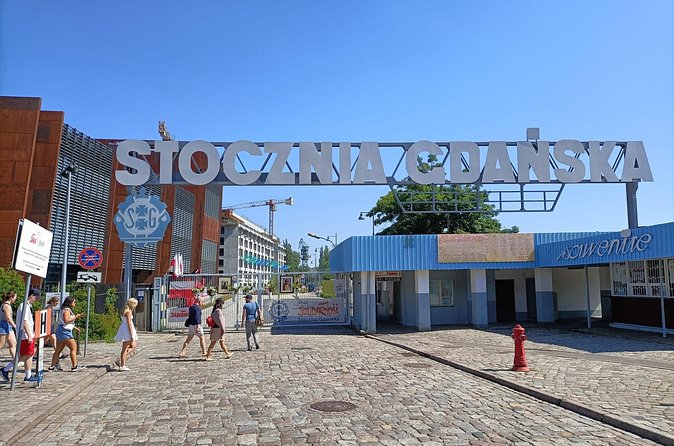
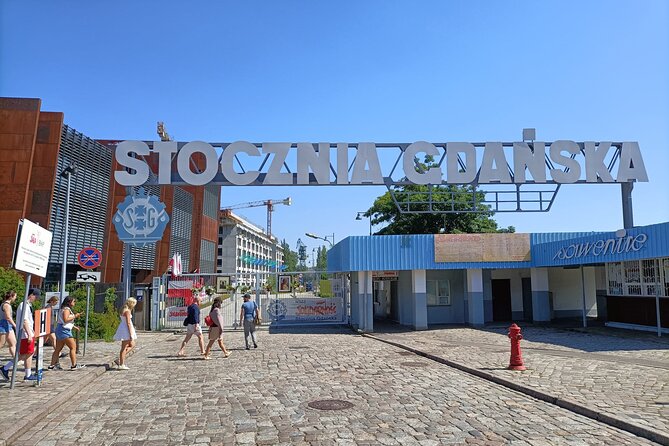
As the route continues, you head toward the Gdansk Shipyard area, specifically Gate No. 2. This is not a casual stop. On December 16, 1970, workers leaving the shipyard were fired upon by army troops, and there were fatalities and injuries. Before a dedicated monument existed, the gate was the first place of remembrance for the victims.
You then come to the Museum of the Polish Post Office in Gdansk, and this one is also listed with free admission. It connects to the Treaty of Versailles era and the idea of the Polish post office buildings as extraterritorial Polish property. The tour explains the role of the Polish post office in the Free City of Danzig, including that the building known as Gdańsk 1 became the primary Polish post office in 1930, with a direct telephone line to Poland.
After that, you might pause at Bunkier, a Luftschutz Hochbunker air-raid shelter built between 1942 and 1943. It is a six-storey structure with reinforced concrete and thick walls. The details are intense for a short tour stop, but they help you understand what the city’s wartime survival looked like in physical form.
This whole segment is the main “balance breaker” for some visitors. It brings the tour out of the pretty-Old Town mood and into twentieth-century reality. If you can handle that, it makes the trip feel complete rather than surface-level.
Churches, included entry at St. Bridget’s, and the Bread Bridge story
You come to St. Catherine’s Church, originally begun in 1227 and expanded later. Its tower was erected in 1450 but completed in 1634, then crowned with a Baroque cupola. A standout date: 1738, when the interior was equipped with a carillon. The tour also notes the Protestant occupation beginning in 1555, ending in 1945, when the building returned to the Carmelite order.
Then comes the scheduled highlight with included entrance: St. Bridget’s Church (Kosciol sw. Brygidy). Construction began in 1227 for an earlier chapel setting, and the monastery church construction followed after 1394, when the Order of St. Bridget arrived in Gdansk. The first single-nave temple was completed in 1396 to 1397, then expanded until the 16th century. It was repeatedly rebuilt and renovated after fires and war damage. The tour also connects it to the symbolism of Solidarity in August 1980, where it became one of the symbols.
If you have limited time, this is a smart inclusion. You are not paying extra just to enter one meaningful church on the route.
From there you move to the House of Three Preachers area near St. Catherine’s, a Mannerist tenement house that served pastors of St. Catherine’s and later became part of a church secondary school. It suffered heavy World War II damage but retained its façade, then was reconstructed completed in 1970. Since 2008 it has been owned by the Carmelite Order.
Finally, you reach Most Chlebowy, the Bread Bridge. It was built between 1338 and 1356 over the Radunia Canal and connects Kowalska and Korzenna Streets. The name comes from the bread stalls sold from bread benches starting in the 14th century. After multiple rebuilds, including early 20th-century tram additions, it received a thorough renovation in 2002 to 2003, restoring its historical look. This is one of those stops where the guide’s storytelling makes a small bridge feel like a community hub.
Science and sea symbolism to end at Neptune and the Royal Route core
To wrap up the vibe, you get the Hevelius Monument in the square on Korzenna Street opposite the Old Town Hall. It commemorates Johannes Hevelius, astronomer, mathematician, inventor, and brewer, author of the first atlas of the Moon and discoverer of comets and constellations. The monument is tied to the site where he ran his astronomical observatory in the 17th century, and it was unveiled on January 28, 2006.
Then you finish at Neptune’s Fountain (Fontanna Neptuna), one of Gdansk’s most recognizable symbols. Work began in the early 17th century, and Neptune’s bronze sculpture was cast by Piotr Husena in 1612. The fountain went into operation in 1633 after delays, and the tour frames it as a city pride link to the sea.
This finale gives you the perfect last ingredient: a visual landmark that makes it easy to keep walking on your own afterward. You have a strong “I have been here” feeling when you end with Neptune.
Price and value, plus who this Melex tour is for
At $40.14 per person for about 1 hour to 1 hour 15 minutes, the value comes from two things. First, you are getting a private English guide and a structured route through major Old Town stops, not just a self-guided wander. Second, the ride is described as cozy and comfortable, which matters in a place where cobblestones and distances can drain you fast.
Also, St. Bridget’s Church entry is included, which nudges the cost in your favor if you were already planning to see it. Food and drinks are not included, so do not count on the tour for a café break.
Who should book? This tour is a great fit if you want:
- A fast orientation of Gdansk Old Town and the Royal Route
- Comfort, especially if you do not want long walking sessions
- A mix of architecture and historical storytelling, including shipyard and wartime context
- A fun, family-friendly outing style, where the guide can keep it light while still informative
If you should skip or add extra time: if you want deep museum study, you will likely need separate time at bigger ticket sites like the Museum of the Second World War. This tour helps you pick the right places to go next, but it is not a full museum day.
Should you book this Gdansk Old Town guided tour?
I think it is worth booking if you want to see the city’s big story beats in a single, manageable outing. The combination of a quiet Melex ride, a private small-group feel, and strong guide storytelling makes it a low-stress way to get oriented, then choose what to explore further on your own.
Book it if you appreciate practical history, gates, and churches, and you like having a route that keeps you moving without feeling rushed. Pass on it or pair it with longer time blocks if your ideal day is mostly museum hours and you hate being on a schedule.
If you are standing at the start point asking what to do first, this tour is a confident answer. It gives you the map in your head, plus the details that turn a walk into understanding.
FAQ
How long is the Gdansk 1 hour guided tour?
It runs about 1 hour to 1 hour 15 minutes.
Is this tour private?
Yes. It is a private tour/activity, so only your group participates.
What language is the guide?
The tour is offered in English.
Where is the meeting point?
The meeting point is Długi Targ 1, 80-828 Gdańsk, Poland. The tour ends back at the meeting point.
What is included in the price?
The tour includes entrance to St. Bridget’s Church.
Are tickets included for the other stops?
For most stops, admission tickets are not included. Some places are listed as free, including Zuraw miniatura and the Museum of the Polish Post Office.
Is coffee, soda, or meals included?
No. Coffee or tea, soda, and meals are not included.
Can I cancel for a full refund?
Yes. Free cancellation is available if you cancel at least 24 hours before the experience start time.
Are there any timing limits for when the tour runs?
The provided operating window is Monday to Sunday from 9:00 AM to 5:00 PM, with the listed date range shown for 10/29/2025 to 03/13/2027.
Fresh listings from Gdansk
- Wolf’s Lair and St. Lipka Private Tour from Gdansk★ 4.5 · 5 reviews
- Private WW2 Tour of Westerplatte,Gdansk and Stutthof Including Lunch★ 5.0 · 12 reviews
- 6 Hours Teutonic Castle Tour in Malbork★ 3.5 · 3 reviews
- Westerplatte – 2h private trip by luxury car|★ 5.0 · 4 reviews
- Undercover City Games: Gdynia★ 5.0 · 34 reviews
- Westerplatte private tour led by Expert-Guide (door to door)★ 5.0 · 5 reviews
- Aiport Gdansk Transfer to Malbork Castle or Stutthof★ 5.0 · 3 reviews
- Torun – City of Copernicus Private Tour★ 4.5 · 5 reviews
Old Town Tours, compared.



Bike Tour of Old Town, Jewish Quarter and the Ghetto
Read our review →

Sightseeing EcoCruise around the Old Town of Gdansk
Read our review →
Browse the lists this tour appears in