
Review · JEWISH HERITAGE TOURS
Jewish Krakow in German
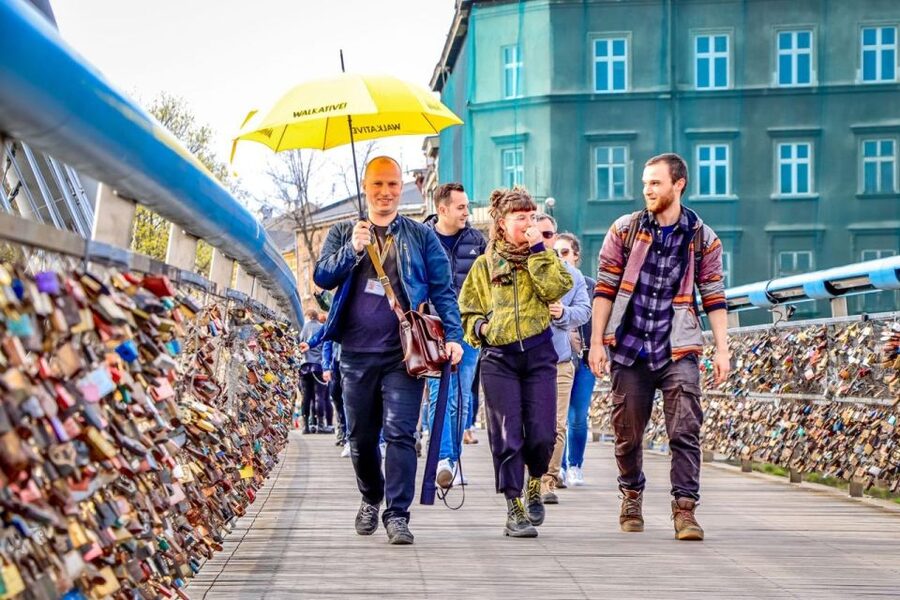
Krakow’s Jewish story is written into the streets. This German walking tour weaves that story across Kazimierz and Podgórze, with an expert local guide explaining what you are seeing, not just pointing at it. You get a structured narrative that moves from earlier community life, through World War II destruction, and into the Jewish revival you can still feel in today’s Krakow.
I especially like two things here. First, the tour stays focused on real places where history happened, including the areas connected to the Holocaust in Krakow. Second, the guiding is reported as excellent in German, with facts that land clearly and with a guide who can keep the group engaged, not stuck in lecture mode.
One consideration: this is emotionally heavy material, and the time is tight at 150 minutes. If you tend to want slow, contemplative stops, you may wish for a bit more time at certain points on the route.
In This Review
- Key highlights to look for
- Jewish Krakow in German: what this 150-minute walk really gives you
- Meeting on the stairs outside the old synagogue
- Kazimierz and the surviving synagogues: why these buildings hit harder
- A practical note for your pace
- Krakow’s Jewish community before the war: the context your photos usually miss
- Holocaust places in Krakow: learning from locations, not slogans
- Podgórze and the ghetto landscape (1941 to 1943)
- The revival in today’s Krakow: what stays after catastrophe
- Guide quality in practice: why people mention the German fluency
- Price and value: $26 for 150 minutes, plus a pay-what-you-want element
- What to expect on the ground: timing, walking, and emotional weight
- Who should book this German Jewish Krakow tour
- Should you book Jewish Krakow in German?
- FAQ
- Is the tour guided in German?
- How long is the Jewish Krakow tour?
- Where is the meeting point?
- Do I need to arrive early?
- What is included in the price?
- What is not included?
- Can I reserve and pay later?
- Is there free cancellation?
Key highlights to look for
- German-led clarity that helps you connect names, places, and meaning
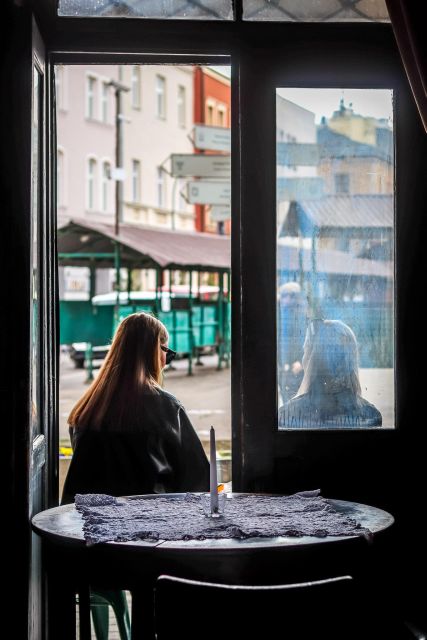
- Kazimierz focus on the old Jewish quarter and surviving synagogue architecture
- Holocaust locations in Krakow explained in context so the street-level view makes sense
- Podgórze 1941 to 1943 with the ghetto landscape explained on foot
- Modern revival today showing how Jewish culture continues in small, real ways
Jewish Krakow in German: what this 150-minute walk really gives you
This isn’t a “see everything” tour. It’s a story-walk. And that difference matters.
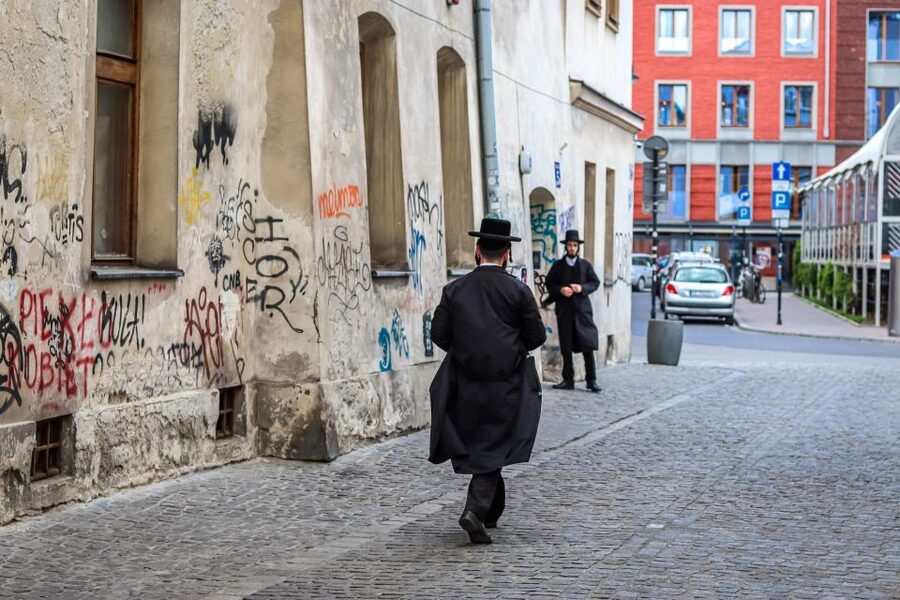
Krakow once hosted one of the largest Jewish communities in the world. The center of that community’s flowering culture was the historic Jewish quarter, especially Kazimierz. On this walk, you go beyond the postcard version of Kazimierz and look at what the buildings mean, why they survived when so much was destroyed, and how that survival connects to what came next.
The tour then moves toward Podgórze, the area tied to the wartime Jewish ghetto from 1941 to 1943. You’ll also learn about death and destruction during World War II. The goal is not shock for shock’s sake. It’s understanding, grounded in the actual street plan and location.
More Jewish Heritage Tours in Krakow
- Krakow: Schindler’s Factory & Ghetto Guided Tour
★ 4.7 · 1,694 reviews - Krakow: Jewish Quarter and Former Ghetto Tour
★ 4.9 · 1,441 reviews - Krakow: Bike Tour of Old Town, Jewish Quarter and the Ghetto
★ 4.9 · 1,155 reviews
Meeting on the stairs outside the old synagogue
You meet on the stairs in front of the old synagogue, in the main street of the Jewish district. The exact feel of that start matters because Kazimierz is a maze of small streets and corners. Starting at a clear landmark helps you orient fast.
Arrive about 10 minutes early. You’ll want a minute to find the right steps, settle your timing, and get ready to start moving. This is the kind of tour where if you show up late, you miss the first thread of the story. And with history like this, missing the beginning can make everything else feel more confusing than it needs to be.
Kazimierz and the surviving synagogues: why these buildings hit harder
One of the most striking promises of this experience is that you explore the historical Jewish quarter where seven old synagogues survived World War II destruction and the Holocaust. That detail is not trivia. It’s a message in stone and space.
When you stand near older synagogues, you aren’t just seeing architecture. You are seeing evidence that Jewish life was present, organized, and built to last. Even after the catastrophic break of the war years, those structures stayed. Your guide helps you understand why that matters: survival is not only a physical fact, it’s also a cultural one.
What I like about this approach is that it gives you a reason to look closely. You learn how to connect exterior details and locations to the deeper story of the community that used these spaces. Without that, synagogue exteriors can blur together. With it, you start to notice the differences and understand their significance.
A practical note for your pace
Because the tour is 150 minutes, you won’t have endless time parked at every doorway. If you want to spend extra moments staring at details, keep your expectations flexible. Think of this walk as your first, guided “map of meaning,” then use the rest of your day to return to the places that stayed with you.
More Jewish heritage walks in Krakow:
- Krakow: Kazimierz Jewish Quarter Walking Tour
★ 4.8 · 571 reviews - Krakow: Kazimierz, Schindler’s Factory & Ghetto Guided Tour
★ 4.8 · 460 reviews - Full Bike Tour – the Old Town, Jewish Qtr & the Ghetto NEW BIKES
★ 5.0 · 437 reviews - Krakow: Jewish Ghetto Walking Tour
★ 4.6 · 349 reviews
Krakow’s Jewish community before the war: the context your photos usually miss
Krakow’s Jewish quarter was not a side chapter. It was a center of culture and daily life. This tour includes historical context about the local Jewish community, and that part is crucial for understanding what you are looking at.
Before you reach the darkest sections of the story, you get the bigger picture: how the community contributed to the city, what the neighborhood represented, and why the Jewish quarter became such a key hub. That context changes your experience instantly. Instead of seeing Kazimierz as a museum district, you experience it as a place that once had rhythm, institutions, and identity.
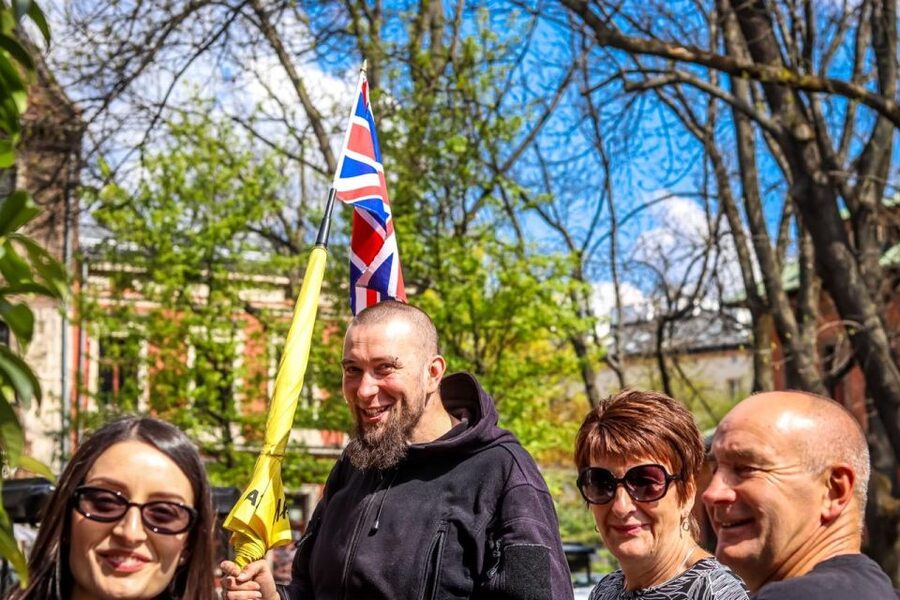
This is also where a good guide earns their pay. A German-speaking guide can connect names and terms smoothly, and the group can follow without constantly guessing what a word means. A strong performance here is reflected in the feedback you have for this tour: people emphasize that the guide’s German is excellent and the narration is well grounded.
Holocaust places in Krakow: learning from locations, not slogans
The tour explicitly includes places where the Holocaust took place in Krakow. That line matters, because it signals that you are walking through the city with a purpose: to connect the past to the street-level reality.
You will talk about death and destruction of World War II, and the guide works to explain meaning tied to each stop. I find this approach more effective than reading a list of events. Locations stick. They also teach you what kind of world this was. A building, a street, a neighborhood boundary, even the direction you face, can help you understand how people lived and then how that life was broken.
The key is the structure of the story. Because the tour is carefully structured, you are not dumped into heavy history without explanation, then left alone with it. You move step by step: context first, then the wartime reality, then the afterlife of memory and culture.
Podgórze and the ghetto landscape (1941 to 1943)
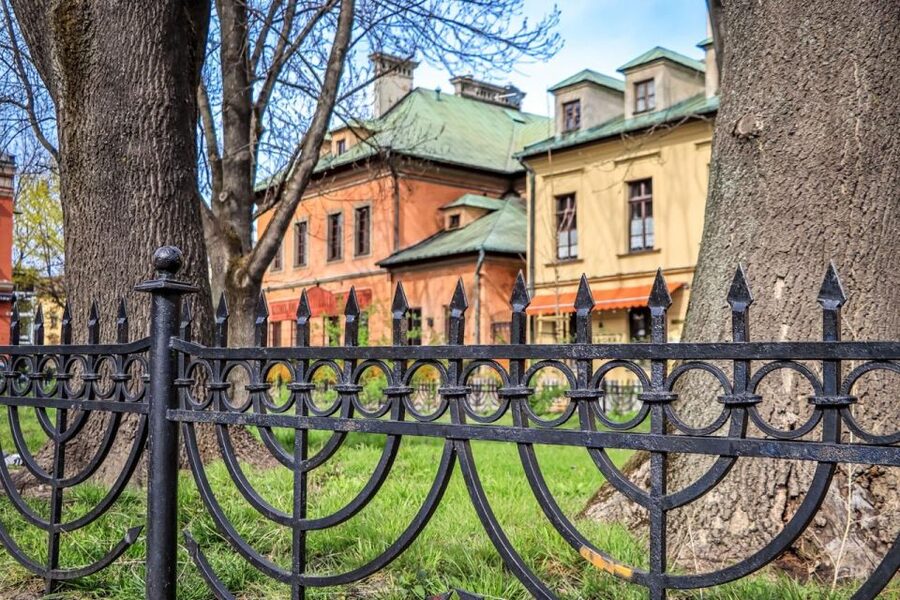
After Kazimierz, you shift to Podgórze, tied to the former Jewish ghetto. The years 1941 to 1943 are specifically part of the tour framing, so you know the time window you are studying as you walk.
What you gain here is a sense of how the neighborhood itself functioned as part of the system. Even when you do not see every original detail, the route helps you understand how space can be used to restrict, isolate, and control. Your guide connects the wartime story to what is still observable today, so you can interpret the current streetscape with more care.
This is also where you should expect the tour to feel heavier. The goal is understanding, not rushing past emotion. If you need a moment, take it when your guide pauses. Do not be afraid to step back, breathe, and then rejoin. The tour is a walk with meaning, and that is exactly when you should take your time internally.
The revival in today’s Krakow: what stays after catastrophe
One of the most important parts of the tour is the recovery story. You learn about the amazing revival of Jewish culture in today’s Krakow, and you see how Kazimierz functions as a cultural heart of the modern city.
The tour also points out that Kazimierz houses a small but lively Jewish community today. That detail matters. It keeps the story human and current. You are not only studying loss. You are seeing continuation.
I like that this prevents the tour from turning into a one-note history lesson. You end with a clearer sense of what survives and why. You also leave with a mental checklist of places you might want to revisit later on your own, now that you have context.
Guide quality in practice: why people mention the German fluency
The feedback pattern for this tour is strong on guiding quality. People highlight that the guide speaks excellent German, explains with solid knowledge, and keeps the group engaged through variation in both places and storytelling.
One guide name that comes up is Max. The description of his style is specific: he leads the group to different places and shines with a lot of factual knowledge. That matters because this is the kind of tour where facts are not the point by themselves. Facts are how the meaning becomes clear.
Another repeated theme is interaction. A tour like this works best when the guide can read the room, answer questions, and keep momentum. If you like tours that feel like conversation with structure, this is a good fit.
Price and value: $26 for 150 minutes, plus a pay-what-you-want element
At $26 per person for 150 minutes, the price is in the range of what you would expect for a serious guided walking tour in a major European city. But value here is not just the time on the clock.
You are paying for three things that are hard to DIY:
- An expert local guide who can translate place into meaning
- A carefully structured story, so the route has logic
- German-language delivery, so you are not piecing together context yourself
There is also an additional twist: booking this tour puts you in a general pay as you wish model. The amount you pay covers the reservation fee and the guide’s payment. In practice, that means you can reward the guide based on how you felt about the experience, without needing complicated planning.
If you’re comparing tours by cost only, you can miss the point. With history tours, the guide is often the difference between “I saw buildings” and “I understood what I saw.”
What to expect on the ground: timing, walking, and emotional weight
This tour is 150 minutes, guided in German, and it meets at a clear landmark in the Jewish district. You should expect walking between Kazimierz and Podgórze-style areas, and you should also expect the pace to be guided, not leisurely.
Emotionally, it is not light. The story includes death, destruction, and Holocaust-related locations. That’s not optional context. The tour is built around those elements, plus the revival that comes after.
My practical advice: wear comfortable shoes. Bring a small water bottle if you personally need it, since snacks are not included. And mentally plan for a slow follow-up after the tour. If you schedule a long, upbeat activity immediately afterward, you might feel a bit out of sync.
Who should book this German Jewish Krakow tour
You’ll probably love this tour if:
- You want a guided route through Kazimierz and the Podgórze ghetto area with clear storytelling
- You prefer history explained through places you can stand on
- You want German narration and smooth understanding of key terms
- You like tours that feel structured, not random stops
It may be less ideal if:
- You want to avoid heavy World War II and Holocaust content
- You need lots of free time sitting and pondering at every stop
- You prefer self-guided wandering without an interpretive narrative
Should you book Jewish Krakow in German?
If your goal is to understand what you are seeing in Krakow’s Jewish districts, I think you should book it. The strongest reason is the combination of German-speaking expert guiding and a story that links pre-war community life, World War II destruction, Holocaust-related locations, and then modern revival.
If you only have a short window, this 150-minute format gives you a high-impact overview. You will likely leave with places you can revisit with more meaning, not just more photos.
Go for it if you want clarity and structure. Skip it only if you know you cannot handle emotionally heavy history right now or you need a slow, unscripted pace.
FAQ
Is the tour guided in German?
Yes. The live tour guide speaks German.
How long is the Jewish Krakow tour?
It lasts 150 minutes.
Where is the meeting point?
You meet on the stairs in front of the old synagogue, in the main street of the Jewish district.
Do I need to arrive early?
Yes. Please arrive at the meeting point 10 minutes before the activity starts.
What is included in the price?
Included are an expert, local travel guide and a carefully structured story.
What is not included?
Hotel pickup and return transport are not included, and snacks are not included.
Can I reserve and pay later?
Yes. You can reserve now and pay later.
Is there free cancellation?
Yes. You can cancel up to 24 hours in advance for a full refund.
Fresh listings from Krakow
- Zakopane & Gubalowka Funicular – Private Winter Tour from Krakow★ 5.0 · 10 reviews
- ZALIPIE – painted village, unique PRIVATE tour from Krakow★ 5.0 · 20 reviews
- stag dog chase Krakow prank★ 5.0 · 4 reviews
- Sleigh Ride & Bonfire in Zakopane with Funicular – Private Trip★ 5.0 · 48 reviews
- ZALIPIE – painted village, unique small group tour from Krakow★ 5.0 · 7 reviews
- Full-Day Zalipie Painted Village Guided Tour★ 4.0 · 3 reviews
- Zakopane PRIVATE TOUR from Krakow★ 5.0 · 18 reviews
- Zakopane Funicular Hill & Thermal Springs regular tour★ 5.0 · 9 reviews
Jewish Heritage Tours, compared.
Bike Tour of Old Town, Jewish Quarter and the Ghetto
Read our review →
Kazimierz, Schindler’s Factory & Ghetto Guided Tour
Read our review →
Full Bike Tour – the Old Town, Jewish Qtr & the Ghetto NEW BIKES
Read our review →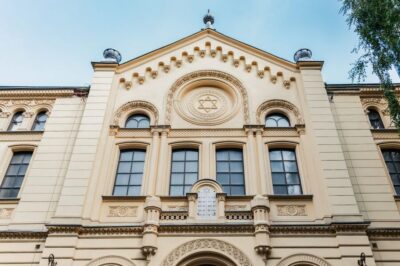
Warsaw Ghetto Private Walking Tour with Hotel Pickup
Read our review →
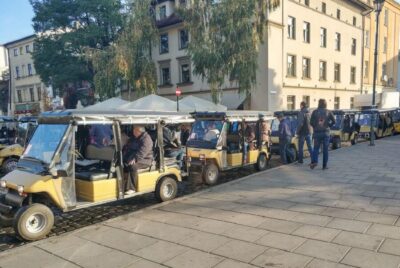
Jewish Quarter and Ghetto Electric Golf Cart Tour
Read our review →Browse the lists this tour appears in