
Review · JEWISH HERITAGE TOURS
Kraków old town and jewish quarter®
Krakow makes sense when a historian talks. This 3-hour tour connects the dots between the historic center and the Jewish quarter, showing you why this part of Krakow matters enough to be named a World Heritage Site. I especially liked how the guide links big national events to street-level buildings, and how the route balances “look at this” moments with “here’s why” explanations. One possible drawback: the time is tight, so you will be on your feet and you may want to extend your day after the tour if you start getting really curious.
You meet your Spanish guide at a simple landmark, a gray umbrella. In my experience with tours like this, the value comes from the pacing and the way the guide uses tools like photos and drawings to keep things clear, and this one keeps a good rhythm as you move from squares to walls to synagogues. It is also wheelchair accessible, which is a big plus in a city where cobblestones can otherwise feel like a personal challenge.
In This Review
- Key points to watch for
- A historian’s lens on Krakow: Old Town and Kazimierz in 3 hours
- From Juliusz Slowacki Theater to the city walls and Barbican
- Market Square’s big names: St Mary, Sukiennice, and the Old Town Hall tower story
- Collegium Maius, the university neighborhood, and Wawel’s power center
- Wawel complex and the dragon sculpture: architecture explained up close
- Kazimierz 101: why the Jewish quarter took root here
- Synagogues and memorials: Tempel, Stara, and the names of victims
- Old Jewish cemetery, New Square, and the walls of Kazimierz
- Price and value for about $16, plus what to bring
- Should you book this Krakow Old Town and Jewish Quarter tour?
- FAQ
- How long is the Kraków Old Town and Jewish Quarter tour?
- What is the price per person?
- What language is the tour guide?
- Where is the meeting point?
- Is food or drinks included?
- What is included in the tour?
Key points to watch for
- A historian-style approach that ties Krakow’s buildings to the events that shaped Poland
- Old Town plus Kazimierz in one compact 3-hour route, with both the “monument” and “meaning” stops
- Wawel complex on the agenda, including a walk up the hill for the cathedral architecture
- Photos and drawings that make the story easier to follow, even in cold weather
- Synagogues and memorials that help you understand what was lost, and what people tried to protect
- A route that works for wheelchair access, not just for able-bodied walkers
A historian’s lens on Krakow: Old Town and Kazimierz in 3 hours
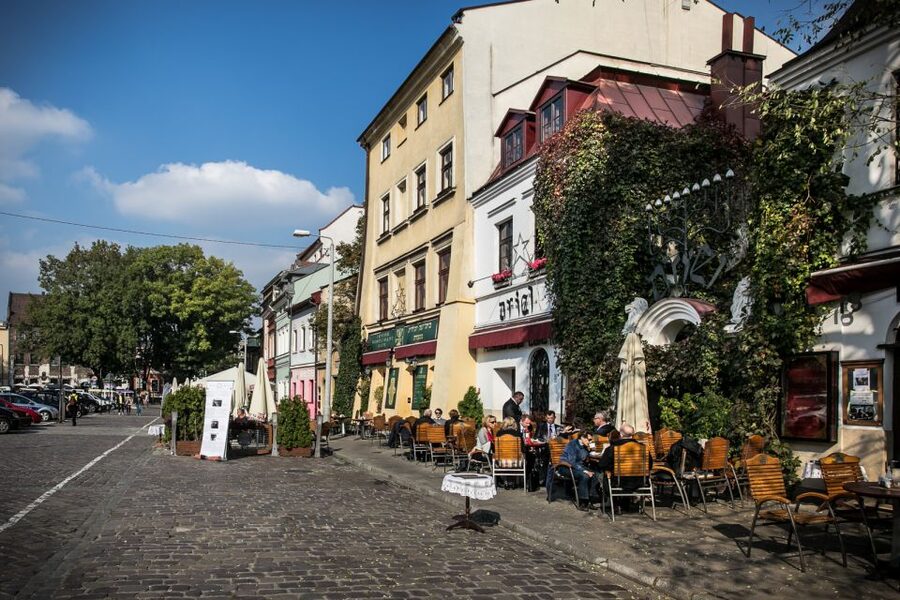
This is the kind of tour that helps you stop treating Krakow like a postcard list. You start in the most recognizable part of the city, then you shift to Kazimierz, where centuries of Jewish life played out right beside Polish Catholic culture.
The tour is built around two “fundamental” areas: the historic center and the Jewish quarter. That choice matters because these neighborhoods are not separate stories. They influenced each other, competed for space, and coexisted in ways that changed over time. The guide keeps returning to the same idea: history is not just dates. It is walls, schools, religious buildings, public squares, and the rules people lived under.
Because the entire experience lasts 3 hours, you will cover a lot, but not at a slow museum pace. Plan to take photos quickly, then listen. If you walk while you think, Krakow will feel clearer by the end.
More Jewish Heritage Tours in Krakow
- Krakow: Schindler’s Factory & Ghetto Guided Tour
★ 4.7 · 1,694 reviews - Krakow: Jewish Quarter and Former Ghetto Tour
★ 4.9 · 1,441 reviews - Krakow: Bike Tour of Old Town, Jewish Quarter and the Ghetto
★ 4.9 · 1,155 reviews
From Juliusz Slowacki Theater to the city walls and Barbican
You begin in the downtown area with Juliusz Slowacki Theater as a first anchor. It is an easy start because it sets you up in the modern city fabric, not in “only medieval Krakow” mode. From there, the tour turns back toward fortifications.
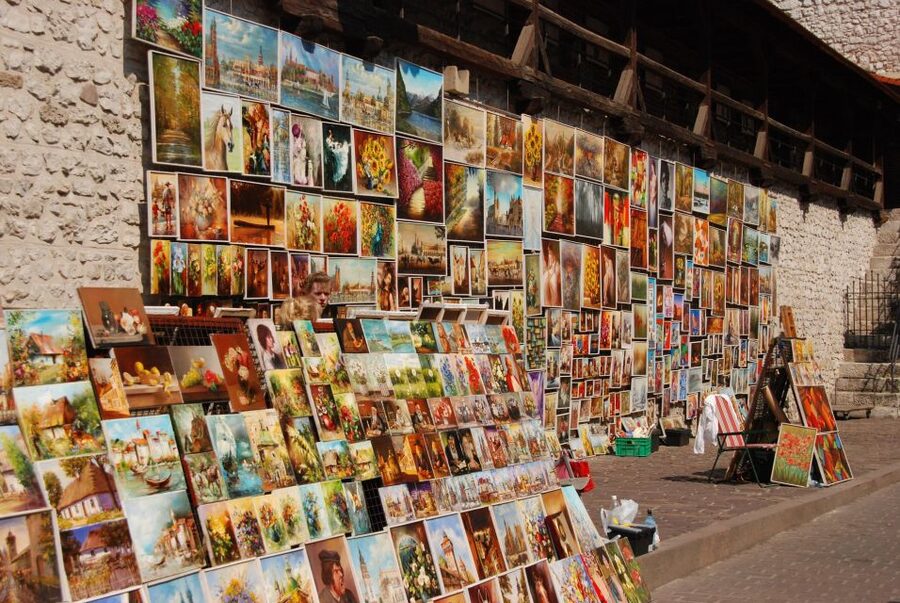
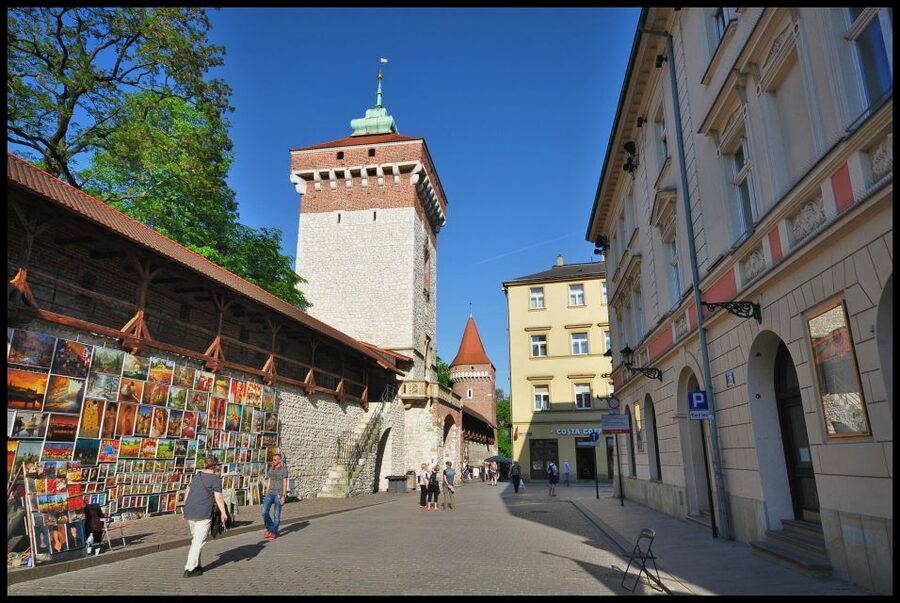
Next comes the medieval walls, including stops around the Barbican and St. Florian’s Gate. This part is great for practical understanding. City defenses were not decoration. They shaped where people could move, trade, and expand. When you stand near gates, you can actually imagine how a city protected itself while still needing to invite merchants and travelers in.
A small tip: keep your eyes up while you are near gates and wall lines. Even when you are not climbing anything, the shape of the structure gives clues about security priorities. And since the tour keeps moving, you will get quick “why this here, why this shape” explanations instead of a long lecture.
Market Square’s big names: St Mary, Sukiennice, and the Old Town Hall tower story
The heart of the historic center is Rynek Główny, the market square, and this tour gives it real attention. The focus is not just on a single famous church, but on the square as a machine for city life: markets, politics, announcements, and the daily rhythm of crowds.
You will see Basilica of Saint Mary and get context for why it is a focal point. You will also walk by Sukiennice (the Cloth Hall) and the Tower of the Old Town Hall. These stops make more sense when the guide explains how the square functioned over time, because the buildings stop feeling like isolated monuments.
Why I like this part: it teaches you to read space. A market square is designed to be seen from different angles, and the important buildings are placed to give the impression of civic order. In a short tour, you do not get every architectural detail, but you do get the logic.
If you are the kind of traveler who wants to take your time, do not feel pressured to linger too long during this segment. The best move is to absorb the explanation, then decide later which one spot you want to revisit.
Collegium Maius, the university neighborhood, and Wawel’s power center
After the market square, the tour shifts to the university neighborhood. You will visit Collegium Maius, and you will hear about famous figures connected with academic training, including Copernicus and John Paul II. This matters because Krakow’s identity is not only royal or religious. It is also a place where learning shaped reputations and careers.
You also pass the area around the Archbishop’s Palace and highlights connected to the Basilica of the Franciscans. These religious and power centers are worth looking at together because they show how influence worked. The church was not just a spiritual role. It was administration, education, and public authority.
One practical note: this stretch can feel a little “stand and look” compared with the fortifications, since you are orienting yourself to complex city zones. If you want to keep your energy, try to pause only when the guide stops. Otherwise you might end up staring at the wrong facade while the real story is happening a few steps away.
More Old Town Tours in Krakow
- Old Town Krakow & Wawel Castle Walking Tour
★ 5.0 · 1,508 reviews - Krakow: The Old Town Walking Tour
★ 4.8 · 794 reviews - Krakow: Old Town Guided Segway Tour
★ 4.7 · 756 reviews - Kraków: Old Town & Wawel Castle Walking Tour in English
★ 4.8 · 532 reviews
Wawel complex and the dragon sculpture: architecture explained up close
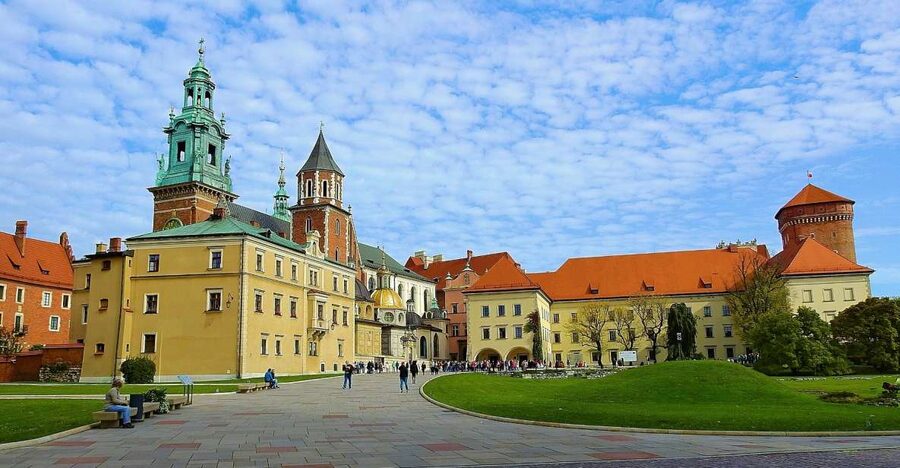
Then you climb toward Wawel Complex, one of the most important architectural ensembles in Poland. The tour includes analyzing the cathedral area and the buildings that make up the complex, so you get a guided reading of the place as a whole, not just one photo-worthy angle.
You will also see the dragon sculpture at the complex. That one is useful because it reminds you that Wawel is not only about power and stone. Krakow’s legends and public imagination grew around the same physical spaces.
The cathedral stop is the “big architecture” moment. Even if you are not an architecture person, the guide’s job is to help you notice patterns, not memorizing names. You are looking for how different parts of the complex relate to each other, how the hill location makes the complex visible, and how the setting turns the site into a symbol.
If you are short on time, this is one of the stops where it helps to listen closely. Wawel is massive, and without context it is easy to feel like you only saw a few buildings. With the tour’s structure, you get a framework.
Kazimierz 101: why the Jewish quarter took root here
Next comes Kazimierz, the Jewish quarter. This is the segment where Krakow changes tone. Instead of only reading the city as royal or civic, you read it as a place where communities formed, argued, contributed, and faced persecution.
The guide explains why the earliest Jewish communities settled here and how coexistence between Jewish and Catholic communities worked in practice. That framing is key. It avoids turning Kazimierz into a single tragedy or a single celebration. The story is both, and it changes over time.
This part also sets you up for the memorial stops later. When you understand the earlier settlement reasons, you feel the loss more sharply when you reach the monuments. You can also better understand why certain buildings and street areas hold emotional weight for so many people.
If you are unsure what to ask yourself while walking, use this: what does a neighborhood need to grow, and what happens when power shifts? Kazimierz makes those questions feel real.
Synagogues and memorials: Tempel, Stara, and the names of victims
Kazimierz includes some of the most powerful stops on the whole tour: Tempel Synagogue and Stara Synagogue. The guide uses these buildings to explain more than religion. You learn how community life organized itself and how the architecture relates to identity.
Then the tour moves into remembrance with monuments, including the Monument to the victims of the Holocaust, the Monument to the righteous among the nations, and the Monument to Polish victims during the occupation. These are heavy stops, but the value here is that they are not treated as random photo backdrops. The guide’s historian angle helps you connect them to the timeline of what the neighborhood experienced.
This is also where the tour’s use of visuals matters. When explanations include photos and drawings, the concepts land better, especially in a setting where the physical space can feel quiet.
Practical tip: if your emotions run high, step back for a minute. You do not have to race to the next stop. The route gives you enough moments to absorb, then move when you feel ready.
Old Jewish cemetery, New Square, and the walls of Kazimierz
You finish with more neighborhood texture: the old Jewish cemetery, New Square, and the medieval square of the Jewish quarter, plus the walls of the Jewish quarter. This is where Kazimierz stops being a set of sights and starts feeling like a place with boundaries, streets, and a lived geography.
Cemeteries carry a special kind of focus. You will likely notice how the guide frames them in relation to community continuity and memory. New Square and the medieval square help you see how public life functioned in the neighborhood, not only religious life.
The walls are another “read the city” moment. Fortifications here feel different from the medieval walls near the historic center, because Kazimierz’s story includes segregation, exclusion, and shifting control. Walking along those edges helps you understand that walls are never only stone. They are rules.
By the end, you have a loop in your head: Wawel as power and symbol, the market square as civic engine, and Kazimierz as community life shaped by both coexistence and conflict.
Price and value for about $16, plus what to bring
At $16 per person for a 3-hour tour, this is strong value if you like historical context. The price is not just for “seeing places.” It is for someone trained to explain how events affected the city, with a graduate guide in Geography and History. That matters because you spend much of your time on buildings that can otherwise feel like generic sightseeing.
You also get structure that saves time. Instead of building your own route, you follow an order that makes the connections easier to understand, starting downtown, then moving to the university area, then out to Kazimierz.
What to bring:
- Comfortable shoes for standing and walking, including cobbled stretches
- Water, since food and drinks are not included
- A warm layer if weather is cold, since the tour continues and the guide keeps things moving
- Your phone camera, but don’t rely on it for understanding, listen first
Language is Spanish, so if you do not speak it, you might find the experience less smooth. The tour is wheelchair accessible, which can help you plan confidently if mobility is a concern.
Should you book this Krakow Old Town and Jewish Quarter tour?
I think you should book if you want Krakow to feel logical, not random. This tour is built for people who like history explained in a way that ties architecture to real events, especially when you see Wawel, the market square, and Kazimierz in the same day.
Skip it if you are looking for a totally self-paced tour where you can linger for long periods at each stop, or if Spanish is a barrier for you. Also, if you already know Polish history deeply and prefer specialist academic detail, you might want something longer than 3 hours.
If you are visiting Krakow for the first time and you want the city to make sense fast, this is a smart way to get oriented and to leave with questions you can follow up later on your own.
FAQ
How long is the Kraków Old Town and Jewish Quarter tour?
It lasts 3 hours.
What is the price per person?
The price is listed as $16 per person.
What language is the tour guide?
The tour is guided in Spanish.
Where is the meeting point?
The guide will be holding a gray umbrella at the meeting point.
Is food or drinks included?
No, food and drinks are not included.
What is included in the tour?
The tour includes a graduate guide in Geography and History.
More Old Town Walks in Krakow
- Krakow Old Town Guided Walking Tour
★ 4.5 · 438 reviews - Krakow Old Town Segway Tour 2hr with Training, Safety Gear, Guide
★ 5.0 · 435 reviews - Historic Krakow : Old Town & Wawel Castle Walking tour
★ 5.0 · 318 reviews - Krakow Night Tour: Ghosts, Vampires and Legends of the Old Town
★ 5.0 · 258 reviews
More Jewish Heritage Walks in Krakow
- Krakow: Kazimierz Jewish Quarter Walking Tour
★ 4.8 · 571 reviews - Krakow: Kazimierz, Schindler’s Factory & Ghetto Guided Tour
★ 4.8 · 460 reviews - Full Bike Tour – the Old Town, Jewish Qtr & the Ghetto NEW BIKES
★ 5.0 · 437 reviews - Krakow: Jewish Ghetto Walking Tour
★ 4.6 · 349 reviews
Fresh listings from Krakow
- Zakopane & Gubalowka Funicular – Private Winter Tour from Krakow★ 5.0 · 10 reviews
- stag dog chase Krakow prank★ 5.0 · 4 reviews
- ZALIPIE – painted village, unique PRIVATE tour from Krakow★ 5.0 · 20 reviews
- ZALIPIE – painted village, unique small group tour from Krakow★ 5.0 · 7 reviews
- Full-Day Zalipie Painted Village Guided Tour★ 4.0 · 3 reviews
- Sleigh Ride & Bonfire in Zakopane with Funicular – Private Trip★ 5.0 · 48 reviews
- Zakopane PRIVATE TOUR from Krakow★ 5.0 · 18 reviews
- Zakopane Funicular Hill & Thermal Springs regular tour★ 5.0 · 9 reviews
Jewish Heritage Tours, compared.
Bike Tour of Old Town, Jewish Quarter and the Ghetto
Read our review →
Kazimierz, Schindler’s Factory & Ghetto Guided Tour
Read our review →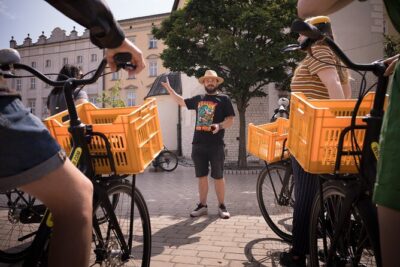
Full Bike Tour – the Old Town, Jewish Qtr & the Ghetto NEW BIKES
Read our review →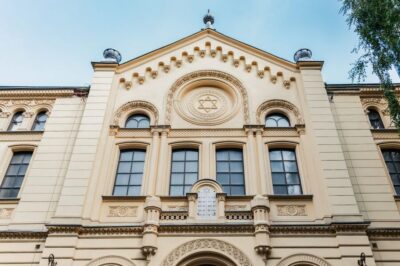
Warsaw Ghetto Private Walking Tour with Hotel Pickup
Read our review →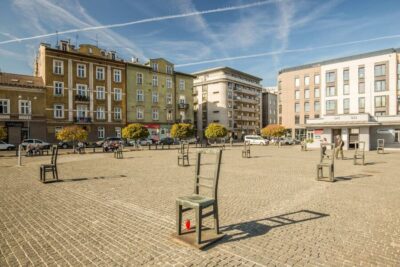
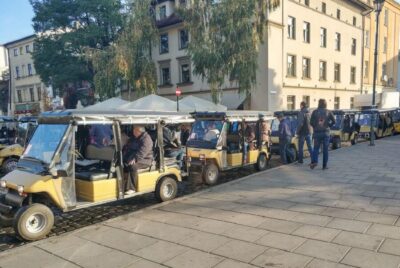
Jewish Quarter and Ghetto Electric Golf Cart Tour
Read our review →Browse the lists this tour appears in