
Review · WALKING TOURS
Life Behind the Iron Curtain Warsaw Walking Tour
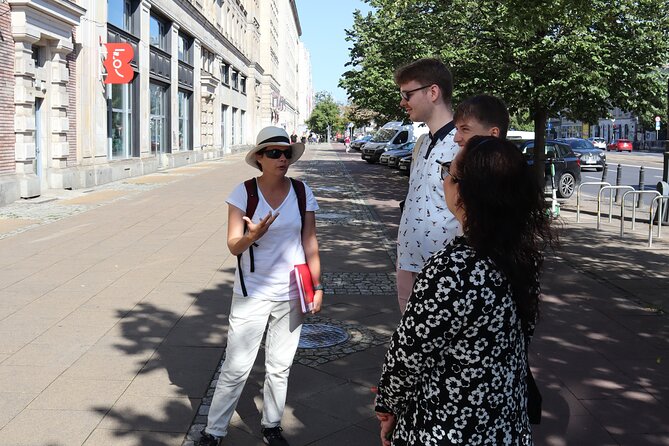
Iron Curtain Warsaw has a way of sticking in your mind. This 2.5 hour walking tour uses real buildings, street views, and guided explanations to show how daily life worked in the Polish People’s Republic. You’ll move from planned grand spaces to sites tied to party control and surveillance, with an English speaking guide and a small group pace.
I especially like the stop-by-stop storytelling, because each location has a specific theme, from socialist architecture to censorship. I also like that the tour keeps things practical, with an included info pack, visual aids, and recommendations to help you keep exploring after the walk. The guides can also bring in personal family context, which makes the whole era feel less like a textbook and more like something people actually lived.
One consideration: this is still a walking tour, so it’s not recommended if you have problems walking long distances. Also, the viewing terrace at the Palace of Culture and Science costs extra if you want to go up.
In This Review
- Key Highlights You Should Know Before You Go
- Turning Warsaw’s Streets Into a Timeline
- Price and What Makes It Feel Like Good Value
- Meeting at Constitution Square and Seeing a Planned Capital
- Marszałkowska Street, Parade Space, and the Look of Authority
- Socialist Realism at the Ministry of Agriculture Building
- Mysia 3 and the Free Speech Memorial: Censorship Made Physical
- Nowy Świat 6/12: Where the Party Managed the Country
- Cedet and Shopping Problems: Everyday Life Was the Hard Part
- Railway Stations and Travel Under the Old System
- Palace of Culture and Science: Symbol, Controversy, and a Choice on the Terrace
- What the Guides Do Well, Based on Real-World Experience
- Who Should Book This Tour, and Who Might Want to Skip
- A Simple Plan to Make the Most of It
- Should You Book Life Behind the Iron Curtain Warsaw Walking Tour?
Key Highlights You Should Know Before You Go
- A focused 2.5 hour route across major communist-era sites, designed as a guided “read” of the city
- Small groups (max 10 travelers), which helps questions stay on topic
- English mobile ticket plus an info pack with FAQ and useful links
- Free admission at every stop, with only the Palace of Culture and Science viewing terrace listed as extra
- Discussion of censorship and espionage at Mysia 3, plus party power at Nowy Świat 6/12
- Everyday life theme at the Cedet department store area, where shopping was part of the story
Turning Warsaw’s Streets Into a Timeline
If you think Poland’s communist past is only about big monuments, this tour corrects that fast. The route is built around places that shaped daily reality, not just major political headlines. You start in an area meant to function as a new political center, then you work your way toward the institutions that governed, controlled, and managed ordinary life.
I like that the walk keeps a steady rhythm. Each stop has a clear purpose, and you’re not left guessing why you’re standing where you are. Even better, the tour uses visual aids and an info pack so you can follow the ideas without needing to memorize dates on the spot.
The tone is also grounded. Instead of only lecturing, the guide connects architecture and street layout to how power operated. That matters because under communist rule, the city was often designed to reflect authority, and to steer behavior, from what people said to where they traveled.
More Walking Tours in Warsaw
- Warsaw: Old Town Highlights Walking Tour in English
★ 4.7 · 1,516 reviews - Warsaw: Old Town Guided Walking Tour
★ 4.9 · 599 reviews - Half-Day Polish Food Walking Tour with Guide and Dinner
★ 4.5 · 381 reviews
Price and What Makes It Feel Like Good Value
At $28.57 per person for about 2 hours 30 minutes, the price sits in the “serious value” range for Warsaw walking tours focused on a single theme. The biggest reason is that the walk is structured so you’re not paying multiple entry fees along the way.
Here’s the money picture that helps you plan:
- All listed stops have admission ticket free noted for the tour route.
- The only extra cost mentioned is the viewing terrace at the Palace of Culture and Science, which is 28 PLN if you want to go up.
That one detail is worth thinking about. If you skip the terrace, you keep the experience close to the advertised total. If you do want the view, budget the additional 28 PLN and still know that everything else is covered by the tour’s design.
Also, this tour runs with a maximum of 10 travelers, so you typically get more back-and-forth than on big city buses. That small-group size often makes the price feel fair, especially for a very specific topic like life behind the Iron Curtain.
Meeting at Constitution Square and Seeing a Planned Capital
You begin at Plac Konstytucji, at the Constitution Square area. This is an effective starting point because it sets up the idea of “planned power.” The square was supposed to be the new city center for the Polish People’s Republic, so right away you’re looking at a place tied to what the regime wanted Warsaw to represent.
From here, the tour doesn’t just point out buildings. It helps you understand why squares like this matter. Big urban projects can be political tools. They shape how people move through the city, where crowds gather, and which areas are treated as important.
Then you move on, using the walk to keep building the story. You’re not stuck in one spot, and you’re not rushing through everything, either. It’s paced so you can connect the visual cues in front of you to the explanations you’re hearing.
Marszałkowska Street, Parade Space, and the Look of Authority
Next up is Marszałkowska, a wide, ceremonial street designed for parades and marches. This stop is a reminder that power is often displayed physically. Streets like this weren’t only for transportation. They were stages.
The guide uses the street view to highlight how the Polish People’s Republic wanted the city to look and feel. When a government plans how wide a street is, and what kind of events it expects there, that tells you a lot about how the state intended to be seen.
This is also a good moment to let the tour “click” in your head. If you’re the type who enjoys reading a city, you’ll start noticing patterns: how certain buildings line up, where open space appears, and how grand streets contrast with more constrained corners nearby.
Practical tip: Marszałkowska is an easier place to orient yourself visually because it’s so broad. If you like photography, this is one of the stops where framing makes sense fast.
Still in reach of Warsaw, but a different sort of day:
- Warsaw: Chopin Concert in the Old Town
★ 4.8 · 2,287 reviews - Warsaw: Traditional Galar Cruise on The Vistula River
★ 4.6 · 1,640 reviews - Warsaw Concert: Chopin – Painted by Candlelights with Wine
★ 4.8 · 1,442 reviews - Warsaw: City Sightseeing Hop-On Hop-Off Bus Tour
★ 3.6 · 1,415 reviews
Socialist Realism at the Ministry of Agriculture Building
Then the walk turns to the architecture of control, starting with the Ministry of Agriculture and Rural Development building. This stop is presented as a strong example of socialist realism, and the tour explains what characterizes the style and why the buildings were built this way.
Even if you do not know the art term going in, you’ll still get something useful here: you’ll learn how visual style can be political communication. Under communism, architecture was not just functional. It carried messages about the system and its ideals, and it helped legitimize authority in stone and steel.
This stop also gives you a break from the biggest political headlines. It’s more about how everyday people experienced power. You see an official-looking building and you connect it to an administrative reality.
If you like understanding how regimes use design to shape public perception, this is one of the more satisfying stops.
Mysia 3 and the Free Speech Memorial: Censorship Made Physical
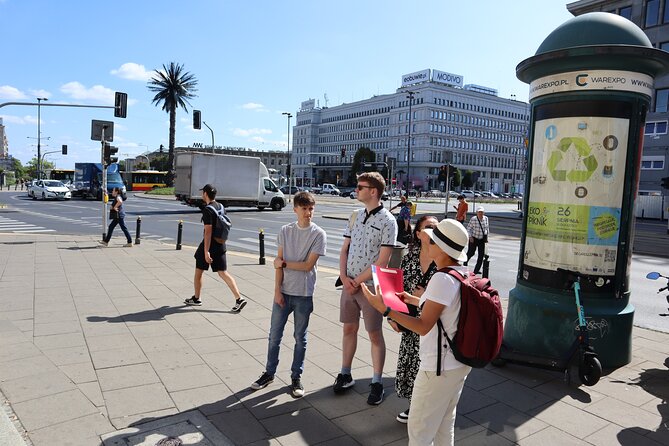
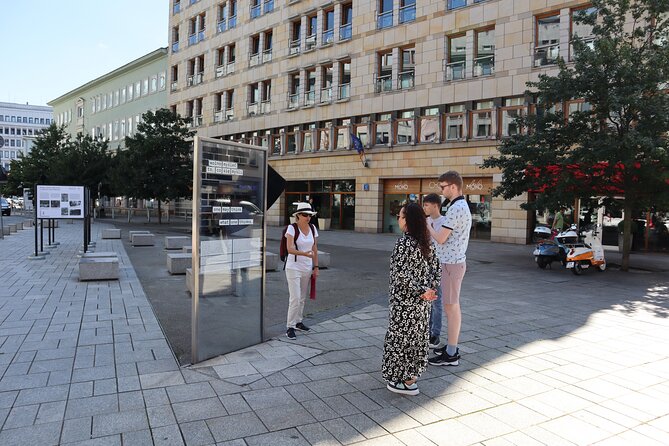
At Mysia 3, the tour shifts into one of the most serious themes: censorship and espionage. The guide points to the Free Speech Memorial, and the discussion centers on how controlling speech and information was part of how the system worked.
This is where the tour stops feeling like architectural sightseeing and starts feeling like a lesson about human life. You can’t fully grasp censorship from a photo. Standing at the site, hearing how the regime handled information, and connecting it to modern ideas of free speech helps the topic feel immediate.
It’s also a smart pacing choice. After discussing party power and administrative buildings, the tour makes you face the consequences, the risks, and the pressure. You learn that surveillance was not abstract. It affected choices, conversations, and careers.
If you’re interested in how ordinary citizens navigated the fear of saying the wrong thing, this stop will likely be the one you remember most clearly.
Nowy Świat 6/12: Where the Party Managed the Country
The tour then moves to Nowy Świat 6/12, a building that today houses the Banking and Finance Center. During the Polish People’s Republic, it was described as the place from which the entire country was managed, and it served as the Communist Party HQ.
This stop is valuable because it links the present-day city use to its earlier purpose. You see a modern function in the same walls where the party ran the system. That contrast helps you understand a key idea: even when institutions change names, the built environment can keep echoes of what came before.
The guide uses this location to explain how centralized decision-making shaped national life. You’ll also get a clearer sense of why this was a prime target for control and why its proximity to major city areas mattered.
If you’re someone who likes to understand “who held the levers,” this is one of the strongest stops on the route.
Cedet and Shopping Problems: Everyday Life Was the Hard Part
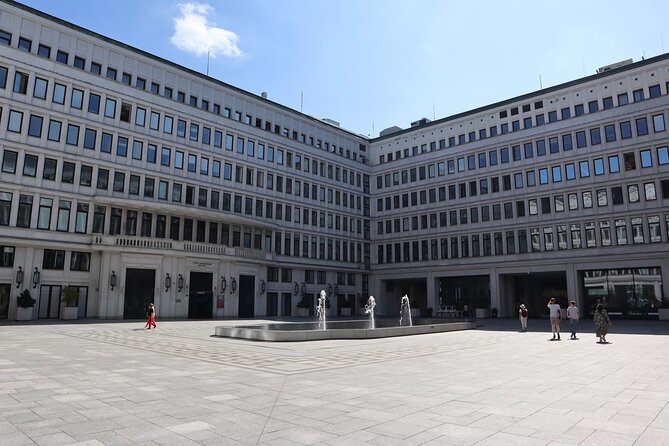
At the Central Department Store Cedet, the tour tackles a very relatable theme: buying everyday things. The tour frames this as one of the most challenging aspects of life in the Polish People’s Republic, and you’ll be guided through what made shopping difficult.
This is an especially good stop if you’re traveling with someone who doesn’t want only politics talk. It brings the story down to real human needs: food, household items, and the frustration of systems that did not behave like a consumer economy.
The point is not that everyone had the same experience. It’s that shortages, rules, and uneven access were part of daily routine in many centrally planned systems. Standing outside Cedet, you’re walking toward the idea that even basic purchases could become an experience of power.
This stop is also a good chance to tune your questions. Ask your guide how the everyday experience differed from the public messaging of the era. If the guide has personal family context, this is often where it lands best.
Railway Stations and Travel Under the Old System
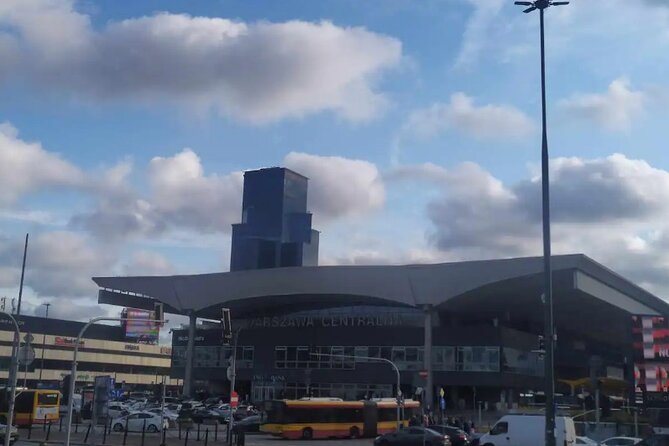
Next you look at Warsaw Central Railway Station and also the Downtown Railway Station, with a discussion on local, regional, and international travel during the Polish People’s Republic.
This is one of those themes that sounds dry until it’s explained in context. Travel is where policy shows up in real choices: what routes were emphasized, how systems connected places, and how international travel worked in a controlled environment.
The tour uses the stations to help you understand how movement could be affected by political realities. You see how major transit hubs are never only about trains. They’re about access.
If you plan to take trains during the rest of your Poland trip, you might find it interesting to compare the modern ease of ticketing and routes with the era’s constraints. Even when the tour stays focused on history, it can give you a better appreciation for what’s improved.
Palace of Culture and Science: Symbol, Controversy, and a Choice on the Terrace
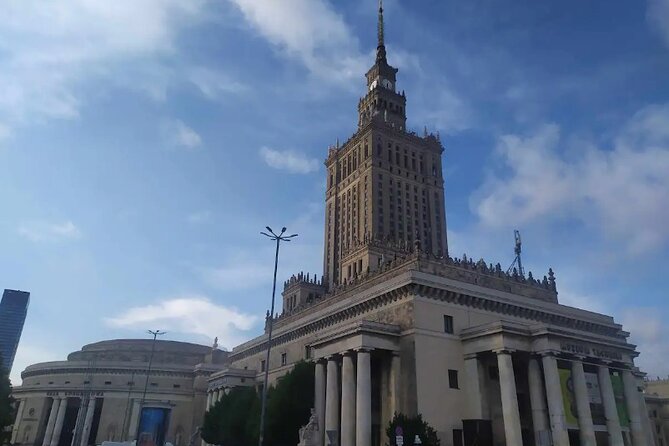
You finish at the Palace of Culture and Science. This building is treated as both symbolic and controversial, and the guide gives you what you need to understand why people argue about it.
This stop is a strong closer because it pulls together themes from earlier in the walk. You’ve already seen planned spaces, institutional architecture, party control, and censorship. The Palace becomes a final visual shorthand for those issues, even before you dig into details.
Also, this is the only location where a visitor choice is clearly spelled out. The viewing terrace costs extra, 28 PLN, if you want to go up. If you’re short on time or you’d rather keep energy for the rest of Warsaw, you can skip it and still get the core tour value.
Practical tip: plan for weather here. This is a big open area at the end, so bring a layer if the day feels changeable.
What the Guides Do Well, Based on Real-World Experience
A big reason this tour earns such high marks is the way the guide holds attention. Guides such as Olivia and Agnieszka are described as upbeat and story-driven, with a command of the topic that makes it feel clear instead of heavy.
The strongest praise pattern is simple: family stories make history feel personal. When a guide shares perspective from their family background, the era becomes less like distant politics and more like something connected to real life decisions, migration, and what people carried with them after change.
If you enjoy tours where the guide doesn’t just name dates but explains how systems worked day to day, this tour fits that style well.
Group size matters too. With a maximum of 10 travelers, you’re not competing with a crowd for time, and you’re more likely to get the kind of explanation that helps you connect the dots.
Who Should Book This Tour, and Who Might Want to Skip
This experience is a great match if you:
- want a 2.5 hour walking tour focused on communism-era Warsaw, not scattered city highlights
- like learning through streets and buildings, with explanations tied to what you see
- want practical context for understanding why Warsaw looks the way it does today
You might want a different option if:
- you have limitations with walking long distances, since the tour is designed as a route with several stops
- you’re only looking for quick photo spots without any history or interpretation
If you’re doing multiple tours in Warsaw, this one plays well as the theme tour. It gives you a lens. After it, you’ll likely notice more on your own, especially when you pass older institutional buildings.
A Simple Plan to Make the Most of It
If you want this tour to pay off beyond the walk, do this:
- Wear comfortable shoes. You’re covering multiple stops over roughly 2.5 hours.
- Save energy for afterward. The included info pack and recommendations are meant to keep your exploration going.
- If the Palace terrace sounds tempting, think about whether you want the view enough to pay the extra 28 PLN.
Finally, bring a curious mindset. The tour isn’t just about what the system was. It’s about how it shaped everyday choices, speech, and even shopping.
Should You Book Life Behind the Iron Curtain Warsaw Walking Tour?
Book it if you want a focused, English guided walk that turns Warsaw into a readable story. The value math works because most stops are admission free, and the route is designed to give context, not just stops on a map.
I’d skip it only if walking is a real challenge for you. Otherwise, it’s one of the best ways to understand the communist era in Warsaw without getting lost in big, generic museum explanations.
If you’re the type who likes seeing how political decisions show up in real streets, this is exactly the kind of tour that makes a city make sense.
Fresh listings from Warsaw
- Wolf’s Lair & Treblinka Tour in 1 day from Warsaw★ 5.0 · 37 reviews
- Tour from Warsaw: Wolf’s Lair, Hitler’s HQ Zones I and II★ 5.0 · 32 reviews
- Wolf’s Lair Private Day Trip from Warsaw★ 5.0 · 50 reviews
- Warsaw’s Old Town A Self-Guided Audio Tour★ 4.5 · 10 reviews
- Wilanow Royal Palace : SMALL GROUP /inc. Pick-up/★ 4.5 · 16 reviews
- Warsaw Must-See Local City Tour with Antek and Tomek★ 5.0 · 51 reviews
- Private 3-, 5-, or 7-Hour Warsaw Tour by Car★ 5.0 · 7 reviews
- Off the Beaten Track in Warsaw: Private City Tour★ 4.5 · 9 reviews
Walking Tours, compared.
Gdańsk City Sights & History Guided Walking Tour in English
Read our review →
Browse the lists this tour appears in