
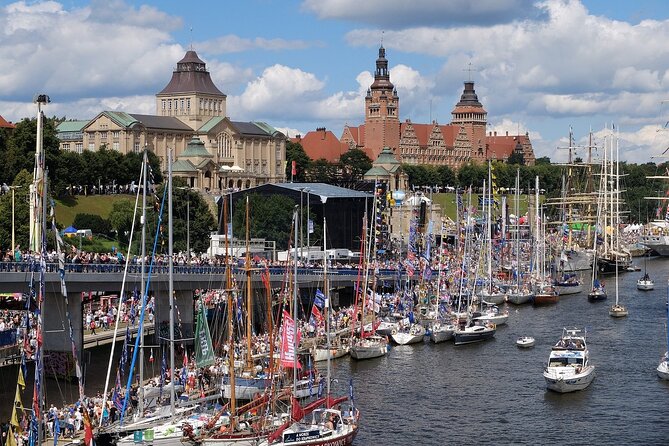
Review · WALKING TOURS
Szczecin Walking Tour: Explore Top Sights & Hidden Gems
Szczecin clicks into focus fast. This 2-hour guided walk is a practical way to get your bearings, with a route that mixes big landmarks and smarter, less obvious moments so the city makes sense right away. You also get a guide who helps you see connections, not just buildings.
I like the small group size. With a maximum of 15 people, you can actually ask questions instead of whispering them into a phone. I also like that you get admission tickets built into the experience, so you spend your time looking, not figuring out entry fees.
One possible drawback is that time at each stop is short. If you want to linger inside museums for hours, plan to build extra time into your day after the tour.
In This Review
- Key highlights that make this walk worth your time
- A smart 2-hour way to learn Szczecin without getting lost
- Karłowicz Philharmonic, modern design you can read at a glance
- The Archcathedral Basilica of St. James the Apostle: Gothic details with real purpose
- Pomeranian Dukes’ Castle: a 14th-century anchor for everything else
- Lastadia Łasztownia: the Oder riverfront with maritime roots
- Wheel of Szczecin area: time for skyline-level perspective
- How price, group size, and pacing add up to value
- Small-group guides and how to get the most questions answered
- Should you book the Szczecin walking tour?
- FAQ
- Where does the Szczecin walking tour start?
- How long is the tour?
- What time does the tour begin?
- Is the tour offered in English?
- How many people are in the group?
- Are admission tickets included?
- Is the ticket mobile?
- Where does the tour end?
- Can I bring a service animal?
- Can I cancel for a full refund?
- Are tips included in the price?
Key highlights that make this walk worth your time
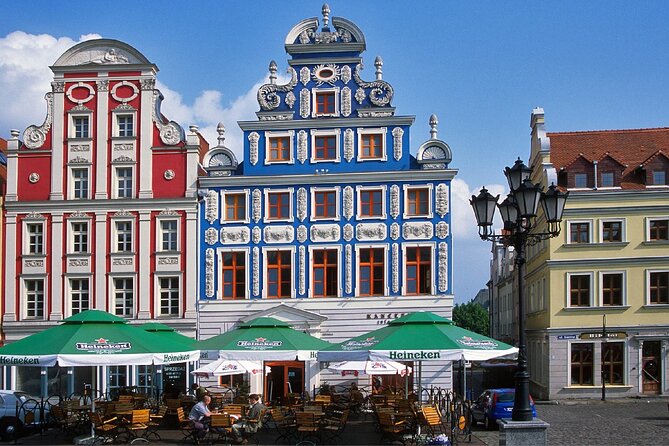
- Modern + classic architecture together, starting with the Karłowicz Philharmonic, designed by Alberto Veiga and Fabrizio Barozzi
- St. James the Apostle Basilica, a Gothic 12th-century stop with stained glass that’s meant for slowing down
- Pomeranian Dukes’ Castle, a 14th-century landmark now used as a cultural hub for museums and exhibitions
- Lastadia Łasztownia, a former cargo and shipbuilding zone turned riverside promenade with restored warehouses and places to eat
- A maximum of 15 people, plus an English-speaking guide, for real conversation on the move
- Mobile ticket and no map stress, since the guide takes care of navigation and pacing
A smart 2-hour way to learn Szczecin without getting lost
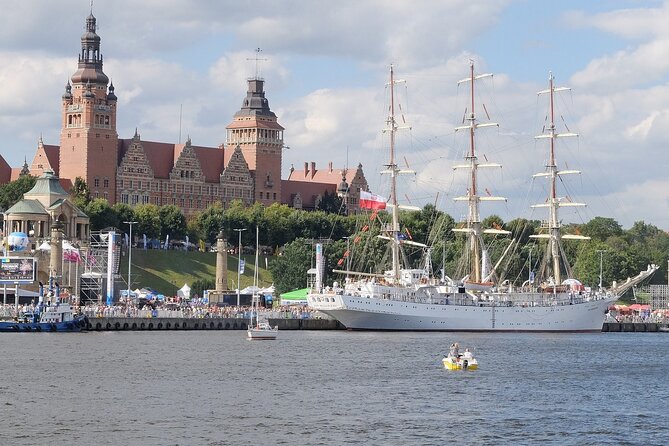
If you have only half a day in Szczecin, this is the kind of tour that saves you guesswork. You meet at Kino Pionier, then spend about 2 hours walking and stopping for photos, quick looks inside where available, and guided context you can carry with you for the rest of your trip.
What makes it feel efficient is the format. You do not need to map a route or decide in advance which sites matter most. You also get a guide who keeps the story moving, which helps if Szczecin is new to you and you want an overview that still feels specific.
The pacing is also built for attention, not endurance. Each major stop gets around 20 minutes, and Lastadia and the Wheel area get longer stretches. You’ll cover key highlights plus a few additional surprise stops along the way, which keeps the walk from turning into a checklist.
This is especially good value if you like architecture and urban history, but you also want to keep your day open. After the tour, you’ll know where to return for a longer look, whether that’s for a museum visit, a second walk around the waterfront, or just more time soaking up streets you now understand.
More walking tours in Szczecin:
- Szczecin: Old Town Highlights Private Walking Tour
★ 4.7 · 76 reviews - Szczecin: Medieval Old Town Private Walking Tour
★ 4.7 · 17 reviews - Szczecin: Spy-Themed Walk & Game with Host
★ 4.7 · 16 reviews
Karłowicz Philharmonic, modern design you can read at a glance
The tour starts by steering you to the Karłowicz Philharmonic in the heart of Szczecin. It gets a solid first stop, about 20 minutes, and admission tickets are included. The building is named for Polish composer Mieczysław Karłowicz, which gives the place an identity beyond architecture.
Here’s the practical part I’d carry forward to my own planning: this stop sets the tone. You’re not only seeing old Szczecin. You’re seeing a major cultural institution with modern architecture by Spanish architect Alberto Veiga and Portuguese architect Fabrizio Barozzi. That mix matters because it helps you understand the city as living, not frozen.
When you’re there, it helps to pay attention to two things. First, the sheer presence of the building, because it’s meant to be noticed. Second, how the guide connects the name, the cultural role, and the design. You’ll come away with something simple you can say to yourself later, like: this is where contemporary Szczecin announces itself through music.
If you’re the type who likes a photo that actually tells a story, this is a strong opening shot. And since your time here is structured, you get value even if you are not planning to attend a performance.
The Archcathedral Basilica of St. James the Apostle: Gothic details with real purpose
Next comes the Archcathedral Basilica of St. James the Apostle. It’s an older, heavier stop in mood. The basilica dates back to the 12th century and is described as Gothic in style, with stained glass windows that help create that classic church-light effect you get in Northern Europe.
This is about a 20-minute visit with included admission tickets. That timeframe is enough to notice the big features and still catch the details that the stained glass and Gothic lines are designed to highlight. The best use of your minutes here is to look slowly for a moment, then let the guide’s explanation put the pieces together. You’ll get a sense that this is not just a sightseeing object, but a working center of spirituality and cultural heritage.
A consideration: religious sites can have rules and quiet expectations, and that can affect how long you can comfortably stay in a single spot. The good news is that your guide’s job is to keep things smooth, so you can still see the main areas without feeling rushed.
If you want a tour that doesn’t only skim the surface, this is the stop that rewards you for paying attention. And even if you are not a church person, the history and stained glass are easy to appreciate because they do the heavy lifting for you.
Pomeranian Dukes’ Castle: a 14th-century anchor for everything else
Then the route moves to the Pomeranian Dukes’ Castle, a major historical monument that started in the 14th century. It’s another roughly 20-minute stop with admission tickets included. Today, the castle works as a cultural hub, with museums, exhibitions, and events that keep the building active instead of purely decorative.
This is a key moment for your mental map. Castles tend to be more than dramatic walls. They’re often where rulers shaped the area, where power was organized, and where later generations repurposed the space. The guide’s explanation turns the castle from a backdrop into a reference point.
What makes this stop particularly useful on a short tour is that it helps you interpret the rest of the city. When you later walk past other older structures or waterfront traces, you’ll start noticing the same themes the guide covered here: how Szczecin used its strategic position, how buildings evolved, and how the city’s identity formed over time.
One small practical note: because the castle functions as a cultural center, you might want to revisit it on your own if you’re curious about the specific museum topics or current exhibition themes. Your tour visit is designed to orient you. If something grabs you, you’ll have the “why” in your head by the time you leave.
A few more Szczecin outings to weigh up
- Undercover City Games: Szczecin
★ 5.0 · 14 reviews - Szczecin: Private Traditional Polish Food Tour
★ 3.9 · 13 reviews - Szczecin – Be Happy Museum – entry ticket
★ 3.9 · 11 reviews - Szczecin Polish Beer and Food Tasting Private Tour
★ 4.1 · 8 reviews
Lastadia Łasztownia: the Oder riverfront with maritime roots
Lastadia Łasztownia is where the tour slows down in a good way. You get about 30 minutes here, and admission tickets are included. This area is built on maritime history. It was once a bustling cargo handling and shipbuilding hub, and it has since been transformed into a riverside district with promenades and restored warehouses.
If you’ve ever walked a waterfront that feels like it was designed for postcard photos, this feels different because you can still trace the industrial past. The restored buildings now host restaurants, cafes, and art galleries, so the area works for both daytime walking and later hangs.
What I like most here is the view logic. The guide helps you orient yourself to the Oder River, which makes the scenery feel intentional instead of random. You’ll probably spend extra time along the promenade because this is the stop where you can breathe, look around, and let the city open up visually.
Potential drawback: if the weather is cold or windy, waterfront time can feel longer than you expect. Still, that’s part of the charm. Even on a short visit, it’s the section of Szczecin that tends to feel most “you are here” and least “you are passing through.”
Wheel of Szczecin area: time for skyline-level perspective
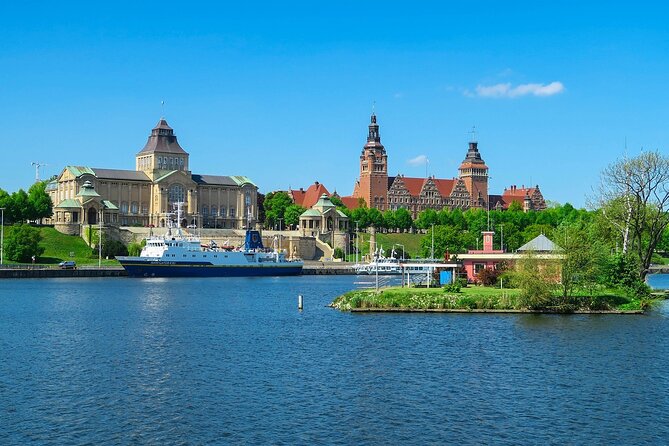
The tour includes a stop connected to the Wheel of Szczecin, again with included admission tickets and about 30 minutes allocated to this final stretch. There are also a few more quick stops along the way kept as a surprise, which keeps the walking portion fun and a little unpredictable.
I treat ferris wheel stops as decision points. Sometimes you want to take photos and skip the ride. Sometimes you decide the height is worth it because it’s the easiest way to get a bigger picture of a city’s layout. Even if you don’t ride, the area around the Wheel is a good place to step back and see how your walk connects into the wider city.
Because you have a guide, you’ll also get clues about what you are seeing as you look around. That matters because the Wheel stop can otherwise turn into a quick photo moment with no payoff. With context, you’ll understand the relationship between landmarks and how Szczecin’s parts line up.
How price, group size, and pacing add up to value
The price is $32 per person for about 2 hours, with a professional guide and admission tickets included. That puts it in a category where you should do a quick mental math check: you are paying for guidance, time efficiency, and entry costs at stops along the route.
Here’s where I think the value lands. First, you are not paying extra for entry at the listed major stops, and you don’t need to spend your time hunting for tickets or figuring out which places charge what. Second, the small group size, max 15, makes the experience feel more interactive. That matters because the best tours are the ones where you can ask, not just listen.
Language is English, which helps a lot if you want clear explanations without relying on translations. And your start time is 10:00 am, so you avoid the late-afternoon slump when walking tours can feel like an endurance test.
On pacing, the short visits are a trade. You get a lot of stops in a little time, but you do not get deep museum time. This tour is best for people who want a foundation: architecture and history highlights, plus a feel for the waterfront district, so you can plan a second pass later.
If you want a single highlight from the experience itself, it’s the mix of headline landmarks and street-level atmosphere. You’ll see major cultural institutions and church architecture, then you’ll shift to a riverside neighborhood that feels more like a place to linger.
Small-group guides and how to get the most questions answered
One thing I really appreciate about this format is how much room you have for questions. The tour caps at 15 people, and some past groups have had only a couple of participants, which makes for even more direct conversation with the guide.
That’s where you should lean in. If you care about architecture, ask what changes across eras you should notice. If you care about city layout, ask how this waterfront area connects to the rest of town. If you want the fastest way to plan an extra visit later, ask which stops are worth the most time after the tour.
You might also meet a guide who brings extra energy and interaction, and one guide named Glenn has been noted for staying motivated and engaging the group. Even without naming names, the point is consistent: the experience is built to be conversational.
Practical tip for you: wear comfortable shoes and bring a phone camera only if you plan to use it. The route is designed for walking, and some stops ask you to look at details rather than just chase views. If you keep your walking pace steady and use your stop time to ask one or two smart questions, you’ll come away with more than a set of photos.
Should you book the Szczecin walking tour?
Book it if you want a guided overview in a short window, especially if you’re interested in architecture, key historical landmarks, and the Oder waterfront area. The combo of the Karłowicz Philharmonic, St. James Basilica, the Pomeranian Dukes’ Castle, and Lastadia makes it a well-balanced route for first-timers.
Skip it or consider adding extra time if you’re the type who wants long museum sessions. The stop durations are designed for orientation, not deep study. You might leave wanting more, and that’s not a failure. It usually means the tour did its job, it gave you a map for where to go next.
If you like small groups, a guide who can answer questions, and a plan that saves you from the map headache, this is a solid choice at $32 for a 2-hour walk with admission tickets included.
FAQ
Where does the Szczecin walking tour start?
The tour starts at Kino Pionier, located at 1907al. Wojska Polskiego 2, 70-471 Szczecin, Poland.
How long is the tour?
The tour lasts about 2 hours.
What time does the tour begin?
The start time is 10:00 am.
Is the tour offered in English?
Yes, the tour is offered in English.
How many people are in the group?
The tour has a maximum of 15 travelers.
Are admission tickets included?
Yes. Admission tickets are included as part of the tour.
Is the ticket mobile?
Yes. You receive a mobile ticket.
Where does the tour end?
The tour ends back at the meeting point.
Can I bring a service animal?
Service animals are allowed.
Can I cancel for a full refund?
Yes. You can cancel up to 24 hours in advance for a full refund.
Are tips included in the price?
No. Gratuities are not included and are optional.
Fresh listings from Szczecin
- Undercover City Games: Szczecin★ 5.0 · 14 reviews
- Szczecin Private Vodka Tasting Tour★ 5.0 · 4 reviews
- Szczecin: Private Traditional Polish Food Tour★ 3.9 · 13 reviews
- Szczecin Pomeranian Dukes’ Castle Exterior Private Tour★ 4.3 · 6 reviews
- Szczecin Old Town with Pomeranian Dukes’ Castle Private Walk★ 5.0 · 3 reviews
- Szczecin – Be Happy Museum – entry ticket★ 3.9 · 11 reviews
- Szczecin Polish Beer and Food Tasting Private Tour★ 4.1 · 8 reviews
- Szczecin: Old Town Highlights Private Walking Tour★ 4.7 · 76 reviews
Walking Tours, compared.

Gdańsk City Sights & History Guided Walking Tour in English
Read our review →
Browse the lists this tour appears in