
Review · WROCLAW TOURS
The secrets of World War II
WWII in Poland hits different. This small-group day pairs three linked sites tied to Nazi occupation, forced labor, and the Riese project. I love that it’s not built around the usual postcard stops, and you get both history and real places.
I especially like the hotel pickup and round-trip transport that makes a long day feel manageable, plus the fact that key admissions are included so you can focus on the story. It’s also run with a tight group, which keeps the questions flowing.
One consideration: it’s a 9-hour day starting at 7:00 am, and at least some parts may be more guided-by-the-site than fully narrated start to finish, so come with patience and a good attitude for slow, reflective time.
In This Review
- Key highlights worth your attention
- A 7:00 am start, with pickup that actually helps
- Gross-Rosen Museum in Rogoźnica: the forced-labor story you cannot skip
- Ksiaz Castle in Walbrzych: a fortress setting, and a wartime purpose
- Osowka Underground Town: the Riese project beneath your feet
- How the three sites connect, and how to see the links
- Price and logistics: is $239.10 a good deal?
- What to expect on the ground (and what to bring)
- Who this WWII day trip is best for
- Should you book Secrets of World War II from Wroclaw?
- FAQ
- What is the duration of the tour?
- Where does the tour take place?
- What time does the tour start?
- Is hotel pickup included?
- Are entrance tickets included?
- Is lunch included?
- What language is the tour offered in?
- How big is the group?
- Is the tour suitable for children?
- Does the tour require good weather?
Key highlights worth your attention
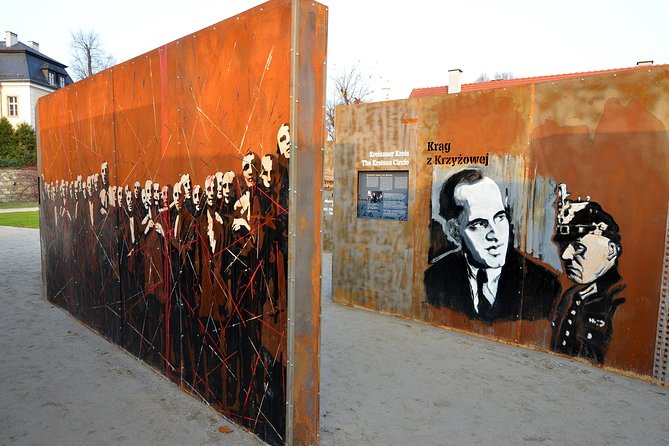
- Gross-Rosen Museum in Rogoźnica: harsh forced-labor reality, with the motto Vermichtung durch Arbeit
- Ksiaz Castle above the Pelcznica River: Nazi-era construction connected to the Riese complex
- Osowka Underground Town: the Riese project, still not fully explained, built between 1943 and 1945
- Small-group format: a maximum group size is listed, keeping it personal
- Transport plus included tickets: air-conditioned minibus, no extra charges for the main sites
- Real guidance support: you’ll have an assigned pilot and an English-speaking driver to keep things smooth
A 7:00 am start, with pickup that actually helps
This is a full-day outing, about 9 hours, designed for people who want to see a lot without fighting schedules or transfers. The day begins at 7:00 am and includes pickup from your hotel plus round-trip transfer by air-conditioned minibus. That matters in a practical way here, because the distances between these sites are not the kind you’d want to juggle on your own time.
You’ll also have on-the-ground support: an assigned pilot helps the flow, and the driver is English-speaking. In other words, you are not just dropped off and abandoned with a ticket and a vague meeting time. The tour also operates in English, which is a big deal when the subject is complex and you want to understand the details, not just stand near plaques.
One more thing to plan around: the day requires moderate physical fitness and the tour is weather-dependent. I’d pack for early mornings and comfort, because you’re walking through historical spaces and you want to move easily from one part to the next.
A few more Wroclaw outings to weigh up
- Wroclaw: E-Car Tour and Audio Guide
★ 4.6 · 1,738 reviews - Wroclaw: 2-Hour Private Guided Tour by Electric Car
★ 4.8 · 805 reviews - Wroclaw: Ticket for Old Town Boat Cruise
★ 3.9 · 361 reviews
Gross-Rosen Museum in Rogoźnica: the forced-labor story you cannot skip
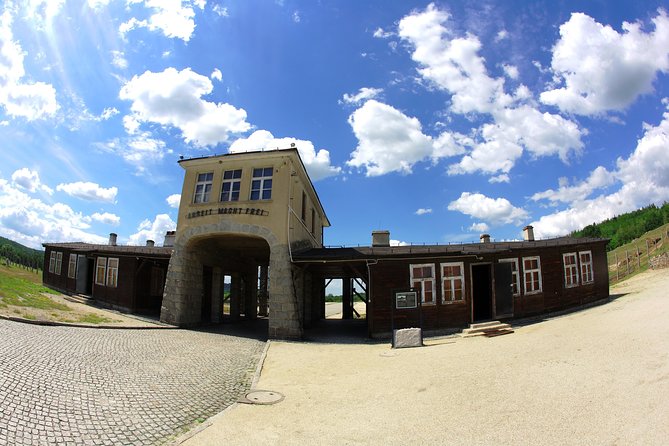
Your first stop is the Gross-Rosen Museum in Rogoźnica, described as the biggest Nazi-German concentration camp in Lower Silesia. This is not a light visit, but it’s a deeply meaningful one, because the site centers on the specific mechanism of suffering here: forced labor in quarries and brutal living conditions.
The museum is tied to a chilling slogan, Vermichtung durch Arbeit, meaning annihilation through work. The focus is not abstract. It’s the lived logic of the camp system, where prisoners were used as labor and then discarded when they could no longer work. The numbers given for this site are staggering: around 40,000 prisoners died here, including Poles, Jews, Russians, French, and Hungarian.
You’ll have about 2 hours at this stop, and admission is included. That time window is important. This kind of place works best when you can slow down. Two hours gives you room to read, absorb, and stand in some areas longer than you planned at first.
Practical note: the visit can be emotionally heavy, so plan your stamina. I’d treat this first as the day’s anchor. If you try to rush it, you’ll miss what makes Gross-Rosen so moving and so historically specific.
Ksiaz Castle in Walbrzych: a fortress setting, and a wartime purpose
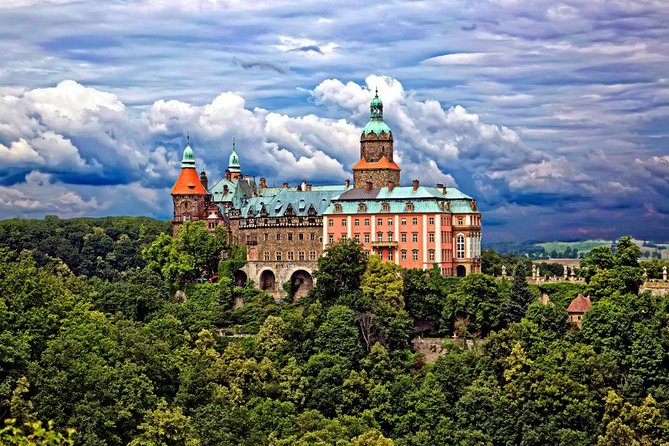
After the concentration camp, you go to Ksiaz Castle in Walbrzych, and the change in scenery is dramatic. The castle sits on a rock cliff by the Pelcznica River, at 395 meters above sea level, and it’s often called the Pearl of Lower Silesia. Even if you’re not a castle person, the location and scale are impressive in a quiet, European way.
But this stop is not just about views. During 1943, Hitler’s paramilitary organization Tod began building one of his main quarters here. It’s also connected to the broader Riese complex, with other related objects near Osowka and Włodarz. In other words, this castle helps you understand how Nazi planning used existing landforms and power structures, turning a dramatic setting into something functional for a war machine.
You’ll spend around 1 hour 30 minutes here, and admission is included. For me, that time feels right because the castle is big enough that you can wander without feeling like you’re racing. Still, if you love castles, you might wish you had more. One review even hints you could happily spend longer, but the best use of time on a connected itinerary is keeping pace so the three sites make sense together.
Osowka Underground Town: the Riese project beneath your feet
The third stop is Osowka Underground Town, part of the Osówka Complex, connected to Nazi Germany’s massive construction project between 1943 and 1945 under the codename Riese. The framing here matters: this underground site is described as “mysterious,” and the structure still hasn’t revealed all of its secrets.
The way the site is presented points you toward one central idea: this was not random tunneling. It was designed planning for wartime headquarters, and the tour describes it as the biggest and most complex Hitler headquarters in Lower Silesia. Whether you’re coming for military history, architecture, or how people imagine escape routes and power networks, this place gives you something physical to match the story.
You’ll have about 1 hour at Osowka. That’s enough time to get oriented and experience the underground spaces without turning the day into a marathon. You should expect that the experience feels more like moving through a built system than touring a typical museum. It’s the kind of place where details in the layout make the narrative click.
It also helps to set your expectations: you’re not just “looking.” You’re walking through a space created for hiding, control, and command. That gives the history weight, because you start understanding what the Nazis meant by secure operations, distance from the front lines, and keeping leadership protected while everything else collapsed.
Still in reach of Wroclaw, but a different sort of day:
- Wrocław: Old Town and Ostrów Tumski Walking Tour in English
★ 4.8 · 311 reviews - Wroclaw: Private Old Town Guided Walking Tour (2 hours)
★ 4.8 · 275 reviews - Old Town Wrocław Walking Tour
★ 5.0 · 249 reviews - Group city tour (walking tour) through Wroclaw in German
★ 4.9 · 203 reviews
How the three sites connect, and how to see the links
The real value of this day is that the stops are thematically linked, not three random hits. Gross-Rosen gives you the human cost, forced labor, and the camp logic. Ksiaz Castle shows how Nazi power used grand settings, and how construction plans reached beyond battlefields into local geography. Osowka brings it all underground, turning planning into architecture.
The connections you’re looking for:
- Space as strategy: from quarries and prisons to castles and tunnels
- Systems of control: how occupation shaped labor and how command structures were protected
- The Riese idea as a thread: a project spanning multiple locations, not one isolated “secret”
If you do the day in this order, the story lands better. Starting with Gross-Rosen forces you to face what occupation did to people. Then you move to sites that show how the occupiers organized and protected themselves. Finally, the underground spaces pull everything together into a single theme: war planning is not just decisions on paper, it is buildings, sites, and logistics.
Price and logistics: is $239.10 a good deal?
At $239.10 per person, this isn’t a budget afternoon, but it also isn’t priced like a luxury private charter. The math is clearer when you look at what you actually get.
Included in the price are:
- Hotel pickup and round-trip transport in an air-conditioned minibus
- A pilot and an English-speaking driver
- Admission tickets for all three key sites
- A guided sightseeing component in the language of your choice
- No additional charges for the main experience (lunch is the one obvious extra)
That bundle changes the value equation. You are paying for time saved and for guided context at three places that would otherwise be harder to piece together. Also, the group size is kept small, and that tends to make a big difference when you’re asking questions or trying to hear explanations over vehicle transfers and busy site areas.
One more price-based tip: this is a long day with one meal break implied but lunch not included. If you know you’ll get hungry early, plan ahead with snacks or a simple lunch strategy. In places like this, hunger will make reflection harder, so I like the practical approach of having something on hand.
What to expect on the ground (and what to bring)
Because the itinerary includes both outdoor and enclosed historical spaces, I recommend you dress for comfort rather than style. You’ll want shoes that handle uneven ground and you’ll appreciate layers, since mornings at 7:00 am can feel cooler than you expect.
Bring:
- Comfortable walking shoes
- Water
- Snacks if you tend to run low energy on long days
- A light layer in case the weather changes
One more detail to know before you go: some visits can include site narration that is not fully in English, even when your overall tour language is English. In at least one similar experience, an audio guide was used to follow the story. So if you’re sensitive to language flow, don’t assume every spoken segment will match your expectations perfectly. The upside is that there is usually a way to follow along.
Finally, remember that this day is structured around serious history. It’s not a light “see and go” tour. You’re there for the story of Nazi occupation and resistance in the region, and you’ll want to give each stop its due time.
Who this WWII day trip is best for
This tour is a strong fit if you:
- Want less common WWII sites in Poland, especially linked to Lower Silesia
- Like history that connects political power, built infrastructure, and human outcomes
- Prefer a small-group day with transport handled for you
- Are okay with a heavier topic and a long morning start
You might want to skip it or reconsider if:
- You need a fully guided, step-by-step narration at every single minute of the day
- You’re not comfortable with a moderate fitness requirement
- You want lots of free time for wandering on your own, because the schedule is structured around three set stops
This is also a good choice for first-time visitors to Wroclaw who want a meaningful day trip without the stress of renting a car and figuring out complicated routes.
Should you book Secrets of World War II from Wroclaw?
Yes, I’d book it if your goal is a focused day that connects three sites tied to Nazi planning and occupation in Lower Silesia. The value looks strongest because you get transport plus included admission for all major stops, and the small-group setup helps you actually learn instead of just moving past exhibits.
I would book with eyes open if you prefer a completely flexible day, or if you’re not up for the emotional weight of concentration camp history. But if you can handle reflective time and you want a day that makes the “secrets” theme real through place, this is a smart, worthwhile way to see the region beyond the usual routine.
FAQ
What is the duration of the tour?
The tour lasts about 9 hours.
Where does the tour take place?
It runs from Wroclaw, Poland, to nearby sites including Rogoźnica and Walbrzych (Lower Silesia).
What time does the tour start?
The start time is 7:00 am.
Is hotel pickup included?
Yes. Pickup from your hotel and round-trip transfer by air-conditioned minibus are included.
Are entrance tickets included?
Yes. Admission tickets for Gross-Rosen Museum, Ksiaz Castle, and Osowka are included.
Is lunch included?
No. Lunch is not included.
What language is the tour offered in?
The tour is offered in English.
How big is the group?
The tour is a small-group experience. A maximum group size is listed as 15 travelers, and the experience is described as small-group in general.
Is the tour suitable for children?
Children must be accompanied by an adult.
Does the tour require good weather?
Yes. The experience requires good weather, and if it’s canceled for poor weather you’ll be offered a different date or a full refund.
Fresh listings from Wroclaw
- Wrocław: World War II and the non-existent city of Breslau★ 3.6 · 3 reviews
- Wrocław University: Tour with Audio Guide & Admission★ 4.8 · 45 reviews
- Wroclaw : Walking Custom Tour with a Local Guide★ 4.8 · 3 reviews
- Wroclaw To Church of Peace and Project Riese Tour★ 4.8 · 4 reviews
- Wroclaw: 3-Hour Bike Tour in English or Polish★ 4.8 · 66 reviews
- Wroclaw: Spy-Themed Walk & Game with Host★ 4.6 · 14 reviews
- Wroclaw: Solar Catamaran Cruise on the Odra River★ 4.8 · 9 reviews
- Wroclaw: Secrets of Wroclaw Walking Tour (2 hours)★ 5.0 · 14 reviews
Wroclaw Tours, compared.
Old Town and Ostrów Tumski Walking Tour in English
Read our review →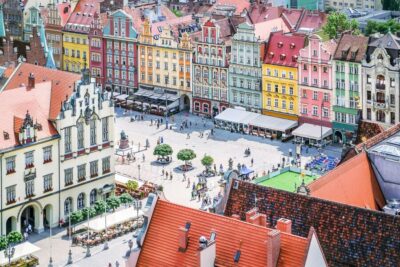
Private Old Town Guided Walking Tour (2 hours)
Read our review →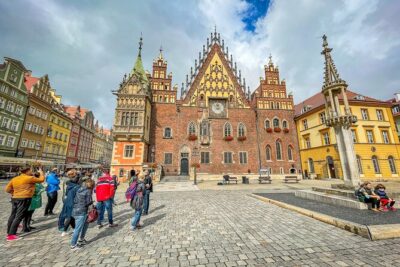
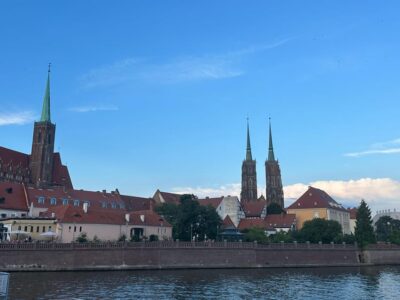
Group city tour (walking tour) through Wroclaw in German
Read our review →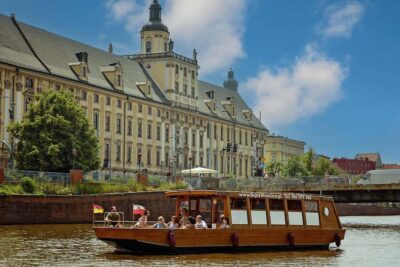
Ticket for Old Town Christmas Cruise by Heated Ship
Read our review →Browse the lists this tour appears in