
Review · WALKING TOURS
Walk through the Warsaw Old and New Town: like Phoenix from the ashes
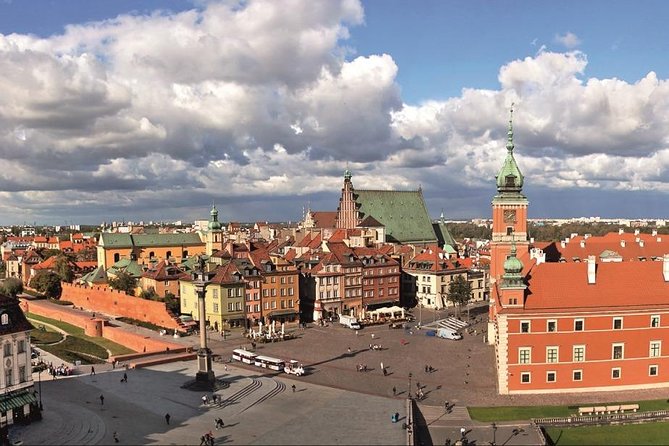
Warsaw tells its story two times over. This 2-hour guided walk moves from Old Town to the New Town with major stops tied to Chopin, World War II, and how the city rose again. I like the fast, focused way you get the names and meaning of what you see, not just the postcard views.
Two things I especially liked: the moment Holy Cross Church is explained around Chopin’s heart, and how Castle Square turns reconstruction after WWII into a clear, human story you can picture while you stand there. It really helps if Warsaw is your first stop in Poland, or if you only have a short window.
One possible drawback: it is a brisk, mostly outdoors walk, and not all entries are covered. Marie Curie’s museum has admission not included, and you also need to plan for snacks and transport on your own.
In This Review
- Key things to know before you go
- From Copernicus Monument into Warsaw’s restart chapter
- Krakowskie Przedmiescie, then Holy Cross Church and Chopin’s heart
- University of Warsaw and the Saxon kings, told through power and dates
- Presidential Palace to Castle Square, UNESCO Old Town built back up
- St John the Baptist basilica and the WWII front line detail
- Gnojna Góra for the Vistula view, then Rynek Starego Miasta legends
- Crossing the city gate into the New Town for Marie Curie
- Ending at the Field Cathedral and the Warsaw Uprising monument
- Price and value: what $72.87 gets you in real walking time
- Who this is perfect for, and who may prefer something else
- Practical tips so you enjoy every stop
- Should you book this Old Town and New Town walk?
- FAQ
- How long is the walk from Old Town to New Town?
- What language is the tour offered in?
- Is this tour private?
- Where do we meet, and where does the tour end?
- What is included in the price?
- What is not included?
- Do you need to pay for admission during the tour?
- Is free cancellation available?
- Is transport provided, and is the meeting point easy to reach?
Key things to know before you go
- Old Town to New Town, in about 2 hours, so you see both layers of Warsaw without extra day-planning.
- Chopin’s story is tied to place, with Holy Cross Church as a central stop.
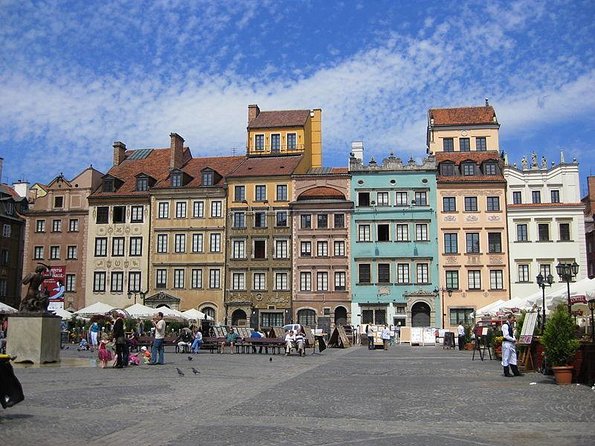
- Castle Square and the Royal Castle area get extra context, including the reconstruction story.
- War history is explained at real landmarks, including the basilica tied to the WWII front line.
- Marie Curie’s birthplace is included as a short stop, but museum entry is not included.
- Your group stays together, since it is set up as a private tour for your party.
From Copernicus Monument into Warsaw’s restart chapter
The tour starts at the Nicolaus Copernicus Monument on Krakowskie Przedmieście, right in a busy, easy-to-navigate area of central Warsaw. Your guide meets you with a PolinTours sign, and you head out with a clear route so you are not left wandering for context.
This is set up as a private tour, meaning it is only for your group. One recent experience also turned into a one-on-one tour when booking worked out that way, which is great if you like asking questions while walking.
Also note the language setup. The guide is described as German-speaking, while the experience is offered in English, so if language precision matters to you, it is smart to double-check what will be spoken with your confirmation.
More Walking Tours in Warsaw
- Warsaw: Old Town Highlights Walking Tour in English
★ 4.7 · 1,516 reviews - Warsaw: Old Town Guided Walking Tour
★ 4.9 · 599 reviews - Half-Day Polish Food Walking Tour with Guide and Dinner
★ 4.5 · 381 reviews
Krakowskie Przedmiescie, then Holy Cross Church and Chopin’s heart
First you move along Krakowskie Przedmiescie, a street that quickly teaches you how Warsaw blends grand architecture with everyday life. It sets the tone for the rest of the walk, because the city is always doing two things at once: honoring the past while continuing the present.
Then comes Holy Cross Church, where the guide connects you to the life story of the most famous Warsaw-born composer, Frédéric Chopin. You are shown the church connected to the resting place of Chopin’s heart, which gives the stop emotional weight without needing a long visit.
This is one of those landmarks where it helps to have a guide because the meaning sits in specific details. Even if you already know Chopin’s music, you leave understanding how Warsaw treated his memory, and why this place matters beyond a single famous name.
University of Warsaw and the Saxon kings, told through power and dates
Next you stop at the University of Warsaw, looking at the oldest part of the university. In a short time, you get a sense of how education, politics, and culture were stacked together in the city’s long timeline.
Right after, you reach Grob Nieznanego Żolnierza, the Tomb of the Unknown Soldier. The guide ties it to broader royal-era context, including the estate of the Saxon kings in Poland, which helps explain why Warsaw’s “monument stops” are never just about one event.
The practical value here is that you start noticing patterns. Empires rise, borders shift, and the city keeps leaving markers behind. When you learn those markers in order, Warsaw feels more coherent, not just dramatic.
Presidential Palace to Castle Square, UNESCO Old Town built back up
At Palac Prezydencki, the Presidential Palace, you get a quick look at the seat of the Polish President and hear about its history that the guide describes as unprecedented. This stop is short, but it gives you a framing lens for the rest of the walk, because government buildings tell you where power lives.
Then you enter Castle Square (Plac Zamkowy), the heart of Warsaw’s Old Town UNESCO World Heritage Site. Here the guide emphasizes that this Old Town is described as the youngest Old Town in the world, which lands differently once you hear how much was destroyed and rebuilt.
The best part is the reconstruction story you hear while you stand among the buildings. You learn about how the rebuilding was financed, and the role of a Venetian painter in the process. You also get context around the Royal Castle area and the history tied to the first democratic constitution in Europe.
If you have ever felt that “Old Town” labels can mean nothing beyond pretty streets, this stop corrects that. It makes the architecture feel like a lived project, not a theme park.
Still in reach of Warsaw, but a different sort of day:
- Warsaw: Chopin Concert in the Old Town
★ 4.8 · 2,287 reviews - Warsaw: Traditional Galar Cruise on The Vistula River
★ 4.6 · 1,640 reviews - Warsaw Concert: Chopin – Painted by Candlelights with Wine
★ 4.8 · 1,442 reviews - Warsaw: City Sightseeing Hop-On Hop-Off Bus Tour
★ 3.6 · 1,415 reviews
St John the Baptist basilica and the WWII front line detail
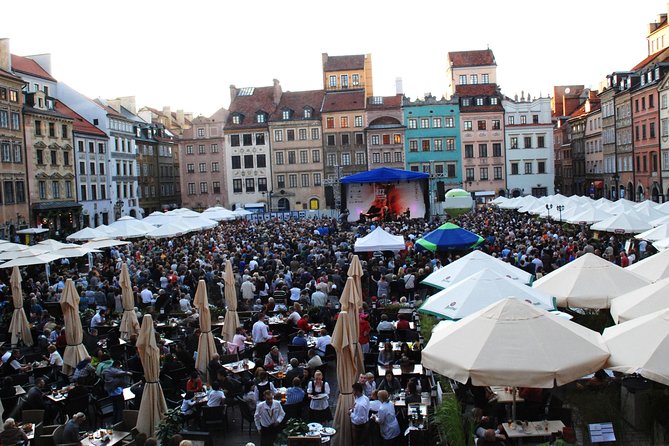
After Castle Square, you visit the Archcathedral Basilica of St John the Baptist. The guide highlights a striking fact: it is described as the only church in Europe where the war front ran during the Second World War.
That detail changes how you see the building. It is no longer just impressive, it is a witness. The guide also explains the heroic struggle of the Poles in the Warsaw Uprising and discusses the role of the Russian army in the wider conflict.
This is a stop where you should slow down mentally. Even though the time here is short, the meaning is heavy, and having it explained helps you avoid turning it into just another quick photo moment.
Gnojna Góra for the Vistula view, then Rynek Starego Miasta legends
A quick pause brings you to Gnojna Góra, where you look out toward the Vistula. This is short and simple, but it matters because it reminds you Warsaw is not only built on walls and towers. A river shapes how cities survive, trade, and get hit.
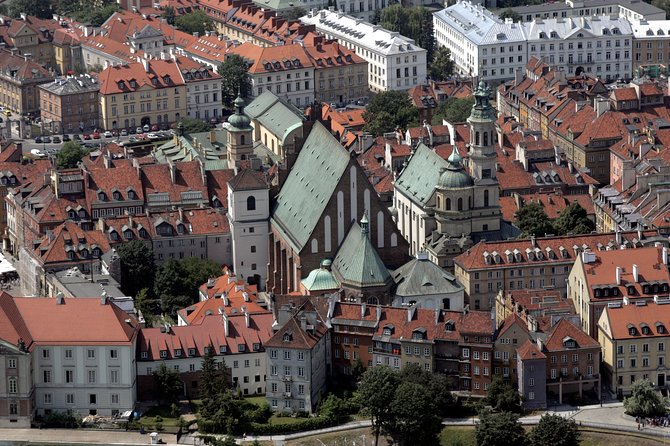
Next comes Rynek Starego Miasta, the Market Place of the Old Town. You walk through the picturesque streets and hear legends and authentic stories tied to the square. The atmosphere here is why people come to Warsaw, but the guide’s stories are what help you remember more than just the scenery.
If you are traveling fast, this is a good time to be picky about photos. Take a few wide shots from corners that show the street layout, then save your closer shots for quieter pauses when the crowd shifts.
Crossing the city gate into the New Town for Marie Curie
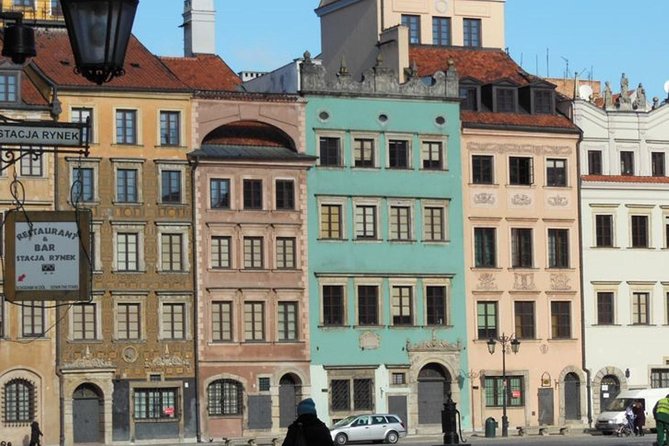
Through the city gate, you move from Old Town toward the New Town for a different kind of Warsaw story. The mood shifts from reconstruction and war to invention and influence, which is a smart change of pace in a two-hour format.
Your New Town stop is Muzeum Marii Sklodowskiej-Curie, Marie Curie’s birthplace. The museum time is listed as short, about 10 minutes, and admission is not included, so plan to decide on the spot whether you want to pay for deeper museum time after the brief introduction.
Even without extra time inside, the value is that you get Marie Curie’s place in Warsaw’s story set right into the streets you are standing on. If you love science travel, you may want to extend this in your free time later by returning to the museum area when you have more than a quick stop.
Ending at the Field Cathedral and the Warsaw Uprising monument
The tour ends at the monument tied to the Warsaw Uprising, with the final stop described as the Field Cathedral of the Polish Army. This finish point gives the walk emotional closure, because the route has already threaded together Chopin, royal-era power, and WWII destruction.
You end where the city wants you to remember the cost of freedom. It is a meaningful way to wrap up a walk called like Phoenix from the ashes, because the theme is not just rebuilding, it is resilience.
Also, you end at plac Krasińskich at the Warsaw Uprising Monument, which is a practical landmark for getting around afterward.
Price and value: what $72.87 gets you in real walking time
At $72.87 per person for about 2 hours, this is priced like a serious guided city walk, not a casual stroll. The value comes from how many major stops you cover with time-saving guidance and a licensed tour structure.
Most entries on the walk are listed as free, which helps keep the total cost from ballooning mid-day. The one clear exception is the Marie Curie museum, where admission is not included, plus you are on your own for snacks and transport.
The other value point is the feel of control. This is set up as a private tour for your group, and that tends to make a short tour feel longer. When you can ask questions without managing a big crowd, you get more meaning per minute.
If you are deciding between doing this or piecing things together on your own, the question is simple. If you want context fast, this tour-style format wins.
Who this is perfect for, and who may prefer something else
This walk is ideal if you are:
- In Warsaw for the first time and want a guided map of major sites fast
- Interested in WWII-era places but also want a story that includes culture and science
- Short on time and prefer a structured route over building your own
It may be less ideal if you:
- Want long, slow museum time
- Expect transport to be included
- Prefer a self-guided pace with lots of independent wandering
It is also a good pick for people who like meaningful stops that do not require hours of planning. The stops are tightly chosen, and the guide connects them so the city feels like one story instead of disconnected attractions.
Practical tips so you enjoy every stop
First, wear comfortable shoes. Even with only two hours on the clock, Warsaw’s center has plenty of surfaces and turning points, and you will be on your feet most of the time.
Bring a small water bottle if you know you get thirsty quickly. Snacks are not included, so plan to grab something before or after the walk.
Finally, think ahead about Marie Curie. Since museum admission is not included, decide whether you want only the quick introduction or whether you plan to pay for entry and keep going.
Should you book this Old Town and New Town walk?
Yes, if you want a high-impact Warsaw overview that connects Old Town reconstruction, Chopin’s memorial site, and WWII and the Warsaw Uprising into one easy-to-follow route. It is short enough to fit early in your trip, and it helps you understand what you see later when you walk the streets on your own.
Skip it only if you know you want lots of time inside museums, or if you dislike guided pacing. In that case, you might prefer a longer museum-focused plan.
If you like guided storytelling in a tight time window, this is a strong value way to see why Warsaw is often described through the idea of rising again.
FAQ
How long is the walk from Old Town to New Town?
It lasts about 2 hours.
What language is the tour offered in?
The experience is offered in English.
Is this tour private?
Yes, it is a private tour/activity with only your group participating.
Where do we meet, and where does the tour end?
You meet at Nicolaus Copernicus Monument on Krakowskie Przedmieście, and you end at the Warsaw Uprising Monument at plac Krasińskich.
What is included in the price?
A licensed city tour and tax are included.
What is not included?
Snacks, transport, and admissions are not included.
Do you need to pay for admission during the tour?
Most stops are listed as free, but the Muzeum Marii Sklodowskiej-Curie stop has admission not included.
Is free cancellation available?
Yes, you can cancel for free up to 24 hours in advance for a full refund.
Is transport provided, and is the meeting point easy to reach?
Transport is not included, but the meeting point is near public transportation.
Fresh listings from Warsaw
- Wolf’s Lair & Treblinka Tour in 1 day from Warsaw★ 5.0 · 37 reviews
- Tour from Warsaw: Wolf’s Lair, Hitler’s HQ Zones I and II★ 5.0 · 32 reviews
- Wolf’s Lair Private Day Trip from Warsaw★ 5.0 · 50 reviews
- Warsaw’s Old Town A Self-Guided Audio Tour★ 4.5 · 10 reviews
- Wilanow Royal Palace : SMALL GROUP /inc. Pick-up/★ 4.5 · 16 reviews
- Warsaw Must-See Local City Tour with Antek and Tomek★ 5.0 · 51 reviews
- Private 3-, 5-, or 7-Hour Warsaw Tour by Car★ 5.0 · 7 reviews
- Off the Beaten Track in Warsaw: Private City Tour★ 4.5 · 9 reviews
Walking Tours, compared.
Gdańsk City Sights & History Guided Walking Tour in English
Read our review →
Browse the lists this tour appears in