
Review · AUDIO TOURS
Warsaw at War 1939-1945: A Self-guided Audio Tour
Warsaw feels heavy the closer you get to the war years. This self-guided VoiceMap tour strings together a 3 km walk with crisp audio, sound effects, and offline maps, so you can follow the story at your own pace. I like that you can pause anytime to look around, and I also like that it works well for solo exploring, without the pressure to match a group’s speed.
One thing to consider: the navigation alerts can feel too sensitive, so if you drift onto the other side of the street, the app may warn you to get back on track.
In This Review
- Key things I’d focus on before you go
- Starting at Kościół Akademicki św. Anny and ending at Piłsudski’s statue
- Price and what $9.99 really covers in Warsaw
- Walking route basics: 3 km, 90 minutes, and pause power
- Using VoiceMap without losing the plot (or your street side)
- Stop: Warsaw Old Town streets and the shape of the story
- The Mały Powstaniec memorial: child soldiers and the moral weight of war
- Tomb of the Unknown Soldier: what it contains today and why it’s powerful
- The 1920 end point: Piłsudski and Poland’s fight to break control
- Audio quality, sound design, and why this feels more real
- What’s included, what’s not, and how to plan your day
- Who this tour suits best, and who might want another option
- Should you book Warsaw at War 1939-1945?
- FAQ
- How long is the Warsaw at War self-guided audio tour?
- What is the walking distance for the route?
- How much does the tour cost?
- What language is the audio available in?
- Where does the tour start?
- Where does the tour end?
- Is the tour audio available offline?
- What do I need to bring?
- Are there entrance tickets included for museums or attractions?
- Can I cancel and get a refund?
- Is the tour limited in group size?
Key things I’d focus on before you go
- Offline audio and maps via the VoiceMap app, so you are not stuck hunting signal.
- 90 minutes and about 3 km, an easy day add-on for most visitors.
- Major WWII touchpoints, including the memorial for child soldiers, Mały Powstaniec.
- A respectful stop at the Tomb of the Unknown Soldier, with details about what it holds today.
- An ending at Józef Piłsudski, tied to Poland’s fight for freedom and the 1920 war.
- Small group limit (up to 10), which can help the experience feel calmer at busy spots.
Starting at Kościół Akademicki św. Anny and ending at Piłsudski’s statue
You begin at Kościół Akademicki św. Anny, Krakowskie Przedmieście 68, 00-322 Warszawa. The tour ends at the Statue of Józef Piłsudski, plac Marszałka Józefa Piłsudskiego, 00-073 Warszawa.
Why this matters: you are moving through some of the most story-dense parts of central Warsaw, and you get a clear start and finish without needing to coordinate with a human guide’s schedule.
A few more Warsaw outings to weigh up
- Warsaw: Chopin Concert in the Old Town
★ 4.8 · 2,287 reviews - Warsaw: Traditional Galar Cruise on The Vistula River
★ 4.6 · 1,640 reviews - Warsaw: Old Town Highlights Walking Tour in English
★ 4.7 · 1,516 reviews
Price and what $9.99 really covers in Warsaw
At $9.99 per person, you are paying for the audio experience, not for entry tickets or transportation. The tour itself is built to be a walking route with narration, sound, and location-based guidance. You also get lifetime access to the Warsaw at War: 1939-1945 tour, plus the VoiceMap app experience.
Is that good value? For a historic city like Warsaw, I think so, if you like learning as you go. You are effectively buying 90 minutes of organized storytelling that you can replay later, which is harder to get from a random audio file or a quick guidebook read.
Walking route basics: 3 km, 90 minutes, and pause power
Expect about 1 hour 30 minutes and roughly 3 km of walking. The tour is designed as an exploratory stroll, not a fast march. You can pause at any time to take photos, eat, or just stand and absorb what you are hearing.
A practical tip: since you might want to step into places near the route (like grabbing a bite or visiting the Vodka Museum if it fits your day), build in a little breathing room. The audio keeps you moving, but it does not stop you from wandering a few steps.
Using VoiceMap without losing the plot (or your street side)
This experience runs through the VoiceMap Application and includes offline access to audio, maps, and geodata. That is a big deal in Warsaw, because it reduces stress. You can focus on the streets and the stories instead of constantly loading.
How to make it smoother:
- Start the tour at the meeting point, then let the audio lead you.
- Keep your phone nearby enough that you can glance at it if the map guidance feels unclear.
- If the route alert gets annoying, pay attention to staying close to the exact suggested path. One review pointed out that the alarm can trigger even when you are on the opposite side of the street.
One more note: the tour instructions suggest you can put your phone away and let the guide direct you. I like that approach for flow, but I also recommend you keep it handy for quick fixes.
Still in reach of Warsaw, but a different sort of day:
- Warsaw Concert: Chopin – Painted by Candlelights with Wine
★ 4.8 · 1,442 reviews - Warsaw: City Sightseeing Hop-On Hop-Off Bus Tour
★ 3.6 · 1,415 reviews - Warsaw: Highline Warsaw Entry With 360° Views & Rooftop Bar
★ 4.4 · 1,297 reviews - Warsaw: POLIN Museum of the History of Polish Jews Ticket
★ 4.7 · 1,142 reviews
Stop: Warsaw Old Town streets and the shape of the story
The walk begins just outside Warsaw’s Old Town, and it is built as a guided exploration that later funnels you toward the Piłsudski ending. Along the way, you are offered photo moments and options to extend your day. You might detour toward the Saxon Garden for a break, or choose lunch at one of the many restaurants nearby.
What I like about this opening: it sets your mental map before the heavier WWII moments land. Old Town is visually powerful, and the narration uses that setting to frame why people fought, what they protected, and what it cost.
Drawback to keep in mind: because you can wander and explore, you might occasionally need to tighten up and follow the app’s route more closely to keep the audio transitions working smoothly.
The Mały Powstaniec memorial: child soldiers and the moral weight of war
One of the most striking stops is about the Mały Powstaniec, the Little Insurgent, a memorial to child soldiers who fought and died during the Warsaw Uprising of 1944.
This is not a stop for quick consumption. The narration helps you understand the background before you look at what is memorialized. If you care about human scale in history, this part lands. You are not just hearing dates and battles, you are hearing about lives that were cut short.
Practical suggestion: give yourself an extra minute here. Even if you feel ready, memorials often work better when you slow down and let the details register.
Tomb of the Unknown Soldier: what it contains today and why it’s powerful
Another key moment is a respectful pause at the Tomb of the Unknown Soldier. You learn the history of the monument and, importantly, how it is used today.
The audio explains that today it contains ashes and soil from every 20th-century battlefield where Polish soldiers lost their lives. That detail changes the stop. It stops being just a symbolic monument and becomes a place that holds fragments of many wars in one spot.
If you are the type who likes to know what you are looking at, this is a great match. You get meaning before the visuals, and that makes it easier to pay attention to what surrounds you.
The 1920 end point: Piłsudski and Poland’s fight to break control
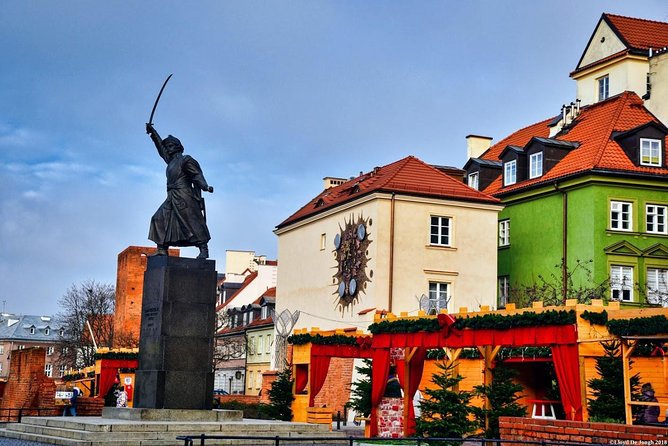
The tour’s story arc pushes toward the ending at the Statue of Józef Piłsudski. You hear how he is remembered as a political and military hero, and how his efforts were tied to freeing Poland from Russian control. The narration also covers how Polish forces defeated Lenin’s Red Army at the gates of Warsaw in 1920.
What I appreciate here is the pacing. You start with the war years frame, then you move into uprisings and sacrifice, and finally you land on the political-military struggle for freedom. It gives you context for why certain names and places matter in modern Poland.
If you are curious about Polish history beyond WWII, this ending is one of the best “hooks” to keep learning after the tour ends.
Audio quality, sound design, and why this feels more real
The narration is described as crisp, with professional audio engineering. The tour also uses sound effects and music to keep the experience engaging and suitable for all ages.
Here is the value for you: sound design helps you stay with the story when you are walking through a lively city. You do not just read about history on your phone screen. You hear it, and that changes how the street scenes connect to what you are learning.
You can listen through ear buds or headphones, and the tour can even work with a small group speaker if needed. That flexibility helps if you are traveling with someone who wants a shared experience.
What’s included, what’s not, and how to plan your day
Included:
- Lifetime access to the Warsaw at War: 1939-1945 tour
- VoiceMap Application
- Offline access to audio, maps, and geodata
Not included:
- A smartphone
- Transportation
- Food or drinks
- Tickets or entrance fees for museums or other attractions along the way
Plan tip: if you intend to visit anything optional near the route, do it as a timed add-on. Do not assume the audio will wait forever while you are in a museum line.
Also, because the tour is location-based, I recommend you start with a charged phone and good battery habits.
Who this tour suits best, and who might want another option
This tour fits best if you want history that you walk through, without locking yourself into a group meeting point every time you stop. I also think it is a good match if you travel solo and like exploring at your own rhythm.
It can work well for families too, since the audio experience is designed to be suitable for all ages and can be listened to with headphones or earbuds.
Who might not love it: if you hate route guidance alerts and you regularly wander far off the main path, the navigation sensitivity could frustrate you. In that case, the fix is simple, stay close to the suggested route and check the map when you feel unsure.
Should you book Warsaw at War 1939-1945?
Book it if you want a value-priced, self-paced way to connect WWII Warsaw to real memorials and real places, with audio that keeps your attention and offline maps that reduce stress.
Skip or rethink it if you are only looking for a quick hit, or if you strongly prefer to freestyle without any route guidance. The tour is flexible to pause and explore, but it still expects you to follow the story route closely for the smoothest experience.
If your goal is to leave Warsaw with names, places, and meaning linked together, this one is an easy yes.
FAQ
How long is the Warsaw at War self-guided audio tour?
The tour is about 1 hour 30 minutes.
What is the walking distance for the route?
The total walking distance is approximately 3 km.
How much does the tour cost?
It costs $9.99 per person.
What language is the audio available in?
The tour is offered in English.
Where does the tour start?
The start is at Kościół Akademicki św. Anny, Krakowskie Przedmieście 68, 00-322 Warszawa, Poland.
Where does the tour end?
The tour ends at the Statue of Józef Piłsudski, plac Marszałka Józefa Piłsudskiego, 00-073 Warszawa, Poland.
Is the tour audio available offline?
Yes. Offline access is included for audio, maps, and geodata.
What do I need to bring?
You will need your own smartphone to use the VoiceMap app.
Are there entrance tickets included for museums or attractions?
No. Tickets or entrance fees to museums or other attractions along the way are not included.
Can I cancel and get a refund?
No. This experience is non-refundable and cannot be changed for any reason.
Is the tour limited in group size?
Yes. The maximum is 10 travelers.
Fresh listings from Warsaw
- Wolf’s Lair & Treblinka Tour in 1 day from Warsaw★ 5.0 · 37 reviews
- Tour from Warsaw: Wolf’s Lair, Hitler’s HQ Zones I and II★ 5.0 · 32 reviews
- Wolf’s Lair Private Day Trip from Warsaw★ 5.0 · 50 reviews
- Warsaw’s Old Town A Self-Guided Audio Tour★ 4.5 · 10 reviews
- Wilanow Royal Palace : SMALL GROUP /inc. Pick-up/★ 4.5 · 16 reviews
- Warsaw Must-See Local City Tour with Antek and Tomek★ 5.0 · 51 reviews
- Private 3-, 5-, or 7-Hour Warsaw Tour by Car★ 5.0 · 7 reviews
- Off the Beaten Track in Warsaw: Private City Tour★ 4.5 · 9 reviews
Audio Tours, compared.

Day or Night Vistula River Cruise with Audio Guide
Read our review →

Sightseeing Cruise on Vistula River with Audio Guide
Read our review →
Vistula River Sightseeing Cruise with Audio Guide
Read our review →
The Birthplace of Poland: A Self-Guided Audio Tour of Poznań
Read our review →
Browse the lists this tour appears in