
Review · CITY TOURS
Warsaw: Behind the Scenes City Tour with Hotel Pickup
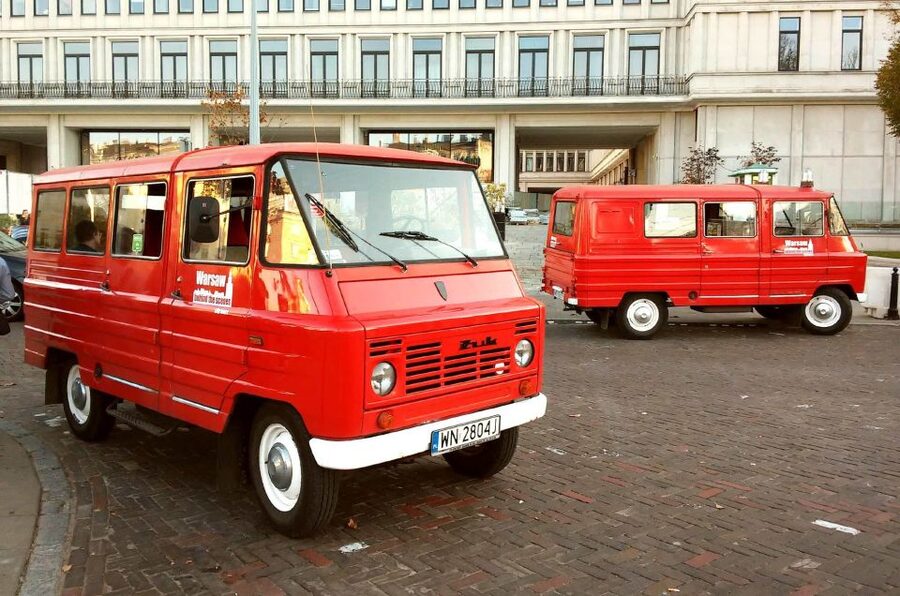
A communist-era minibus makes history feel close. This 3-hour behind-the-scenes Warsaw tour uses an iconic Żuk retro minibus to move you through districts most visitors miss, guided with a clear, human story that connects past to present. You still get the street-level reality, because you’ll do some short walks at each stop, not just stare out a window.
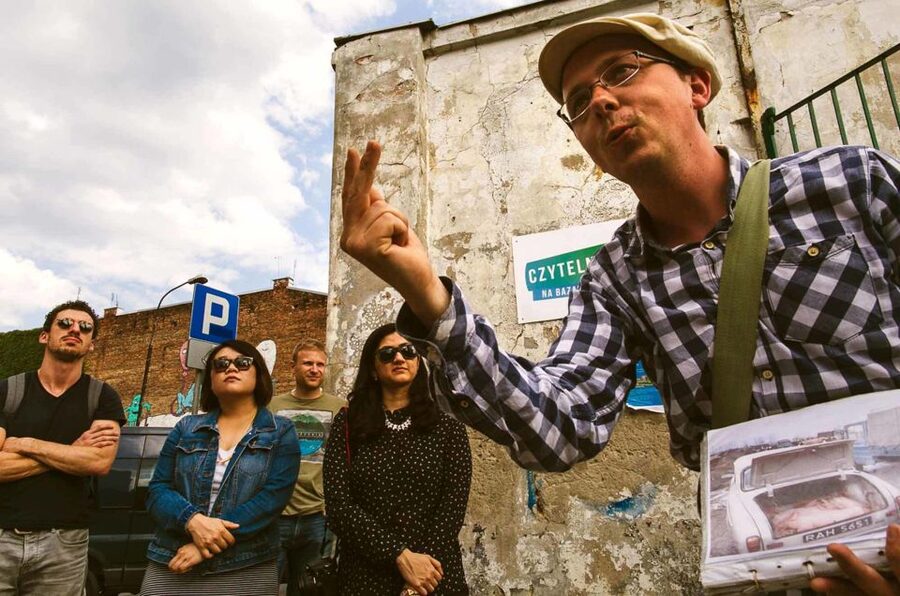
What I really like is the mix of time periods. You start with the timeline of Warsaw’s pre-war character, hit the damage and survival of World War II, then move into life under communism and the big shifts after 1989. The second thing I love is the people running it, with guides such as Konrad and Marcin bringing both humor and serious context, and often tailoring the flow to what you want to understand.
One practical consideration: these vintage minibuses are not air-conditioned, and some may not have seat belts (historic-vehicle rules). That matters if you’re sensitive to heat or you’re traveling in winter, when heating helps but the ride can still feel old-school.
In This Review
- Key things to know before you go
- A Żuk minibus is more than a gimmick in Warsaw
- How the 3 hours actually flow with hotel pickup
- Pre-war Warsaw to post-1989 Warsaw, in a single storyline
- Jewish Ghetto remnants, and why the guide’s framing matters
- Sites connected with both uprisings
- Muranów reconstruction and how planning left fingerprints
- Praga across the Vistula: old Warsaw survived here
- Soviet-era rebuilding and the long view of modern Warsaw
- What to wear, what to bring, and what to expect from a vintage vehicle
- Who this tour fits best, and who should think twice
- Price value: is $129 a fair deal for 3 hours?
- The little things that make the tour feel personal
- Should you book this Warsaw behind-the-scenes tour?
Key things to know before you go
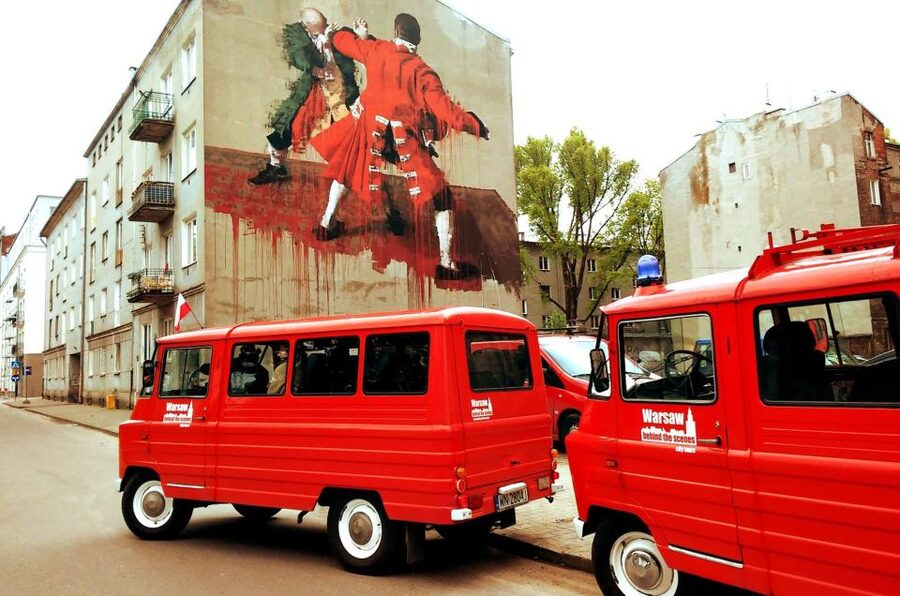
- Retro Żuk minibus ride in a vehicle tied to the communist era, plus heating for winter
- Small-group feel with up to 8 passengers per minibus, so you can ask questions
- You’ll see the wartime and post-war city pattern, not just postcard sights
- Jewish Ghetto remnants, plus sites tied to both uprisings, placed in a clear timeline
- Praga district across the Vistula, where old Warsaw survives and creativity has grown up around it
A Żuk minibus is more than a gimmick in Warsaw
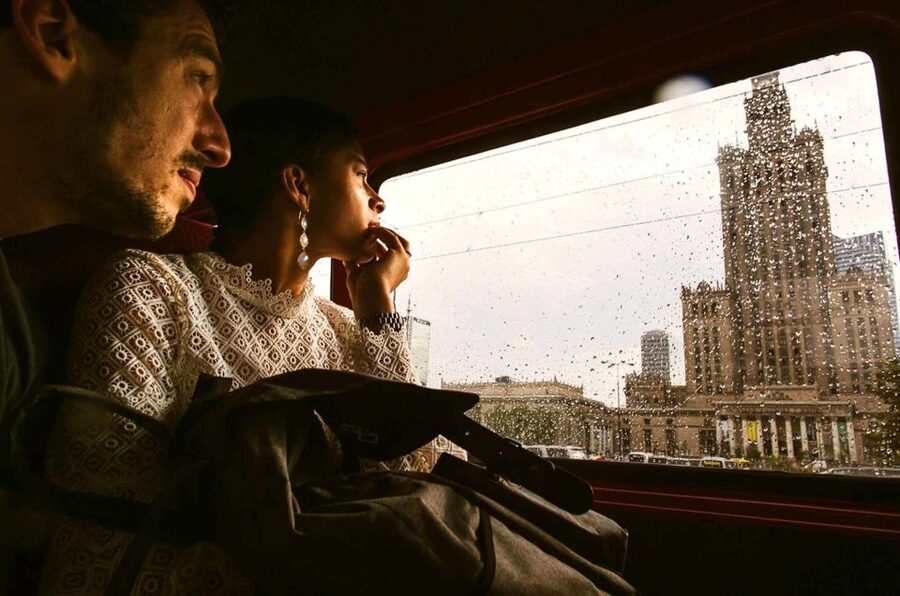
Warsaw has plenty of classic views, but this tour sells something more useful: understanding why the city looks the way it does. The Żuk minibus helps because it slows you down, literally. You’re not hopping between photo stops, you’re traveling through neighborhoods with a guide reading the city like a book.
And because the group is small (up to 8 per vehicle), it feels conversational. You get a real chance to ask, not just hold your phone up and hope for the best angle. Guides such as Konrad and Marius are repeatedly praised for pairing facts with a lively delivery, which is exactly what you want when the subject matter is heavy.
A few more Warsaw outings to weigh up
- Warsaw: Chopin Concert in the Old Town
★ 4.8 · 2,287 reviews - Warsaw: Traditional Galar Cruise on The Vistula River
★ 4.6 · 1,640 reviews - Warsaw: Old Town Highlights Walking Tour in English
★ 4.7 · 1,516 reviews
How the 3 hours actually flow with hotel pickup
The tour includes pickup and drop-off from centrally located hotels within about 1 kilometer of the city center. That’s a big deal in Warsaw, where the best history sites are spread out and transit can eat time.
Once you’re onboard, the vehicle is mainly for transfers between locations. That means you will walk a bit at each stop, so plan on comfortable shoes and clothing that handles city weather. The upside is that walking segments keep the experience grounded, especially when you’re looking at places shaped by war, rebuilding, and politics.
The whole run is designed as a journey, not a checklist. You begin with an overview that gives you a framework, then you move into specific areas that connect key events to the street plan you see today.
Pre-war Warsaw to post-1989 Warsaw, in a single storyline
I like the way this tour organizes time. Instead of treating history as separate eras, it links each chapter to what you see outside the window. You’ll start with Warsaw’s pre-war atmosphere, which helps you understand what was lost later, not just what exists now.
Then the guide brings you through the World War II devastation and survival. After that, you get the communist-era reality and the way Soviet ideology influenced city planning. Finally, you end with modern Warsaw, so the story doesn’t stay stuck in the past.
That structure is valuable because it trains your eyes. Once you know the why, you notice how architecture and neighborhood layout reflect different priorities from different decades.
Jewish Ghetto remnants, and why the guide’s framing matters
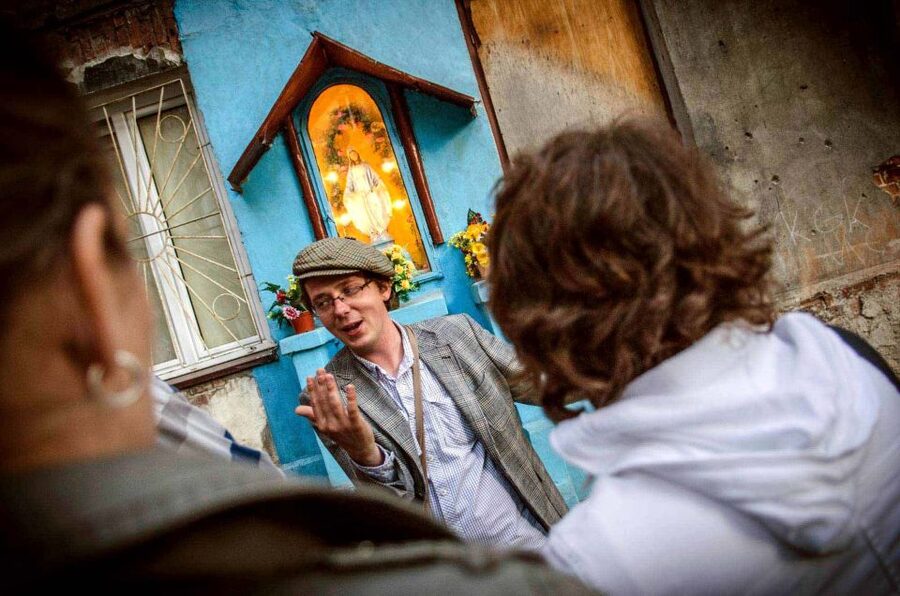
One of the most important stops is tied to the remnants of the Jewish Ghetto. This is not the kind of place you can do justice with quick sightseeing. The value here is the guide’s context, which explains what you’re looking at and why it still matters.
You’ll also get the larger picture of how Warsaw’s population and neighborhoods were reshaped by occupation and persecution. Even if you know some general facts, seeing the physical clues in the city helps it land on a different level. It becomes less about a distant chapter and more about the streets where life continued, and where it was forced to break.
A practical note: because the tour includes walking, wear shoes you trust. Ground conditions can be uneven in older districts, and you’ll want steady footing while you’re focusing on details.
Still in reach of Warsaw, but a different sort of day:
- Warsaw Concert: Chopin – Painted by Candlelights with Wine
★ 4.8 · 1,442 reviews - Warsaw: City Sightseeing Hop-On Hop-Off Bus Tour
★ 3.6 · 1,415 reviews - Warsaw: Highline Warsaw Entry With 360° Views & Rooftop Bar
★ 4.4 · 1,297 reviews - Warsaw: POLIN Museum of the History of Polish Jews Ticket
★ 4.7 · 1,142 reviews
Sites connected with both uprisings
Warsaw’s story includes uprising after uprising, and this tour connects those events to places you can actually visit. You’ll see sites connected with both uprisings, placed into the larger arc of resistance, occupation pressure, and the costs paid by civilians.
What I appreciate about this approach is that you learn to separate myth from geography. Instead of hearing dramatic stories in the abstract, you understand how timing, location, and city structure affected what happened.
This part can feel emotionally intense, so bring your patience. The tour keeps moving, but the guide’s job is to translate the hard history into something you can process without turning it into a museum lecture.
Muranów reconstruction and how planning left fingerprints
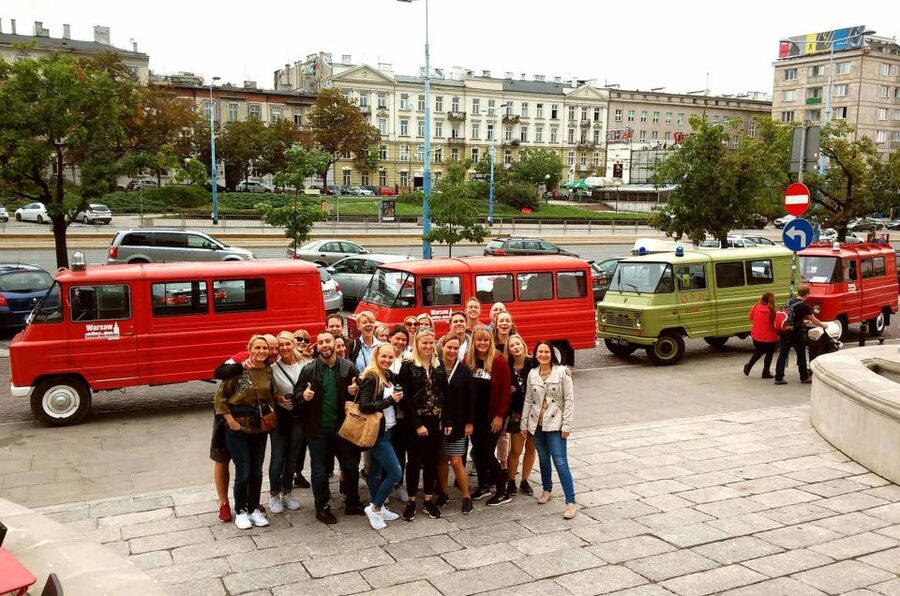
After the wartime chapters, the tour turns to post-war rebuilding, including Muranów and how planners tried to rebuild Warsaw from ruins. This is where city design becomes history you can point to.
You’ll explore how the new neighborhoods and major avenues took shape under Soviet influence. The point is not to memorize political slogans, it’s to see how ideology can become concrete, roadways, and block layouts. You start noticing the logic of the city plan: where space was created, where it was widened, and how the new urban vision reshaped daily life.
If you like architecture and urban design, this section is a highlight. If you’re more into story than buildings, it still helps because it explains why Warsaw feels like it has layers that don’t always match.
Praga across the Vistula: old Warsaw survived here
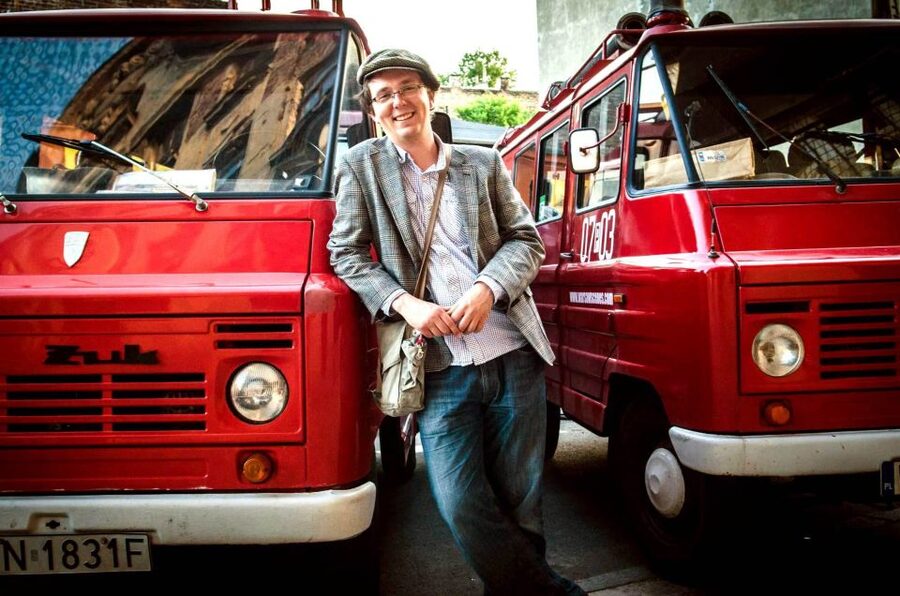
Then you cross the Vistula River to Praga, a district that survived the war with far less damage than many central areas. This stop is one of the reasons the tour feels different from standard city routes.
Praga still carries charm from older Warsaw, but it also has a modern creative edge. You’ll see the kind of scenery that comes from studios, workshops, and murals, not just official monuments. The result is a district you can picture as a living place, not only a historical set.
One useful way to enjoy Praga is to pay attention to the mix. Look for how older architecture holds space for newer life. That contrast is the big theme of the tour: Warsaw rebuilt itself, then kept reinventing itself.
Soviet-era rebuilding and the long view of modern Warsaw
This tour doesn’t treat 1945 as a final page. Instead, it shows how the city kept changing under communism, and then how Warsaw shifted after 1989 into a European capital shaped by growth and innovation.
You’ll see how earlier planning decisions still affect the cityscape today. For me, that’s one of the best takeaways: you stop viewing Warsaw as a list of sights and start viewing it as a system. Streets, districts, and building patterns become clues to what priorities drove each era.
The ending lands in modern Warsaw, so you leave with a sense of where the city is going, not only where it has been. It’s the kind of ending that helps you understand why people love Warsaw now, even after the losses it endured.
What to wear, what to bring, and what to expect from a vintage vehicle
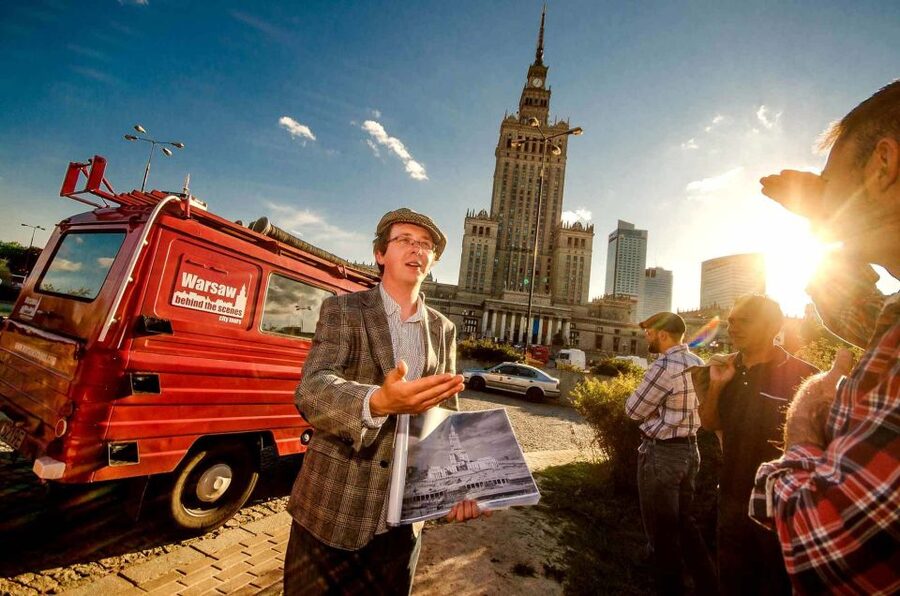
This tour is built around a classic vintage minibus. That’s fun, but it comes with real-world limits.
- No air-conditioning on the vehicles, and some may not have seat belts
- Heating is included for winter
- You’ll do short walks at each stop, so comfy footwear is key
Also, pack light. The tour does not allow pets and does not allow luggage or large bags. If you’re traveling with a big suitcase, arrange storage before you go, or plan to travel with a smaller day bag.
If you’re sensitive to confined rides, sit where you’ll be most comfortable, and bring a layer. Warsaw weather changes fast, and the ride is part of the experience.
Who this tour fits best, and who should think twice
This is a smart choice if you want more than the usual Old Town circuit. It’s best for people who care about history but also want to understand how that history shows up in real neighborhoods. If you like asking questions and getting answers in plain language, you’ll probably enjoy the small-group format.
It may not be the right fit if you’re a wheelchair user, since it is not suitable. The tour also requires a minimum height of 150 cm (4 ft 9 in), and for children under 150 cm, seat boosters are mandatory under Polish law.
Price value: is $129 a fair deal for 3 hours?
At $129 per person for about 3 hours, the value depends on what you want from Warsaw. If your goal is maximum sights per minute, it might feel pricey. If your goal is context and access to neighborhoods you might not find on your own, it usually makes more sense.
Here’s what you’re paying for:
- a retro Żuk minibus ride that’s part of the story, not a side detail
- an English-speaking guide focused on explaining the city’s layers
- small-group dynamics that keep the experience from turning into a fast bus tour
- pickup and drop-off from centrally located hotels, so you’re not spending half your day figuring out logistics
And because you’re getting both major historical themes and urban planning context, the experience can save you time later. You won’t need to do as much guesswork when you explore the rest of the city on your own.
The little things that make the tour feel personal
This tour earns praise for guides who bring information with personality. Multiple guide names show up in the feedback, including Konrad, Marcin, Marius, Lukas, and others, and the common thread is a mix of humor and serious explanation.
Also, some tours include extra stops that feel very local, like a traditional Polish lunch venue or coffee and cakes. Your exact day can vary, but the general pattern is that you’re not only driving past history, you’re living in the present around it.
For me, that matters. History feels more real when you also get a taste of how people eat, talk, and relax in the same neighborhoods.
Should you book this Warsaw behind-the-scenes tour?
If you’re doing Warsaw for the first time and you want the city explained through neighborhoods, this is a strong pick. The combination of Żuk transport, wartime and communist-era context, and a look at Praga across the Vistula makes it a more thoughtful use of time than chasing only famous landmarks.
Book it if you:
- want to see beyond typical routes
- like walking a little and learning in context
- appreciate guides who can connect events to streets and buildings
Skip it if:
- you need wheelchair accessibility
- you have large luggage or rely on traveling with a lot of gear
- you’re uncomfortable riding in older vehicles without air-conditioning and possibly without seat belts
If you want Warsaw with the volume turned up, not the volume turned down, this is the kind of tour that gives you that.
Fresh listings from Warsaw
- World War II Warsaw Old Town, Military Cemetery Walking Tour★ 4.7 · 3 reviews
- 3-hour: Palace of King Jan Sobieski in Wilanow/inc. Pick-up/★ 4.7 · 27 reviews
- Wilanów Palace: 2-Hour Guided Tour with Entrance Tickets★ 4.8 · 8 reviews
- Warsaw: Wolf’s Lair & Swieta Lipka Small-Group Tour + Lunch★ 5.0 · 3 reviews
- Warsaw Zoo Skip-the-Line Entry Ticket with Private Transport★ 4.8 · 3 reviews
- Warsaw Private Wilanow Palace & Garden Tour★ 4.6 · 30 reviews
- 4 hour: Warsaw Uprising Museum and POLIN Museum/inc.Pick up/★ 4.9 · 4 reviews
- Warsaw Wolf’s Lair with St. Lipka and Mamerki Private Guided★ 4.2 · 3 reviews
City Tours, compared.
City Sightseeing Tour Eco Electric Buggy Golf Cart
Read our review →
Gdańsk City Sights & History Guided Walking Tour in English
Read our review →
Extended City Sightseeing Tour – Eco Buggy Golf Cart
Read our review →
Shared or Private City Tour Sightseeing by Golf Cart
Read our review →Browse the lists this tour appears in