
Review · WARSAW TOURS
Warsaw Behind the Scenes – small group tour with hotel pickup
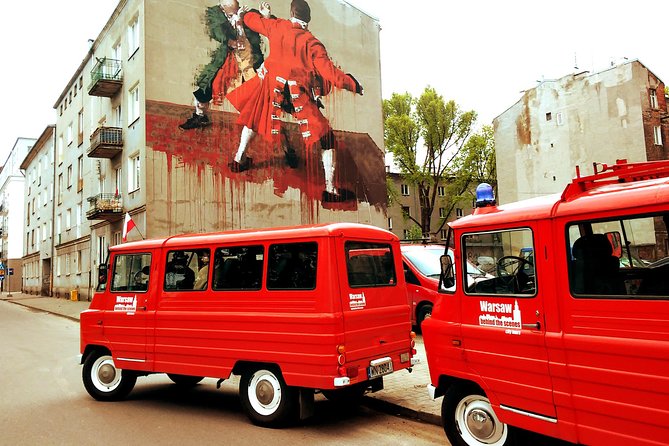
Warsaw’s hidden corners carry heavy stories. This small-group tour links WWII sites to the city you walk today, with a guide who explains what you are actually looking at. I like the small-group feel and the way each stop is timed for context, not a long bus ride. A possible drawback: some rides are in vintage minibuses without air conditioning, so it helps to dress for weather.
Two things I especially like are the hotel pickup that gets you out the door fast, and the photo-based storytelling that helps you picture the city before and after the destruction. Stops are also spread across neighborhoods, so you get a real sense of how Warsaw changed, not just a list of monuments.
One consideration before you go: the theme is intense. You will visit sites tied to the Jewish Ghetto, resistance, and mass destruction, so it is not the kind of tour you do to recharge.
In This Review
- Key Things You’ll Notice on This Tour
- Price and What You’re Really Paying For
- The Minibus Experience: Zuk Transport and Real-World Comfort
- Stop 1: Warsaw Orientation, So the Whole Day Makes Sense
- Stop 2: Muranów, Where Postwar Housing Sits Over the Ghetto
- Stop 3: The Chłodna and Żelazna Corner, and the Wooden Bridge from The Pianist
- Stop 4: Nowolipki and the Warsaw Ghetto Uprising, 1943
- Stop 5: Bielańska, WWII’s Bigger Clock, and Poland’s Postwar Trap
- Stop 6: Praga Polnoc, Crossing the Vistula and Seeing a Different Warsaw
- Stop 7: Śródmieście and the Communist Rebuilding Compromise
- Stop 8: 1989, Solidarity, and the End of Communist Rule
- Guides, Pacing, and Why People Rate This So High
- What to Expect at Each Stop, Without the Guesswork
- Should You Book Warsaw Behind the Scenes?
- FAQ
- How long is the Warsaw Behind the Scenes tour?
- Is hotel pickup included?
- What language is the tour offered in?
- Are there height requirements for children?
- What are the minibuses like?
- Can I cancel and get a refund?
Key Things You’ll Notice on This Tour
- Hotel pickup and drop-off for select hotels, so you start without logistics stress
- Small groups (up to 39 max, and minibuses hold about 8) that make questions feel normal
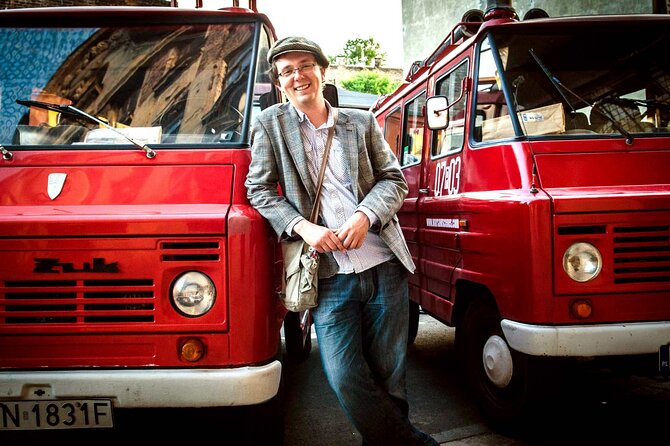
- Classic Zuk-style transport used for transfers, adding real old-Warsaw texture
- WWII sites explained in layers, from the ghetto period through 1944 and then 1945
- Praga and Śródmieście contrasts, so you see both survival and rebuilding
- Photo-led narration, including scenes from before the war and after
Price and What You’re Really Paying For
At $133.08 per person for about 3 hours, this is not the cheapest way to see Warsaw. But you are paying for three things that matter in a city with complicated history.
First, you get structured time. This tour is paced as a route that moves from the Warsaw you see now to what happened underneath it. Guides use that short window well, so you do not end up staring at a building with no clue what it means.
Second, you get the small-group setup. The max group size is 39, and each minibus seats up to 8. That matters for emotional, topic-heavy stops. You can ask the practical questions, like how certain areas were sealed off, or why the city rebuilt the way it did.
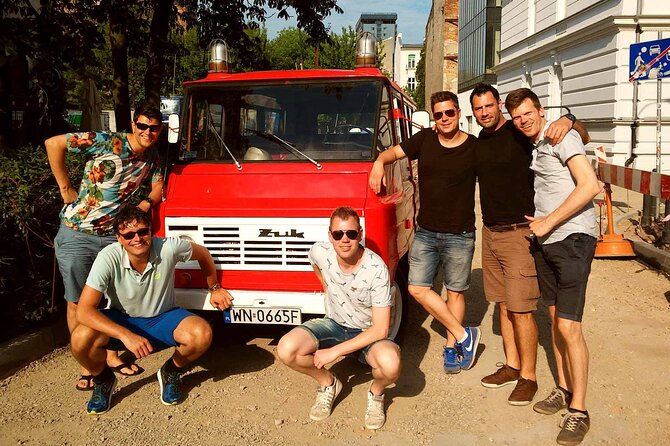
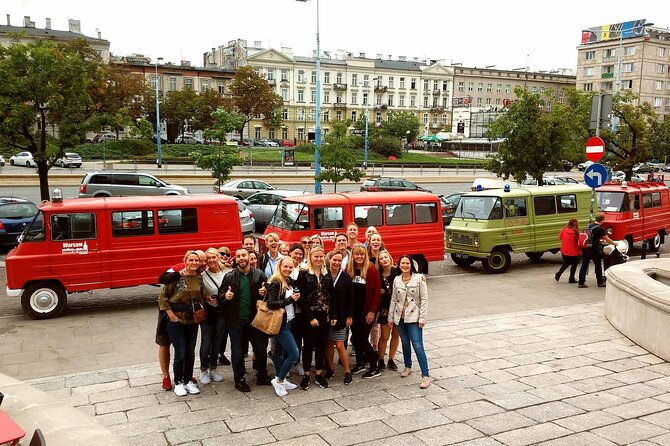
Third, you get transport plus walking. The vehicles do the transfers, and you walk at each stop. That cuts down on wasted travel time and keeps your legs useful instead of useless. Just remember some minibuses are vintage. They may not have air conditioning, and some may not have seat belts (historic-vehicle rules allow that). In winter, there is heating, so you are not freezing.
A few more Warsaw outings to weigh up
- Warsaw: Chopin Concert in the Old Town
★ 4.8 · 2,287 reviews - Warsaw: Traditional Galar Cruise on The Vistula River
★ 4.6 · 1,640 reviews - Warsaw: Old Town Highlights Walking Tour in English
★ 4.7 · 1,516 reviews
The Minibus Experience: Zuk Transport and Real-World Comfort
This is one of those tours where the ride feels like part of the story. Many people love the classic Zuk-style vehicle because it instantly changes the mood from tourist-mode to Warsaw-mode.
Here’s the practical side:
- Minibuses are used mostly for transfers between stops.
- You will walk segments at each location.
- Wear comfortable clothing and solid footwear.
- Heating is available in winter.
- Air conditioning may not be available, and some vehicles may have no seat belts.
If you are the type who hates feeling cramped, bring a light layer you can adjust in and out of the vehicle. If rain hits, the tour still aims to get you close to the sights while staying safe, but you should pack for weather.
Stop 1: Warsaw Orientation, So the Whole Day Makes Sense
The tour begins with hotel pickup, then a quick introduction to Warsaw and Poland. It is brief, about 10 minutes, but it sets the frame.
Why I think that matters: Warsaw is not one era. It is many eras layered in the same streets. Without a quick historical map in your head, you can miss the logic behind where you are being taken next.
Think of this as mental setup. You get a baseline for the later stops, especially when the story turns to WWII, the Soviet influence after the war, and then the political shift that led to 1989.
Stop 2: Muranów, Where Postwar Housing Sits Over the Ghetto
Your first major themed stop is Muranów. On the surface, it can look like ordinary postwar apartments. Under that, the ground carries a dramatic history.
You will hear how the Jewish Ghetto was established in 1940 by Nazi Germany. Your guide explains how the ghetto’s traces remain in the story of the district, even where the city rebuilt what it could.
What to pay attention to here:
- This is a “look and listen” stop. You will not just read plaques.
- You are learning how normal-looking neighborhoods can be built on sites with extraordinary violence.
- The guide’s wording matters. The point is not shock for shock’s sake. It is understanding how the war reshaped daily life.
A good guide will also help you grasp why a reconstructed district still does not erase what happened beneath it. That is the “behind the scenes” idea in action.
Still in reach of Warsaw, but a different sort of day:
- Warsaw Concert: Chopin – Painted by Candlelights with Wine
★ 4.8 · 1,442 reviews - Warsaw: City Sightseeing Hop-On Hop-Off Bus Tour
★ 3.6 · 1,415 reviews - Warsaw: Highline Warsaw Entry With 360° Views & Rooftop Bar
★ 4.4 · 1,297 reviews - Warsaw: POLIN Museum of the History of Polish Jews Ticket
★ 4.7 · 1,142 reviews
Stop 3: The Chłodna and Żelazna Corner, and the Wooden Bridge from The Pianist
Next is the location associated with the wooden ghetto bridge at the intersection of Chłodna and Żelazna. Many people know this image from the film The Pianist, but the tour connects film memory to the physical place.
You are told how the bridge once sat high over the street. It connected two sealed parts of the ghetto while traffic moved underneath. Your guide uses historical photographs to help you picture the bridge in context, not as a standalone movie prop.
This stop is short, about 15 minutes. Still, it is memorable because it gives you a visual anchor. If you tend to remember images more than dates, this is a strong fit.
One practical tip: if you like photography, bring your phone ready. Even with modern buildings in place, the guide points out where the historical lines were.
Stop 4: Nowolipki and the Warsaw Ghetto Uprising, 1943
At Nowolipki, the tour moves from the structure of the ghetto to the moment when resistance flared into open revolt.
You learn about the Warsaw Ghetto Uprising in 1943, when Jewish resistance fighters launched a final stand against deportation. After weeks of fighting, the ghetto was fully razed. The guide then explains how these events are commemorated today, and how history shows up as layered meaning across the modern cityscape.
This is where the tour becomes emotionally serious. I appreciate that the pacing does not rush. It also helps that guides often answer questions directly, especially about what “commemoration” looks like beyond a single memorial.
If you are tired of walking by the time you reach this stop, slow down anyway. The point here is to let the story land while you are still close to the geography.
Stop 5: Bielańska, WWII’s Bigger Clock, and Poland’s Postwar Trap
The story widens at Bielańska. You get the broader WWII context and how Poland’s political future got squeezed between powers.
You will hear that agreements between the Western Allies and Stalin placed Poland under Soviet control. Then the Warsaw Uprising of 1944 enters the picture as the city’s last major effort to change the outcome. After the uprising collapsed, Nazi forces destroyed about 85% of Warsaw. The Red Army entered the ruins in January 1945.
Why this stop is valuable: it connects the emotional “what happened here” to the political “why it happened the way it did.” Warsaw’s history can feel like one tragedy after another. This stop helps you see the chain of cause and effect.
It also makes the later city changes feel less random. When you reach neighborhoods that look rebuilt for a later century, you understand what had to be rebuilt and why.
Stop 6: Praga Polnoc, Crossing the Vistula and Seeing a Different Warsaw
Then you cross the Vistula River to reach Praga, one of Warsaw’s most distinctive districts. Before you even start the deeper walking, you get riverbank views. That short visual break matters. It resets your brain after a heavy run of WWII stops.
Praga is described as an area that survived the war largely intact. You get an atmosphere that feels closer to prewar Warsaw, with Belle Époque buildings, traditional courtyards, and a strong local identity. The neighborhood was long overlooked by mass tourism, and now it attracts attention for its creativity.
What to look for in Praga:
- The sense of place. Courtyards and street scale often feel different than central Warsaw.
- The “survival” theme. This is the counterpoint to destruction.
- The way the neighborhood still feels lived-in, not just curated.
This is also a good stop to ask your guide questions. A lot of people love that guides adjust based on interest. If you want more architecture talk, this is often the moment to ask.
Stop 7: Śródmieście and the Communist Rebuilding Compromise
Back in central Warsaw, you stop near the former Polish Communist Party headquarters. Now the focus shifts to the rebuild after 1945.
Your guide explains the challenge communist authorities faced: how do you rebuild a capital that had been systematically destroyed, while also meeting Soviet-inspired ideological demands. Architects aimed for modern, functional city design, but compromises shaped what you see.
So instead of just saying “communism changed things,” this stop shows the results on the ground. You start noticing how planning choices can reflect power structures, not just practical needs.
In a city that has both old and newer layers, Śródmieście is where you feel how political systems leave fingerprints.
Stop 8: 1989, Solidarity, and the End of Communist Rule
The tour finishes by linking Warsaw’s WWII and postwar rebuilding to the political shift of 1989.
You learn how the Solidarity movement and Pope John Paul II played key roles in ending communist rule in Poland. From there, Warsaw enters a new era of democracy and capitalism, and the city transforms yet again.
This final stop matters because it gives the story a landing. Without it, the tour can feel stuck in the past. With it, you see why modern Warsaw looks the way it does, and why the city keeps remaking itself.
If you are doing this on your first day, this ending also helps you connect the neighborhoods you will visit later to the larger timeline.
Guides, Pacing, and Why People Rate This So High
One reason this tour earns consistently top marks is the combination of empathy and clarity. In the guides people have been assigned, names come up often, like Tom, Marcin, Lucas, Mark, Karol, Jan, Arturo, and Artur.
You will likely notice a few shared strengths:
- Guides tell stories with enough context that you can follow.
- They use visual aids, including photographs, to make vanished Warsaw make sense.
- Many guides are flexible with questions, and keep the tour moving without brushing you off.
- The tone stays respectful, even when the subject matter is brutal.
Also, the route works well for orientation. Even if you consider yourself “not a museum person,” the walking stops and street-level references help you understand what you are seeing over the next few days.
Some guides also manage to add a local food or drink moment, like a bakery stop or a Polish café experience. It is not guaranteed based on the basic tour outline, but it shows up in guide style. If you care, it is worth asking on the day.
What to Expect at Each Stop, Without the Guesswork
Here’s the quick reality check:
- You spend most time outside, walking short segments.
- You have a guided explanation at each stop, with the longest stretches around Praga and central Warsaw.
- The WWII topics get progressively wider, from ghetto life to larger political agreements and then back to how Warsaw looks afterward.
- You finish with the modern political turning point, so the emotional tone has a direction.
If you are visiting in a group with mixed interests, this tour still tends to work because it mixes architecture, street corners, and politics. If your group wants only happy highlights, though, you may find the focus on WWII heavy.
Should You Book Warsaw Behind the Scenes?
I’d book this tour if you want a guided route that explains Warsaw’s layers, not just its famous monuments. It is a smart choice for a first visit, because it helps you get your bearings quickly and understand what you will later see around the city. I also like that the pacing is tight enough to hold attention, and small enough for questions.
Skip it if you strongly prefer light, casual sightseeing with minimal history. Also consider your comfort with older vehicles. If heat and tight seating are dealbreakers, plan your clothing accordingly.
If you want WWII and postwar Warsaw explained in human terms, on real streets, with a guide who can answer questions and show photos, this tour is a strong value for your half-day.
FAQ
How long is the Warsaw Behind the Scenes tour?
It runs for about 3 hours.
Is hotel pickup included?
Pickup and drop-off are available only for selected hotels. If your hotel is not listed, contact the operator to arrange the most comfortable pickup point.
What language is the tour offered in?
The tour is offered in English.
Are there height requirements for children?
Adults and children over 150 cm (4 ft 9 in) can join. For children under 150 cm, you must contact the operator in advance, since seat boosters are mandatory under Polish law.
What are the minibuses like?
Each minibus accommodates up to 8 passengers. Some vintage vehicles do not have air conditioning, and some may not have seat belts (allowed for historic vehicles). Heating is available for winter.
Can I cancel and get a refund?
Yes. You can cancel up to 24 hours before the start time for a full refund. If you cancel less than 24 hours before, the amount paid is not refunded.
Fresh listings from Warsaw
- Wolf’s Lair & Treblinka Tour in 1 day from Warsaw★ 5.0 · 37 reviews
- Tour from Warsaw: Wolf’s Lair, Hitler’s HQ Zones I and II★ 5.0 · 32 reviews
- Wolf’s Lair Private Day Trip from Warsaw★ 5.0 · 50 reviews
- Warsaw’s Old Town A Self-Guided Audio Tour★ 4.5 · 10 reviews
- Wilanow Royal Palace : SMALL GROUP /inc. Pick-up/★ 4.5 · 16 reviews
- Warsaw Must-See Local City Tour with Antek and Tomek★ 5.0 · 51 reviews
- Private 3-, 5-, or 7-Hour Warsaw Tour by Car★ 5.0 · 7 reviews
- Off the Beaten Track in Warsaw: Private City Tour★ 4.5 · 9 reviews
Warsaw Tours, compared.
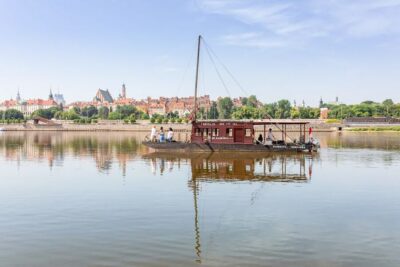
Traditional Galar Cruise on The Vistula River
Read our review →
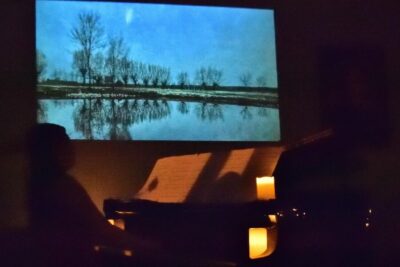
Warsaw Concert: Chopin – Painted by Candlelights with Wine
Read our review →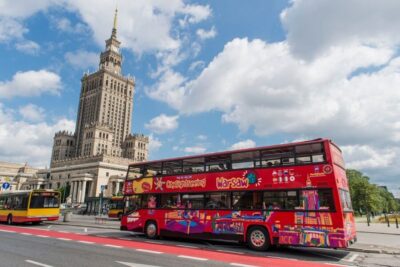
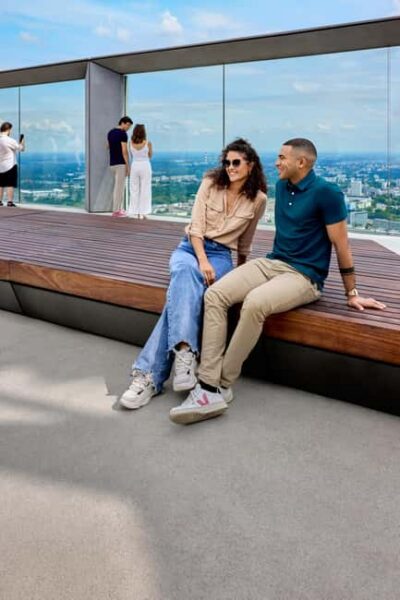
Highline Warsaw Entry With 360° Views & Rooftop Bar
Read our review →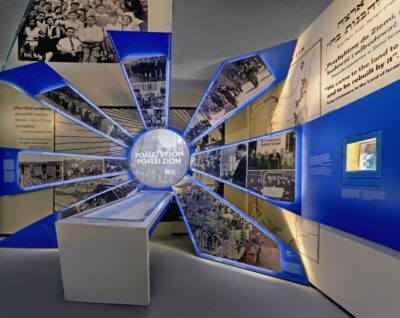
POLIN Museum of the History of Polish Jews Ticket
Read our review →
Browse the lists this tour appears in