
Review · WALKING TOURS
Warsaw in World War 2 Walking Tour
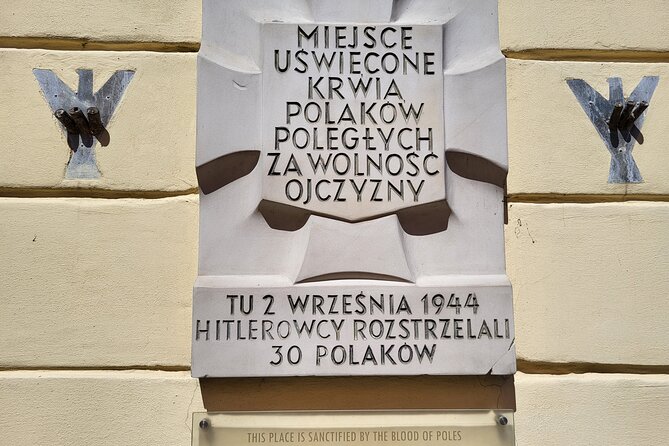
Warsaw tells its WWII story in plain sight. What makes this tour interesting is how it turns major city landmarks into a clear timeline from occupation to ghetto life and the 1944 uprising. I like the memorial-focused stop sequence and the strong English storytelling that helps you make sense of what you are seeing. One drawback: it is a fast, no-frills walk, so with meals not included, you will want to plan your timing.
You also get a small-group feel, with a maximum of 25 people, and the tour can be led by guides such as Peter, Magda, Albert, or Goska depending on the day. Expect a serious topic, but delivered in a way that stays understandable.
In This Review
- Key highlights at a glance
- Meeting at Sigismund’s Column, finishing at Krasinski Square
- Stop 1 at Plac Zamkowy: Sigismund’s Column and the wartime stage
- Stops 2 and 3: Palac Prezydencki and Plac Marszalka Jozefa Pilsudskiego
- Stop 4: Tomb of the Unknown Soldier and the Saxon Palace link
- Stop 5: Reduta Bank Polski and the Warsaw Uprising connection
- Stops 6 and 7: the Warsaw Ghetto wall memorial and Ogrod Krasinskich
- Stop 8: Warsaw Uprising Monument and how to read 1944 preparation and aftermath
- Price and value: what $19.20 buys you in central Warsaw
- Who should book this WWII walking tour in Warsaw
- Should you book this tour?
- FAQ
- How long is the Warsaw in World War 2 walking tour?
- Where do I meet the guide?
- What time does the tour start?
- When does the tour end?
- How much does the tour cost?
- Is the tour in English?
- Are admissions included for the stops?
- Is a city map included?
- Is a meal included?
- Is it possible to cancel?
Key highlights at a glance
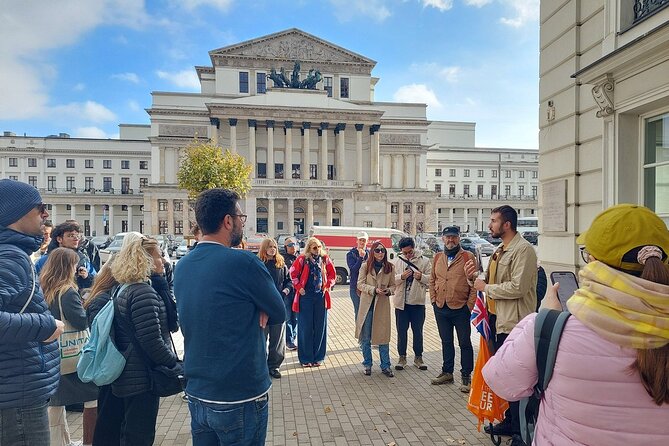
- 8 landmark stops that trace occupation sites, ghetto life, and the uprising in 1944
- English narration with clear pacing, plus audio help like a voice amplifier in larger groups
- No extra site fees because the tour stops include free admission tickets
- An end-point that makes sense, finishing around half a mile from the start near the Warsaw Uprising Monument
- Free city map included, handy for continuing your own self-guided walk afterward
- Up to 25 people, so you get community in the group, not a crowded swarm
Meeting at Sigismund’s Column, finishing at Krasinski Square
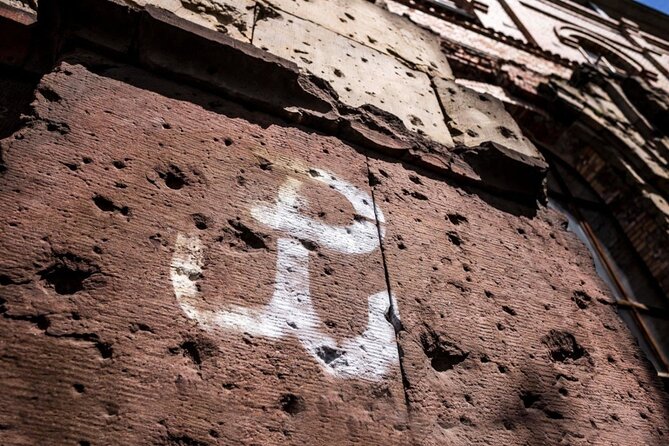
This is a straightforward, walk-first tour designed to give you a usable understanding of WWII-era Warsaw. You meet at Sigismund’s Column at Plac Zamkowy, and you start at 1:30 pm. The tour runs about 2 hours 30 minutes and ends near plac Krasińskich, close to the Warsaw Uprising Monument. In practical terms, you are not stuck going in circles. When you finish, you can keep exploring the area with momentum.
Logistics are simple. You get a mobile ticket, confirmation at booking, and the tour is offered in English. It also moves near public transportation, which matters because Warsaw weather can change quickly and you might want an easy exit route.
The pace is “active but managed.” The plan is a set of short talks at each stop, each one about 15 to 20 minutes. Reviews also point out that guides can use a voice amplifier, which helps if your group is closer to the upper end of the 25-person limit. The tradeoff is that this is not a long sit-down museum visit. You should expect standing, walking, and absorbing.
Finally, there is no meal included. That is not a dealbreaker for a half-day plan, but if you want a smooth afternoon, you will likely eat before or after the tour.
More Walking Tours in Warsaw
- Warsaw: Old Town Highlights Walking Tour in English
★ 4.7 · 1,516 reviews - Warsaw: Old Town Guided Walking Tour
★ 4.9 · 599 reviews - Half-Day Polish Food Walking Tour with Guide and Dinner
★ 4.5 · 381 reviews
Stop 1 at Plac Zamkowy: Sigismund’s Column and the wartime stage
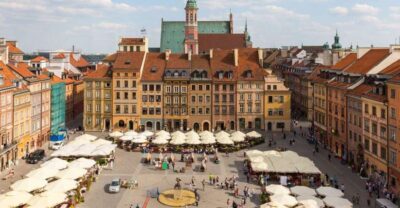
Your tour begins at Sigismund’s Column in Castle Square (Plac Zamkowy). Your guide meets you there and gives a historical introduction to set the frame. This matters because Warsaw has been rebuilt in layers, and without a quick orientation, it is easy to look at a building or square and miss the story behind it.
This first stop is about grounding you in the city’s layout and why these places matter. It is also a good moment to ask a question early, when the tour is still building your timeline. The stop itself is listed as about 20 minutes, with free admission.
A smart way to use this beginning is to look around before your guide moves you on. Castle Square is the kind of place that can feel like a classic postcard scene, but the wartime narrative starts to reframe what you are seeing. You are not just learning names. You are learning how to read the city as evidence.
Potential drawback here is also simple: if you arrive late or lose the group right away, you can miss that initial context. Since the tour then continues rapidly from stop to stop, the early minutes really count.
Stops 2 and 3: Palac Prezydencki and Plac Marszalka Jozefa Pilsudskiego
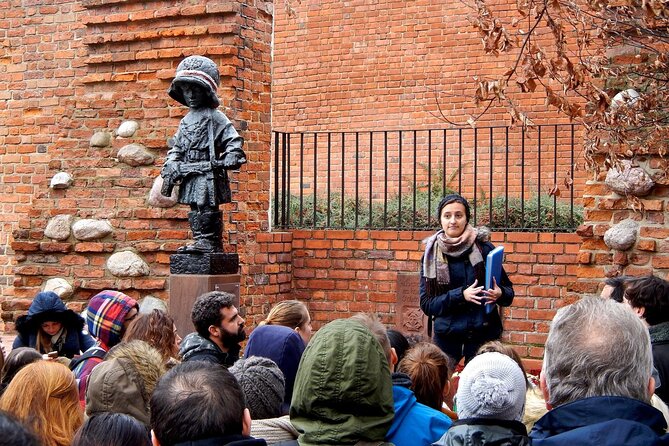
Next you head to Palac Prezydencki, where the Nazi-German Deutsches House was located during the occupation. Your guide explains the ceremonies that took place there, tying the building to how power tried to project itself through public ritual. Even if you already know the basics of WWII history, this stop has a sharper feel because it connects propaganda and control to a specific Warsaw location.
After that, you move to Plac Marszalka Jozefa Pilsudskiego, described as the center of the former Nazi-German District. Here the guide focuses on the Nazi-German offices around the square. This is where the walking format shines. You see an urban layout, not just a chapter in a book. The square becomes a map you can remember.
Both stops are listed at about 20 minutes each, with free admission tickets. That keeps the tour from turning into a ticket line exercise. It stays narrative-driven.
One thing to watch: these stops are historically heavy and concept-heavy. The point is not only what happened, but how the occupying authorities organized the city. If you prefer lighter, more recreational tours, this may feel intense. But if you want a clear storyline, this is one of the strongest parts of the walk.
Stop 4: Tomb of the Unknown Soldier and the Saxon Palace link
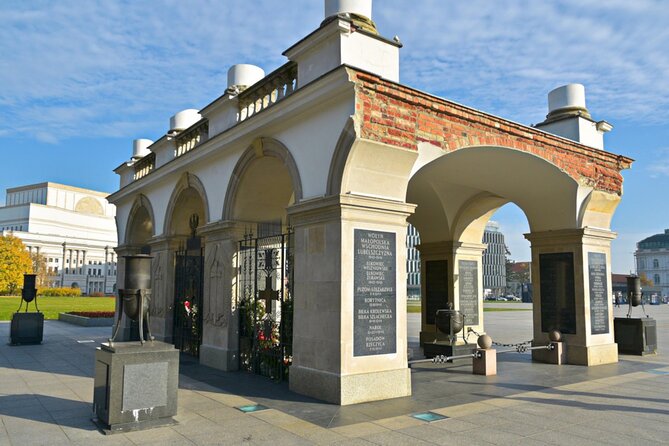
At the Tomb of the Unknown Soldier, the tour shifts toward Polish sacrifice and collective memory. Your guide talks about Polish soldiers who fought on different fronts during WWII, and also connects the narrative to the Saxon Palace, destroyed by the Nazis in the last days of the occupation.
This stop works because it gives you a “memory lens.” Instead of only focusing on occupation buildings and administration, you are asked to think about what Poland lost and what it chose to honor afterward. It also gives a clean emotional and historical pivot before the tour moves toward the uprising material.
The stop runs about 20 minutes and is listed with free admission. Symbolic places like this can sometimes feel like you are standing in silence, but here you get a guided explanation that helps you interpret what the monument represents in the wartime context.
Possible consideration: because this is symbolic and reflective, you might want a moment of personal quiet as well. The tour does not stop moving for long. If you need extra decompression time, plan a short pause before or after the tour ends.
Still in reach of Warsaw, but a different sort of day:
- Warsaw: Chopin Concert in the Old Town
★ 4.8 · 2,287 reviews - Warsaw: Traditional Galar Cruise on The Vistula River
★ 4.6 · 1,640 reviews - Warsaw Concert: Chopin – Painted by Candlelights with Wine
★ 4.8 · 1,442 reviews - Warsaw: City Sightseeing Hop-On Hop-Off Bus Tour
★ 3.6 · 1,415 reviews
Stop 5: Reduta Bank Polski and the Warsaw Uprising connection
Then you reach Reduta Bank Polski, described as one of the last partially destroyed WWII buildings in central Warsaw. Your guide uses this location to talk about the Warsaw Uprising.
This is a key stop for anyone who wants the uprising explained as something grounded in real spaces, not only in famous photos. A partially destroyed building is hard evidence. It shows how war damaged the city and why those later fights mattered so much.
The stop is about 15 minutes, with free admission. That brevity is useful. You get the essential story without turning this into a long detour.
The only practical downside is that the tour is still moving. If you tend to process best with longer pauses, keep this in mind. You can always come back to the area later on your own once you have the wartime context from the guided part.
Stops 6 and 7: the Warsaw Ghetto wall memorial and Ogrod Krasinskich
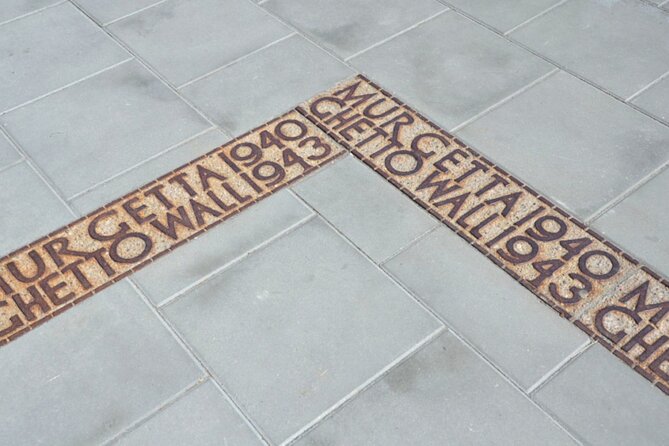
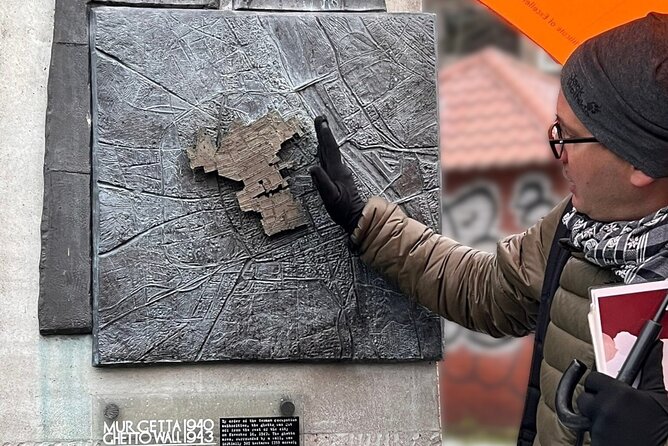
This is where the tour becomes emotionally urgent. At the Warsaw Ghetto, you visit a memorial of the Ghetto Wall. The guide explains life in the Jewish Ghetto, focusing on what residents faced and how the ghetto functioned as a controlled reality. It is not a casual stop, and the guide’s narrative pacing matters here, because the topic is both tragic and complex.
You then continue to Ogrod Krasinskich, described as a relic linked to Nalewki street, and the guide discusses the uprising in the Warsaw Ghetto. Again, the value of the walking tour is that it links geography to events. You are not only hearing about “an uprising.” You are hearing about a neighborhood space and what was at stake there.
Stop 6 is about 15 minutes, stop 7 about 20 minutes, both with free admission. You might feel that the tour is compressing a lot of information into a short time, but that is the nature of a focused, half-day plan. If you want more depth, treat this tour as your first layer, then plan to continue your reading and self-guided exploration afterward.
A realistic consideration: this portion may not suit everyone’s mood. If you travel with anyone who gets overwhelmed by Holocaust-related history, you will want to discuss whether this tour’s emotional intensity matches your group.
Stop 8: Warsaw Uprising Monument and how to read 1944 preparation and aftermath
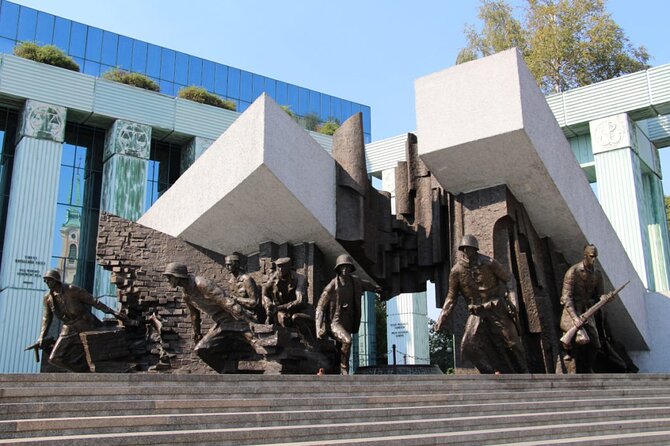
The final stop is Warsaw Uprising Monument, in Krasinski Square, and it is also where your tour finishes. Here the guide talks about preparations, the odds, the outbreak, and suppression of the 1944 uprising.
This is the tour’s “big closing frame.” Earlier stops gave you occupation, offices, symbolic sacrifice, ghetto life, and neighborhood-linked conflict. Now the story pulls into the large, central event that defines the city’s wartime identity for many people.
The stop is about 20 minutes, with free admission. Because it is the last stop, you also get an easy transition into independent exploration. You can keep walking the square area and take your time with the monument after the guide finishes the structured narrative.
If you want to maximize your experience, I suggest planning one extra hour after the tour ends. Not because the tour is missing anything, but because memorial sites reward a slower read once you have the guided context.
Price and value: what $19.20 buys you in central Warsaw
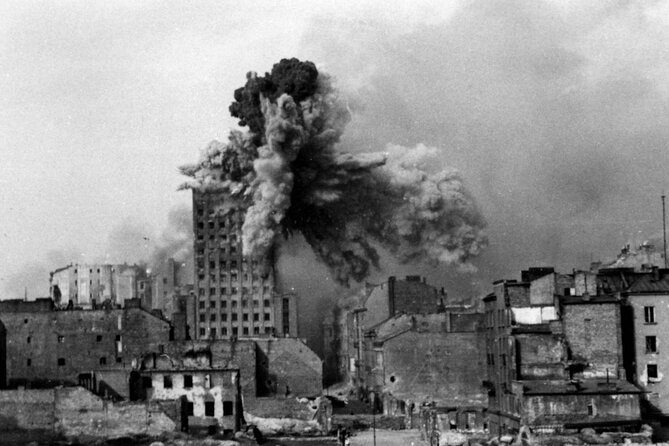
At $19.20 per person for about 2 hours 30 minutes, this tour is built for value. You get an English guide, a structured path across multiple WWII-related locations, and a free city map included. Even better, the listed stops are covered as free admission tickets, so you are not adding extra site costs while you learn.
The best way to think about this price is not only in dollars per hour, but in usefulness per hour. If you are only in Warsaw for a short time, this kind of stop-by-stop explanation can help you orient quickly. You walk away with a mental map of how the city looked and how events unfolded across those specific sites.
The main factor that affects your value is your comfort with a serious, history-centered focus and a steady pace. If you want a light sightseeing afternoon with breaks for snacks and wandering, you might find the “all business” rhythm less fun. But if you want real grounding, this is one of the most efficient options you can choose.
Also, since this tour is booked about 9 days in advance on average, try not to wait until the last minute if your schedule is tight.
Who should book this WWII walking tour in Warsaw
I think this tour is a strong fit if you:
- want a clear WWII storyline tied to real places in Warsaw
- are visiting for a short time and want an organized starting point
- like asking questions and getting explanations that connect buildings and squares to wartime events
- appreciate English narration with solid clarity, sometimes supported by a voice amplifier for larger groups
It might be less ideal if you:
- need frequent breaks or long stops for reflection
- travel with someone who is sensitive to Holocaust-related content
- prefer food-focused or purely scenic sightseeing
If you are a first-time Warsaw visitor, this tour helps you get your bearings fast. If you are returning to the city, it can still add meaning, because it connects the present-day map to the wartime logic you might otherwise miss.
Should you book this tour?
Yes, if you want a focused, guided way to understand Warsaw in WWII without bouncing between random sites. The structure is efficient, the stops are meaningful, and the finishing point near the Warsaw Uprising Monument helps you keep your exploration moving.
Just go in prepared for a serious subject and a steady walk. Bring your questions. Dress for walking. And give yourself a little extra time after the tour so the final memorial stop can settle in.
FAQ
How long is the Warsaw in World War 2 walking tour?
It runs for about 2 hours 30 minutes.
Where do I meet the guide?
The meeting point is at Sigismund’s Column, Plac Zamkowy, 00-001 Warszawa, Poland.
What time does the tour start?
The tour starts at 1:30 pm.
When does the tour end?
It ends in Krasinski Square, at plac Krasińskich, around half a mile away from the starting point.
How much does the tour cost?
The price is $19.20 per person.
Is the tour in English?
Yes, it is offered in English.
Are admissions included for the stops?
The stops listed in the itinerary have free admission tickets.
Is a city map included?
Yes, a free city map is included.
Is a meal included?
No, meals are not included.
Is it possible to cancel?
Yes, you can cancel for a full refund up to 24 hours before the start time.
Fresh listings from Warsaw
- Wolf’s Lair & Treblinka Tour in 1 day from Warsaw★ 5.0 · 37 reviews
- Tour from Warsaw: Wolf’s Lair, Hitler’s HQ Zones I and II★ 5.0 · 32 reviews
- Wolf’s Lair Private Day Trip from Warsaw★ 5.0 · 50 reviews
- Warsaw’s Old Town A Self-Guided Audio Tour★ 4.5 · 10 reviews
- Wilanow Royal Palace : SMALL GROUP /inc. Pick-up/★ 4.5 · 16 reviews
- Private 3-, 5-, or 7-Hour Warsaw Tour by Car★ 5.0 · 7 reviews
- Off the Beaten Track in Warsaw: Private City Tour★ 4.5 · 9 reviews
- Warsaw Must-See Local City Tour with Antek and Tomek★ 5.0 · 51 reviews
Walking Tours, compared.


Gdańsk City Sights & History Guided Walking Tour in English
Read our review →
Browse the lists this tour appears in