
Review · WALKING TOURS
World War 2 in Warsaw walking tour in English
Warsaw looks calm, until the stories start. This WWII walking tour uses local Polish guides and real war images to turn familiar streets into living history, all in a small-group format. It is also easy to spot the meeting point since your guide carries an Orange Umbrella.
My favorite part is the way the walk is built around personal family stories and old photographs, not just dates and uniforms. I also like how you cover the major WWII flashpoints on foot, from the former Nazi German District to the former Adolf Hitler Square, then onward to the Jewish Ghetto and 1944 resistance sites.
One consideration: it is a heavy subject, and the walking can be brisk, so go prepared for cold weather and the emotional weight. In winter, it can get brutally cold, so pack layers and plan to keep moving.
In This Review
- Quick takeaways
- Finding the orange umbrella at the big Warsaw column
- What 150 minutes of WWII in Warsaw really feels like
- The former Nazi German District, where control had a street address
- Adolf Hitler Square, learning to read power in architecture and space
- The former Jewish Ghetto, from everyday life to uprising resistance
- Execution sites and 1944 Warsaw Uprising strongholds
- Why the local Polish guides and family stories matter
- Price and value: why $20 can feel like a bargain
- Cold weather, pacing, and how to make the walk enjoyable
- Who should book this Warsaw WWII walking tour
- Should you book this WWII in Warsaw walking tour with Orange Umbrella Tours?
- FAQ
- How long is the World War 2 in Warsaw walking tour?
- Is the tour available in English?
- Where do I meet the guide?
- Is this tour a small group?
- Is the tour wheelchair accessible?
- How much does the tour cost?
- Can I cancel or change my plans?
Quick takeaways
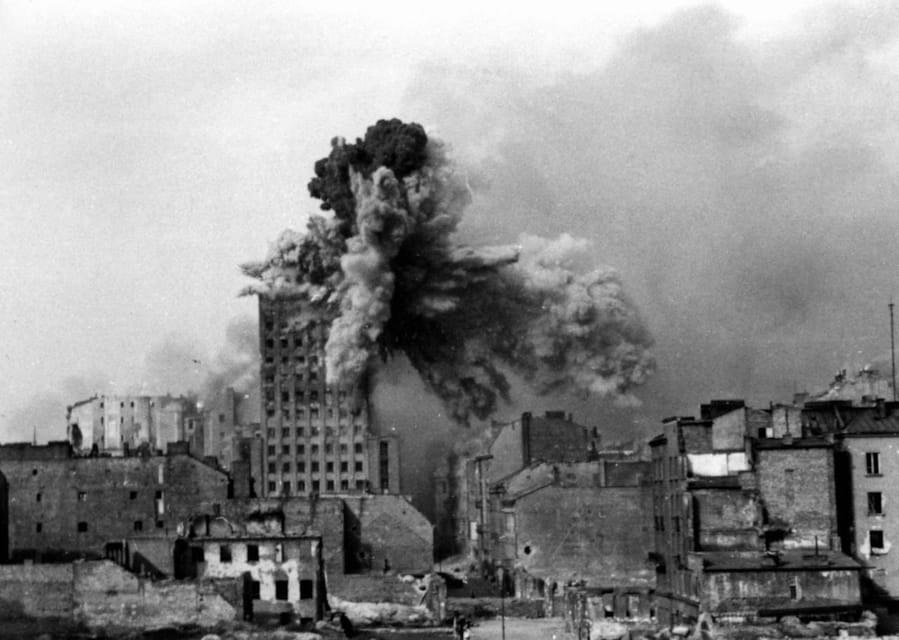
- Local Warsaw guides bring context with personal family details and period photographs
- Key WWII locations on foot connect the bombings, occupation, and uprisings to specific places
- English live narration keeps the story clear and question-friendly
- Small groups make a serious topic easier to handle without feeling rushed
- Wheelchair accessible option is available, though you still will be walking outdoors
Finding the orange umbrella at the big Warsaw column
Your biggest early win is just getting started, and this tour makes that simple. Meet your guide near a 20-meter-high column with a statue on top. Look for the guide holding an Orange Umbrella, standing close to that column. That is the whole trick, and it prevents that classic start-of-tour scramble.
Because the meeting spot is a clear landmark, you can focus on the real purpose of the walk: getting your bearings in Warsaw and understanding how occupation-era decisions played out on actual streets. The guide usually sets the tone quickly, laying out what you will see and why it mattered.
More Walking Tours in Warsaw
- Warsaw: Old Town Highlights Walking Tour in English
★ 4.7 · 1,516 reviews - Warsaw: Old Town Guided Walking Tour
★ 4.9 · 599 reviews - Half-Day Polish Food Walking Tour with Guide and Dinner
★ 4.5 · 381 reviews
What 150 minutes of WWII in Warsaw really feels like
This is a 150-minute walking tour, so think of it as a focused, moving classroom. You will be outside for long enough that winter weather can become a factor, especially with wind and icy pavement. Reviews repeatedly flag extreme cold on tour dates, and that is no small detail, since you will want your hands free for listening, not frozen to death.
More importantly, you are walking through places tied to violence and resistance. Warsaw was heavily targeted in World War 2, and daily life under occupation was shaped by terror and surveillance. Your guide handles this in a way that aims for understanding, not shock value. Still, expect the story to be emotionally intense, especially when the tour reaches the uprising years.
In practice, the walk’s structure helps. By the time you reach the most difficult sites, you have already built the geography in your head. That makes the history hit harder, in a good way, because you are not guessing where you are standing.
The former Nazi German District, where control had a street address
One major stop is the former Nazi German District. This is where the tour’s approach gets practical. Instead of treating the occupation as something abstract, you connect it to how the city was reorganized and watched.
You will learn how bombings and occupation policies shaped everyday life, including the pressure of living under the eye of the SS. Your guide’s job here is to connect the macro picture, occupation and brutality, to micro details, what people actually faced as they tried to survive.
This section is also where war photographs can do real work. Seeing images from the era alongside the buildings around you changes your sense of scale. It turns Warsaw from a “city I visited” into a “city that endured a planned system of control.”
If you like history that sticks to real places, this part is a highlight. It gives you something a museum label cannot always do: a sense of location, direction, and proximity to key events.
Adolf Hitler Square, learning to read power in architecture and space
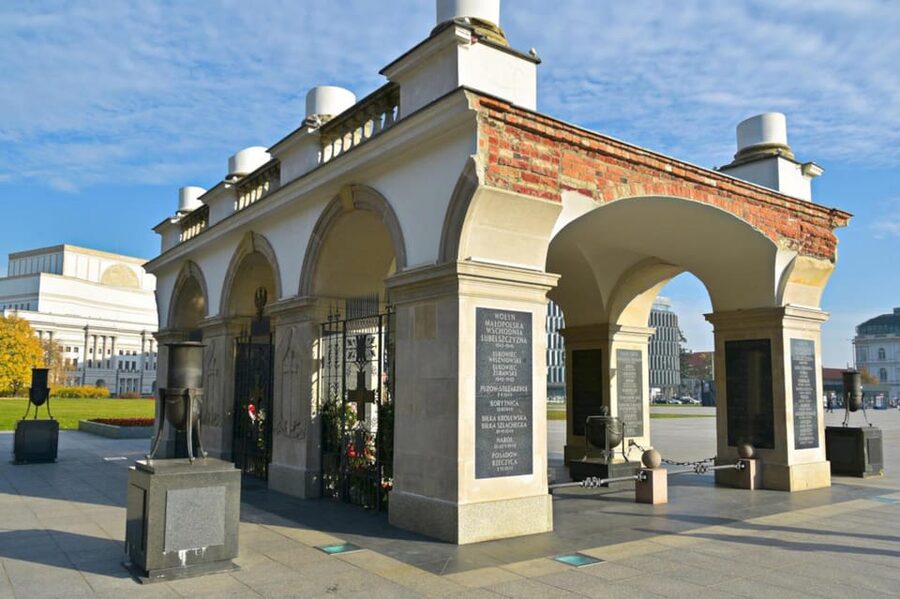
Next comes the tour’s reference point to the occupation’s worldview: the former Adolf Hitler Square. Even if you have seen photos of Warsaw in wartime, the value here is how the guide explains the meaning of the space.
A square is not just a square. It becomes a stage for authority, parades, announcements, and intimidation. When you stand near where the square existed in its occupation-era form, you understand why the story is not only about what happened behind closed doors. It is also about public pressure.
This stop is often where the narration becomes especially clear and organized, because the guide has to translate big political forces into something you can picture on a walking route. You are not forced into dense theory. You are shown how the city’s topography helped occupation power operate.
Still in reach of Warsaw, but a different sort of day:
- Warsaw: Chopin Concert in the Old Town
★ 4.8 · 2,287 reviews - Warsaw: Traditional Galar Cruise on The Vistula River
★ 4.6 · 1,640 reviews - Warsaw Concert: Chopin – Painted by Candlelights with Wine
★ 4.8 · 1,442 reviews - Warsaw: City Sightseeing Hop-On Hop-Off Bus Tour
★ 3.6 · 1,415 reviews
The former Jewish Ghetto, from everyday life to uprising resistance
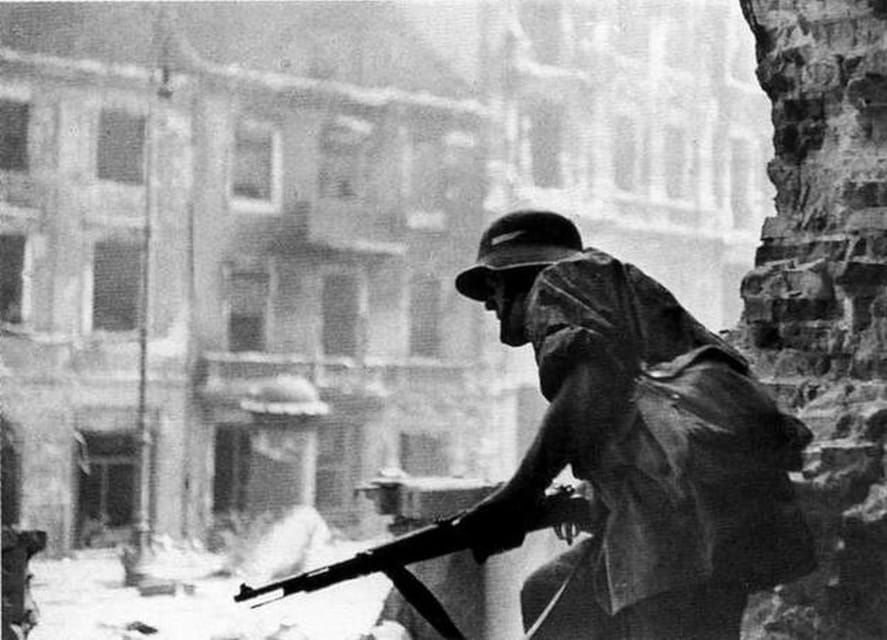
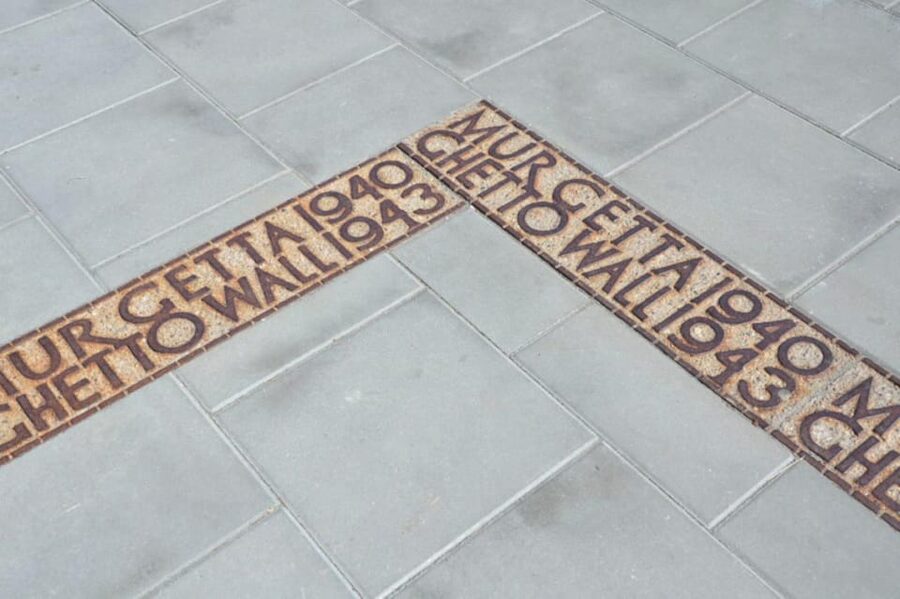
The tour then moves into one of the most important sections: the former Jewish Ghetto area and the story around the 1943 Jewish Ghetto Uprising. This part is not light. Warsaw’s Jewish community faced brutal conditions, and the ghetto concept is tied directly to persecution and confinement.
What makes this stop so meaningful is how it is framed. You are not simply told what happened. You are guided to see how the ghetto was a lived place under siege, and how resistance emerged despite impossibly constrained options.
Your guide also uses supporting material such as period war photographs, and that matters here. Images can show the physical closeness of life during the occupation, which helps you understand how quickly fear and desperation could turn into action.
If you want to understand Warsaw beyond monuments, this is a must-do piece of context. You leave with a stronger sense of why the uprising happened when it did, and what it meant for survival and dignity.
Execution sites and 1944 Warsaw Uprising strongholds
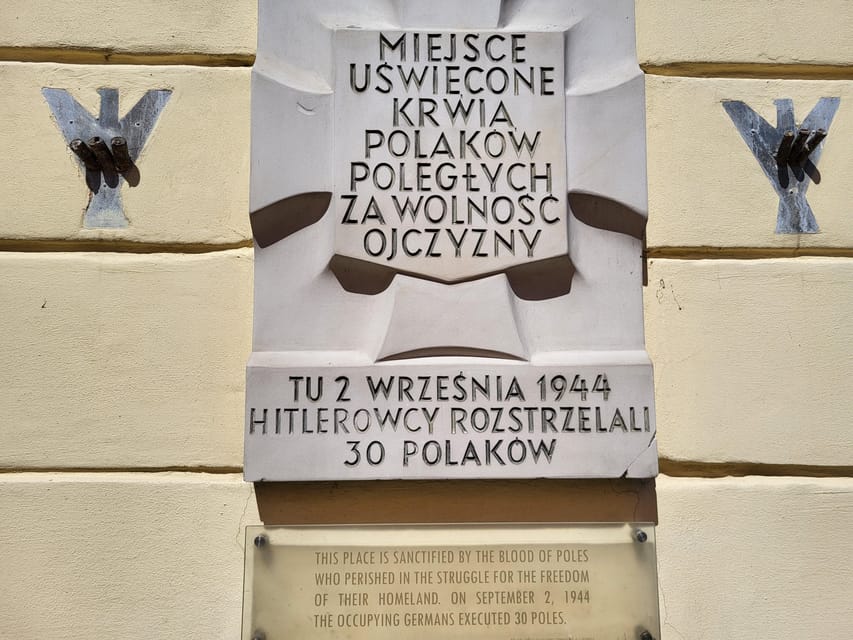
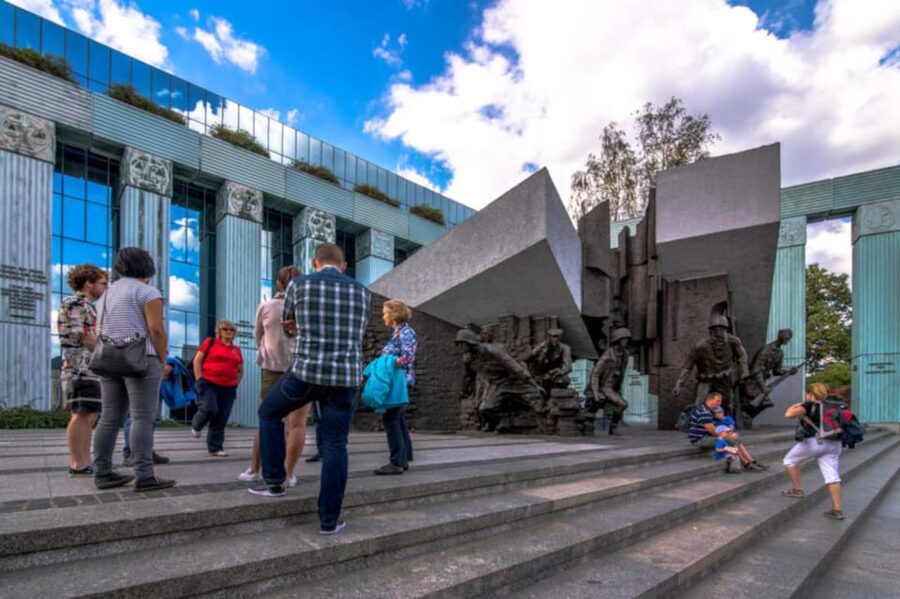
The last big theme of the walk is resistance in 1944, including execution sites and the strongholds of Polish Resistance tied to the Warsaw Uprising. This is where the tour shifts into a map of sacrifice and decision-making.
Execution sites are especially difficult, and the guide’s pacing is important. You get time to absorb what you are seeing, instead of being rushed past it. You will also hear how the uprising connected local fighters, civilian courage, and the occupation’s response.
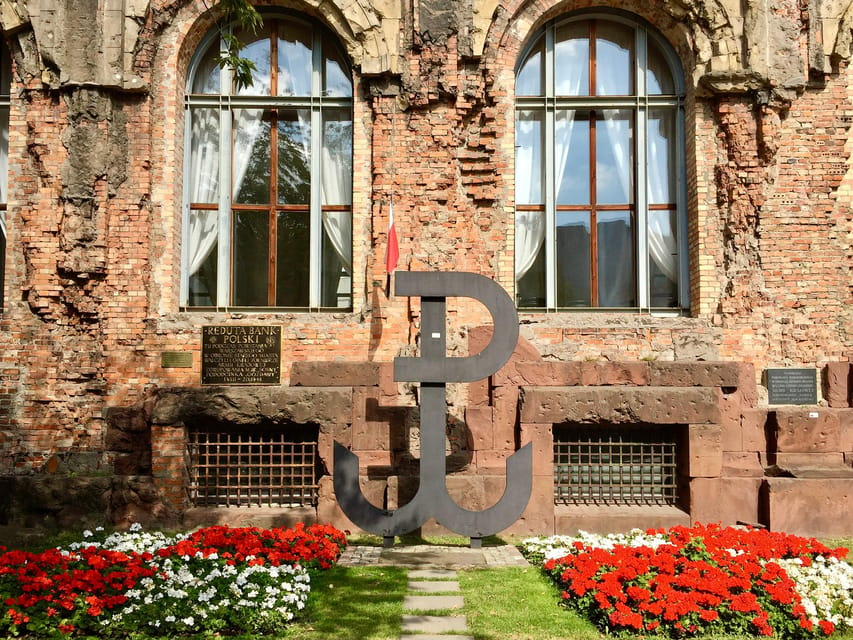
The stronghold areas add a different layer. They help you understand the uprising not as one day of fighting, but as a network of resistance linked to specific neighborhoods and opportunities. That is the difference between learning history and actually grasping how it unfolded.
If you have any interest in how wars move through neighborhoods, this is the segment that delivers it. You start noticing how streets and blocks function like routes, barriers, and hiding places, even if the city has changed since then.
Why the local Polish guides and family stories matter
This tour has one advantage that is hard to fake: the guide. You are not getting generic narration from someone who learned the topic from a book. The guiding team is made up of Poles born and raised in Warsaw, and that local grounding shows.
In the best moments, guides connect history to family memory. That means you hear small human details alongside major events. One person’s account can make a bombing, an occupation policy, or a resistance decision feel concrete instead of distant.
You will also notice names popping up again and again in the tour’s English-language storytelling. Magda, Goska (and variations like Gosia), Piotr, Andrew, Eliza, Albert, Peter, Iga, Martin, and Arek are all cited for clear speaking, careful handling of heavy topics, and a real passion for explaining what happened in a way you can follow.
That matters for you if you are not trying to become a WWII specialist. The tour gives you enough structure to keep up, even when the topic turns dark. It also helps if you want more than a museum visit, because this format ties story to geography as you walk.
Price and value: why $20 can feel like a bargain
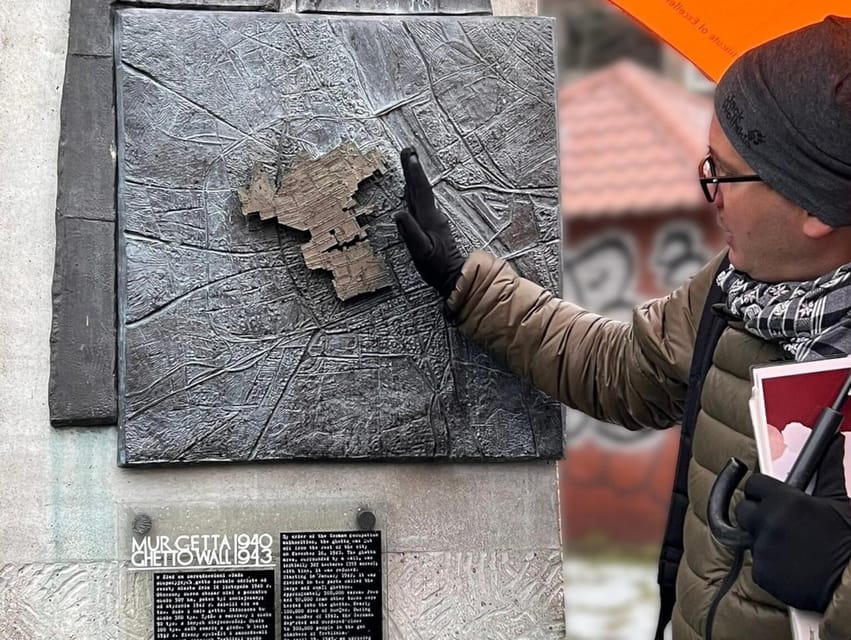
At $20 per person for a 150-minute English-guided walk, the value is in what you get per hour. You are paying for a professional local guide, plus extra effort that goes into using war photographs and personal stories to build meaning at each stop.
This is not a quick hit. Over two and a half hours, your guide has time to connect the earlier events, occupation policies, and the uprisings into one coherent route through Warsaw. That is what you typically pay more for with other city tours.
Also, small groups change the math. When the group is not huge, you can ask questions and the guide can adjust explanations. For a topic like this, that matters. You are allowed to understand at a human pace.
Cold weather, pacing, and how to make the walk enjoyable
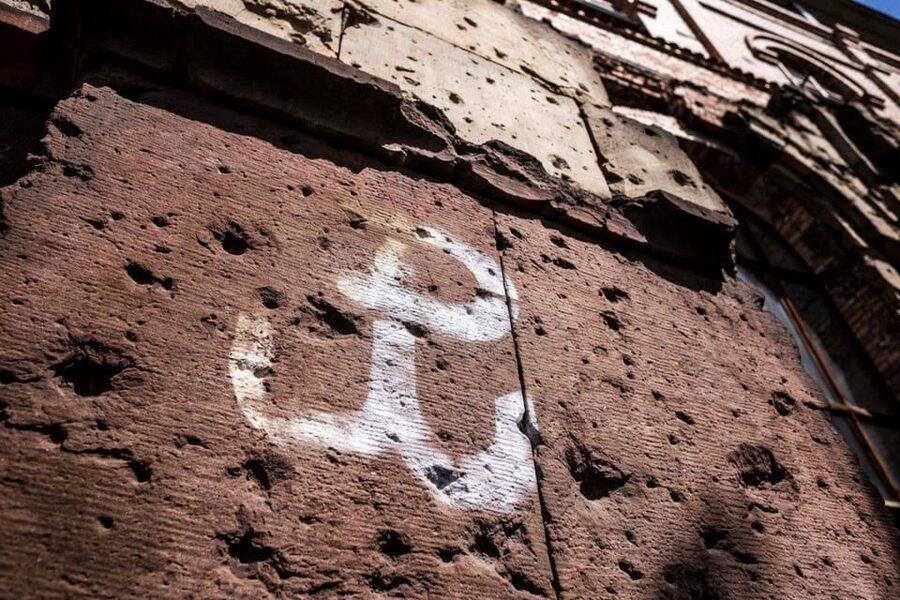
Let me be practical about the outdoor part. Warsaw in winter can be brutally cold, and some tours run in temperatures close to -20 Celsius. Even if you do not dress for that level, wind can make it feel worse. So bring real layers, a warm hat, gloves, and shoes with good grip.
Pacing is another factor. Some guides keep a steady, efficient rhythm, which makes good sense for a route built around multiple sites. That said, this is not supposed to feel like a sprint. Still, plan to keep moving and take short pauses when your guide offers them.
If you struggle with cold or long walks, consider booking earlier in the day so you are not starting late with your body already chilled. And if you have mobility limits, the tour is listed as wheelchair accessible, but you still should plan for an outdoor route.
Who should book this Warsaw WWII walking tour
I think this tour is best for you if:
- You want WWII history tied to actual locations, not only indoor exhibits
- You like clear English narration and a human storytelling style
- You are okay with a serious, emotionally heavy subject
- You prefer a walking format where the city’s geography helps you understand events
It is also a strong choice for families, as long as everyone is prepared for hard material. The guides often work to keep the group engaged, even when the topic is painful.
If you want a purely academic, military-history lecture with no emotional context, this might feel too human. But if you want the city understood through the people who lived it, it is exactly that.
Should you book this WWII in Warsaw walking tour with Orange Umbrella Tours?
Yes, you should book if you want a guided route that connects Warsaw’s occupation years to specific places, especially the former Nazi German District, former Adolf Hitler Square, the former Jewish Ghetto, and the 1944 Warsaw Uprising strongholds and execution sites.
The decision is even easier if you care about two things the tour does well: local guiding and storytelling with photographs and personal family context. At $20 for 150 minutes, it is also priced in a way that feels fair for what you get.
Just go in prepared. Dress for cold weather, expect a heavy subject, and plan to listen closely. This is the kind of tour that does not just add facts, it changes how you see the city.
FAQ
How long is the World War 2 in Warsaw walking tour?
It lasts 150 minutes.
Is the tour available in English?
Yes. The tour guide provides live commentary in English.
Where do I meet the guide?
Meet near a 20-meter-high column with a statue on top of it. Look for the guide holding an Orange Umbrella close to the column.
Is this tour a small group?
Yes, the tour is described as small groups, and you join a group of other tourists.
Is the tour wheelchair accessible?
Yes, it is listed as wheelchair accessible.
How much does the tour cost?
The price is $20 per person.
Can I cancel or change my plans?
Free cancellation is available up to 24 hours in advance for a full refund, and you can reserve now and pay later.
Fresh listings from Warsaw
- Wolf’s Lair & Treblinka Tour in 1 day from Warsaw★ 5.0 · 37 reviews
- Tour from Warsaw: Wolf’s Lair, Hitler’s HQ Zones I and II★ 5.0 · 32 reviews
- Wolf’s Lair Private Day Trip from Warsaw★ 5.0 · 50 reviews
- Warsaw’s Old Town A Self-Guided Audio Tour★ 4.5 · 10 reviews
- Wilanow Royal Palace : SMALL GROUP /inc. Pick-up/★ 4.5 · 16 reviews
- Warsaw Must-See Local City Tour with Antek and Tomek★ 5.0 · 51 reviews
- Private 3-, 5-, or 7-Hour Warsaw Tour by Car★ 5.0 · 7 reviews
- Off the Beaten Track in Warsaw: Private City Tour★ 4.5 · 9 reviews
Walking Tours, compared.

Gdańsk City Sights & History Guided Walking Tour in English
Read our review →
Browse the lists this tour appears in