
Review · MUSEUMS
Gdansk: Museum of World War II – True Story of a Living Hell
This museum doesn’t just explain WWII, it shows you how it felt. I especially liked the 20-room layout and corridor story line that keeps you oriented, and I liked the way the audio headsets and visuals make the details easier to follow. One thing to consider: the exhibitions are packed, and if you rush, the repeated themes can start to feel like work.
You’ll meet your licensed guide at the Museum of the Second World War, then spend close to three hours with guided commentary. Tickets and entry are included, and the tour is set up as a private experience for your group, in English. You’ll still want to plan your energy level, because the subject matter is heavy and the “daily life” scenes can be emotionally intense.
If you like WWII history that ties the big geopolitical story to real people and real artifacts, this is a strong pick in Gdansk. Just go in with time to slow down, use the audio when you need it, and take breaks when your brain asks for one.
In This Review
- Key highlights you should know before you go
- A 3-hour WWII walk through the Museum of the Second World War
- Meeting at Plac Władysława Bartoszewskiego 1, then heading into the main exhibition
- How the museum ties Gdansk to the origins of the war
- Inside the 20-room layout, and why the corridor matters
- From maps and decisions to objects you can almost touch
- Daily-life streets, personal fates, and the emotional weight
- Using the audio headsets without losing the visuals
- When there’s a lot to absorb, and how to keep your pace sane
- Price and value: what you pay for, and when admission may be cheaper
- Who should book this Gdansk WWII tour
- Should you book it?
- FAQ
- How long is the Museum of World War II tour in Gdansk?
- Is the tour offered in English?
- Is the museum admission ticket included?
- Is this a private tour or shared group experience?
- Where do I meet the guide?
- Does the museum provide audio or headphone options?
- Are there lifts to reach lower exhibition levels?
- Is admission ever free or discounted?
- Can I cancel for a full refund?
Key highlights you should know before you go

- 20 rooms along a long corridor that maps the war in a clear, linear way
- Audio headsets that help with translation and narration while you move
- Original artifacts and striking objects, from Stalin’s pipe to the Enigma machine
- Gdansk context that connects WWII origins to WWI and the Treaty of Versailles
- Daily-life street scenes that make the human side impossible to forget
- Practical comfort with a cloakroom and a cafe, plus lifts for lower levels
A 3-hour WWII walk through the Museum of the Second World War
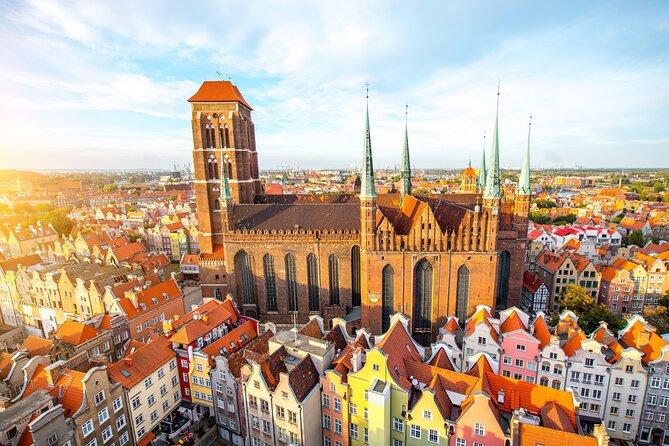
Plan on about three hours for the full guided visit. That’s not a “quick look” museum, and you’ll do yourself a favor by giving it the time it deserves.
What makes this tour a good fit is that you are not stuck reading everything yourself. Your guide’s job is to keep the story straight, explain the links, and point out what matters as you move through the rooms. By the end, you should feel like you understand how the war’s causes, decisions, and consequences fit together, especially for Poland and the region around Gdansk.
A few more Gdansk outings to weigh up
- Tower of Secrets (Wax Figure Museum, Horror House and much More)
★ 4.0 · 30 reviews - Gdansk: Private Communism Tour with Solidarity Center Museum
★ 5.0 · 28 reviews - Museum of the Second World War Gdansk Private Tour & Tickets
★ 5.0 · 24 reviews
Meeting at Plac Władysława Bartoszewskiego 1, then heading into the main exhibition
You meet at Plac Władysława Bartoszewskiego 1, 80-862 Gdańsk, Poland, right in front of the Museum of the Second World War. The tour ends back at the same meeting point, which makes it simple to build into your day.
The museum is near public transportation, so you can plan around tram and bus routes without much fuss. Once inside, expect to go down to lower exhibition levels, and the site has lifts to help with access.
How the museum ties Gdansk to the origins of the war
The strongest starting point for me was the museum’s opening explanation, which quickly moves you from the end of World War I to the unstable political reality that shaped the next conflict. In the case of Danzig, the story connects to the Treaty of Versailles, which left the city in a kind of political limbo.
Here’s the key idea: Danzig was not fully governed as part of the newly recreated Poland, and it also wasn’t treated as a straightforward German continuation after long prior control. That tension matters, because the exhibition shows how unresolved borders and power struggles create conditions where extremism can gain ground.
Your guide helps you see that the war is not one sudden event. It’s a chain, and this museum makes the chain easier to follow.
Inside the 20-room layout, and why the corridor matters

The exhibition covers a lot of ground, spread across 20 rooms along both sides of a long corridor axis. That corridor is more than architecture. It acts like your spine for the story, so you are less likely to feel lost as you shift from room to room.
The first rooms set the stage with a semi-circular screen showing the rise of totalitarian regimes across Europe. What I like about this kind of opening is that it gives you a framework before you meet the personal and local stories. Instead of doom-scrolling through history, you get a map first.
Then the museum continues with a clear split between the broader war story and the everyday-life angle. The corridor includes displays of daily life during the war, which keeps the exhibition from becoming only strategy and dates.
Still in reach of Gdansk, but a different sort of day:
- Gdansk: City Cruise on Historical Polish Boat
★ 4.8 · 2,913 reviews - Gdańsk: Sunset Cruise on a Historic Polish Boat
★ 4.9 · 977 reviews - Gdańsk City Sights & History Guided Walking Tour in English
★ 4.8 · 876 reviews - Gdansk: Firearm Shooting Experience with Instructor
★ 4.8 · 866 reviews
From maps and decisions to objects you can almost touch
The museum’s object choices are a big part of its power. You’ll see items that anchor the narrative in the real world, including Stalin’s pipe, a Sherman tank, and the Enigma machine.
These objects do two useful things at once. First, they make the war feel less abstract. Second, they help you connect the political and military story to the practical tools, propaganda, and mechanics that drove events forward.
Your guide’s commentary helps you interpret why an object like Enigma matters beyond being a famous name. You start to understand the human effort behind intelligence work, the stakes of communication, and how modern war can turn information into power.
Daily-life streets, personal fates, and the emotional weight
One of the most praised aspects is the way the museum shows daily life during WWII through built scenes that resemble streets and shops. These moments can feel almost normal at first glance, which is precisely why they hit hard once you connect them to the violence surrounding them.
A strong theme across the exhibition is the alternation between major events and individual fates. That structure helps you avoid two common museum traps. It doesn’t stay at the level of big headlines only, and it doesn’t get stuck in isolated suffering without context.
There are lots of photos, films, and documentary material shown in continuous loops, so the museum keeps talking even when you pause. If you want a quieter visit, you may find you need to step back and take breaks, because the continuous media can feel like a constant pressure.
Using the audio headsets without losing the visuals

Audio is one of the best tools here. The museum offers headphones you can use, and the audio headset approach has been described as highly practical, including translation help. It can also help you follow where you are inside the exhibitions, so you spend less time guessing and more time absorbing.
You’ll likely use a mix of ways to read and learn: the display text, the guide’s commentary, and the audio when your focus shifts. If you are the type who likes to understand everything but you also get tired of reading, this audio support is a real advantage.
I suggest using the audio most in the rooms where the story feels dense. Then when you hit a strong visual or an artifact, lower the audio volume and let your eyes do the work for a moment.
When there’s a lot to absorb, and how to keep your pace sane

This museum can feel like it never ends, and that’s not exaggeration. The repetition can be helpful, but there’s also a point where too many details repeat the same theme without giving your brain a fresh angle.
If you notice that you are walking fast just to get through it, slow down. Take short stops to let one room’s message settle before you move on. If you need a reset, the cafe and cloakroom give you a place to pause, stand up, and clear your head.
A practical tip: give yourself at least three hours minimum. If you cut it shorter, you’ll miss parts and you’ll leave feeling like you only skimmed, even if you technically saw a lot.
Price and value: what you pay for, and when admission may be cheaper
The tour price is $217.08 per person, and you should judge it by what’s included. You are getting a private tour (your group only), a licensed guide fluent in the selected language, and museum tickets included.
That structure is often good value if you care about narrative clarity. Paying for a guide matters here because the museum can be intense and information-heavy. The guide’s job is not just to tell you facts. It’s to connect causes and consequences, explain the Poland-focused angle, and keep the flow manageable.
Admission can also be cheaper on certain days. Based on review hints, some days may be free, including Tuesdays, and there may be an admission discount for people aged 60 and older. If you are traveling on one of those days, you might pay less for admission, but you’d still be choosing whether you want guided commentary versus self-paced wandering.
Who should book this Gdansk WWII tour
This is a great match if you want WWII history tied tightly to place, especially for Poland and the region around Gdansk. If you like museums that combine politics, military history, and real artifacts, you’ll feel at home.
It also works well if you want a guide to help you interpret the hardest parts. The museum doesn’t shy away from naming horrors, and that can be a lot to take in alone. With a guide, you get pacing and context, which makes it more likely you’ll finish the visit feeling informed, not just overwhelmed.
If you prefer very light, casual sightseeing, this may be heavier than you want. Still, the structure is clear enough that you can take it room by room without needing to “understand everything instantly.”
Should you book it?
Book this tour if you want the museum experience guided in English, with included entry and a licensed guide helping you connect the dots from WWI aftermath to WWII in this part of Europe. The audio support, the artifact-driven storytelling, and the room-by-room structure make it easier to stay oriented.
Skip it if you only want a self-paced museum visit, or if you know you need very short, low-intensity attractions. This place is built for careful attention, not quick consumption.
If you do book, plan for a slow start, use the audio when you need it, and leave enough time to sit with what you see before you move on. This museum has a strong way of sticking with you, and that’s the point.
FAQ
How long is the Museum of World War II tour in Gdansk?
It runs for about 3 hours.
Is the tour offered in English?
Yes, the tour is offered in English.
Is the museum admission ticket included?
Yes. Museum tickets are included with the tour.
Is this a private tour or shared group experience?
This is a private tour/activity. Only your group will participate.
Where do I meet the guide?
You meet at the Museum of the Second World War, Plac Władysława Bartoszewskiego 1, 80-862 Gdańsk, Poland.
Does the museum provide audio or headphone options?
Yes. There are headphones available at the desk for translation, and audio headsets are available to help as you move through the exhibits.
Are there lifts to reach lower exhibition levels?
Yes. There are lifts available, and access to lower levels is part of the museum setup.
Is admission ever free or discounted?
Some review notes indicate admission can be free on certain days, including Tuesdays, and there may be discounts for ages 60 and older.
Can I cancel for a full refund?
Yes, free cancellation is available. You can cancel up to 24 hours in advance for a full refund. If you cancel less than 24 hours before the start time, the amount paid is not refunded.
Fresh listings from Gdansk
- Wolf’s Lair and St. Lipka Private Tour from Gdansk★ 4.5 · 5 reviews
- Private WW2 Tour of Westerplatte,Gdansk and Stutthof Including Lunch★ 5.0 · 12 reviews
- 6 Hours Teutonic Castle Tour in Malbork★ 3.5 · 3 reviews
- Westerplatte – 2h private trip by luxury car|★ 5.0 · 4 reviews
- Undercover City Games: Gdynia★ 5.0 · 34 reviews
- Westerplatte private tour led by Expert-Guide (door to door)★ 5.0 · 5 reviews
- Aiport Gdansk Transfer to Malbork Castle or Stutthof★ 5.0 · 3 reviews
- Torun – City of Copernicus Private Tour★ 4.5 · 5 reviews
Museums, compared.
Auschwitz-Birkenau Museum and Memorial Guided Tour from Krakow
Read our review →
POLIN Museum of the History of Polish Jews Ticket
Read our review →


Krakow Schindler’s Factory Museum Guided Tour in English
Read our review →
Browse the lists this tour appears in