
Review · JEWISH HERITAGE TOURS
Krakow Jewish Quarter and Ghetto Tour by Electric Golf Cart
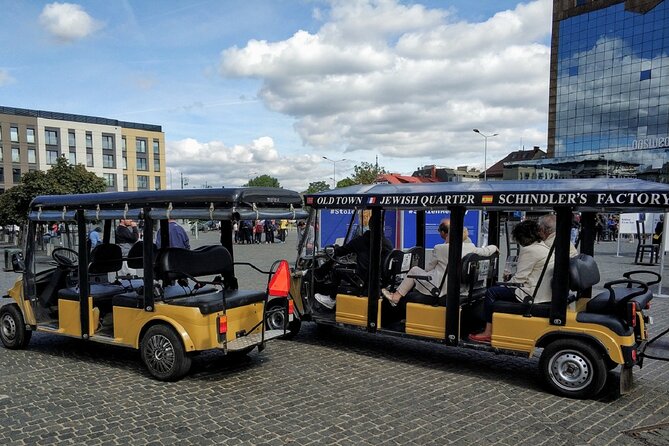
Krakow moves fast, even in the dark. This Krakow Jewish Quarter and Ghetto Tour uses an electric golf cart to connect major Kazimierz landmarks with the story of the wartime ghetto, guided in English.
Two things I really liked: you cover a lot of ground without frying your legs, and the format is built for clarity. You get an English-speaking driver plus an audio guide, so the history lands even when you are only hopping out for a short walk.
One possible drawback to plan for: some stops allow quick inside looks, and the mix can lean toward well-known churches as well as Jewish sites. If you want Jewish interiors only, you may feel slightly shortchanged in 1.5 hours.
In This Review
- Key Things to Know Before You Go
- Kazimierz and the ghetto, in 90 minutes
- Electric cart comfort, English guidance, and how the audio works
- Quick comfort tips that help
- Start and end points, plus the pace you should expect
- Szeroka Street: the heart of Kazimierz and why four synagogues mattered
- What to watch for during the stop
- The old synagogue stop: preserved history you can still see
- St Joseph Church and Podgórze Market Square: the view over the neighborhood
- How to get more from this stop
- The preserved ghetto wall fragment and the plaque that anchors memory
- A practical way to handle this emotionally
- Plac Zgody and Umschlagplatz: where deportations took shape
- The pharmacy story at the ghetto’s edge: a small bright spot
- How I’d use this as a traveler
- Price and value: is $34.75 worth 1.5 hours in Kazimierz?
- Who this electric cart tour fits best
- Who might want a different approach
- My booking advice: should you do it?
- FAQ
- How long is the Krakow Jewish Quarter and Ghetto Tour by Electric Golf Cart?
- How much does the tour cost?
- Is the tour offered in English?
- What is included in the price?
- Is hotel pickup or drop-off included?
- Where do I meet the tour?
- Where does the tour end?
- What is the group size limit?
- Can I cancel for a full refund?
Key Things to Know Before You Go
- Electric golf cart touring keeps the pace manageable while still hitting lots of monuments
- English narration plus an audio guide helps you follow the story as you move
- Szeroka Street is treated as the heart of Kazimierz, tied to its former synagogue density
- A preserved ghetto wall fragment with a commemorative plaque adds weight to the route
- Plac Zgody, Umschlagplatz, and the pharmacy story give real shape to the deportation timeline
- Maximum group size of 50 usually keeps the experience organized and on schedule
Kazimierz and the ghetto, in 90 minutes
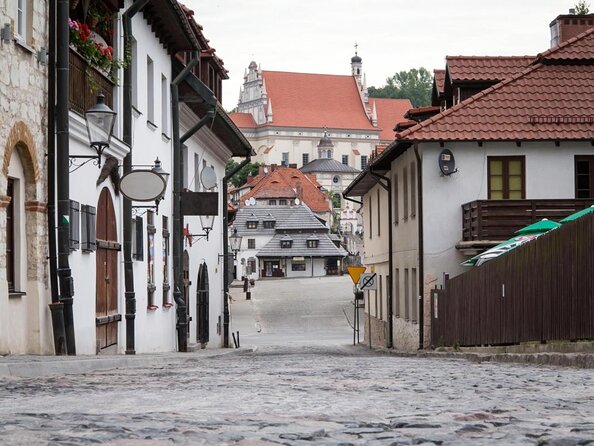
Kazimierz is the part of Krakow that helped carry Jewish life for centuries. On this tour, you do not just get scenery. You get a guided timeline of how that community lived, how the area changed, and how the wartime ghetto fits into the same streets you see today.
What makes this tour practical is the cart. Kazimierz and nearby Podgórze have a lot going on, and you want your time to be about the meaning, not about trudging between stops. The tour also aims to visit over 20 important cultural monuments in Kazimierz, so you leave with a mental map. That is huge if you plan to return later on foot.
The best part of the 90-minute structure is that it gives you context fast. You start with Kazimierz as a former hub of Jewish life, then you move toward the ghetto story, including two of the route’s hardest symbolic locations: the former ghetto wall fragment and Umschlagplatz at Plac Zgody. It is intense, but it is organized, so you are not left guessing what you are seeing.
More Golf Cart Tours in Krakow
- Krakow: City Sightseeing Tour by Electric Golf Cart
★ 4.5 · 3,264 reviews - Krakow: City Sightseeing Tour Eco Electric Buggy Golf Cart
★ 4.7 · 3,143 reviews - Krakow: Extended City Sightseeing Tour – Eco Buggy Golf Cart
★ 4.7 · 794 reviews
Electric cart comfort, English guidance, and how the audio works
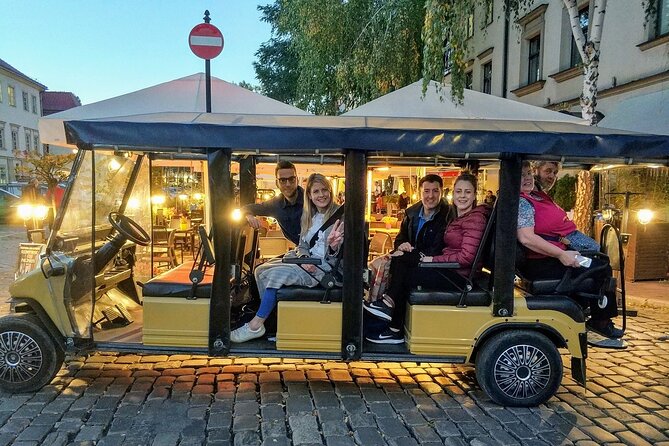
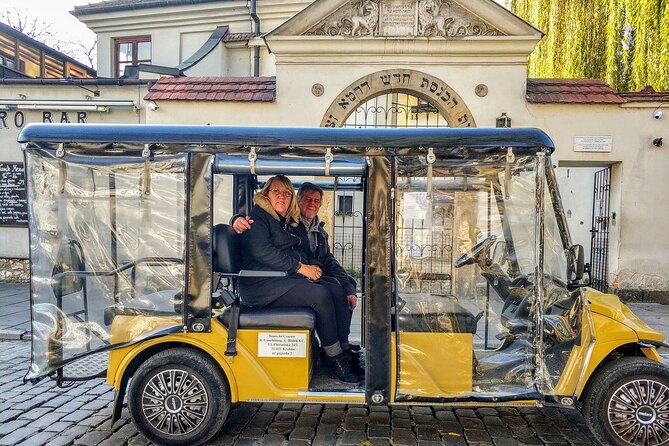
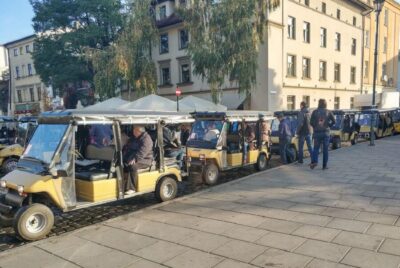
You are not out there in a walking marathon. You ride in an electric golf cart during the tour, which makes a big difference if you are traveling in heat, rain, or cold. Several guides for this experience have earned strong praise for keeping things clear and human, including names like Matt, Natalie, Olivia, Martina, Michael, and Phillips. The common thread is that the narration connects the street names to real life.
The tour includes an audio guide plus an English-speaking driver. That combo matters. The driver gives you the live story as you move, while the audio helps you catch details at stops without constantly straining to hear over a group.
One small heads-up: the audio experience may be delivered through personal headsets or a headset-style setup, which can limit side conversations. You will likely be listening more than chatting, and that is fine. For this subject, focused listening is often the right call.
Quick comfort tips that help
- Wear layers. You will be outside, then entering churches or synagogues briefly.
- Bring a small bag you can manage in quick stop windows.
- If you care about getting the best view for photos, consider asking for front or side seating when you board, since seating may vary by cart load.
Start and end points, plus the pace you should expect
This is a point-to-point experience. You start at Mikołaja Zyblikiewicza 2, 31-029 Kraków, and you end at Mikołaja Kopernika 3, 31-034 Kraków. There is no hotel pickup/drop-off, so plan your arrival around public transit or a walk to the meeting point.
The timing is also worth respecting. The tour runs for about 1 hour 30 minutes (approx.), and it is designed to move. Expect short stop windows where you can step out, look around, and sometimes go inside.
Also note the scale: the tour has a maximum of 50 travelers. That is large enough to keep things rolling, but small enough that you should still get guidance and clear directions at each pause.
If you are trying to fit this into a busy day, this format is a win. You get orientation, then you can choose what to revisit. If you only have one afternoon for Kazimierz, this tour can be a solid backbone.
More Jewish Heritage Tours in Krakow
- Krakow: Schindler’s Factory & Ghetto Guided Tour
★ 4.7 · 1,694 reviews - Krakow: Jewish Quarter and Former Ghetto Tour
★ 4.9 · 1,441 reviews - Krakow: Bike Tour of Old Town, Jewish Quarter and the Ghetto
★ 4.9 · 1,155 reviews - Krakow: Kazimierz Jewish Quarter Walking Tour
★ 4.8 · 571 reviews
Szeroka Street: the heart of Kazimierz and why four synagogues mattered
Kazimierz has a reputation for being layered, and Szeroka Street is where that layering comes into focus. This street is described as the heart of Jewish Kazimierz, and the tour highlights something striking: four synagogues once stood on Szeroka Street, something described as unheard of elsewhere in Europe.
When you stand in the area, you can see why that detail is so important. It signals that this was not a small, scattered community. It was dense, organized, and culturally loud in its own way, with religious life anchored right into everyday street life.
On this stop, you also get the sense of how festivals and remembrance play out in public space. Szeroka Street is linked in the tour narration to the final concert of the Jewish Culture Festival. That is one reason the area still feels alive today. Even when you are learning about tragedy, you are also learning where community identity survives.
What to watch for during the stop
- Look for how the street layout makes movement easy, so you understand why crowds formed here historically.
- If you get a brief chance to get closer to buildings, use it. In this neighborhood, street-level details help you read the area later on your own.
The old synagogue stop: preserved history you can still see
After Szeroka Street, the tour includes a stop at one of the oldest synagogues in Poland, described as preserved in such a good condition. This matters because a lot of Jewish heritage across Europe did not survive. When something is still intact, you can study it with your eyes, not just through photos.
This is the kind of stop where the emotional weight can be mixed with awe. You are not only hearing about history. You are seeing what lasted. That is why the tour frames it as part of understanding past and present Kazimierz residents, not just the wartime story.
One practical note: because the tour is timed, you may not have long inside-view time. Still, even short visits can help you connect the street-scale story to the architecture.
If you are the type who likes to return for deeper interior reading later, this is a good entry point. You can take the tour now, then go back with your own questions.
St Joseph Church and Podgórze Market Square: the view over the neighborhood
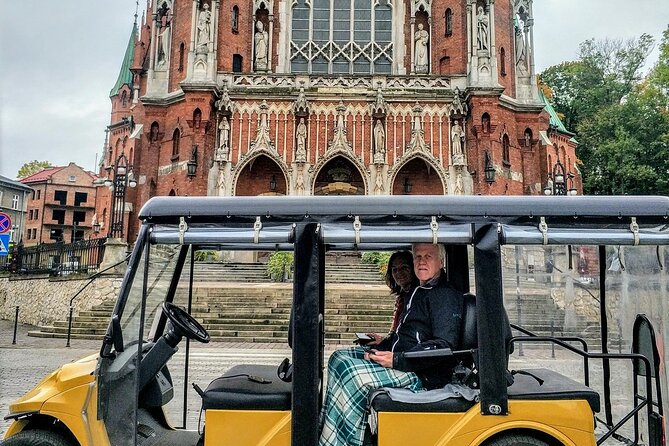
You then shift to a major visible landmark: the parish church of St Joseph. It is described as distinctive and widely recognizable, and the tour notes it dominates the surface of Podgórze Market Square, which became part of Krakow only in the 20th century.
This is one of the moments where you learn to read the city as a palimpsest. The neighborhood’s Jewish past is central to the tour, but the present-day skyline is mixed. St Joseph’s Church is a good example. You can understand why people in different eras built different kinds of institutions in the same urban space.
When the narration connects Podgórze’s incorporation into Krakow to what you are seeing now, you start understanding how city borders and identities shift over time. That context is useful later when you try to map what you learned to what you see in guidebooks.
How to get more from this stop
Even if you are not an architecture person, take 30 seconds to look at the church’s position from the square. It teaches you how dominance in a city often means who had resources and visibility at a given moment.
The preserved ghetto wall fragment and the plaque that anchors memory
The tour includes a stop at a small fragment of the original wall around the former ghetto, preserved to our times, with a plaque commemorating the fate of the inhabitants. This stop is brief, but it is one of the most important on the route because it is tangible.
This is where the tour goes from history talk to physical reminders. A wall fragment does not explain itself. The plaque and narration do the work, and they make you slow down.
If you tend to rush through memorial stops, give yourself permission not to. This is not a photo-op moment only. It is a grounding moment. You are seeing a remnant that survived, and you are learning what it stood for.
A practical way to handle this emotionally
If you get overwhelmed, step back for a minute and let the group move first. You are not failing the experience. You are processing it in a way that lets you stay present for the next stop.
Plac Zgody and Umschlagplatz: where deportations took shape
Next comes a heavy symbolic location: Plac Zgody, also known in the tour notes as Concord Square. Under Nazi occupation, this area was designated Umschlagplatz, the place where Jews had to congregate to be deported.
This stop is valuable because it pins the story to a specific place name you can later recognize when you study photographs or read about the Holocaust. You are not just learning that deportations happened. You are learning how a system used real squares and real streets.
The tour also frames this section as a meeting point between wartime history and everyday life. You can look around and see that the city did not stop being a city. That is part of what makes the topic so haunting.
If you want one takeaway from the whole tour, it is this: place names matter. They turn an enormous tragedy into something you can locate, then remember.
The pharmacy story at the ghetto’s edge: a small bright spot
One stop focuses on a pharmacy that functioned as an asylum or embassy during deportation. The tour notes that it provided shelter during deportation, delivering messages and packages inside and outside the ghetto. It is described as a symbolic place, a small bright spot on the map of a tragic place.
This part of the tour is important for balance. The story can be only suffering if you let it. By including the pharmacy, the tour shows that even in a system designed for cruelty, people tried to protect others in practical ways.
When you leave this stop, it is worth holding two ideas at once. The ghetto was a site of forced deportation. And within that same structure, there were people who helped. The contrast makes the memory sharper, not softer.
How I’d use this as a traveler
If you like to do your own follow-up, this is where you can later search for names, context, and photos. The tour gives you a concrete anchor, so your reading does not feel abstract.
Price and value: is $34.75 worth 1.5 hours in Kazimierz?
At $34.75 per person for about 1 hour 30 minutes, the value comes from what you do in that time. You cover a large area by cart, you hear the story in English, and you stop at multiple major points tied to both Kazimierz life and ghetto history.
The included extras help justify the price. You get transport by golf cart, an English-speaking driver, and an audio guide. That combination reduces friction. You do not need to line up additional guides or piece together the story yourself while moving across neighborhoods.
Is it a deep, slow, read-every-sign kind of experience? No. The duration is short. But the tour is built for orientation and impact, not for exhaustive study of every site.
If you are the kind of visitor who likes to cover the main nodes first, then return on your own, this price is easier to defend. It also helps if you are limited by time or want to avoid long walking in hot or cold weather.
Who this electric cart tour fits best
I think this tour is best for three types of visitors.
First, it fits time-crunched travelers. You get over 20 cultural monuments covered in a relatively short window, which is hard to match on foot.
Second, it fits people who want the historical story to be guided and organized. The mix of live English narration plus the audio guide helps you connect street names to what you see.
Third, it fits travelers who prefer reduced walking. Kazimierz and Podgórze can be easier to do from a cart, especially when you still want access to key memorial and cultural sites.
Who might want a different approach
If your top priority is spending long inside Jewish buildings, you may want to supplement this tour with additional time. The route includes places that are significant, including well-known religious sites, and quick stop windows can limit how much interior time you get. That is not a problem for everyone, but it matters if interiors are your main interest.
My booking advice: should you do it?
If you want an organized overview of Kazimierz plus the ghetto story, I would book it. The cart format makes the experience efficient, and the route includes the key emotional anchors: the preserved wall fragment, Umschlagplatz at Plac Zgody, and the pharmacy stop that shows how people tried to help.
Skip it only if you have plenty of time and you strongly prefer a slower, self-paced approach where you can linger much longer at fewer sites. In that case, you might combine walking and reading without being tied to a fixed 1.5-hour run.
If you only have one day or only one afternoon, this cart tour is a smart start. It helps you understand where you are standing, and it gives you a short list of places to revisit when you are ready to go deeper.
FAQ
How long is the Krakow Jewish Quarter and Ghetto Tour by Electric Golf Cart?
It lasts about 1 hour 30 minutes.
How much does the tour cost?
The price is $34.75 per person.
Is the tour offered in English?
Yes, it is offered in English.
What is included in the price?
You get an audio guide, transport by golf cart during the tour, and an English-speaking driver.
Is hotel pickup or drop-off included?
No, hotel pickup and drop-off are not included.
Where do I meet the tour?
The start is at Mikołaja Zyblikiewicza 2, 31-029 Kraków, Poland.
Where does the tour end?
It ends at Mikołaja Kopernika 3, 31-034 Kraków, Poland.
What is the group size limit?
The tour has a maximum of 50 travelers.
Can I cancel for a full refund?
Yes. You can cancel up to 24 hours in advance for a full refund. If you cancel less than 24 hours before the start time, the amount paid is not refunded.
More Jewish Heritage Walks in Krakow
- Krakow: Kazimierz, Schindler’s Factory & Ghetto Guided Tour
★ 4.8 · 460 reviews - Full Bike Tour – the Old Town, Jewish Qtr & the Ghetto NEW BIKES
★ 5.0 · 437 reviews - Krakow: Jewish Ghetto Walking Tour
★ 4.6 · 349 reviews - Jewish Krakow Walking Tour
★ 5.0 · 307 reviews
More Golf Cart Rides around Krakow
- Krakow: Jewish Quarter and Ghetto Electric Golf Cart Tour
★ 4.6 · 348 reviews - Krakow: City Sightseeing Tour Eco Electric Buggy Golf Cart
★ 4.5 · 311 reviews - Krakow Grand City Tour by golf cart – All 3 districts
★ 5.0 · 311 reviews - Krakow: City Tour by Electric Golf Cart
★ 4.9 · 310 reviews
Fresh listings from Krakow
- Zakopane & Gubalowka Funicular – Private Winter Tour from Krakow★ 5.0 · 10 reviews
- ZALIPIE – painted village, unique PRIVATE tour from Krakow★ 5.0 · 20 reviews
- stag dog chase Krakow prank★ 5.0 · 4 reviews
- ZALIPIE – painted village, unique small group tour from Krakow★ 5.0 · 7 reviews
- Full-Day Zalipie Painted Village Guided Tour★ 4.0 · 3 reviews
- Sleigh Ride & Bonfire in Zakopane with Funicular – Private Trip★ 5.0 · 48 reviews
- Zakopane PRIVATE TOUR from Krakow★ 5.0 · 18 reviews
- Zakopane Funicular Hill & Thermal Springs regular tour★ 5.0 · 9 reviews
Jewish Heritage Tours, compared.
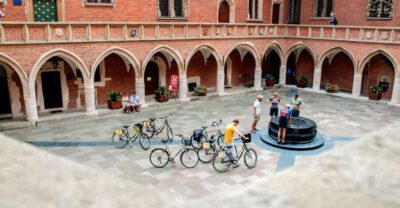
Bike Tour of Old Town, Jewish Quarter and the Ghetto
Read our review →
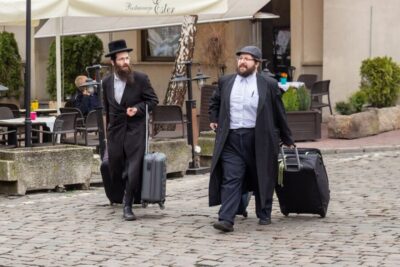
Kazimierz, Schindler’s Factory & Ghetto Guided Tour
Read our review →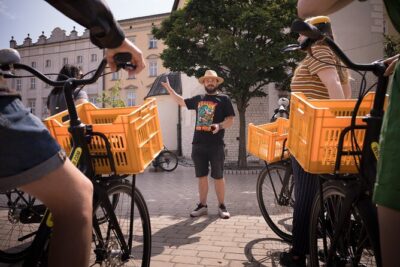
Full Bike Tour – the Old Town, Jewish Qtr & the Ghetto NEW BIKES
Read our review →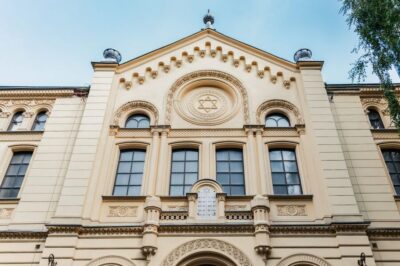
Warsaw Ghetto Private Walking Tour with Hotel Pickup
Read our review →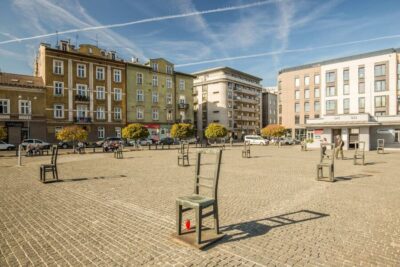
Jewish Quarter and Ghetto Electric Golf Cart Tour
Read our review →Browse the lists this tour appears in