
Review · JEWISH HERITAGE TOURS
Krakow: Old Town, Jewish Kazimierz and Ghetto Sightseeing by Electric Golf Cart
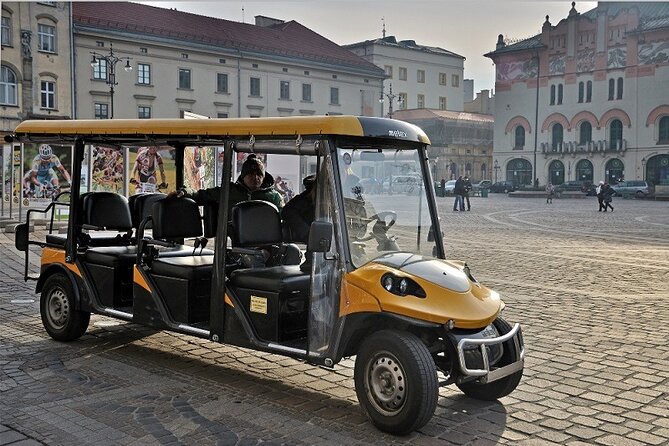
Electric golf carts make Krakow feel fast. This 2.5-hour electric golf cart tour is a smart way to cover Old Town highlights plus Kazimierz and the ghetto without losing your whole day to walking. You cruise between key monuments with an English audio system that keeps the flow moving.
I like that the route hits the big visual anchors fast, from the Main Market Square vibe to St. Mary’s Basilica and the medieval Barbican. I also like the storytelling boost when you get a strong guide, with names like Radic, Filip W, Michael, Peter, and Tom showing up in the guide feedback for being attentive and informative.
One caution: stops can feel short, and Old Town can get crowded enough that photo angles and viewpoints are harder. If you want more time at each spot, especially in the center, booking an earlier time slot helps.
In This Review
- Key things to know before you ride
- Electric golf cart logistics that actually matter in Krakow
- Old Town in under three hours: Main Market Square and Cloth Hall
- Town Hall Tower and St. Mary’s Basilica: the details you remember
- Juliusz Słowacki Theatre and the Barbican: culture plus medieval defense
- Kazimierz by cart: Tempel Synagogue, Szeroka Street, and small prayer houses
- Podgórze and the ghetto story: St. Joseph, the wall fragment, Umschlagplatz
- Pacing and photo time: what the 2.5 hours feels like
- Price and value: why $56.47 can make sense
- Best fit for you: who should book this tour
- Should you book the electric cart Krakow tour?
- FAQ
- How long is the Krakow Old Town, Kazimierz, and Ghetto electric golf cart tour?
- What language is this tour offered in?
- How many people are in the group?
- Where do I meet and where does the tour end?
- Is a mobile ticket provided?
- Is it okay to bring luggage?
- What is the cancellation policy?
Key things to know before you ride
- Small group feel (max 8 travelers) keeps the tour from turning into a shuffle line.
- Electric cart efficiency helps you see more in less time, especially if you do not want long walks.
- St. Mary’s Basilica details get singled out, including the altar by Veit Stoss and major ceiling artwork by Jan Matejko.
- Kazimierz is built into the loop, not treated as an optional detour.
- You cover both heritage and tragedy, with stops tied to Jewish history and the former ghetto area.
- Photo time is quick, so plan to use your stops for photos and save longer visits for later.
Electric golf cart logistics that actually matter in Krakow
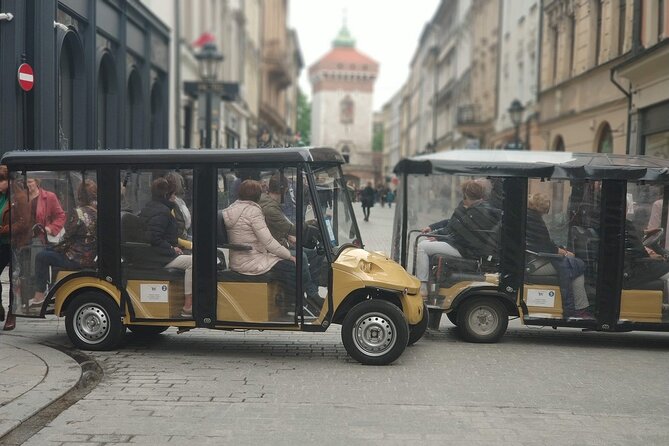
Krakow rewards slow wandering, but most of us do not have a whole week in our pocket. This tour solves the time math by moving you between neighborhoods in a quiet, electric vehicle instead of asking you to cross town on foot.
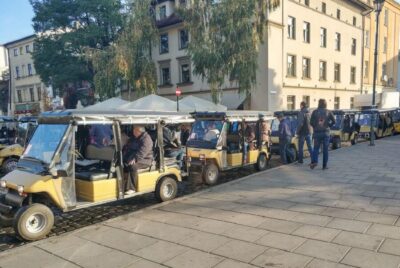
You sit and ride for most of the route, and that changes what you can do with your day. With the cart, I find it easier to handle uneven pavement and long sightline walks around the busiest areas. One review also called out that this kind of format works well if you cannot stay on your feet for long stretches.
The tour is offered in English, and it uses an audio system as you travel between stops. Then, when the guide is strong, you get extra context and the chance to ask questions. Multiple guides are praised for being professional and for taking time to explain what you are seeing, not just reading a script.
The main tradeoff is pacing. You might get enough time to look, take pictures, and move on, but you should not expect long, sit-down visits at every stop. In fact, one piece of feedback was pretty direct: if you want more time for photos at each monument, you may wish for longer photo pauses.
More Golf Cart Tours in Krakow
- Krakow: City Sightseeing Tour by Electric Golf Cart
★ 4.5 · 3,264 reviews - Krakow: City Sightseeing Tour Eco Electric Buggy Golf Cart
★ 4.7 · 3,143 reviews - Krakow: Extended City Sightseeing Tour – Eco Buggy Golf Cart
★ 4.7 · 794 reviews
Old Town in under three hours: Main Market Square and Cloth Hall
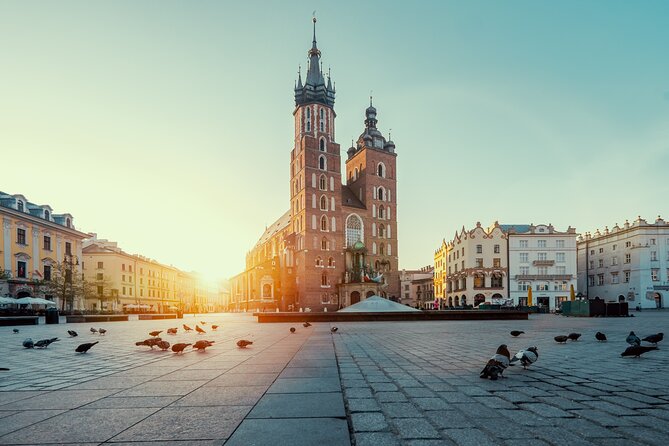
Your first wow factor is Krakow’s Main Market Square, the central public space where medieval life once pulsed and where today you still feel the city’s rhythm. The tour describes it as the expansive Market Square of medieval Europe, packed with the most characteristic elements of Krakow in one place.
This is a good stop for orientation. Even if you do not go into anything, you get a reference point for where you are in the city, what streets connect out, and why so many landmarks cluster here. It is also a place where you can quickly judge what you want to return to later, once crowds are less intense.
Next comes Sukiennice, the Cloth Hall, which the tour frames as Krakow’s oldest commercial center and a key piece of renaissance architecture. Standing in the square, the Cloth Hall matters because it explains how Krakow’s wealth and craft tradition fed the city’s layout. It is the kind of building that looks even better when you see it from different angles, which is hard to do when you only have one shot.
If you’re thinking about value, this is a good use of your money. You are not paying to hear one monument described in isolation. You are paying for an efficient way to connect the square, the commerce centerpiece, and the nearby civic architecture into one mental map.
One practical note: Old Town can be crowded, and carts can stack up near prime photo spots. If you care most about photography, you may need to accept that sometimes your view is blocked by other vehicles, or that you stand in a spot just long enough to shoot and then move.
Town Hall Tower and St. Mary’s Basilica: the details you remember
The Town Hall Tower is the “vertical landmark” in the center. The tour highlights the sheer scale, including 70 meters, 110 stone steps, executioner’s dungeons, and the idea that it has been part of the Main Market Square life for centuries. Even without climbing, it is a strong mental landmark because it tells you where civic power used to live.
Then you get to St. Mary’s Basilica, and this stop is one of the most payoff-heavy segments for art lovers. The tour points you to the high altar by Veit Stoss, the bugle call, and the star-strewn murals by Jan Matejko that cover the vaulting. That is a lot of wow per stop, and it is exactly the sort of context that an audio guide plus live explanation can make easier to understand.
If you want to enter places, check how you can hop off. One review notes that you may need to inform the guide if you want a quick visit into a cathedral or a similar stop. So if St. Mary’s Basilica is on your “must go inside” list, plan to ask early rather than assuming you will automatically get time inside.
This is also where you can decide how you want to spend the rest of your Krakow day. If your priorities are interior art, you will likely want to come back. If your priorities are overview and landmarks, this stop does the job.
Juliusz Słowacki Theatre and the Barbican: culture plus medieval defense
Next up is the Juliusz Słowacki Theatre, described as operating continuously since 1893. The tour also calls its architecture one of the most precious examples of theatre design in Europe. Even if you only see it from the outside, you get a sense that Krakow has long treated culture as a major civic activity, not just a tourist product.
It is a nice contrast right after the heavy religious art stop. You go from indoor spiritual drama to a public stage, and the city starts to feel like it has layers, not just one face.
Then comes the Barbican, a pearl of Krakow’s fortifications and a striking example of medieval military architecture. The tour leans into an engaging legend, that it was never captured during a siege and that defenders repulsed an attacking force with a single shot. Legends aside, the structure itself communicates defense logic in stone, and it is easy to see why it earned a reputation in stories.
For photographers, the Barbican segment is often where you can get cleaner angles because fortifications sit differently than the open square. Still, you should not expect perfect solitude in the center.
If you get a guide who likes to talk, this is a good stop to ask questions. A strong guide can connect how the city was defended to how Krakow grew around its core, and that connection makes the rest of the trip feel less like a checklist.
More Jewish Heritage Tours in Krakow
- Krakow: Schindler’s Factory & Ghetto Guided Tour
★ 4.7 · 1,694 reviews - Krakow: Jewish Quarter and Former Ghetto Tour
★ 4.9 · 1,441 reviews - Krakow: Bike Tour of Old Town, Jewish Quarter and the Ghetto
★ 4.9 · 1,155 reviews - Krakow: Kazimierz Jewish Quarter Walking Tour
★ 4.8 · 571 reviews
Kazimierz by cart: Tempel Synagogue, Szeroka Street, and small prayer houses
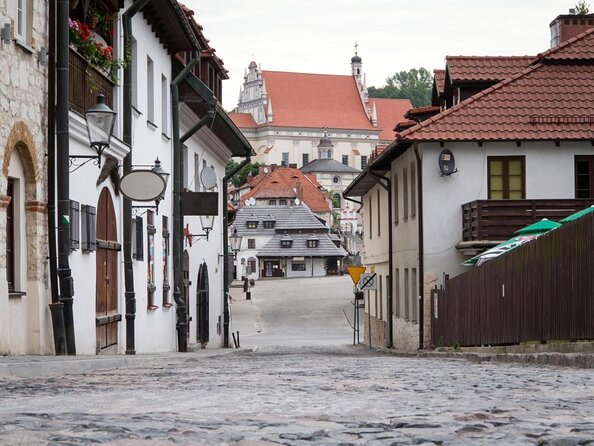
The Jewish quarter of Kazimierz is the second big half of the tour, and the cart format helps you transition without feeling rushed between neighborhoods. The tour’s framing makes it clear that this area was the hub of Jewish life for centuries and that it remains a major attraction today.
You start with the Tempel Synagogue, highlighted for stained glass windows that are among the best preserved of their kind in Poland. The tour also notes the synagogue’s non-orthodox character. That matters because it gives you more than a generic “synagogue stop,” it gives you a sense that Jewish life and architecture in Krakow were not uniform.
Then you move to Szeroka Street, described as the heart of Jewish Kazimierz. The tour emphasizes its significance, including that four synagogues used to stand on the street, which was unusual for Europe. That’s a key idea for first-timers. It helps you understand that this was not a single building story, it was a whole street life story.
The tour also includes another synagogue stop on Szeroka Street, described as one of the oldest preserved in Poland. And you get a visit to the smallest of Krakow’s seven synagogues, with its more modest decor, plus the note that renovation completed in April 2016 made it the main site of prayer for the Jewish community in Krakow.
What I like about these stops as a set is that they show variety. One synagogue gets celebrated for glass and a different religious character. One is tied to the oldest street legacy. One is tied to modest decor and modern renewal. You leave with a clearer sense of how community life can express itself through different spaces.
One thing to keep in mind is time inside. The vehicle gets you there fast, but you still need to accept that the tour is built around short visits. If you want deeper interior study, plan on saving that for an additional visit on another day.
Podgórze and the ghetto story: St. Joseph, the wall fragment, Umschlagplatz
This part of the tour handles painful history, and it deserves your full attention. The cart helps you reach the former ghetto area quickly while keeping the day efficient, but it does not mean the content should feel casual.
You start with St. Joseph Church in the Podgórze district, described as dominating the Podgórze Market Square and now incorporated into Krakow only in the 20th century. That sets the stage by reminding you that modern city boundaries and historic neighborhoods do not always align.
Then you see a small fragment of the original wall around the former ghetto, with a plaque commemorating the fate of the inhabitants. This stop is powerful because it is literal, you are looking at remaining physical evidence, not just a photo from a textbook.
After that comes Plac Zgody, also known as Concord Square. The tour explains that in 1941 the Podgórze district became the Krakow Ghetto, and that Plac Zgody was designated Umschlagplatz under Nazi occupation, the place where Jews had to congregate before deportation. When the story is framed this way, the location stops being an abstract name and becomes a real point in the timeline.
The final historical stop tied to individual survival and courage is Tadeusz Pankiewicz and his pharmacy. The tour notes that he took over his father’s pharmacy and made history through the enterprise, which connects a major world event to one person’s decisions. It is a reminder that even when the facts are overwhelming, there are still human stories to learn.
If you want to be thoughtful about your timing, this is not the best moment to rush to the next photo stop. Give yourself a quiet minute. You will remember this portion longer than you expect.
Pacing and photo time: what the 2.5 hours feels like
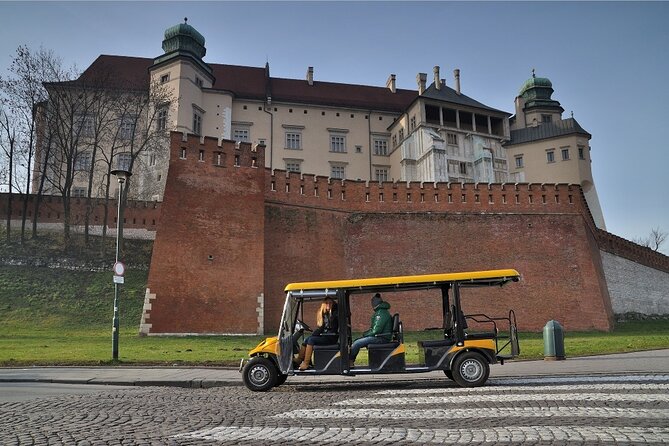
The tour is listed at about 2 hours 30 minutes, and the stop selection is wide. That means the schedule has to breathe by using quick photo moments and short looks.
Here is the practical reality from the experience pattern: Old Town can be crowded, and carts can park in ways that block your line of sight. You may also feel that some stops are more of a look-and-go. One negative comment basically echoed that exact frustration, wanting more time at each site for the price.
So if you have a short stop window in mind, adjust your expectations. Think of this tour as a fast way to build your mental map and pick your follow-up targets. You can return for longer visits later.
If you care about getting inside certain churches or buildings, pay attention to how the guide handles hopping off. One review notes you may need to tell the guide if you want to hop off for a quick entry, like into a cathedral. That small detail can change your outcome, so ask early.
Also consider crowds by time of day. Feedback specifically recommended earlier time slots because later hours can get busy and congested. In Krakow’s center, that advice is not just practical, it is how you protect your photo time.
Price and value: why $56.47 can make sense
At about $56.47 per person for a tour lasting around 2 hours 30 minutes, you are paying for three things at once: transportation, time efficiency, and guided context.
The cart part matters because it lets you cover multiple neighborhoods in a single morning or afternoon without turning it into a long walking day. That is especially valuable if you only have one day in Krakow or if your schedule is packed with other plans.
The guided context matters because the itinerary is not just random stops. You see a full arc from Krakow’s civic center to Jewish Kazimierz to the ghetto area and its key markers. Without someone to connect the dots, you might see great buildings and still miss the meaning behind them.
The small group limit, maximum 8 travelers, is part of the value too. It helps keep the experience more personal than big bus tours. Several guides are praised for being attentive and for adding information beyond the audio system, which makes the money feel more justified.
If you want long, slow museum visits, this is probably not the right format. But if you want high signal sightseeing, this price can be reasonable.
Best fit for you: who should book this tour
I’d book this if you want a first-pass view of Krakow and you like structure. This tour is ideal for time-tight days because it covers Old Town landmarks, the Jewish quarter of Kazimierz, and ghetto-related sites in one loop.
I’d also consider it if you do not want long walking. The cart setup and short stop windows can work well when you want to keep your energy for later, like a meal, a longer neighborhood wander, or a separate museum visit.
You might want a different plan if your top priority is deep interior access at every stop. This route is built for seeing and understanding quickly, not for a long sit-down at each monument.
Finally, if you care about sensitive history, choose a moment when you can pay full attention. The wall fragment and Umschlagplatz stop deserve your focus, not a rushed half minute.
Should you book the electric cart Krakow tour?
If your goal is to get your bearings fast and see a lot without a full day of walking, I think this is an excellent fit. The strong point is the mix of landmark variety and meaningful stops, with guides such as Radic, Filip W, Michael, Peter, and Tom repeatedly noted for being professional and responsive.
Book it if you like efficient sightseeing, want an English audio setup, and can accept shorter stop times in crowded areas. Skip it if you expect long visits inside every building and you need lots of quiet time at each stop.
If you do book it, set yourself up for success: come earlier in the day to beat congestion, and decide in advance which places you want to enter so you can ask the guide for the right moment. That turns a “see everything quickly” tour into a day that actually sets you up to explore Krakow on your own afterward.
FAQ
How long is the Krakow Old Town, Kazimierz, and Ghetto electric golf cart tour?
It runs about 2 hours 30 minutes (approx.).
What language is this tour offered in?
The tour is offered in English, with an audio system included.
How many people are in the group?
The tour is limited to a maximum of 8 travelers.
Where do I meet and where does the tour end?
The start is Mikołaja Zyblikiewicza 2, 31-029 Kraków, Poland. The tour ends at Mikołaja Kopernika 3, 31-034 Kraków, Poland.
Is a mobile ticket provided?
Yes, the tour includes a mobile ticket.
Is it okay to bring luggage?
Please do not bring large baggage, since the vehicles only have enough room for passengers to sit.
What is the cancellation policy?
Free cancellation is available. You can cancel up to 24 hours in advance for a full refund.
More Golf Cart Rides around Krakow
- Krakow: Jewish Quarter and Ghetto Electric Golf Cart Tour
★ 4.6 · 348 reviews - Krakow Grand City Tour by golf cart – All 3 districts
★ 5.0 · 311 reviews - Krakow: City Sightseeing Tour Eco Electric Buggy Golf Cart
★ 4.5 · 311 reviews - Krakow: City Tour by Electric Golf Cart
★ 4.9 · 310 reviews
More Old Town Tours in Krakow
- Old Town Krakow & Wawel Castle Walking Tour
★ 5.0 · 1,508 reviews - Krakow: The Old Town Walking Tour
★ 4.8 · 794 reviews - Krakow: Old Town Guided Segway Tour
★ 4.7 · 756 reviews - Kraków: Old Town & Wawel Castle Walking Tour in English
★ 4.8 · 532 reviews
Fresh listings from Krakow
- Zakopane & Gubalowka Funicular – Private Winter Tour from Krakow★ 5.0 · 10 reviews
- ZALIPIE – painted village, unique PRIVATE tour from Krakow★ 5.0 · 20 reviews
- stag dog chase Krakow prank★ 5.0 · 4 reviews
- ZALIPIE – painted village, unique small group tour from Krakow★ 5.0 · 7 reviews
- Full-Day Zalipie Painted Village Guided Tour★ 4.0 · 3 reviews
- Sleigh Ride & Bonfire in Zakopane with Funicular – Private Trip★ 5.0 · 48 reviews
- Zakopane PRIVATE TOUR from Krakow★ 5.0 · 18 reviews
- Zakopane Funicular Hill & Thermal Springs regular tour★ 5.0 · 9 reviews
Jewish Heritage Tours, compared.
Bike Tour of Old Town, Jewish Quarter and the Ghetto
Read our review →
Kazimierz, Schindler’s Factory & Ghetto Guided Tour
Read our review →
Full Bike Tour – the Old Town, Jewish Qtr & the Ghetto NEW BIKES
Read our review →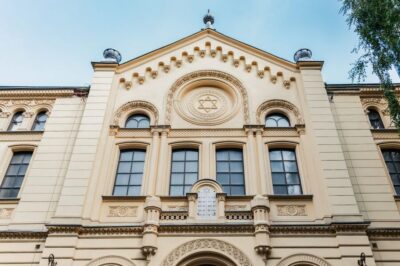
Warsaw Ghetto Private Walking Tour with Hotel Pickup
Read our review →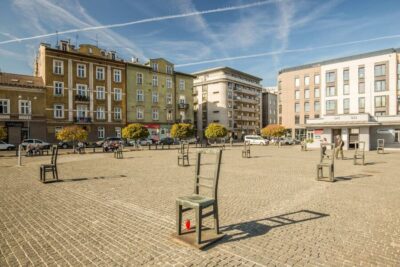
Jewish Quarter and Ghetto Electric Golf Cart Tour
Read our review →Browse the lists this tour appears in