
Review · NOWA HUTA & COMMUNISM TOURS
Nowa Huta Steel Mill Administration Buildings and Shelters with local NGO
A steelworks office tour with real cold war grit. You’ll step into the Socialist Realist world of Nowa Huta, then go underground to see what the plant built for emergencies. I especially like how the experience uses the admin buildings themselves as the story, not just photos and theory.
Second, I like the human touch: you hear how the site worked through period details, including the steelworks’ own historic audio material. In practice, that means the tour feels like it’s moving through a system, from offices to shelters, not just a single room. The guide name that came up often is Mateusz, and his delivery seems built for questions.
One possible drawback is that what you see in display areas can feel like a mix of eras, because the local NGO has put together an exhibition using items preserved over time rather than recreating a perfect snapshot of one day.
In This Review
- Key things to know before you go
- Entering Nowa Huta’s administration buildings, where the style does the talking
- The communist past lesson, without turning it into a lecture
- Underground bomb shelters and cold war spaces that change your mood fast
- Worker theater, steelworks radio tapes, and the “life inside the system”
- How the guides make or break the experience, and why Mateusz comes up
- What duration feels like on the ground, and how long you should budget
- Price and value: what $27.63 buys you at Nowa Huta
- Meeting at Ujastek 1: easy to find, but no hotel pickup
- Photography, items on display, and what to expect from the NGO setup
- Who should book this Nowa Huta administration and shelter tour
- Should you book this tour or skip it?
- FAQ
- How long is the Nowa Huta steelworks administration and shelter tour?
- What is the price per person?
- Is the tour offered in English?
- What do I get if I book?
- Where do I meet the tour?
- Can I cancel for free?
Key things to know before you go
- Socialist Realist architecture you can walk through in a working-era administrative complex
- Underground bomb shelters and cold war protective spaces that change the whole pace of the tour
- Historic steelworks radio recordings that bring the industrial world to life
- Small group size (max 15) keeps it conversational and easier to ask questions
- English guide with local support helps you connect the architecture to the everyday system inside
- Moderate physical fitness helps, since there are tunnels and underground areas
Entering Nowa Huta’s administration buildings, where the style does the talking
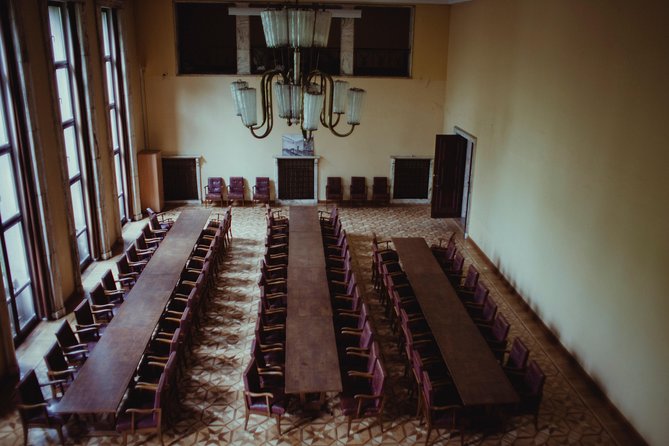
Nowa Huta has a reputation for being visual. The architecture is a big part of the point, and this tour leans hard into that. You’re not touring a museum set on a hill. You’re touring the administrative buildings tied to the steelworks, where the design choices were meant to signal power, order, and ideology.
The best way to think about it is like this: this is a guided walk through an operating worldview. The buildings are laid out to impress, but the spaces also help you understand how the plant may have managed people. Even if you do not read every sign, the proportions, corridors, and office-style rooms tell a story of structure.
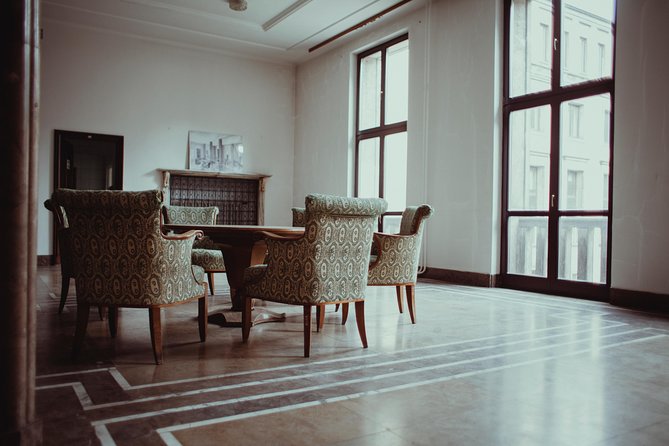
And because the complex includes multiple parts of the operation, you’ll get more than one “type” of space. Expect normal-looking office areas mixed with more ceremonial or symbolic design elements. It’s a reminder that industrial life was not only about machines. It was also about paperwork, hierarchy, and messaging.
If you care about architecture, you’ll probably enjoy the fact that you can compare how spaces feel as you move from surface rooms down to protected areas. The tour pace tends to match that shift, so you don’t just stare at walls. You feel the change in function.
More Nowa Huta and communism tours:
- Krakow: Nowa Huta Guided Tour in Vintage Car
★ 4.9 · 277 reviews - Legendary Private Nowa Huta Communism Tour with Crazy Guides
★ 5.0 · 262 reviews - Nowa Huta: Steelworks Administration Buildings/Shelters Tour
★ 4.8 · 260 reviews
The communist past lesson, without turning it into a lecture
The tour is set up to explain Poland’s communist past using the steelworks context. That means you’re not hearing isolated history. You’re seeing how the steelworks fit into everyday life: how management spaces, worker-related spaces, and protective infrastructure all relate to one big system.
This matters because it keeps the conversation grounded. Industrial history can become abstract if you only hear dates. Here, the site itself supplies the physical logic for the story. When the guide points out design choices, you can usually see why they mattered, like where people would gather, work, meet, or move.
It also helps that the tour is offered in English, with local support. You’re not relying on vague translations. The whole thing is geared toward making the meaning of the place stick.
If you like history that feels connected to real infrastructure, this is the kind of stop that gives you more than a checklist of facts. It gives you a mental map of how the system worked, at least in how the spaces were built and used.
Underground bomb shelters and cold war spaces that change your mood fast
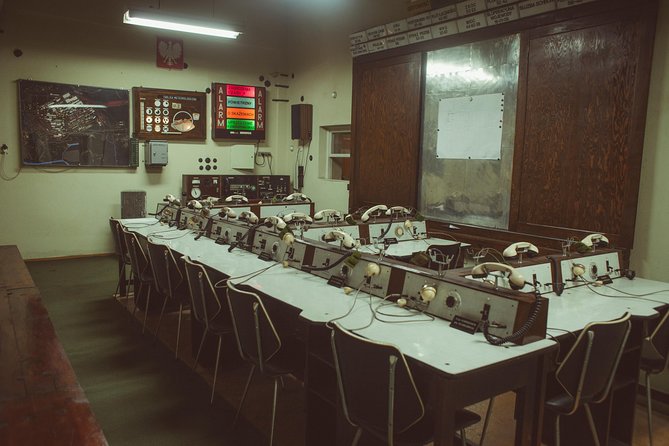
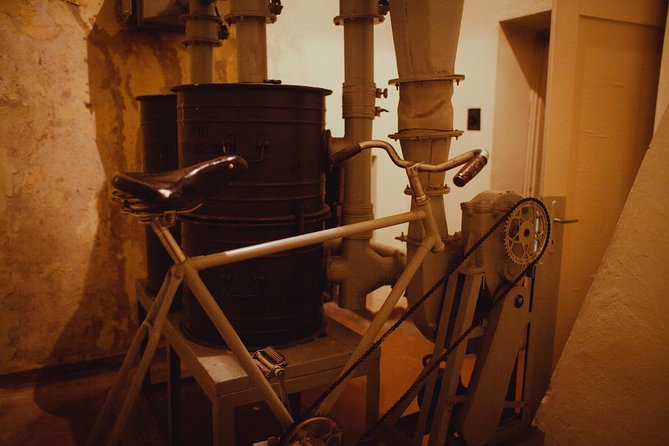
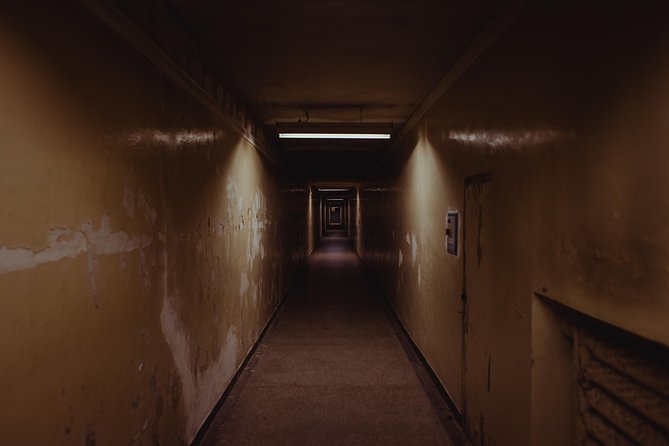
The underground portion is the part people remember. You go into cold war-era protection spaces, and the change in atmosphere is immediate. Surface buildings are one thing. Underground shelters are another. The ceilings, the air feel, the tight passages, and the layout all do the emotional work for you.
This is also where the tour’s moderate fitness requirement makes sense. Even if you’re not an athlete, you should be ready for walking through tunnels and moving between areas that are not designed like a smooth sightseeing route.
What’s valuable here is not just the novelty of seeing “a bunker.” You learn what the plant planned for. It’s a concrete reminder that industrial facilities were also treated as strategic assets. And those shelter spaces, intact enough to tour yet old enough to show wear, offer a kind of raw evidence you can’t get from a book.
I’d go in with the mindset of paying attention to function:
- How the spaces guide movement
- How rooms are arranged for use, not for comfort
- How the shelter story links back to the administrative buildings above
That’s how the underground visit becomes more than a photo moment. It becomes the tour’s emotional anchor.
Worker theater, steelworks radio tapes, and the “life inside the system”
The highlight list includes a worker’s theater and historic tapes from the steelworks’ radio station. Even without turning this into a full entertainment stop, those inclusions help you understand that the steelworks was not only heavy industry. It had culture, communication, and public messaging.
A worker’s theater, in this kind of complex, signals something important: the plant’s leadership likely treated morale and collective identity as part of the job. You’re not just seeing how people worked. You’re seeing how people were meant to feel and how they might have gathered.
Then there’s the radio material. Hearing or referencing historic tapes from the plant’s own radio station gives context that architecture alone can’t supply. It connects the building to daily life and communication habits. Even if you just catch fragments, it adds texture.
If you enjoy tours where you can link space to behavior, this section is a strong reason to book. It turns the visit from “look at old rooms” into “understand how a community ran.”
A few more Krakow outings to weigh up
- From Krakow: Auschwitz-Birkenau Guided Tour & Hotel Pickup
★ 4.5 · 33,358 reviews - From Krakow: Auschwitz-Birkenau Guided Tour & Hotel Pickup
★ 4.5 · 29,340 reviews - Krakow: Auschwitz Guided Tour with Optional Hotel Pickup
★ 4.5 · 15,280 reviews - Krakow: Wieliczka Salt Mine Tour with Entry Ticket
★ 4.6 · 10,927 reviews
How the guides make or break the experience, and why Mateusz comes up
Small groups matter here. With a maximum of 15 travelers, the tour stays flexible, and you can ask follow-up questions instead of swallowing them.
The experience includes both a local guide and a professional guide. That combination tends to work well for a site like this, where you need both context and clear interpretation.
One guide name that shows up in the experience is Mateusz. The impression you get from the guide feedback is consistent: enthusiastic, engaged delivery, and a willingness to explain the architecture and history without drowning you in jargon. That’s a big deal. Industrial sites can easily become a timeline dump. Here, the guide style seems geared toward helping you connect what you see with why it was built that way.
There’s also a practical, human side to this group of guides. One person described getting a lift in the guide’s Lada. Whether you receive anything like that is not something to plan around, but it matches the overall pattern: guides who treat the tour like a conversation, not just a checklist.
What duration feels like on the ground, and how long you should budget
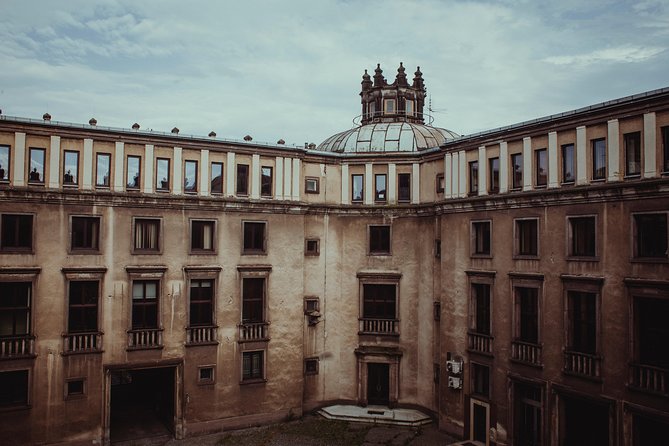
The tour runs about 1 hour 30 minutes to 2 hours. On paper, that’s a short window. In real life, it’s a lot of space to cover because you’re moving between above-ground rooms and underground areas.
I recommend you budget for the full two hours, especially if you like reading details or asking questions. Also factor in a slower pace through tunnels. Underground spaces can make everything feel tighter than surface walking.
The good news is that the tour does not drag. The focus stays on major parts of the complex, and the story changes with the environment: office world up top, emergency preparedness underground, then the worker-oriented and communication elements.
Price and value: what $27.63 buys you at Nowa Huta
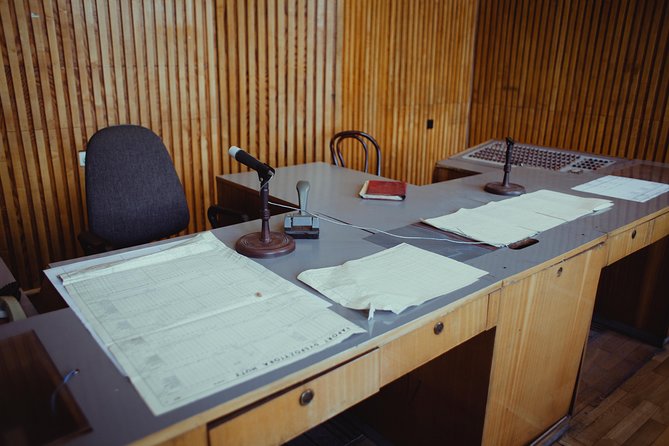
At $27.63 per person, this tour sits in the value zone for a guided, site-based experience that includes both surface rooms and underground shelter space. You’re paying for access plus interpretation, and the inclusion list matters here.
You get:
- A local guide and a professional guide
- A guided look at administrative buildings and shelter areas
- English support
- Historic context through what’s shown and explained
The itinerary notes admission ticket free for the stop. Even if you don’t parse what that means in ticketing terms, it signals that the entry piece is not the separate expensive part. In practice, you’re paying for the guided visit and the time your guide spends helping you understand a complex site.
Small group size is part of that value too. At 15 people max, you’re not watching a guide shout over a crowd. If you’re the kind of traveler who hates being rushed, you’ll appreciate that structure.
One practical note: plan ahead. The average booking is about 19 days in advance, so waiting until the last minute can narrow your options.
Meeting at Ujastek 1: easy to find, but no hotel pickup
The start and end point is Ujastek 1, 31-752 Kraków, Poland, right at the street opposite side. The area is described as near public transportation, which is exactly what you want for a tour that does not include hotel pickup and drop-off.
This is one of those tours where your planning gets simpler if you already know how to reach the meeting point by tram or bus. If you are staying central, you can usually handle it without a taxi, but you’ll want to check routes ahead of time.
Also remember:
- The tour is for a small group (max 15)
- Children must be accompanied by an adult
- You should have a moderate physical fitness level
If you’re traveling with someone who gets uncomfortable in tight or underground spaces, that fitness note is the clue to take it seriously.
Photography, items on display, and what to expect from the NGO setup
You can buy souvenir photos, but the key thing is what’s actually inside rooms and display areas.
This is not a “pristine, untouched” time capsule in the purest sense. The building has been described as almost untouched in feel, yet the site has also been used and preserved through different periods. You may see objects from multiple decades, ranging from early eras tied to the steelworks to later time periods, because the NGO has gathered and organized items into an exhibition.
So here’s the practical way to manage expectations: this experience is about seeing the place and understanding the system, then using preserved artifacts to fill in the gaps. It is not about a single perfectly restored moment frozen in time. That’s not a deal-breaker. It’s just good to know so you don’t feel disappointed when something looks more like an assembled display than a literal back-in-the-day arrangement.
If you like urban exploration and industrial history, that mix often works. If you need every object to match one specific date, you might find the presentation a little too “brought together.”
Who should book this Nowa Huta administration and shelter tour
This is a great fit if you:
- Like history with physical anchors (buildings, tunnels, offices)
- Want context on Poland’s communist era through an industrial lens
- Enjoy architecture and how space communicates power
- Are curious about cold war preparedness infrastructure
- Prefer guided interpretation over self-guided wandering
It may be less ideal if you:
- Want a light, casual sightseeing stop with minimal walking
- Have strong preferences for a perfectly recreated, one-period museum display
- Feel uneasy with underground areas and tight passages
Should you book this tour or skip it?
Book it if you want a memorable Krakow experience that feels unusual and specific. For a single 1 hour 30 minutes to 2 hours visit, you get admin buildings, cold war shelters, worker-related spaces, and historic audio materials, all in English and in a max 15 person group.
Skip it if you mainly want classic old-town sights and short stops, or if you strongly dislike underground spaces. Also consider that the NGO’s exhibition approach can mix eras, so go for the building and the story of how the system worked, not for a perfectly date-matched display.
If you like your travel off the beaten path, this is exactly that: a guided walk through a place built for power, work, and emergencies.
FAQ
How long is the Nowa Huta steelworks administration and shelter tour?
It runs about 1 hour 30 minutes to 2 hours.
What is the price per person?
The price is listed as $27.63 per person.
Is the tour offered in English?
Yes, it is offered in English.
What do I get if I book?
The tour includes a local guide and a professional guide.
Where do I meet the tour?
You meet at Ujastek 1, 31-752 Kraków, Poland, at the opposite site of the street. The tour ends at the same meeting point.
Can I cancel for free?
Yes, there is free cancellation. You can cancel up to 24 hours in advance for a full refund.
Fresh listings from Krakow
- Zakopane & Gubalowka Funicular – Private Winter Tour from Krakow★ 5.0 · 10 reviews
- ZALIPIE – painted village, unique PRIVATE tour from Krakow★ 5.0 · 20 reviews
- stag dog chase Krakow prank★ 5.0 · 4 reviews
- ZALIPIE – painted village, unique small group tour from Krakow★ 5.0 · 7 reviews
- Full-Day Zalipie Painted Village Guided Tour★ 4.0 · 3 reviews
- Sleigh Ride & Bonfire in Zakopane with Funicular – Private Trip★ 5.0 · 48 reviews
- Zakopane Funicular Hill & Thermal Springs regular tour★ 5.0 · 9 reviews
- Zakopane to Chocholow Thermal Pools 3h Ticket with Hotel Transfer★ 5.0 · 9 reviews
Nowa Huta & Communism Tours, compared.

Legendary Private Nowa Huta Communism Tour with Crazy Guides
Read our review →
Nowa Huta: Steelworks Administration Buildings/Shelters Tour
Read our review →
Private Tour: Warsaw’s Communist History by Retro Fiat
Read our review →
Private Nowa Huta Adventure Tour in Communist Cars
Read our review →

Browse the lists this tour appears in