
Review · NOWA HUTA & COMMUNISM TOURS
Private Tour: Warsaw’s Communist History by Retro Fiat
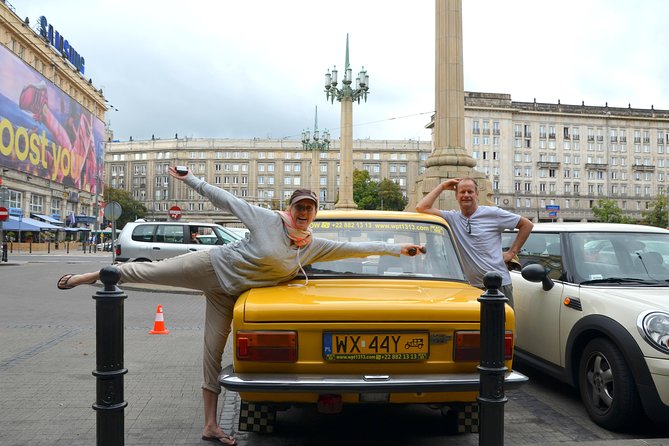
Communist Warsaw hits different from a vintage Fiat. This private 4-hour tour strings together the key buildings and street-level traces of Poland’s socialist era, then adds human scale with local context as you roll from stop to stop. You get door-to-door pickup and a private guide, so it feels less like a checklist and more like a guided story about how power shaped everyday life.
I love the vintage Fiat 125p ride. It makes the whole route feel unusual, easy to enjoy, and memorable, even when the topic is heavy. I also like how the stops mix major symbolic architecture with smaller, street-level reminders, like Constitution Square and the stories tied to black market life.
One thing to plan for: not every stop is fully ticketed. The Palace of Culture and Science is scheduled with admission not included, so you’ll want to budget time and money if you want to go in rather than just view it from outside.
In This Review
- Key things to know before you go
- A vintage Fiat route through Warsaw’s communist street map
- Price and value for a 4-hour private tour
- Stop 1: Palace of Culture and Science, socialist realist scale in real life
- Constitution Square and the Stalin-era housing story around Plac Konstytucji
- The Communist Ministerial District: how power shaped the city’s “official” face
- Monument of the Free Word: censorship in five minutes you won’t forget
- Charles de Gaulle statue: the former party house and the meaning behind a face
- Praga Polnoc and the WWII resilience angle, plus why the district matters
- Bazar Rozyckiego: the black market side of communist survival
- Mariensztat Square: housing blocks and how daily life got designed
- What the best guides tend to add: personal perspective and flexible answers
- Tickets, meals, and what to confirm before you go
- Who should book this Warsaw Communist History tour
- Should you book this Warsaw Communist History tour?
Key things to know before you go
- Vintage Fiat 125p transport: You tour by car, then do short walks for key viewpoints.
- Private, hotel pickup and drop-off: You start and end with convenience, not transit math.
- A tight focus on communist-era Warsaw: Stops are chosen to show how the system built space, speech, and survival.
- English-guided: The guide leads in English, which matters for understanding the nuance in these sites.
- Most stops are free, one isn’t: Palace of Culture and Science has admission not included, while several other stops are free.
A vintage Fiat route through Warsaw’s communist street map
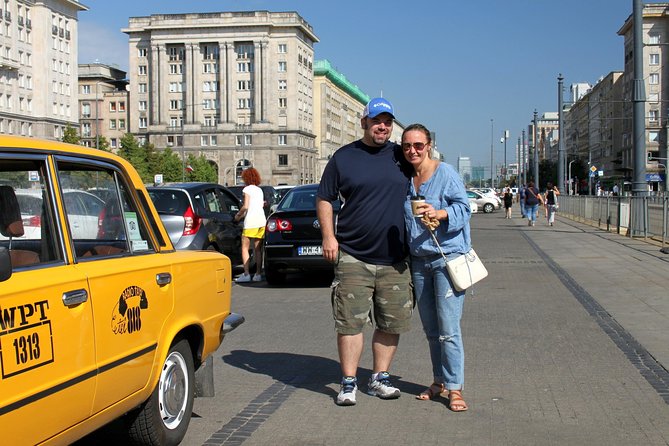
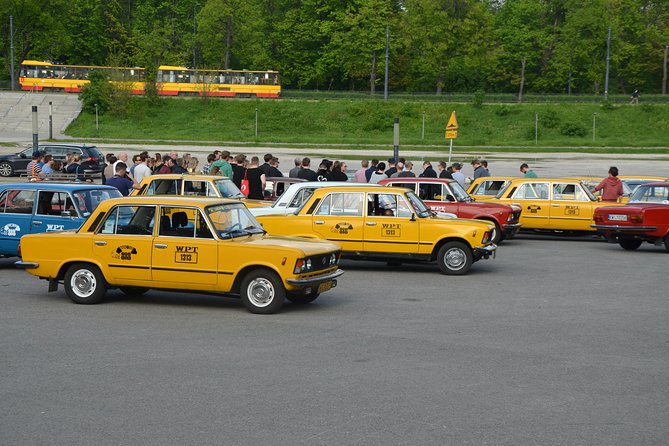
This is the kind of tour where the vehicle is part of the storytelling. Rolling around Warsaw in a classic Polish Fiat 125p adds a layer of irony, and it also helps you move efficiently between neighborhoods. The tour is private, so you can ask questions on the fly without feeling like you’re interrupting a big group.
Expect a mix of riding and short stop-and-look moments. You’re not just parked outside famous buildings and sent along. Instead, the guide stops at the sites tied to the communist period, then explains why those places mattered, both in the moment and in the Warsaw you still see today.
Because the tour is structured for a half-day pace (about 4 hours), it works best when you’re okay with “enough depth to understand” rather than “every museum, every floor.” You’ll come away with a clear framework for what you’re looking at when you explore on your own later.
More History Tours in Warsaw
- Warsaw: POLIN Museum of the History of Polish Jews Ticket
★ 4.7 · 1,142 reviews - Warsaw: Chopin Concert at Historical Venue in Old Town
★ 4.7 · 445 reviews - Small-Group Historical Guided Tour of Warsaw with pick up/drop off. Public Tour.
★ 4.5 · 343 reviews
Price and value for a 4-hour private tour
At $108.24 per person for roughly 4 hours, this is priced like a true private experience, not a generic bus tour. The value here comes from three things that reduce your travel friction: private guiding, private transport, and hotel pickup plus drop-off.
You’re also getting a very specific theme. Communist history tours can go two ways: either you get a broad overview with lots of driving and little interpretation, or you get a tighter route with more meaning per stop. This one leans toward the second option, with a planned set of sites from monumental socialist realism down to areas associated with everyday survival.
If you’re traveling as a pair or small group, this can feel especially fair. Group discounts are offered, which can help the price land better when you split the cost across your group size.
Stop 1: Palace of Culture and Science, socialist realist scale in real life
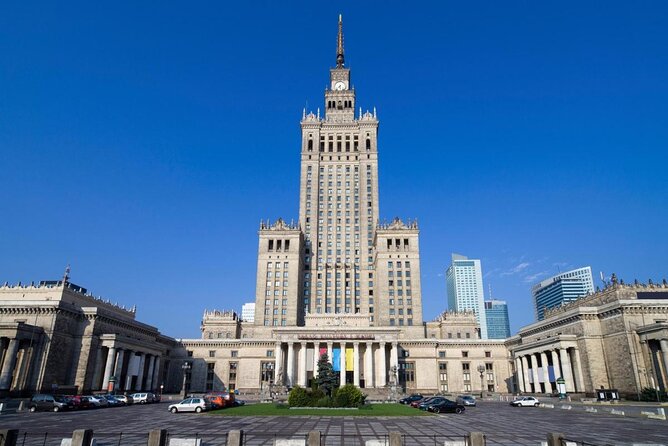
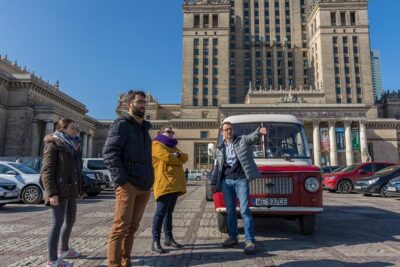
The first stop is the Palace of Culture and Science, Warsaw’s most recognizable socialist-era landmark. This is where the communist-era building language becomes obvious fast. The style is socialist realist, and the building’s size and presence are part of why it was such a powerful symbol.
You get about 30 minutes here. Admission is not included, so you’ll have to decide what you want: a quick look from the outside and public areas, or adding time to go inside on your own. If you want the full payoff of this stop, plan for the ticket decision rather than assuming it’s already covered.
Why this stop matters: this building wasn’t just constructed to be used. It was constructed to be seen, and to communicate authority. Even now, the Palace reads like a landmark of the era’s ambition and control, even as it’s used for modern life like theaters, museums, and cinemas.
Practical note: it’s an efficient start, but it can also set a heavy tone quickly. If you like your history contextualized step by step, tell your guide at the beginning that you want more explanation on the architecture before you move on.
Constitution Square and the Stalin-era housing story around Plac Konstytucji
Next comes Plac Konstytucji, Constitution Square. This area is known for Stalin-era architecture, and it’s especially useful for understanding how communist planning tried to shape daily routines through built space.
You’ll spend about 30 minutes here. Admission is free, so it’s a straightforward stop in terms of cost. What makes it worth your time is the contrast between what these buildings were supposed to represent and how people actually experienced the system.
From a traveler’s point of view, this is one of the better stops for pattern recognition. Once you see the style choices and the way the buildings frame the public realm, you start noticing similar references elsewhere in the city. That’s when the tour becomes more than a list of places and turns into a lens you can reuse later.
More retro car rides in Warsaw:
- Private Tour: Warsaw City Sightseeing by Retro Fiat
★ 5.0 · 562 reviews - Private Tour: Warsaw’s Jewish Heritage by Retro Fiat
★ 5.0 · 208 reviews - Private Historical Tour of Warsaw by a Retro Fiat with Pickup
★ 5.0 · 190 reviews - Warsaw Must-Sees: 4-Hour Private Tour by Retro Fiat
★ 4.9 · 123 reviews
The Communist Ministerial District: how power shaped the city’s “official” face
After Constitution Square, you’ll see the Communist Ministerial District, created in socialist realism style. This is about how the regime projected legitimacy through architecture, bureaucracy, and space.
The time in this stop isn’t clearly listed, but the intent is clear: you’re moving from representative housing and public squares into the parts of the city designed to look like the state was everywhere. Even without going inside, the scale and uniformity tend to do the teaching for you.
If you like your history grounded in visuals, this stop is a good one. Buildings here help you understand how the state tried to look permanent, even when the political reality behind the facade was shaky.
Monument of the Free Word: censorship in five minutes you won’t forget
Then you hit the Monument of the Free Word. This stop is brief, around 5 minutes, and it’s exactly the kind of quick stop that lands because of what it symbolizes: daily censorship and control of public speech.
Admission is free. That makes it easy to stop, look, and absorb without budgeting. The guide’s job here is crucial. The point isn’t just to see a monument, it’s to understand the lived effect of censorship and why a word, a newspaper, or an official statement could carry risk.
If you want context, ask the guide a question like how people navigated daily life when censorship was routine. The best answers turn a monument into a real human story.
Charles de Gaulle statue: the former party house and the meaning behind a face
Next is the Statue of Charles de Gaulle, about 15 minutes. The focus here is what sits behind the statue in the historical record: a former Communist Party House, sometimes described with the nickname Polish White House.
This stop is a reminder that communist power wasn’t only in policies and speeches. It was also concentrated in specific buildings, and the people who lived or worked near them learned the regime’s signals quickly.
Admission is free. So this is mostly interpretation time, not ticket time. Use it to ask how the party structure worked and what leaders meant to ordinary Warsaw residents, including what you might still feel in the city’s layout today.
Praga Polnoc and the WWII resilience angle, plus why the district matters
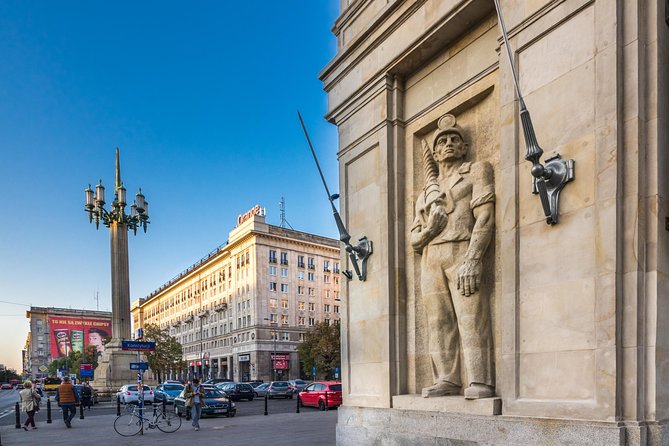
You’ll spend about 30 minutes in Praga Polnoc. The tour frames it as a district that was vibrant during the communist period in Poland and, importantly, not badly destroyed during WWII.
This is a key shift in the tour. So far you’ve looked at major architecture and symbolic state presence. Now you’re zoomed to a neighborhood angle, where the political era shows up through street patterns and local continuity. When areas survive major destruction, they often preserve more of the prewar or interwar “memory,” while still carrying communist-era changes.
Admission is free, so it’s a good neighborhood break from “monument mode.” If your goal is to understand how communist life differed across parts of the city, this is one of the stops that helps you build that map.
Bazar Rozyckiego: the black market side of communist survival
Next is Bazar Rozyckiego, about 15 minutes, and it’s one of the most memorable stops if you like history that shows how people actually lived. The focus is the famous black market in Communist Poland.
Admission is free. This is one of those places where a guided explanation can turn a location into a story about scarcity, workarounds, and how informal markets shaped daily life when the official economy didn’t meet reality.
Even if you’re not into economics, the black market angle helps balance the tour. Architecture shows how the system wanted to look. The black market shows what people did when the system didn’t fully work.
If you want to understand the emotional texture of that era, ask your guide how black market activity was perceived, and what it changed for families trying to get by.
Mariensztat Square: housing blocks and how daily life got designed
The final stop is Mariensztat Square, also known as Rynek Mariensztacki, with about 20 minutes on site. Here you’ll see communist-era housing blocks in the Mariensztat district.
Admission is free. This stop is valuable because it pulls the history back from party buildings and monuments into something more universal: where people slept, raised families, and navigated the everyday rhythm of life under the system.
In practice, this is also a great stop for photos and for noticing how residential architecture communicates values. Even when you’re not an architecture expert, the differences become visible once you’ve already seen socialist realist style in earlier stops.
What the best guides tend to add: personal perspective and flexible answers
The experience is guided in English, and a big part of the tour’s reputation is the way guides make the history feel personal and specific. Several of the named guides associated with this tour, including Jacob, Karol, Konrad, Marcin, Martin, Adam, Olga, Pawel, and Max, are praised for being friendly, answering questions directly, and sharing real perspective on how the era shaped people.
One practical takeaway for you: this is a private tour, so bring curiosity. If you have a particular angle, like censorship, housing, or the contrast between official life and black market life, tell the guide early. The tour structure gives them a route, but the conversation can still bend toward what you care about.
Also, notice how some stops are very short. That means your questions matter. If you want more time on a specific topic, ask for it at the beginning so the guide can manage the schedule.
Tickets, meals, and what to confirm before you go
Here’s the simple planning reality based on what’s stated. The Palace of Culture and Science stop has admission not included. Several other stops are listed as free.
Food and drinks are not included unless specified, so plan on handling your own water and snacks. One past visitor noted that a snack and a vodka shot were expected but not provided, along with a souvenir photo issue. That’s not part of the basic included list, so I’d treat anything like a vodka toast or snack as “only if your booking confirms it.”
My practical advice: if you want that kind of extra, ask your guide at the start what is included on your exact departure. That takes the guesswork out.
Who should book this Warsaw Communist History tour
This tour is a strong fit if you want:
- A focused, half-day way to understand Warsaw under communist rule, without trying to cover everything at museum depth.
- A blend of big landmarks and smaller, meaningful stop points like the black market story at Bazar Rozyckiego.
- An English-speaking guide who can answer your questions, including harder ones about censorship and power.
It’s also a good choice if you like travel that’s part sightseeing and part storytelling. The vintage Fiat ride adds fun, and the short walking stops make it feel like you’re actually in the city, not just watching from a window.
You might consider skipping it if you only want major museum interiors, because this tour prioritizes architectural and street-level context. You’ll see key places, but the Palace stop is one of the few spots where admission choices affect your experience.
Should you book this Warsaw Communist History tour?
Yes, if you want a clear, guided route through communist-era Warsaw with hotel pickup, private attention, and a memorable vintage Fiat 125p ride. The best part is the balance: you see the regime’s “official face” in socialist realist architecture, then you get a grounded look at how people lived through it, including censorship and survival tactics like the black market.
Before you book, do two quick checks. First, plan for the Palace of Culture and Science admission since it’s not included. Second, if you’re hoping for any extras like a vodka shot or snack, confirm early so there are no surprises.
If you like history with a human voice, this one is worth your time. It gives you a framework that makes Warsaw feel more legible, not just pretty.
More Historical Tours in Warsaw
- Warsaw: Jewish History Guided Walking Tour in English
★ 4.7 · 324 reviews - Warsaw: Warsaw Historical Group Tour with Pickup & Drop-Off
★ 4.6 · 233 reviews - Warsaw: Jewish Heritage & Holocaust Walking Tour
★ 4.7 · 119 reviews - Warsaw Foodie Tour – Food, Drinks, History & Traditions
★ 5.0 · 103 reviews
More Nowa Huta & Communism Tours in Warsaw
- Warsaw: Communism Tour in an Original Socialist Van
★ 4.5 · 35 reviews - Self-Drive Tour: Communist Warsaw by Retro Fiat “Toddler”
★ 5.0 · 23 reviews - Communist Warsaw: private tour by retro minibus with hotel pickup
★ 5.0 · 22 reviews - Krakow: Nowa Huta Guided Tour in Vintage Car
★ 4.9 · 277 reviews
Fresh listings from Warsaw
- Wolf’s Lair & Treblinka Tour in 1 day from Warsaw★ 5.0 · 37 reviews
- Tour from Warsaw: Wolf’s Lair, Hitler’s HQ Zones I and II★ 5.0 · 32 reviews
- Wolf’s Lair Private Day Trip from Warsaw★ 5.0 · 50 reviews
- Warsaw’s Old Town A Self-Guided Audio Tour★ 4.5 · 10 reviews
- Wilanow Royal Palace : SMALL GROUP /inc. Pick-up/★ 4.5 · 16 reviews
- Private 3-, 5-, or 7-Hour Warsaw Tour by Car★ 5.0 · 7 reviews
- Off the Beaten Track in Warsaw: Private City Tour★ 4.5 · 9 reviews
- Warsaw Must-See Local City Tour with Antek and Tomek★ 5.0 · 51 reviews
Nowa Huta & Communism Tours, compared.
Legendary Private Nowa Huta Communism Tour with Crazy Guides
Read our review →
Nowa Huta: Steelworks Administration Buildings/Shelters Tour
Read our review →
Private Nowa Huta Adventure Tour in Communist Cars
Read our review →

Communist Krakow – Nowa Huta Walking Tour in English
Read our review →Browse the lists this tour appears in