
Review · SKIP THE LINE
Wroclaw: Skip the Line Panorama Raclawicka and Ostrow Tumski Guided Tour
Wrocław rewards slow looking. This guided walking route ties together big city history, art with a clever perspective, and the Cathedral Island area around Ostrow Tumski and Panorama Raclawicka in just a few hours. You get real context as you move, not just photo stops.
Two things I really like. First, the tour is led by a certified tour guide who clearly loves Wrocław and gives useful pointers for what to see next. Second, you start saving time immediately with skip-the-line tickets to two major stops, so the day feels efficient instead of waiting around.
One consideration: with a 2 to 4 hour pace, you may feel a little time pressure, especially if you want to add extra entries where access is possible by request. Plan to prioritize the stops that matter most to you.
In This Review
- Key highlights worth planning for
- Getting oriented fast at Plac Katedralny
- Panorama Raclawicka: the painting that plays with your eyes
- Those playful gnomes you’ll want to hunt
- Ostrow Tumski, Cathedral Island: Wrocław’s oldest streets and wartime echoes
- Archikatedra pw. Sw. Jana Chrzciciela: stained glass and a tower view
- A university museum that surprises you
- Wrocław’s river scene: islands, boats, and bridges with personality
- Tumski Bridge: the padlock picture moment
- National Museum: art and sculptures with local grounding
- Churches you can add by request, including Church of Our Lady on the Sand
- Ossolineum gardens and church variety that keeps the day interesting
- Bielarska Island and Słodowa Island: calm stops for pictures and pauses
- Church of the Holy Cross and the monument for Chinese students
- Price and pacing: is $145.41 a good deal?
- Should you book this guided Wrocław walk?
- FAQ
- How long is the Wroclaw guided tour?
- Where does the tour start and end?
- What’s included with skip-the-line tickets?
- Are admissions included for all stops?
- Is this tour private?
- How do I receive my tickets and tour info?
- What is the cancellation policy?
Key highlights worth planning for
- Skip-the-line access for Panorama Raclawicka and the National Museum, built into the route
- Cathedral Island focus on Ostrow Tumski, plus WWII-era visual context in the oldest part of town
- Stunning tower viewpoints options, including the view from Archikatedra pw. Sw. Jana Chrzciciela
- River and bridge scenery with boats, islands, floating spots, and that padlock photo moment on Tumski Bridge
- Art and culture in one stretch: Panorama Raclawicka, sculptures at the National Museum, and multiple major churches
Getting oriented fast at Plac Katedralny
You begin at Plac Katedralny 50, and that matters. This area puts you close to the city’s historic spine, so the walk feels like it’s building upward instead of scattering across Wrocław. There’s also a good chance you’ll be able to connect easily with public transport before you start.
Right from the start, you’ll be guided through what to notice. That sounds obvious, but it’s the difference between passing landmarks and actually understanding why they matter. Your guide can also tailor the flow a bit, since this is a private, customizable tour just for your group.
The tour uses a mobile ticket approach. So once you’re set, you can keep things simple while moving from stop to stop.
A few more Wroclaw outings to weigh up
- Auschwitz-Birkenau Skip-the-Line Guided Tour
★ 4.3 · 4,815 reviews - From Krakow: Wieliczka Salt Mine Tour & Skip the Line Ticket
★ 4.4 · 3,925 reviews - Krakow: Schindler’s Factory Skip-the-Line Ticket
★ 4.4 · 3,105 reviews
Panorama Raclawicka: the painting that plays with your eyes
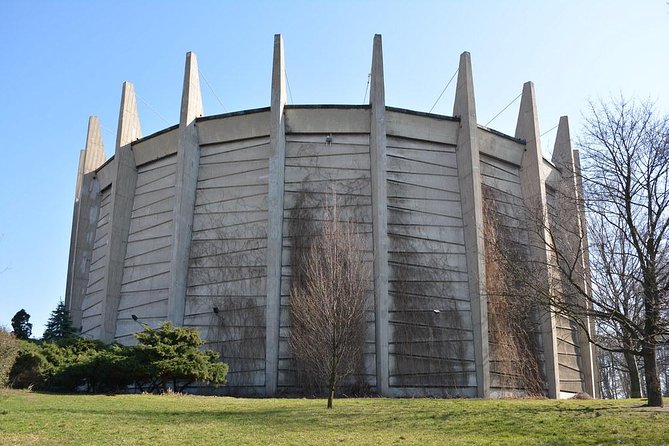
Your first major stop is Panorama Raclawicka. It’s housed in that distinctive rounded building, and the big draw is the painting’s special kind of perspective. The point is to make the scene feel like it wraps around you, so you don’t just look at art, you feel like you’re standing in the middle of it.
You’ll get about 30 minutes here, with admission included. That’s a solid window. It’s enough time to take in the main effect, then come back to it for a closer look at details and composition.
Practical tip: wear comfortable shoes. Even in a short visit, you’ll likely reposition to see how the perspective changes from different angles.
Those playful gnomes you’ll want to hunt
Between the big museums and the Cathedral Island core, your guide leads you to a fun detail stop: the area with gnomes. They’re on the ground, on windowsills, and even hanging onto lampposts. It’s whimsical, but it also breaks up the heavy-history parts of the day with something lighter.
This is the kind of detour that makes a guided walk feel alive. Left on your own, you might not notice them at all. With a guide, you get the prompt, then you get the joy of spotting them one by one.
If you like photo challenges, this is a good moment to slow down. Let your eyes do the work.
Ostrow Tumski, Cathedral Island: Wrocław’s oldest streets and wartime echoes
Then you shift into the heart of the story with Ostrow Tumski, also called Cathedral Island. This is described as the oldest part of Wrocław, and the atmosphere backs that up with old streets, colorful buildings, and a strong cathedral presence.
You’ll spend about one hour here with admission included as part of the guided experience. The key value is that the guide doesn’t treat the island as a pretty place only. You also get context through what you’ll see, including pictures showing how the place looked at the end of WWII.
That combination is powerful. The buildings give you the feel of the past, and the visual wartime references help you understand why the city’s layers look the way they do today.
Still in reach of Wroclaw, but a different sort of day:
- Wroclaw: E-Car Tour and Audio Guide
★ 4.6 · 1,738 reviews - Wroclaw: 2-Hour Private Guided Tour by Electric Car
★ 4.8 · 805 reviews - Wroclaw: Ticket for Old Town Boat Cruise
★ 3.9 · 361 reviews - Wrocław: Old Town and Ostrów Tumski Walking Tour in English
★ 4.8 · 311 reviews
Archikatedra pw. Sw. Jana Chrzciciela: stained glass and a tower view
From the island’s general scenery, you move to Archikatedra pw. Sw. Jana Chrzciciela we Wrocławiu. You’re looking at a restored cathedral with amazing stained glass windows and a strong interior. Even in a brief visit, it’s the kind of stop that makes you pause and look upward without being forced.
Your time here is about 15 minutes, and the admission is not included. The good news is the cathedral also offers a nice view of Wrocław from the top of the tower, if you choose to add that element.
Why this stop is worth it even if you skip the tower: the stained glass and the restored interior give you visual clues about the craftsmanship and rebuilding effort that shaped Wrocław. You’ll come away with a better sense of how old structures still influence what people feel in the present.
A university museum that surprises you
Next, you’ll hit a stop that’s described as not what you’d imagine a university museum to be. Instead of a typical quiet gallery, it includes four rooms, and one section feels more like a tower with city views.
The timing is brief here, so you’ll want to decide fast what you care about most. If city views are your thing, aim to focus on the tower-like section when you enter. If you’re more into artifacts or layout, you can move through with less emphasis on height.
One detail worth knowing: entry may be possible by request for some areas. That’s not a guarantee, but it does mean a good guide can try to help you maximize what you see in the time window.
Wrocław’s river scene: islands, boats, and bridges with personality
A major theme of this walk is the river running through Wrocław. The river itself is treated as an attraction, not just background. You’ll hear about the islands along the water, the little boats that move past, and the fact that there are floating restaurants and bars, plus many bridges connecting it all.
This part works especially well because it changes your pace. After museums and churches, the river gives you open sightlines and a chance to reset. It also makes your photos look more alive, since there’s motion and depth.
If you’re visiting in good weather, this is one of the areas where the city feels most easygoing.
Tumski Bridge: the padlock picture moment
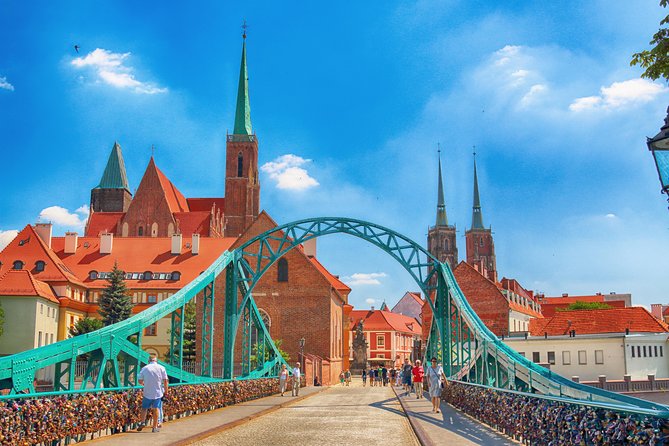
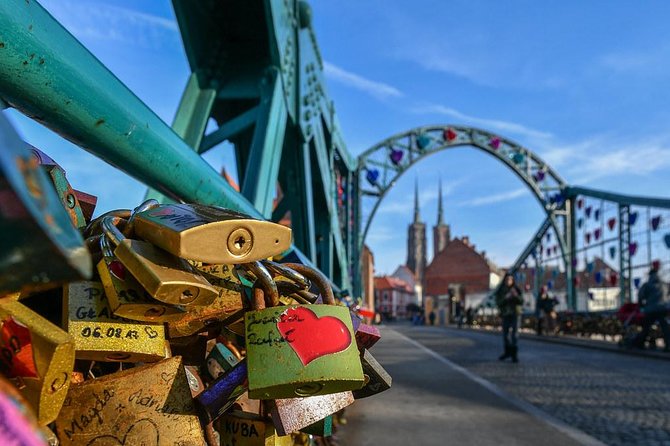
You then pause at Tumski Bridge for about 10 minutes. It’s famous for having padlocks attached and it’s considered a romantic spot for photos.
Keep it simple here. Get your picture, take a quick look both directions, then move on. With the rest of the route, you do not want this to turn into a long stop and steal time from the churches and islands ahead.
National Museum: art and sculptures with local grounding
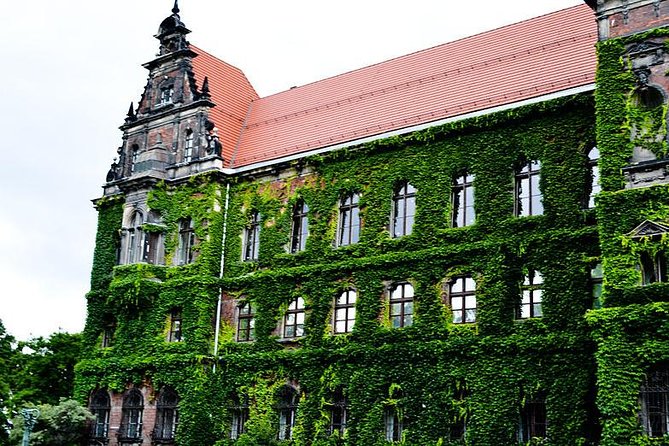
Next comes the National Museum, with about one hour and admission included. This is the art-and-sculpture stop where you can see the city through Polish and Silesian creativity, not only through architecture.
The museum is highlighted for art and sculptures from Silesian and Polish artists, plus works from more distant regions of the world. That mix is useful for context, because it shows how the local story connects to wider cultural currents.
If you love art but hate museum fatigue, use your hour strategically. Look for a few core pieces that catch your eye, then let the guide point out what you might miss on your own. This is also a good moment to ask where to go next after the tour, since that kind of practical guidance is part of the tour’s strengths.
Churches you can add by request, including Church of Our Lady on the Sand
The route includes several major churches, and some access depends on what’s possible at the moment.
You’ll first pass a stunning baroque church that’s described as probably one of the most impressive in Europe. Entry is noted as possible by request, so if you care about interiors, make your interest clear early rather than waiting until the last second.
Then you’ll reach Church of Our Lady on the Sand, built in a Gothic style with a large single nave and Gothic altarpieces. There’s also a mention of a moving nativity scene in one of the chapels, with an old nun attending it.
That kind of detail is why a guided walk helps. A sign alone would not tell you that a nativity scene with movement is part of the experience. It’s the sort of moment that can make your visit feel more like discovery than sightseeing.
Again, entry is described as possible by request, so the best approach is to go with an open mind and ask what you can do during your allotted time.
Ossolineum gardens and church variety that keeps the day interesting
The tour also includes Ossolineum, a palace building with a wonderful garden where you can walk around. Even if you only get a short moment, it adds breathing room. Museums and churches can blur together, and a garden break brings the day back into focus.
You’ll also visit a church tied to the Greek Catholic community. It’s mostly Gothic and unadorned, but it holds a beautiful Baroque chapel on its southern side. That contrast is a highlight because it helps you see how different time periods sit inside the same walls.
Expect your guide to connect these details back to the city’s layered past, which is what makes Wrocław more than just attractive buildings.
Bielarska Island and Słodowa Island: calm stops for pictures and pauses
Between the more indoor stops, you’ll get two nature breaks.
First is Bielarska island, described as a cool joy of visiting, with a quiet natural feeling, benches, and a pleasant stroll. This is where you can step away from the crowds and recharge your attention before the next church or view.
Next comes Słodowa Island, described as adorable with nice views. It’s framed as a good place to relax, take a picture, and enjoy the mix of nature with older buildings. If you want a few minutes without standing in line or listening to facts, these islands are where you get that.
Church of the Holy Cross and the monument for Chinese students
As you wrap up, the route includes a stop where you see a monument or installation that remembers Chinese students and points to Polish solidarity against communism. The emphasis here is historical value plus a location that lets you connect the theme back to the views around the island.
You’ll also spend time by the Church of the Holy Cross, described as having two levels of church, slender windows, and soaring towers. Entry is noted as possible by request.
The most scenic payoff mentioned is the fantastic view on Trumski Island and the cathedral when on top, tying the final viewpoint back to the earlier Cathedral Island focus. If your legs are still working, this is the part where you’ll likely feel grateful you didn’t rush through the earlier stops.
Price and pacing: is $145.41 a good deal?
At $145.41 per person, this tour isn’t a bargain-basement option. But it can still be good value if you care about the right mix of art, history, and time savings.
Here’s where the price earns its keep:
- Skip-the-line tickets are included for Panorama Raclawicka and the National Museum, which are two major stops where waiting can eat into your day.
- Admissions are included for Panorama Raclawicka and Ostrow Tumski in the route, plus the National Museum.
- You get a private tour with the freedom to adjust what you spend time on, which matters when you want to choose between views, interiors, and photo moments.
The one thing to watch is pacing. The full experience takes roughly 2 to 4 hours, so if your goal is only churches or only museums, you might feel like you’d prefer more time at fewer places. If your goal is to get your bearings and understand Wrocław’s main story threads, the length fits well.
A small planning note: it’s commonly booked about 20 days in advance on average. If your dates are firm, book sooner rather than later.
Should you book this guided Wrocław walk?
If you want a “see the highlights, learn the why” day, I’d book it. The guide-driven explanations are a big part of the appeal, and the route avoids the common mistake of turning into a checklist. You get the art experience at Panorama Raclawicka, the historic Cathedral Island at Ostrow Tumski, and the river and island scenery that gives Wrocław its character.
Skip this tour only if you strongly prefer unguided wandering and you know you won’t care about the museum stops or the viewpoint moments. With a guided structure and limited hours, this is best for people who want direction and context, not total freedom.
FAQ
How long is the Wroclaw guided tour?
It typically runs 2 to 4 hours.
Where does the tour start and end?
The tour starts at Plac Katedralny 50, 50-329 Wrocław, Poland and ends at Ostrów Tumski, Wrocław.
What’s included with skip-the-line tickets?
Skip-the-line tickets are included for Panorama Raclawicka and the National Museum.
Are admissions included for all stops?
Admission is included for Panorama Raclawicka, Ostrow Tumski, and the National Museum. For other stops, admission is listed as not included or free, depending on the specific place.
Is this tour private?
Yes. It’s a private tour, and only your group participates.
How do I receive my tickets and tour info?
You’ll receive a mobile ticket, and you should check your email the day before the tour for important information.
What is the cancellation policy?
The experience is non-refundable and cannot be changed for any reason. If you cancel, the amount you paid is not refunded.
If you tell me your travel dates and whether you care most about church interiors, museum art, or viewpoints, I can suggest how to prioritize the stops within the time window.
Fresh listings from Wroclaw
- Wrocław: World War II and the non-existent city of Breslau★ 3.6 · 3 reviews
- Wrocław University: Tour with Audio Guide & Admission★ 4.8 · 45 reviews
- Wroclaw : Walking Custom Tour with a Local Guide★ 4.8 · 3 reviews
- Wroclaw To Church of Peace and Project Riese Tour★ 4.8 · 4 reviews
- Wroclaw: 3-Hour Bike Tour in English or Polish★ 4.8 · 66 reviews
- Wroclaw: Spy-Themed Walk & Game with Host★ 4.6 · 14 reviews
- Wroclaw: Secrets of Wroclaw Walking Tour (2 hours)★ 5.0 · 14 reviews
- Wroclaw: Solar Catamaran Cruise on the Odra River★ 4.8 · 9 reviews
Skip the Line, compared.
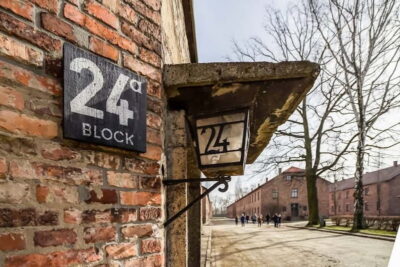
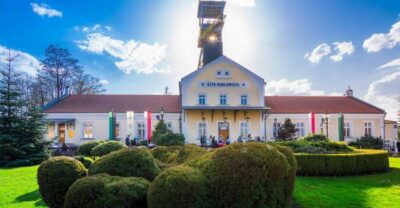
Wieliczka Salt Mine Tour & Skip the Line Ticket
Read our review →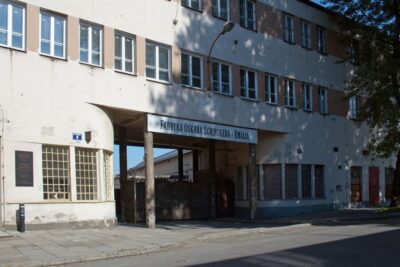
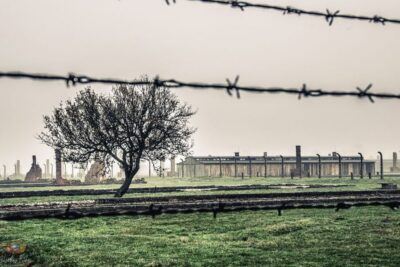
Auschwitz-Birkenau: Skip-the-Line Entry Ticket & Guided Tour
Read our review →
Schindler’s Factory in Krakow: Guided Tour & Skip the Line Ticket
Read our review →
Auschwitz-Birkenau Skip-the-Line Ticket and Guided Tour
Read our review →Auschwitz-Birkenau: Skip-the-Line Entry Ticket & Guided Tour
Read our review →Auschwitz-Birkenau: Skip-the-Line Ticket and Guided Tour
Read our review →Browse the lists this tour appears in