
Review · JEWISH HERITAGE TOURS
A unique walking tour of Jewish Warsaw — past and present
Warsaw tells a hard story on foot. This 3-hour walking tour connects Nożyk Synagogue to a rare surviving slice of the ghetto wall, then follows the route toward Treblinka. You’ll cover about 4.5-5 km, so it is not ideal if you have trouble with longer walks.
I also love how the route moves from place to place with clear, human scale details, not just big facts. And I like that the tour aims to show the full arc, from early settlement and growth, to the war years, and then to today’s Jewish community.
One thing to weigh: entry to key sites is not included, so you may pay a separate ticket if you want to go inside the Nożyk Synagogue or the POLIN Museum. If you want mostly outdoor context and street-level history, you’ll still get a lot out of it.
In This Review
- Key points to know before you go
- Why a Jewish Warsaw walking tour works so well
- Meeting point details and pacing, so you do not waste a minute
- Nożyk Synagogue: the wartime survivor you can still stand beside
- Hala Mirowska: street-level Warsaw where daily life mattered
- Muranów: the ghetto landscape and the wall you can still find
- Ringelblum Archive memorial: remembering through documentation
- POLIN Museum area and Miła 18: choosing your depth
- Umschlagplatz: the point where transport stories became mass deportation
- Price and value: $32 for a 3-hour, guided, story-driven route
- What to wear and how to prepare for a sensitive walk
- Who should book this tour, and who should skip it
- Should you book this Jewish Warsaw walking tour?
- FAQ
- How long is the walking tour?
- What distance will I walk?
- Where do I meet the guide?
- Is the tour guided in English?
- Is the group size small?
- Is wheelchair access available?
- What locations are included on the route?
- Are entry fees included for Nożyk Synagogue and POLIN Museum?
- Is the tour recommended for people with limited walking ability?
- How much does the tour cost?
Key points to know before you go
- Nożyk Synagogue survives WWII and is still here, so the story has a visible anchor.
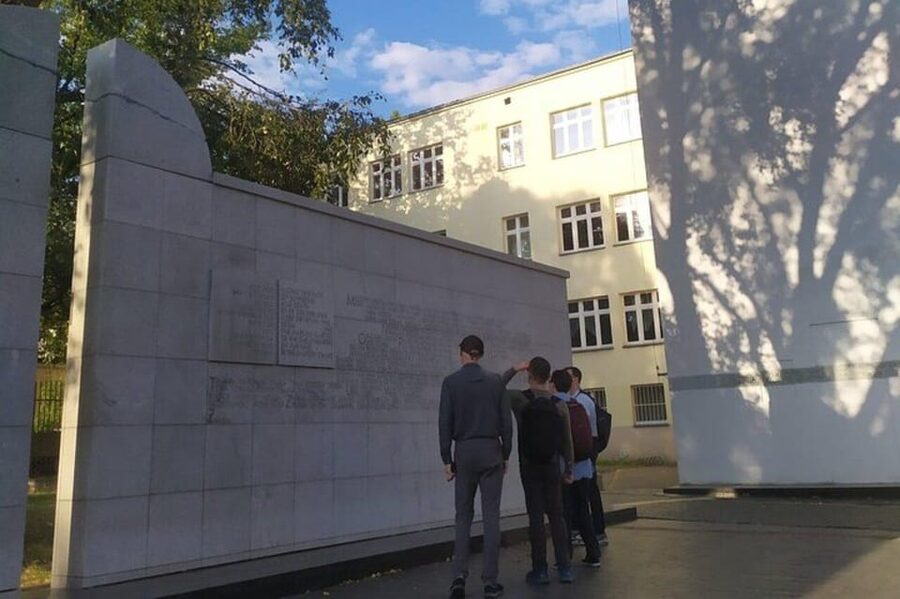
- A remaining part of the ghetto wall gives you a real sense of confinement and geography.
- Umschlagplatz connects to the Treblinka transports, including the grim scale of 300,000 people.
- Ringelblum Archive memorial adds depth to the story of documentation and memory.
- POLIN Museum is part of the walk, even if entry is extra.
- Small groups (up to 10) help you ask questions and keep the pace steady.
Why a Jewish Warsaw walking tour works so well
Jewish Warsaw is not one story. It’s many layers stacked in the same streets, from medieval beginnings to modern life. On a walking tour, you feel that layering because you’re moving through the exact urban spaces where people once lived and worked, and where so much was destroyed.
This tour is also shaped for attention. It’s around 3 hours, about 4.5-5 km, and it stays in a tight radius rather than spreading out across the whole city. That matters, because topics like the Warsaw Ghetto and the Treblinka transports need time for context, not a sprint between distant sights.
You should also know that the tone is direct. The tour talks about tragic events and first-hand accounts of survivors, and it explains why the 1943 uprising happened even when defeat was likely. That combination, street-level setting plus human-scale storytelling, is exactly why this format lands.
More Jewish Heritage Tours in Warsaw
- Warsaw: Warsaw Ghetto Private Walking Tour with Hotel Pickup
★ 4.9 · 369 reviews - Warsaw: Jewish History Guided Walking Tour in English
★ 4.7 · 324 reviews - Private Tour: Warsaw’s Jewish Heritage by Retro Fiat
★ 5.0 · 208 reviews
Meeting point details and pacing, so you do not waste a minute
You meet in front of Baguette Mi restaurant, and you’ll look for a guide with a white and green umbrella. The starting point is listed as Sienna 53, so if you’re arriving early, orient around that area before you start hunting for the umbrella.
The pacing is built around short stops with guided time. You’ll spend 10 to 30 minutes at each key location, including longer segments for the Muranów area. That structure helps you absorb what you’re seeing before you move on.
Group size is limited to 10 people, which is a big deal on a topic like this. Smaller groups tend to mean fewer distractions and more room for questions, especially when the guide uses clear, story-driven explanations.
Nożyk Synagogue: the wartime survivor you can still stand beside
The first major anchor is Nożyk Synagogue. This is presented as the only Warsaw synagogue that survived the war and remains today. That fact alone gives the stop extra weight, because you are not just viewing a memorial, you are standing next to an institution that endured.
The guided time is about 15 minutes. You will get the essentials rather than a full inside visit, since entry is not included. If you’re the type who likes to go in and linger, plan to add the synagogue ticket on your own.
What I like about starting here is that it sets the theme of continuity. The tour is about the arc of almost 1000 years of Jewish presence in Poland and Warsaw, and having a surviving synagogue early helps you hold on to the idea that communities were not only victims of the Holocaust. They were also builders and cultural centers, with religious life rooted in real buildings.
Hala Mirowska: street-level Warsaw where daily life mattered
Next comes Hala Mirowska, with about 10 minutes guided. This stop is less about one single monument and more about the feel of the city around the ghetto era. Markets and market halls tend to be where people experienced the day-to-day rhythm of getting food, working, meeting neighbors, and living under pressure.
Because the tour keeps moving, this is a quick but useful moment. It helps you not treat the ghetto period like a sealed-off chapter. Warsaw’s wartime reality unfolded in a functioning city, which makes the changes even more shocking when you compare then and now.
If you’re hoping for a lot of interior access here, temper expectations. The focus is on guided context, not paid museum-style entry at each stop. You’re there to understand how the city worked and how Jewish life was shaped by its location and access.
More Walking Tours in Warsaw
- Warsaw: Old Town Highlights Walking Tour in English
★ 4.7 · 1,516 reviews - Warsaw: Old Town Guided Walking Tour
★ 4.9 · 599 reviews - Half-Day Polish Food Walking Tour with Guide and Dinner
★ 4.5 · 381 reviews - Old Town Warsaw Walking Tour
★ 4.5 · 333 reviews
Muranów: the ghetto landscape and the wall you can still find
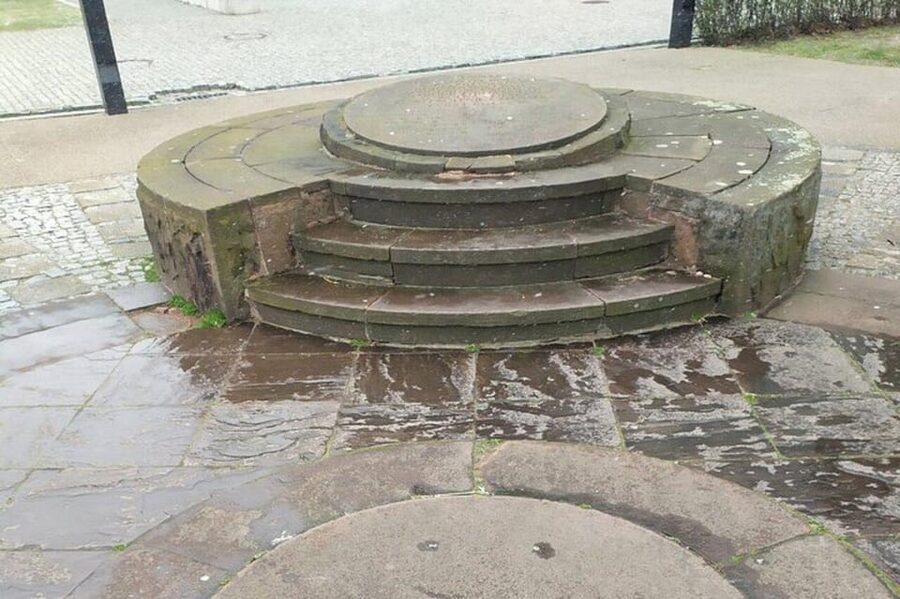
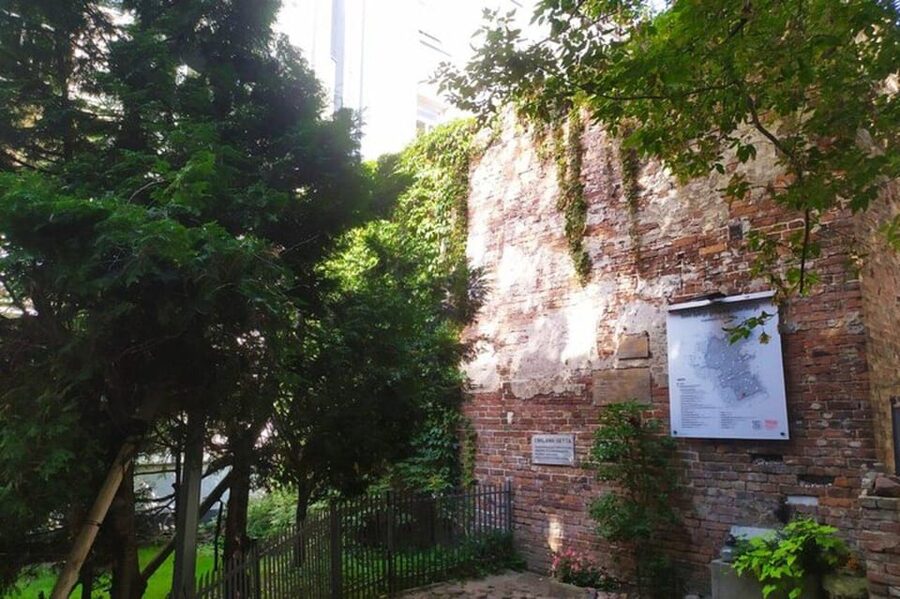
The longest stop on the walk is Muranów at about 30 minutes. This is where the tour gives you the most direct sense of the ghetto’s geographic story. You’ll see one of the few remaining parts of the ghetto wall, which is one of the most powerful visuals on the itinerary.
A wall fragment can feel small, but standing in the right spot makes it real. It forces you to picture movement restricted to a few streets and routes, and it explains why so many lives were narrowed down to a confined area. Your guide also connects the wall to the broader ghetto story, including monuments that remind you of Jewish heroic struggle.
One reason I think this segment is worth your attention is that it links physical evidence to moral and political choices. You’ll hear why the 1943 uprising happened, even though it faced an overwhelming imbalance of power. That is not just a history lesson. It’s a human story about resistance under impossible odds.
Ringelblum Archive memorial: remembering through documentation
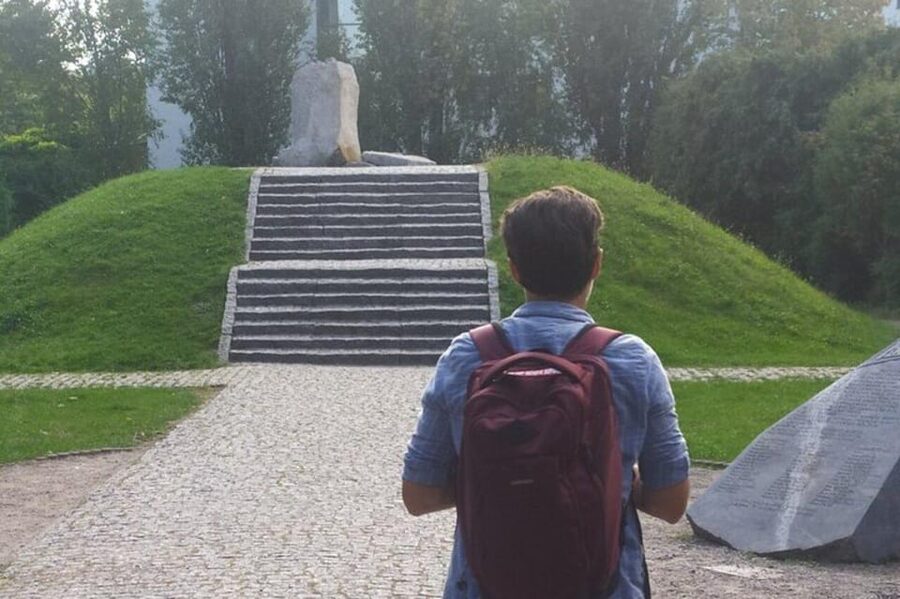
At the Upamiętnienie Archiwum Ringelbluma, you get about 10 minutes guided. This is a memorial that points to a different kind of bravery: documenting what was happening so it would not vanish.
That matters on a tour like this because the risk is to treat everything as only tragedy and loss. The Ringelblum-focused stop balances the story by highlighting the effort to preserve records, witness accounts, and evidence. The tour also aims to include heart-breaking, first-hand accounts from survivors, and this memorial sets you up to understand why those testimonies are so important.
If you want to approach this stop with the right mindset, slow down inside your head for a moment. Look at the fact that memory has shape. It’s not only names and dates. It’s also the work of people who refused to let the story be erased.
POLIN Museum area and Miła 18: choosing your depth
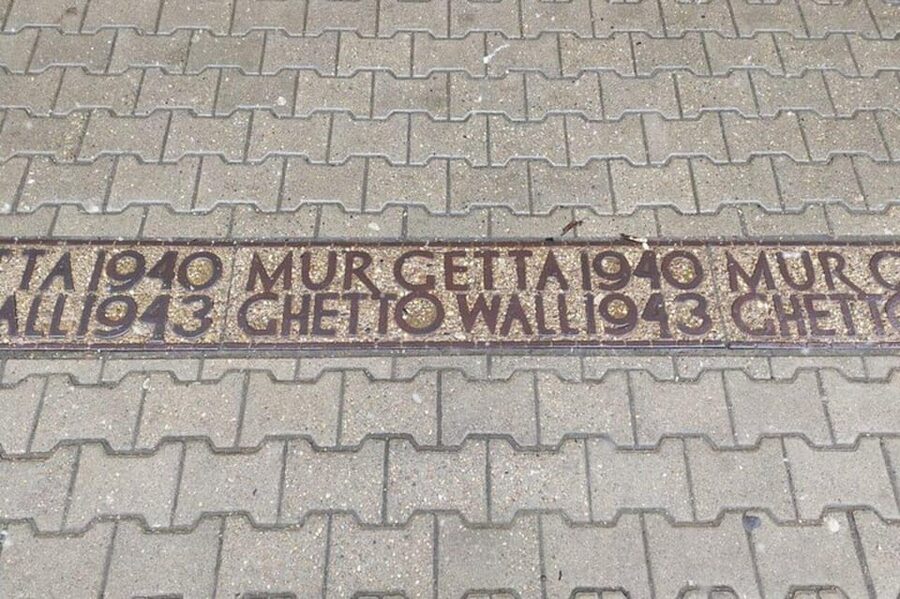
The tour includes a stop for the POLIN Museum of the History of Polish Jews with about 10 minutes guided. Entry to the museum is not included, so what you get is an orientation and contextual framing rather than a full exhibition visit.
That said, this is still valuable. POLIN is one of the most important places in Warsaw for understanding Jewish history in Poland, and having a guided introduction helps you decide what to do next. If you have time later, you can return and pay the entry fee with a better sense of what you want to focus on.
Then you stop at Miła 18 for about 10 minutes guided. The tour treats the address as meaningful, but the time spent is brief, which tells you something important: this is a walking-tour stop designed for guided context, not a long stay. Your guide explains why it fits into the wartime narrative and how it relates to what you’ve already learned in earlier stops.
I like that the itinerary mixes “big anchors” with “specific addresses.” Big sites tell you what happened. Addresses tell you where it happened.
Umschlagplatz: the point where transport stories became mass deportation
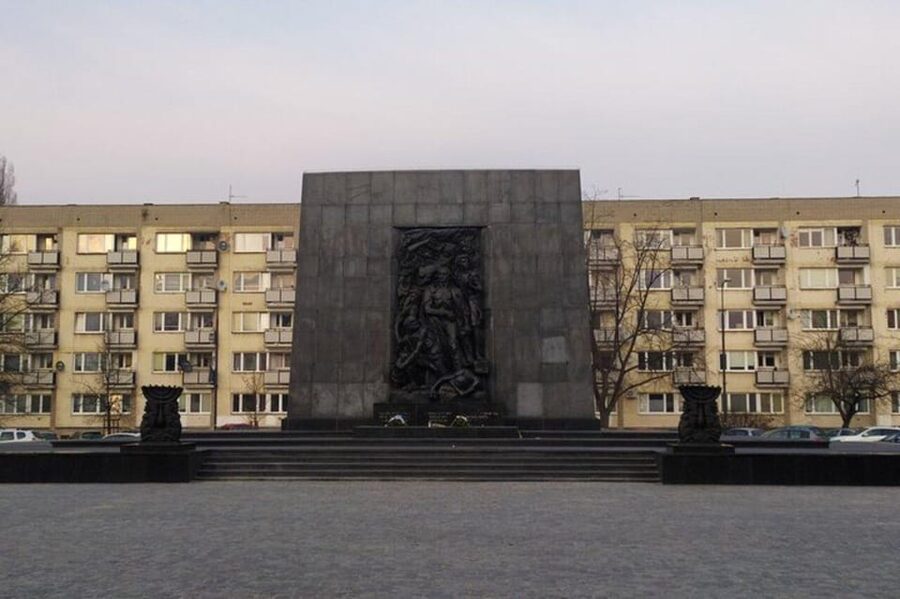
The walk finishes at Pomnik Umschlagplatz, a key marker connected to the transports to Treblinka. This is where the tour brings the story to one of its most brutal conclusions, including the fact that 300,000 Jews were transported from this place.
That number is hard to absorb, and the stop is intentionally direct. You’re not just learning that deportations happened. You’re being shown the site associated with the process and scale.
This ending matters because it shapes how you interpret the earlier stops. If you only visited museums, the story might feel like it happened in a vacuum. By finishing at Umschlagplatz after seeing the ghetto’s geography and remnants of the wall, you understand how people were contained, then moved, then erased as communities.
If you feel emotional here, that is normal. Plan a little decompression time afterward. Don’t schedule a packed dinner that forces you to power through.
Price and value: $32 for a 3-hour, guided, story-driven route
At $32 per person for about 3 hours, this is strong value for Warsaw. The key is what is included: a full info pack with FAQ and useful links, plus visual aids and specific recommendations for what else to see and where to eat or drink afterward.
You’re also paying for the way the guide structures the story. The tour relies on clear explanations, and the experience is helped by a guide style that many guests describe as lively and memorable. In particular, Oliwia is mentioned by name in connection with humor, intonation, and extensive grasp of the ghetto history. Even if your guide is someone else, the tour’s format is clearly built around storytelling that keeps the material understandable without making it feel watered down.
Two costs are not included: entry to the Nożyk Synagogue and entry to POLIN Museum. For me, that’s a reasonable trade-off, because you can decide based on your energy and interests. If you want more time inside, budget extra for tickets. If you prefer outdoor orientation, you can keep spending controlled.
Also consider timing. A tour like this is not the best place to cram in a late airport connection or a rushed day plan. Give yourself time for the walk and for your head to catch up afterward.
What to wear and how to prepare for a sensitive walk
This is a long walking day for the time, and the topic is emotionally heavy. I’d treat it like a museum day, not like a casual stroll.
Wear comfortable shoes. The itinerary covers about 4.5-5 km, and it includes multiple stops where you will stand and listen. Bring water if you’re going in warmer months.
Before you go, set your expectations: you will hear tragic and heroic stories. The tour explains why the Jewish Uprising in 1943 took place despite the likelihood of failure. That historical reasoning helps, but it will still feel heavy.
One more practical tip: bring a notebook or save notes in your phone. The tour points you to additional places after the walk, and the info pack includes links. If you jot down what resonates, you can turn that into a smarter plan later.
Who should book this tour, and who should skip it
This tour is a good match if you want Jewish Warsaw explained through physical places, not only big indoor museums. It works especially well if you care about understanding the ghetto’s geography, learning how people survived and resisted, and then seeing what life looks like today.
It also suits people who like a small-group format. Up to 10 participants keeps the experience personal and easier to follow.
Skip it if walking distance is an issue. It is not recommended for travelers who have problems with walking long distances. If you’re unsure, choose this only if you’re confident you can comfortably cover 4.5-5 km at a steady pace with stops.
Should you book this Jewish Warsaw walking tour?
I think you should book it if you want the most meaningful parts of Warsaw’s Jewish story in one focused, guided route. Starting with Nożyk Synagogue, then moving through Muranów, Ringelblum-related remembrance, and ending at Umschlagplatz ties the timeline together in a way that feels grounded in place.
It’s also a smart pick if you like guides who keep history clear and engaging. The guide approach matters here, because the topic is complex and emotionally intense, and the walking format depends on good pacing and explanation.
Book it with eyes open about two things: the walk is long enough to matter, and two major stops have extra entry fees if you want to go inside. If you can handle those trade-offs, you’ll leave with a sharper understanding of Warsaw past and present, plus a concrete map of what to explore next.
FAQ
How long is the walking tour?
The tour lasts about 3 hours.
What distance will I walk?
You’ll walk approximately 4.5-5 km.
Where do I meet the guide?
You meet in front of Baguette Mi restaurant. Look for a guide holding a white and green umbrella.
Is the tour guided in English?
Yes, the live tour guide speaks English.
Is the group size small?
Yes. It is limited to 10 participants.
Is wheelchair access available?
Yes, the tour is wheelchair accessible.
What locations are included on the route?
The tour includes stops at Nożyk Synagogue, Hala Mirowska, Muranów, a memorial for the Ringelblum Archive (Upamiętnienie Archiwum Ringelbluma), POLIN Museum of the History of Polish Jews, Miła 18, and it finishes at Pomnik Umschlagplatz.
Are entry fees included for Nożyk Synagogue and POLIN Museum?
No. Entry fees for Nożyk Synagogue and POLIN Museum are not included.
Is the tour recommended for people with limited walking ability?
No, it is not recommended if you have problems with walking long distances.
How much does the tour cost?
The price is $32 per person.
More Jewish Heritage Walks in Warsaw
- Warsaw: Ghetto, Jewish Cemetery & POLIN Museum Private Tour
★ 4.8 · 132 reviews - Warsaw: Jewish Heritage & Holocaust Walking Tour
★ 4.7 · 119 reviews - Tour of the Warsaw Ghetto
★ 5.0 · 119 reviews - Jewish Warsaw Walking Tour
★ 5.0 · 95 reviews
Fresh listings from Warsaw
- Wolf’s Lair & Treblinka Tour in 1 day from Warsaw★ 5.0 · 37 reviews
- Tour from Warsaw: Wolf’s Lair, Hitler’s HQ Zones I and II★ 5.0 · 32 reviews
- Wolf’s Lair Private Day Trip from Warsaw★ 5.0 · 50 reviews
- Warsaw’s Old Town A Self-Guided Audio Tour★ 4.5 · 10 reviews
- Wilanow Royal Palace : SMALL GROUP /inc. Pick-up/★ 4.5 · 16 reviews
- Private 3-, 5-, or 7-Hour Warsaw Tour by Car★ 5.0 · 7 reviews
- Off the Beaten Track in Warsaw: Private City Tour★ 4.5 · 9 reviews
- Warsaw Must-See Local City Tour with Antek and Tomek★ 5.0 · 51 reviews
Jewish Heritage Tours, compared.
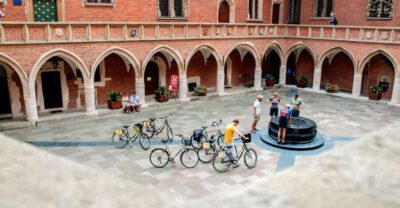
Bike Tour of Old Town, Jewish Quarter and the Ghetto
Read our review →
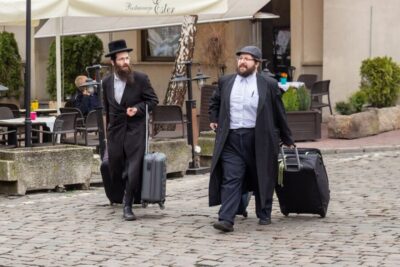
Kazimierz, Schindler’s Factory & Ghetto Guided Tour
Read our review →
Full Bike Tour – the Old Town, Jewish Qtr & the Ghetto NEW BIKES
Read our review →
Warsaw Ghetto Private Walking Tour with Hotel Pickup
Read our review →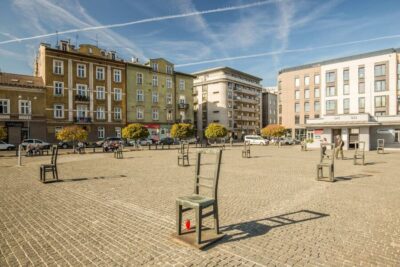
Jewish Quarter and Ghetto Electric Golf Cart Tour
Read our review →Browse the lists this tour appears in