
Review · JEWISH HERITAGE TOURS
Private Tour: Warsaw’s Jewish Heritage by Retro Fiat
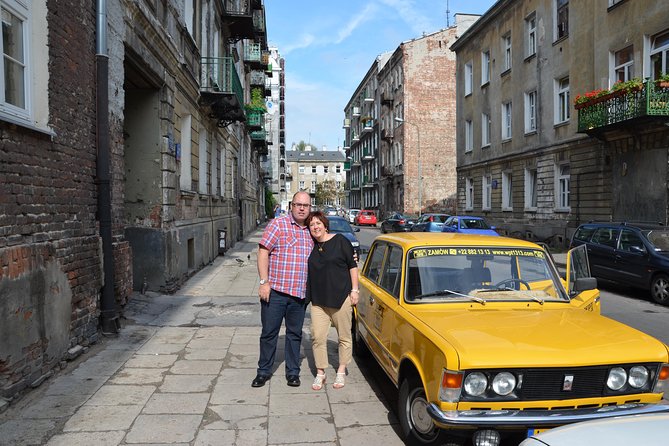
A vintage Fiat rolls past painful history. I really like the private, driver-guide approach, because it turns “historic stops” into a clear story you can follow. I also love that the route ends at places that are still meaningful today, especially Nożyk Synagogue. One thing to plan around: if you book a late-day slot, the synagogue and Jewish cemetery can be unavailable because they close from Friday evening through Saturday for Sabbath.
You start with hotel pickup in the city center and ride in a classic Fiat 125p (or a vintage minivan for groups of 4+). The tour runs about 4 hours and mixes outdoor memorials, surviving landmarks, and optional time at POLIN Museum. You get a steady mix of context, locations tied to WWII, and practical details like head covering at some Jewish sites.
In This Review
- Key Highlights You’ll Feel During the Ride
- Getting Picked Up in Warsaw Center and Settling Into the Fiat
- Price and Value: What $108.28 Buys You in 4 Hours
- Route Overview: How the Day Moves Through Time
- Stop 1: Fragment of Ghetto Wall and the Power of Plaques
- Stop 2: Chłodna Street, the Footbridge of Memory, and Adam Czerniaków
- Stop 3: Muranów, the Former Large Ghetto Area
- Stop 4: Ghetto Heroes Monument and the 1943 Uprising Lens
- Stop 5: POLIN Museum Seen From Outside, Plus Optional Entry
- Treblinka Departure Point, a Group Suicide Memorial, and a “Street That Survived”
- Stop 6: Nożyk Synagogue, Still in Use, With Sabbath Timing to Know
- Stop 7: Jewish Cemetery Time, Names, and Another Sabbath Closure
- English Guidance and Tailoring: Making the Tour Fit Your Questions
- What to Pack and How to Prepare Emotionally
- Who This Tour Is Best For
- Should You Book This Tour?
- FAQ
- Is hotel pickup and drop-off included?
- How long is the tour?
- Is this a private tour?
- Are tickets included for POLIN Museum, Nożyk Synagogue, and the Jewish Cemetery?
- When are Nożyk Synagogue and the Jewish Cemetery closed?
- Can I cancel for a full refund?
Key Highlights You’ll Feel During the Ride
- Retro Fiat 125p transport that makes the streets feel like part of the lesson
- Private pacing with a driver-guide who can answer questions and adjust to what matters to you
- Nożyk Synagogue as a living site of worship, with clear timing rules for visits
- Muranów (the Large Ghetto area) and memorials that put the Warsaw Ghetto Uprising in focus
- Cemetery time for names and generations, not just general history
Getting Picked Up in Warsaw Center and Settling Into the Fiat
This tour is designed to remove friction. If you’re staying in the city center, your guide will meet you at your hotel lobby, or in front of the Palace of Culture and Science if that’s your pickup option. The meeting point is right at pl. Defilad 1, near one of Warsaw’s best-known landmarks, so it’s an easy anchor if you’re orienting yourself in the city.
The ride itself is part of the experience. Most groups tour in a vintage Fiat 125p, which helps the day feel slower and more deliberate. If you’re traveling with a group of 4 or more, you’ll be driven in a vintage minivan instead, so the schedule still feels comfortable and roomy.
You also get a format that works well for emotional subjects. Outdoor stops keep things moving, and the private setup gives you room to ask questions as you go. The tour is offered in English, and the guide is your main source of context, especially at places where the “what am I looking at?” question can be hard to answer on your own.
More History Tours in Warsaw
- Warsaw: POLIN Museum of the History of Polish Jews Ticket
★ 4.7 · 1,142 reviews - Warsaw: Chopin Concert at Historical Venue in Old Town
★ 4.7 · 445 reviews - Small-Group Historical Guided Tour of Warsaw with pick up/drop off. Public Tour.
★ 4.5 · 343 reviews
Price and Value: What $108.28 Buys You in 4 Hours
At about $108.28 per person for a roughly 4-hour private tour, you’re paying for three things that add real value in Warsaw: hotel transfers, a professional driver-guide, and focused WWII-era routing through scattered sites.
A big reason the value feels solid here is that so many of the most important stops are not next door to each other. Packing those into a short window without a headache is exactly what private transport is good for. Also, several stops don’t cost anything to view because the entry ticket is marked as free for the initial memorial points.
The one cost you might add is time at museums and inside religious sites. POLIN Museum is optional (and not included), and the Nożyk Synagogue plus the Jewish Cemetery are also not included for admission. That means you can control your budget based on what you want most: quick exterior viewing versus deeper indoor time.
Route Overview: How the Day Moves Through Time
The flow of the tour matters. You start with the physical traces of the Warsaw Ghetto, move through places that reflect community life and leadership, then shift into memorial ground tied to the uprising and later tragedy. By the time you reach Nożyk Synagogue and the cemetery, the day stops feeling like a generic lesson and starts feeling like a timeline you can point to.
Here’s what that structure looks like in practice:
- Remnants and plaques connected to the ghetto wall and everyday geography
- Muranów, the former Large Ghetto area, now changed by modern Warsaw
- Monuments and memorial sites tied to the uprising and collective suffering
- Nożyk Synagogue as an active site of worship and a survivor of the war
- Jewish Cemetery as a place of names, generations, and loss
It’s not a sightseeing loop. It’s a guided walk through the logic of place, where the city’s current look is constantly contrasted with what happened there.
Stop 1: Fragment of Ghetto Wall and the Power of Plaques
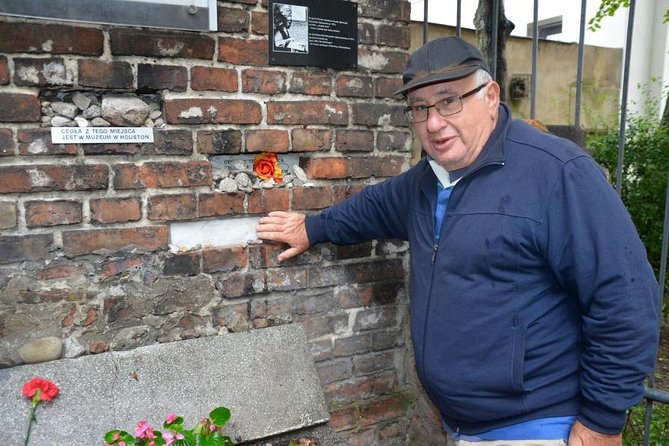
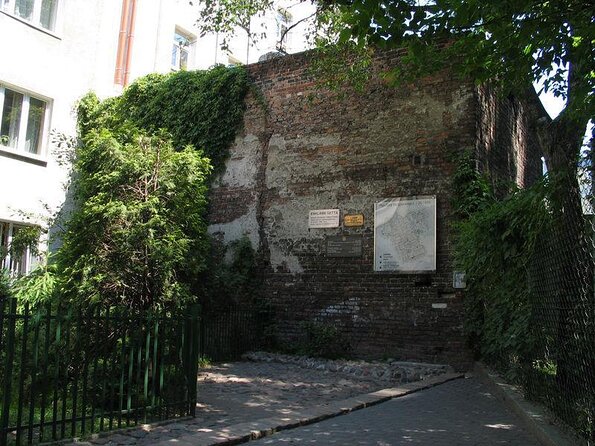
You begin at a fragment of the ghetto wall, with the remains where commemorative plaques are located. This first stop is short, about 15 minutes, and it’s free to view, which makes it a good opening even if you’re still getting your bearings in Warsaw.
Why this matters: walls are one of the easiest visual anchors for understanding confinement. Even when you can read about the ghetto later, standing near a physical trace helps your brain lock onto scale. Your guide connects what you see to the 1940 construction of the wall and the mass imprisonment that followed.
A practical note: some sites require respectful head covering. Your tour info says you may be required to cover your head at certain Jewish sites, so it’s smart to bring a hat you’re comfortable wearing for part of the day, especially in colder months.
More Jewish Heritage Tours in Warsaw
- Warsaw: Warsaw Ghetto Private Walking Tour with Hotel Pickup
★ 4.9 · 369 reviews - Warsaw: Jewish History Guided Walking Tour in English
★ 4.7 · 324 reviews - Warsaw: Ghetto, Jewish Cemetery & POLIN Museum Private Tour
★ 4.8 · 132 reviews - Warsaw: Jewish Heritage & Holocaust Walking Tour
★ 4.7 · 119 reviews
Stop 2: Chłodna Street, the Footbridge of Memory, and Adam Czerniaków
Next you head to Chłodna Street, where you’ll see two meaningful things tied to the ghetto period. There’s the Footbridge of Memory, and nearby is a building connected with Adam Czerniaków, who was president of the Jewish Community, also known as the Judenrat.
This stop is about 10 minutes and is marked as free. Short as it is, it gives you a jump from “fortification” to “people and governance.” If you’re trying to understand how communities functioned under extreme pressure, this kind of detail makes the story stop being abstract.
It also sets up a pattern you’ll see all day: memorials are paired with specific names, roles, and buildings. That’s where a good driver-guide earns their keep.
Stop 3: Muranów, the Former Large Ghetto Area
Then you move into Muranów, the former Large Ghetto area. You’ll spend around 30 minutes here, and it’s free to view, with the emphasis on how the district looks now compared to what it was then.
This is one of the most important stops because it shows the contrast between present-day Warsaw and the overlay of WWII reality. Street art and modern buildings exist in the same space where the ghetto’s life unfolded. A guide helps you see those layers instead of just passing through a neighborhood.
If you want to take photos or just absorb the streets, you’ll likely find yourself slowing down here. The tour is private, so you can linger a moment while your guide keeps the story moving.
Stop 4: Ghetto Heroes Monument and the 1943 Uprising Lens
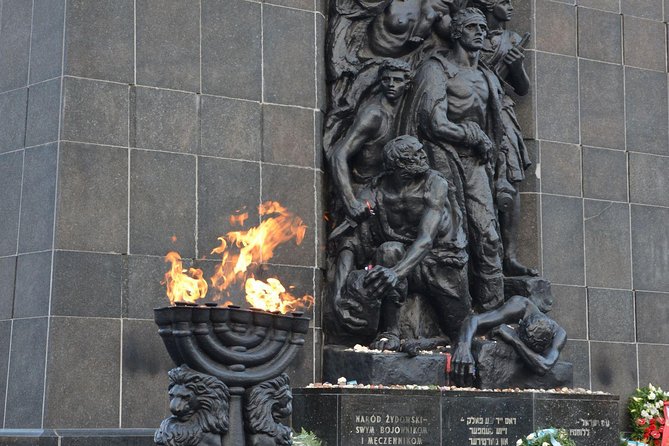
After Muranów, you visit the Pomnik Bohaterów Getta, the Monument to the Ghetto Heroes. It commemorates the Warsaw Ghetto Uprising of 1943.
This is another short stop, about 15 minutes, and it’s free. Even so, it can feel heavy. The point is not just to mark a date, but to understand the uprising as a response under impossible conditions.
If you want to ask how the uprising relates to what you just saw in earlier stops, this is a good moment. It’s a natural pivot point in the timeline.
Stop 5: POLIN Museum Seen From Outside, Plus Optional Entry
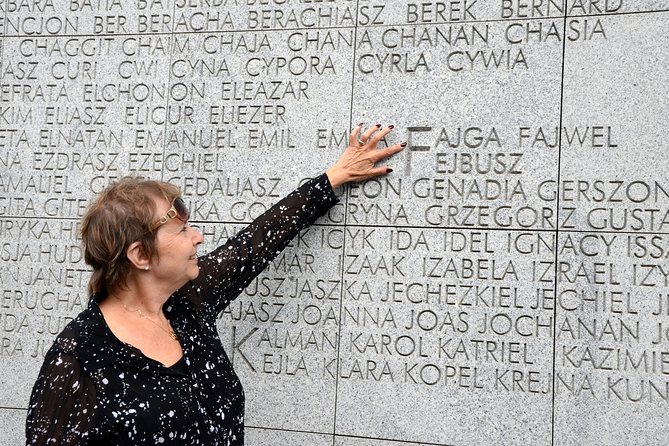
You’ll then reach POLIN Muzeum Historii Żydów Polskich. You’ll see it from the outside for about 15 minutes, and that exterior viewing is included. If you want to go inside, POLIN admission is not included, and your guide can leave you there after the tour.
This is a smart option built into the plan. POLIN can take real time, and not every visitor wants to spend a second block of focused time after the memorial ground. If you’re the type who loves museums, you can use the tour as the intro and let POLIN finish the deeper story.
If you’re more into walking sites and WWII context, it’s also totally fine to skip the museum entry and stay with what the day is already doing.
Treblinka Departure Point, a Group Suicide Memorial, and a “Street That Survived”
The middle of the route includes several additional Warsaw Ghetto-related sites. The tour includes stops described as:
- a departure point connected to Treblinka extermination camp, known for gas chambers
- a memorial for those who committed group suicide during the ghetto uprising
- a street described as the one that survived from both sides in the whole ghetto area
These are the moments that often make the day feel most direct. They’re not just “background.” They give you place-based answers to hard questions about where people were taken, how people died, and what parts of the city remained.
Because these stops are emotionally intense, a private guide helps you pace your own reactions. It’s also why you should plan this tour as one of your more serious activities, not something you squeeze in between parties.
Stop 6: Nożyk Synagogue, Still in Use, With Sabbath Timing to Know
Nożyk Synagogue is a highlight for a reason. It’s described as the only surviving prewar Jewish house of prayer in Warsaw, and it’s still an active place of worship today.
You get about 30 minutes here, and admission is not included. The key practical detail is the closure schedule: the synagogue is closed from Friday evening through the whole Saturday due to Sabbath.
That timing detail matters more than it sounds. If you book a late afternoon tour, you might arrive expecting entry and then find the synagogue closed. This has caused frustration for some people who booked for later hours. The fix is simple: choose a day and start time that gives you a realistic chance to enter, not just to look from the outside.
Also remember the head covering detail, since religious-site visits may require you to cover your head.
Stop 7: Jewish Cemetery Time, Names, and Another Sabbath Closure
The Jewish Cemetery stop is about 30 minutes and is admission not included. It’s described as the remains of graves for over 200,000 people, including spiritual and political leaders, creators of Jewish culture, and thousands of nameless victims. The cemetery also includes graves of many generations of Warsaw Jews.
This stop can hit hard, but it’s also one of the most meaningful parts of the day because it anchors the story in human lives rather than only events.
Again, the timing rule is crucial. The cemetery is closed from Friday evening through the whole Saturday due to Sabbath. If your schedule puts you near that window, plan your visit time accordingly.
If you have a personal connection to Jewish history, family roots, or WWII research, I’d treat this cemetery stop as the moment you slow down the most. Even if you’re not reading every name, the scale and the mix of remembered and nameless losses do the work.
English Guidance and Tailoring: Making the Tour Fit Your Questions
This is a private tour, so you’re not stuck with a scripted rhythm. You can mention interests to your guide, including film locations from The Pianist, which is set in Warsaw during WWII.
That kind of tailoring matters if you’ve read about the subject before. It helps you connect what you’ve seen in books and movies to what exists now. It also helps if you want a specific emphasis, like leadership, the uprising, everyday life under occupation, or how Warsaw’s Jewish community changed over time.
Guides listed for this experience have a consistent reputation for handling questions well and keeping the pace smooth. You’ll likely feel that when the guide explains not only what you’re seeing, but why it was there in the first place, and how it connects to other stops on your route.
What to Pack and How to Prepare Emotionally
You don’t need special gear, but a few basics will make the day easier:
- dress for walking and for weather, since part of the day is outdoor memorial ground
- bring something for head covering if you’re visiting religious sites and you prefer not to improvise
- plan for a serious mood, because the day includes sites tied to extermination and mass death
Comfort matters because you’ll be focused for hours. Also, if you’re traveling with family members, this is the kind of tour where you’ll want to talk ahead of time about expectations. Some people are fine with heavy topics, others prefer a lighter “city overview” first.
This is not a party-style tour. It’s a guided route through tragedy, resilience, and what’s left in the city today.
Who This Tour Is Best For
This works especially well if you:
- want a private, English-speaking guide to connect scattered sites into one timeline
- care about Warsaw’s Jewish community across time, not only WWII headlines
- prefer visiting memorials and surviving landmarks in a guided order
It’s also a good fit if you’re short on time in Warsaw and don’t want to spend your day planning transport across multiple neighborhoods.
If you’re mainly chasing quick photos with minimal context, you might feel the emotional intensity and need to skip some indoor options. The route is designed for understanding, not just snapshots.
Should You Book This Tour?
I’d book it if you want your Warsaw Jewish history stops arranged into a clear story with transport and transfers included. The biggest reasons are practical and human: you get guided meaning at places that can look similar to any other city corner, and you get the right timing cues for major sites like Nożyk Synagogue and the Jewish Cemetery.
Book smartly around Sabbath closure. If you’re traveling on Friday evening or Saturday, or if your schedule is late in the day, verify that you can enter the synagogue and cemetery. If entry matters to you, choose your start time accordingly.
If you’re okay with a day that includes difficult history and you want to walk out with a stronger map of what happened and where, this is a strong choice.
FAQ
Is hotel pickup and drop-off included?
Yes. The tour includes hotel pickup and drop-off. Pickup is available from city-center hotels, and if your hotel is not in the pickup area, you’re asked to contact the provider to arrange the best solution.
How long is the tour?
The tour duration is about 4 hours.
Is this a private tour?
Yes. It’s private, meaning only your group participates.
Are tickets included for POLIN Museum, Nożyk Synagogue, and the Jewish Cemetery?
No. POLIN Museum entry is not included, and admission is also not included for Nożyk Synagogue and the Jewish Cemetery.
When are Nożyk Synagogue and the Jewish Cemetery closed?
Both are closed from Friday evening through the whole Saturday due to Sabbath.
Can I cancel for a full refund?
Yes. You can cancel for a full refund if you cancel at least 24 hours in advance of the experience start time. If you cancel less than 24 hours before, the amount paid is not refunded.
More Jewish Heritage Walks in Warsaw
- Tour of the Warsaw Ghetto
★ 5.0 · 119 reviews - Jewish Warsaw Walking Tour
★ 5.0 · 95 reviews - Historical Walking Tour of Jewish Warsaw
★ 5.0 · 68 reviews - Jewish Heritage and Holocaust Memorial Tour of the Former Ghetto
★ 5.0 · 17 reviews
More Retro Car Tours in Warsaw
- Private Tour: Warsaw City Sightseeing by Retro Fiat
★ 5.0 · 562 reviews - Private Historical Tour of Warsaw by a Retro Fiat with Pickup
★ 5.0 · 190 reviews - Warsaw Must-Sees: 4-Hour Private Tour by Retro Fiat
★ 4.9 · 123 reviews - Private Tour: Warsaw’s Communist History by Retro Fiat
★ 5.0 · 115 reviews
Fresh listings from Warsaw
- Wolf’s Lair & Treblinka Tour in 1 day from Warsaw★ 5.0 · 37 reviews
- Tour from Warsaw: Wolf’s Lair, Hitler’s HQ Zones I and II★ 5.0 · 32 reviews
- Wolf’s Lair Private Day Trip from Warsaw★ 5.0 · 50 reviews
- Warsaw’s Old Town A Self-Guided Audio Tour★ 4.5 · 10 reviews
- Wilanow Royal Palace : SMALL GROUP /inc. Pick-up/★ 4.5 · 16 reviews
- Warsaw Must-See Local City Tour with Antek and Tomek★ 5.0 · 51 reviews
- Private 3-, 5-, or 7-Hour Warsaw Tour by Car★ 5.0 · 7 reviews
- Off the Beaten Track in Warsaw: Private City Tour★ 4.5 · 9 reviews
Jewish Heritage Tours, compared.
Bike Tour of Old Town, Jewish Quarter and the Ghetto
Read our review →
Kazimierz, Schindler’s Factory & Ghetto Guided Tour
Read our review →
Full Bike Tour – the Old Town, Jewish Qtr & the Ghetto NEW BIKES
Read our review →
Warsaw Ghetto Private Walking Tour with Hotel Pickup
Read our review →
Jewish Quarter and Ghetto Electric Golf Cart Tour
Read our review →Browse the lists this tour appears in