
Review · JEWISH HERITAGE TOURS
Tour of the Warsaw Ghetto
Warsaw’s ghetto story hits hard, and educates fast. This 3-hour walk through the wartime core connects street-level sites with the big picture of occupation, deportation, and resistance. I especially love the stop at Nozyk Synagogue and the way the route threads real locations into a clear timeline. One consideration: it is emotionally heavy and it includes a lot of on-foot time, so it is not ideal for kids.
You also get hotel pickup in the city center and a mixed pace with buses or trams for parts of the journey. The visit ends at the POLIN Museum area, but the tour does not take you through the museum’s main exhibition. Plan for a serious subject, wear comfortable shoes, and bring your curiosity, not your casual mood.
In This Review
- Quick hits to know before you go
- What You Pay for: $102.78, Pickup Value, and the One Extra Ticket
- How the 3-Hour Route Works: 2.5 Hours on Foot Plus Transit
- Stop 1, Nozyk Synagogue: The Only Survivor, Still in Operation
- Próżna and Waliców: Where You See What Remained
- Chłodna Street and the Bridge Symbol: More Than a Movie Reference
- Umschlagplatz: The Places Where the Deportation Plan Happened
- POLIN Museum Area, Ghettohelden Memorial, and Willy Brandt’s Kniefall
- A key practical warning about the POLIN Museum time commitment
- Miła 18 and Willy Brandt’s Knees: Memorial Geography You Can Feel
- Pawiak Prison Museum: Detention as a Tool of Control
- What Makes the Guides Matter Here: Storytelling, Maps, and Period Comparisons
- Who Should Book This Tour, and Who Might Want Another Plan
- Book It or Skip It: My Practical Verdict
- FAQ
- How long is the Warsaw Ghetto tour?
- Is the tour offered in English?
- Does the tour include hotel pickup?
- Where does the tour start and end?
- Do I need to pay extra for Nozyk Synagogue?
- Is Nozyk Synagogue visited on Fridays, Saturdays, or Jewish holidays?
- Is the main POLIN Museum exhibition included?
- How much walking is involved?
- Is this a private tour?
- Can I cancel for free?
Quick hits to know before you go
- A tight 3-hour route that still covers major ghetto landmarks without rushing
- Nozyk Synagogue included as a stop (with an extra admission fee you should plan for)
- Original streets and wall fragments that make the history feel literal, not abstract
- Umschlagplatz and the Final Solution plan explained on site, not in theory
- Willy Brandt’s Kniefall and POLIN symbolism woven into the story at the end
- A guide-led, respectful approach that keeps heavy history clear and human
What You Pay for: $102.78, Pickup Value, and the One Extra Ticket
This tour costs $102.78 per person for about 3 hours of guided time. For the price, you are not just buying facts, you’re buying structure, context, and a route that is hard to assemble on your own. You also get pickup from city-center hotels (and the guide uses a PolinTours sign).
The one clear extra cost is Nozyk Synagogue admission, which is €5.00 per person and is not included. Everything else on the route lists free site access. So the budget is pretty simple: book the tour price, add the synagogue ticket if your departure visits it, and bring a little extra for any optional add-ons.
More Jewish Heritage Tours in Warsaw
- Warsaw: Warsaw Ghetto Private Walking Tour with Hotel Pickup
★ 4.9 · 369 reviews - Warsaw: Jewish History Guided Walking Tour in English
★ 4.7 · 324 reviews - Private Tour: Warsaw’s Jewish Heritage by Retro Fiat
★ 5.0 · 208 reviews
How the 3-Hour Route Works: 2.5 Hours on Foot Plus Transit
This is a mixed walking-and-transit experience. You should expect about 2.5 hours on foot and around 30 minutes by bus, tram, or underground. That mix matters because it keeps you moving between key points, while still letting you stand on the ground where things happened.
It is also a private tour for your group only. That helps a lot on a tough topic. It means you can ask questions and get direct answers without feeling like you are talking over a crowd.
One more pacing detail: the order of stops is adapted to where your hotel is, so your guide can keep the logistics smooth.
Stop 1, Nozyk Synagogue: The Only Survivor, Still in Operation
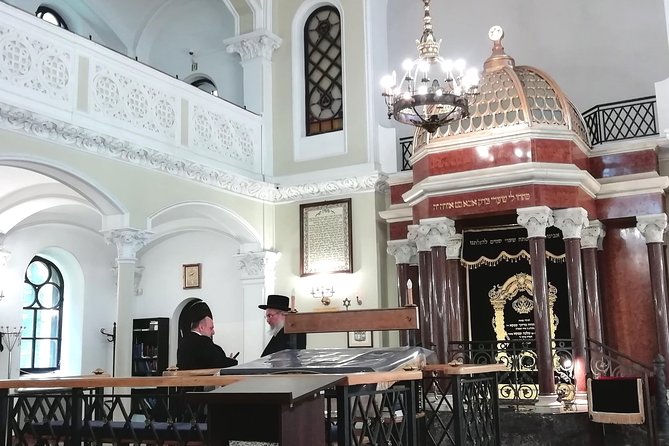
Your first major moment is at Nozyk Synagogue, described as the only synagogue that survived the Second World War and is still operating today. Even if you are not religious, it lands as a powerful anchor. It is not just a memorial site, it is a living place.
Important practical note: Nozyk Synagogue admission is not included, and you should budget for the ticket (listed as €5.00 per person). Also, if your tour runs on Friday afternoons from 1 p.m., Saturdays, or Jewish holidays, the tour is conducted without visiting the synagogue.
Próżna and Waliców: Where You See What Remained
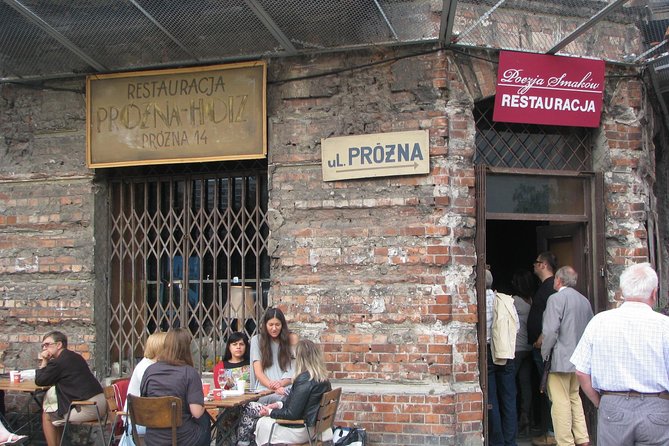
After Nozyk Synagogue, you move to Próżna, focusing on the last surviving streets and neighborhood sections within the ghetto area. This stop is valuable because it shifts your attention from famous events to daily space. You start noticing how cramped the geography was, and how the ghetto was not just a concept, it was a set of streets and blocks.
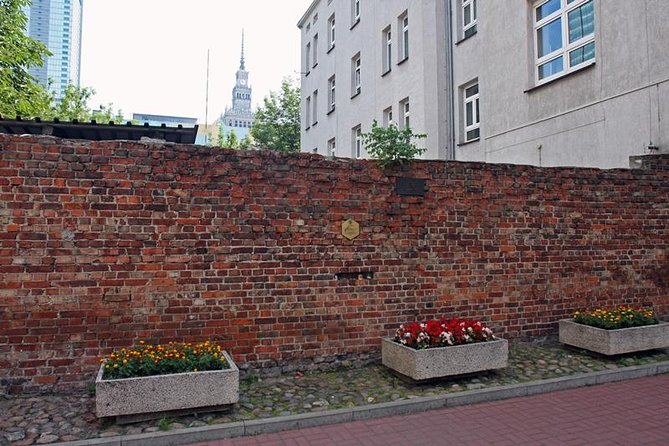
Then comes Waliców, where you see fragments of the ghetto wall. This is one of those moments where photos cannot replace standing there. The tour is designed to build from origins and everyday life to bigger events, including the 1943 uprising, so the wall fragments become a visual “bookmark” in the story.
A drawback to consider here is also why this tour is so effective: you are outdoors for many stops, and the topic is heavy. If you get worn down easily, take short mental breaks, and pace yourself with water.
More Jewish heritage walks in Warsaw:
- Warsaw: Ghetto, Jewish Cemetery & POLIN Museum Private Tour
★ 4.8 · 132 reviews - Warsaw: Jewish Heritage & Holocaust Walking Tour
★ 4.7 · 119 reviews - Jewish Warsaw Walking Tour
★ 5.0 · 95 reviews - Historical Walking Tour of Jewish Warsaw
★ 5.0 · 68 reviews
Chłodna Street and the Bridge Symbol: More Than a Movie Reference
At Chłodna Street, the guide points to the spot where the connecting bridge between the Small and the Big Ghetto was located. That bridge has become a symbol, but on this tour you do not only get symbolism. You get the actual street point and the reason it mattered.
The tour also uses cultural memory to help you grasp what you are seeing. The prompt here includes the story connections tied to The Pianist and the character Władysław Szpilman. That framing can be useful because it helps your brain connect the ghetto geography to stories you already know.
The practical tip: at this stop, listen for how your guide explains both the physical bridge and what it represented socially and emotionally. The point is not the bridge as an object, it is the reality of separation and control.
Umschlagplatz: The Places Where the Deportation Plan Happened
Umschlagplatz is where the tour turns sharply toward the mechanics of genocide. You visit the real places where the “final solution” plan was put into practice, and you learn the symbolic meaning of the location, plus how the plan unfolded.
This stop can feel like the emotional peak. The tour content is laid out so you understand why people were trapped where they were, why deportations happened in the way they did, and how “administration” turned into mass murder. That is a lot for three hours, so the guide’s job is to keep it clear and respectful.
If you want to make the most of this part, mentally separate the layers: listen for (1) the geography, (2) the process, and (3) the human impact. When those three click together, the site stops being a name and becomes a place.
POLIN Museum Area, Ghettohelden Memorial, and Willy Brandt’s Kniefall
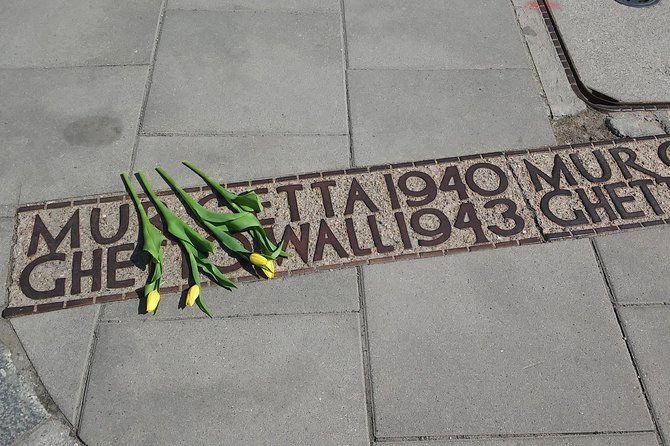
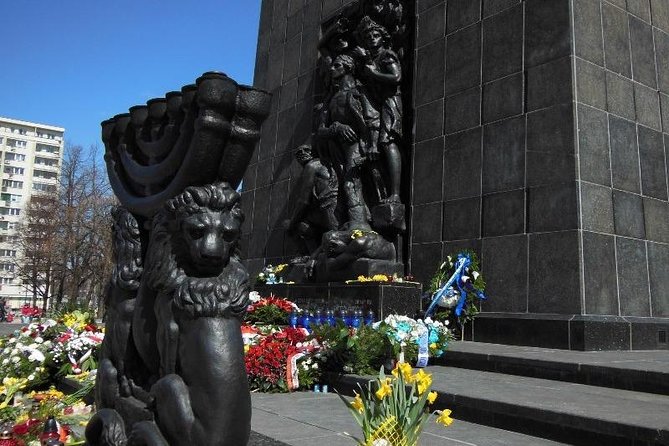
The tour then shifts into the uprising-era context around the POLIN Muzeum Historii Zydow Polskich area. Instead of touring the museum’s main galleries, you get a guided introduction focused on the heroic uprising, why Jews took up arms, and who helped.
This matters because the POLIN Museum is big, and the tour time is limited. So the tour gives you the story thread, and then points you toward a deeper museum visit on your own schedule.
You also get the symbolism tied to the Ghettohelden Memorial, where Willy Brandt performed his famous Kniefall, plus how this memorial connects to POLIN’s message. This is a meaningful way to end the street portion. It gives you a bridge from the wartime past to postwar remembrance and responsibility.
A key practical warning about the POLIN Museum time commitment
During this tour, there is no visit to the main exhibition at POLIN Museum. The guidance recommends you visit the main exhibition separately with audio guides, and to allow about 2.5 hours for that visit.
The listed opening hours (useful if you plan to extend your day) are:
- Mo., Do., Fr.: 10:00 am to 6:00 pm
- Tue.: closed
- Wed., Sa., So.: 10:00 am to 8:00 pm
Miła 18 and Willy Brandt’s Knees: Memorial Geography You Can Feel
Next is Memorial at Miła 18, describing the former location of the bunker at Miła Street 18. That stop is brief, but it is carefully placed. After Umschlagplatz, you start to understand not just what was done to people, but also how people tried to survive, hide, and resist.
Then you stop at Pomnik Willy’ego Brandta, at the spot marking where Brandt made his famous knees. This is another short moment, but it works as a tonal reset. It reminds you that remembrance is not passive, it is a public act.
Pawiak Prison Museum: Detention as a Tool of Control
The last listed stop is Pawiak Prison Museum. Here you learn more about Pawiak Prison, which helps round out the story beyond the ghetto boundaries. It adds a layer of how occupation systems worked day to day, using detention and terror as tools.
As the tour closes, you end up at the POLIN Museum area (your tour end point is listed as Mordechaja Anielewicza 6). This gives you a sensible next step if you want to keep going.
What Makes the Guides Matter Here: Storytelling, Maps, and Period Comparisons
The most praised aspect of this tour is the guidance style. Guides are often described as excellent storytellers who keep engagement high without turning tragedy into a spectacle. Many departures include illustrated support like period photographs and maps so you can compare how places looked before and after.
Some guides have even brought photo notebooks to help you visualize what you are walking through. That technique is practical, because street-level sites in Warsaw can be hard to “read” without context. Maps and old photos give you bearings fast.
If you are lucky and your guide is someone like Marzena (a name that shows up often in feedback), you may get a particularly detailed timeline approach. Some tours have also referenced Olivia as an excellent guide. Either way, expect patience for questions and a careful tone that keeps the history clear.
Who Should Book This Tour, and Who Might Want Another Plan
This tour is best for adults and for people who want structure. It is not suitable for children, and the subject matter is intense and emotionally difficult.
If you like history you can walk on, this fits well. If you prefer a lighter museum day, you might find the street portion exhausting. Also, because there is a lot of on-foot time, you will get more from it if you wear comfortable shoes and don’t plan anything demanding right after.
You should also consider combining it with POLIN Museum’s main exhibition visit. The guided portion points you in the right direction, and the audio-guided museum galleries can give you the deeper context you may want.
Book It or Skip It: My Practical Verdict
Book this tour if you want a guided, site-based Warsaw Ghetto overview that connects key places in a sensible order. It is a strong value when you factor in hotel pickup, a focused route, and a guide who uses maps and photos to make the geography understandable.
Consider skipping or switching plans if you cannot handle heavy history, or if you need a kid-friendly outing. Also, if you want a full museum day inside POLIN, know this tour does not include the main exhibition, so you would still need to add time on your own.
If you do book, do one smart thing: plan your next stop at POLIN Museum with the idea that the guided tour gives you the story thread, and the museum gives you the detailed chapters.
FAQ
How long is the Warsaw Ghetto tour?
It runs for about 3 hours (approx.).
Is the tour offered in English?
Yes, the tour is offered in English.
Does the tour include hotel pickup?
Yes. The licensed guide picks you up from your city-center hotel, or you wait outside if you are staying in an apartment.
Where does the tour start and end?
It starts at Próżna 11, 00-107 Warszawa, Poland, and ends at Mordechaja Anielewicza 6, 00-157 Warszawa, Poland, at the POLIN Museum.
Do I need to pay extra for Nozyk Synagogue?
Yes. Nozyk Synagogue has an admission fee of €5.00 per person, and it is not included.
Is Nozyk Synagogue visited on Fridays, Saturdays, or Jewish holidays?
No. On Friday afternoons (from 1 p.m.), Saturdays, and Jewish holidays, the tour is conducted without visiting the synagogue.
Is the main POLIN Museum exhibition included?
No. During the tour there is no visit to the main exhibition. The recommendation is to visit it separately with audio guides, allowing about 2.5 hours.
How much walking is involved?
You should expect about 2.5 hours on foot, plus about 30 minutes on bus, tram, or underground.
Is this a private tour?
Yes. It is private, and only your group participates.
Can I cancel for free?
Yes. Free cancellation is available if you cancel at least 24 hours before the experience start time for a full refund.
Fresh listings from Warsaw
- Wolf’s Lair & Treblinka Tour in 1 day from Warsaw★ 5.0 · 37 reviews
- Tour from Warsaw: Wolf’s Lair, Hitler’s HQ Zones I and II★ 5.0 · 32 reviews
- Wolf’s Lair Private Day Trip from Warsaw★ 5.0 · 50 reviews
- Warsaw’s Old Town A Self-Guided Audio Tour★ 4.5 · 10 reviews
- Wilanow Royal Palace : SMALL GROUP /inc. Pick-up/★ 4.5 · 16 reviews
- Warsaw Must-See Local City Tour with Antek and Tomek★ 5.0 · 51 reviews
- Private 3-, 5-, or 7-Hour Warsaw Tour by Car★ 5.0 · 7 reviews
- Off the Beaten Track in Warsaw: Private City Tour★ 4.5 · 9 reviews
Jewish Heritage Tours, compared.
Bike Tour of Old Town, Jewish Quarter and the Ghetto
Read our review →
Kazimierz, Schindler’s Factory & Ghetto Guided Tour
Read our review →
Full Bike Tour – the Old Town, Jewish Qtr & the Ghetto NEW BIKES
Read our review →
Warsaw Ghetto Private Walking Tour with Hotel Pickup
Read our review →
Jewish Quarter and Ghetto Electric Golf Cart Tour
Read our review →Browse the lists this tour appears in