
Review · JEWISH HERITAGE TOURS
Jewish Legacy in Warsaw. Private Tour with the best local specialist.
Jewish Warsaw still has visible scars, and this private route helps you read them. I love how the itinerary tracks real locations tied to synagogue life, museum education, and ghetto resistance, including Nozyk Synagogue and the Mila 18 bunker. I also like the practical comfort of a private group with pickup around the city, so you spend your morning walking less and learning more. One possible drawback: if communication goes wrong, you could be left waiting. There was at least one reported no-show case where a refund was issued quickly.
You are covering a lot of emotional ground, but the pacing is built for clarity. Expect an early start at 9:00 am, a small group of up to 3, and stops that feel like a guided story instead of a checklist. You’ll be in English, and you’ll get a mobile ticket for smoother entry at key sites.
In This Review
- Key highlights worth your attention
- A private Jewish legacy route, built for understanding
- Price and value for up to 3 people
- Getting picked up and starting at 9:00 am
- Nozyk Synagogue: the oldest surviving thread of Warsaw Jewish life
- POLIN Museum: a quick interior look that sets the stage
- The Fragment of Ghetto Wall: the “only remaining” physical proof
- Umschlagplatz: the cargo terminal where deportations moved
- Mila 18 memorial: the uprising’s last hiding places
- Heroes of Warsaw monuments and Willy Brandt’s kneeling gesture
- Chlodna Street: footbridge geography and why it made life harder
- Praga Polnoc and The Pianist: streets, film framing, and an optional villa
- What I think makes this tour work on the ground
- A practical caution: what to do if your guide does not show
- Who should book this Jewish Legacy in Warsaw tour
- Should you book?
- FAQ
- What time does the tour start?
- Is pickup available in Warsaw?
- Is the tour offered in English?
- How many people are in a group?
- Do I need a printed ticket?
- Is cancellation free if I change my mind?
Key highlights worth your attention
- Nozyk Synagogue: Warsaw’s oldest existing synagogue and one that survived Nazi destruction due to its location and use during the final ghetto chapter
- POLIN Museum (and design-first orientation): a structured introduction plus a quick look inside so you can place what you see outside
- Fragment of Ghetto Wall: the only remaining piece of the largest Warsaw ghetto, recognized by Chaim Herzog in 1992
- Umschlagplatz: the cargo railroad terminal where deportations began, including the route to Treblinka
- Mila 18 memorial: the largest bunker site, tied to Mordechaj Anielewicz and the uprising leadership hiding there
- Chlodna Street and Praga Polnoc: footbridge geography that shaped ghetto life, plus film-location streets connected with The Pianist
A private Jewish legacy route, built for understanding
Warsaw can be a lot at street level. Buildings look normal, then suddenly you reach a corner that changes the whole meaning of the block. That is why I like a private, local-specialist format for this topic. You can ask the next question, you can pause when it hits emotionally, and the route can stay tight instead of turning into a rushed group shuffle.
This experience is designed around the major “anchors” of Jewish Warsaw. You start with a living religious site (Nozyk Synagogue), move into education (POLIN Museum), then move toward the ghetto’s physical traces and memorial sites (the wall fragment, Umschlagplatz, Mila 18, and the Heroes monument). It ends with geography and storytelling in Praga Polnoc, including street scenes tied to The Pianist and an optional villa visit depending on your interest.
More Jewish Heritage Tours in Warsaw
- Warsaw: Warsaw Ghetto Private Walking Tour with Hotel Pickup
★ 4.9 · 369 reviews - Warsaw: Jewish History Guided Walking Tour in English
★ 4.7 · 324 reviews - Private Tour: Warsaw’s Jewish Heritage by Retro Fiat
★ 5.0 · 208 reviews
Price and value for up to 3 people
The price is $361.23 per group for up to 3 people, with pickup included. If you fill the group, the math works out to about $120.41 per person.
For a Warsaw day like this, value comes less from “how much you see” and more from how well the guide connects each location to the larger story. With a private group, you are not stuck waiting for the slowest pace in a big crowd. You can also keep your questions focused on what matters: what survived and why, how deportations operated, and what the uprising leaders were trying to accomplish.
Booking timing can also affect comfort. This one is typically booked about 9 days in advance, which suggests people plan ahead for the right specialist and the right start time.
Getting picked up and starting at 9:00 am
The tour starts at 9:00 am, with pickup offered from around Warsaw. That detail matters on this route because your stops are not all in one tidy spot. You are moving across neighborhoods and memorial sites, and a pickup saves time, energy, and navigation stress.
You’ll also have a mobile ticket. That tends to cut down on small friction at entrances, especially when you are moving on a tight morning schedule. Service animals are allowed, and the tour is listed as suitable for most travelers, with a focus on walking between sites.
One small but real consideration: memorial tours ask for patience. Bring water, wear shoes you trust, and plan to move slowly when needed.
Nozyk Synagogue: the oldest surviving thread of Warsaw Jewish life
Your first major stop is Nozyk Synagogue. The focus here is simple and powerful: it is the oldest existing synagogue in Warsaw. It also survived when many others did not. The tour explanation emphasizes that the Nazis did not destroy it because of its location and usefulness in the ending chapter of ghetto time.
That survival detail is what I found most important for understanding the next stops. When a religious landmark remains standing, it becomes a kind of anchor point. It helps you remember that this history was not only about catastrophe. There was real community life here, and that life continued until it was brutally interrupted.
Practical tip: expect a shorter stop, listed at about 20 minutes. Use that time to look carefully at what remains and ask what the synagogue represented in the surrounding ghetto context.
More Jewish heritage walks in Warsaw:
- Warsaw: Ghetto, Jewish Cemetery & POLIN Museum Private Tour
★ 4.8 · 132 reviews - Warsaw: Jewish Heritage & Holocaust Walking Tour
★ 4.7 · 119 reviews - Tour of the Warsaw Ghetto
★ 5.0 · 119 reviews - Jewish Warsaw Walking Tour
★ 5.0 · 95 reviews
POLIN Museum: a quick interior look that sets the stage
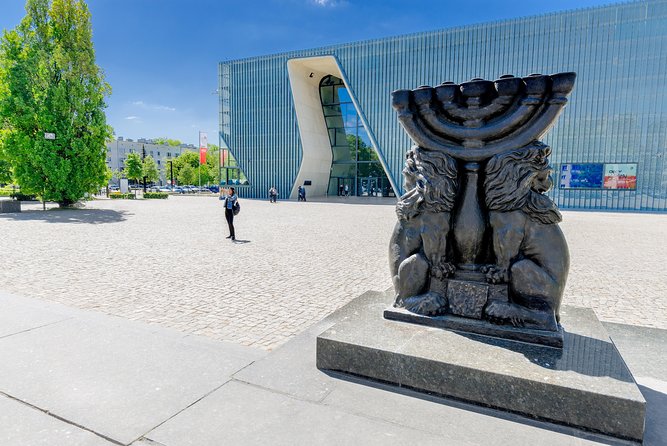
Next is POLIN Muzeum Historii Zydow Polskich. This is where you get a structured framing for Jewish history in Poland. The visit includes the museum area and a quick look inside at interior design.
The key value here is that you do not just take photos and walk out. You get an orientation that helps you connect what you see later at street level. Museum education works like a map: without it, you might recognize names and dates but miss how the pieces connect across centuries.
This stop is about 50 minutes. For a museum stop of that length, your best strategy is to focus on impressions and context rather than trying to read everything. If you are the type who likes to go back later, this tour’s museum time is often a helpful primer.
The Fragment of Ghetto Wall: the “only remaining” physical proof
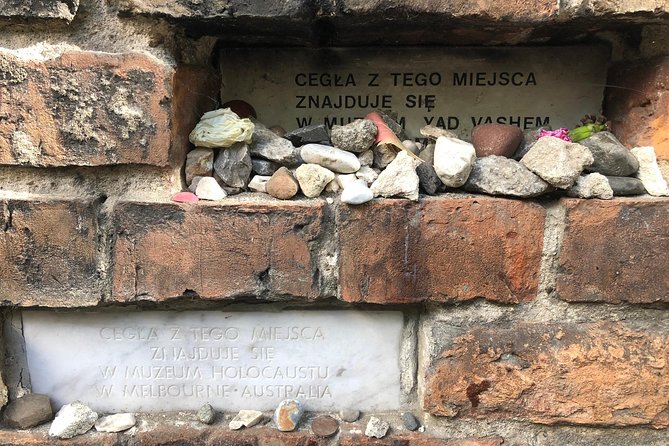
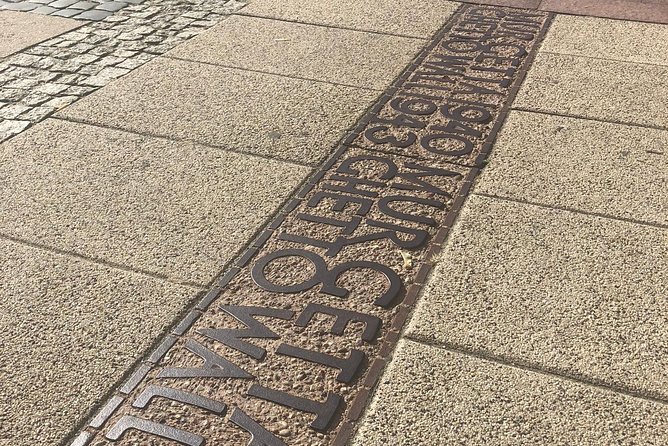
At the Fragment of Ghetto Wall, you get one of the hardest kinds of evidence: material remains. The tour notes this is the only surviving fragment of the largest Jewish ghetto that ever existed.
The site is also described as officially recognized in 1992 by Chaim Herzog, and it receives thousands of guests each year. That matters because it means the location is not just local memory. It’s part of an internationally acknowledged memorial landscape.
This stop runs about 20 minutes. Because the time is short, the goal is not a long site study. It’s to understand what it means that something so small remains, and what it signals about the ghetto’s scale.
Umschlagplatz: the cargo terminal where deportations moved
Then comes Umschlagplatz, described as the ghetto’s cargo railroad terminal, at the corner of Stawki and Dzika. The essential point is where deportations began, including the route that took Jews from Warsaw to the Treblinka death camp.
This stop lasts about 20 minutes. It can feel like the tour compresses too much into too little time, but that is often appropriate here. The architecture and location already carry the weight. Your guide’s job is to help you translate the space into process: what a terminal meant, how crowds and schedules worked, and why that kind of logistical facility became part of the machinery of murder.
Practical tip: if you are sensitive to details, this is the moment to say so. A good private specialist can adjust phrasing while still keeping the facts clear.
Mila 18 memorial: the uprising’s last hiding places
Next is the Memorial at Mila 18. The tour calls it the largest bunker in the Jewish ghetto in Warsaw. It is also tied to a specific, named story: the uprising’s leader, Mordechaj Anielewicz, along with nearly 30 other members of the Jewish fighting organization, hid here.
This is one of the most direct links between the memorial landscape and Jewish resistance. It also changes how you read everything before it. You stop seeing the ghetto only as a place of confinement and start seeing it as a place where people planned, fought, and tried to act even when hope was extremely limited.
This stop is about 20 minutes. Use that time to understand why a bunker matters historically, not just emotionally. A hidden place tells you what people anticipated, what they feared, and what they were trying to prevent.
Heroes of Warsaw monuments and Willy Brandt’s kneeling gesture
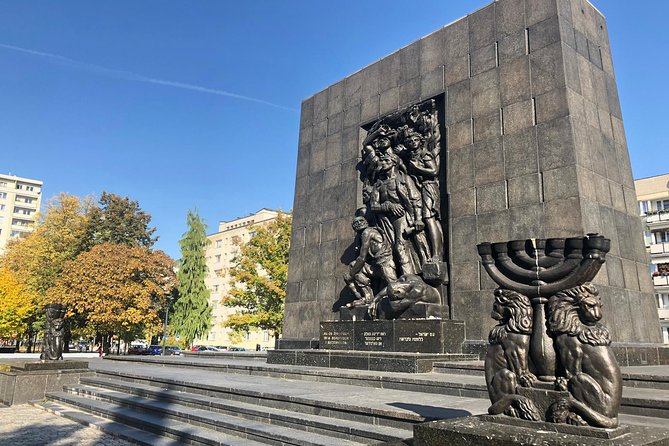
After Mila 18, you’ll also pass the Pomnik Willy’ego Brandta at Willy Brandt Square near POLIN. This monument commemorates Willy Brandt’s gesture, described as kneeling in front of a monument of the ghetto heroes. The tour frames it as a symbol of apology and reconciliation with the Jewish people.
Then there is the Monument to the Heroes of Warsaw. The tour description is focused on memory, tied to Jews who went through the nightmare of the ghetto. This stop lasts about 50 minutes, which suggests your guide will give more than a quick look. In my view, longer stops here are smart. These monuments are not just background. They are part of how later generations chose to tell the story.
Practical tip: look for what the guide tells you to notice. Monuments often hide meaning in form, placement, and wording. If you treat it like a quick photo stop, you can miss the main point.
Chlodna Street: footbridge geography and why it made life harder
You then reach Chlodna Street, including the footbridge linking the small ghetto section with the larger ghetto part. The tour describes this area as the liveliest section of the ghetto, but also the most dangerous.
That mix is crucial. Geography did not just shape movement. It shaped risk. When you cross from one area to another, you are stepping into a different reality, with different pressures and different patterns of control.
This stop is about 10 minutes. It is short, but that can work well here because it’s a “read the layout” kind of place. Stand where your guide tells you to stand, and let the geography do some of the teaching.
Praga Polnoc and The Pianist: streets, film framing, and an optional villa
The tour continues in Praga Polnoc, with a selection of streets tied to Roman Polanski’s filming of The Pianist. This is not about trivia for its own sake. It helps you see how filmmakers translate historical settings into visual memory.
The tour also includes an optional visit connected with the book The Zoo Keeper’s Wife. The villa visit depends on your interest. The time allocation here is about 40 minutes.
This is a good moment for you to decide what you want more of. If you enjoy film history and how stories get retold through specific streets, you’ll likely appreciate this part. If you want to keep the focus strictly on Warsaw’s Jewish history and memorial sites, you might skip the villa option and just take the street-level pacing.
What I think makes this tour work on the ground
A route like this succeeds when the guide uses the places to explain cause and effect, not just names and dates. The stops here are arranged in a way that helps you build understanding:
- You begin with survival and community presence at Nozyk Synagogue.
- You then anchor yourself with POLIN Museum’s educational framing.
- You move to physical evidence, like the wall fragment.
- You shift to deportation logistics at Umschlagplatz.
- You end with resistance and remembrance at Mila 18 and the Heroes monuments.
- You wrap with geography and storytelling in Praga Polnoc.
That flow matters because it reduces guesswork for you. Instead of wondering what you are looking at, you know why each stop was chosen.
A practical caution: what to do if your guide does not show
One review shared a painful experience: the guide was expected at 9:00 am, an email sent the pickup location for waiting, and then nobody arrived. The booking team was contacted, and a refund was issued quickly.
I do not know if that was an isolated incident. But it is still wise to prepare like it could happen. Have your phone charged. Note the meeting details ahead of time. If pickup does not happen, contact the local number or support line promptly rather than waiting too long.
The goal is simple: protect your morning.
Who should book this Jewish Legacy in Warsaw tour
This tour fits best if you want:
- A private, small-group format so questions feel welcome
- A guide-led path through major Jewish Warsaw sites, not a self-guided scramble
- A balance of museum framing and street-level memorial geography
- English language service and pickup convenience across the city
It may be less ideal if you only want a quick, light overview or if you need a fully flexible route where you can skip stops instantly. This is built to follow a defined chain of meaningful locations.
Should you book?
If you want an orderly, emotionally intelligent morning focused on the key sites of Jewish Warsaw, I think this is a strong booking choice, especially at $361.23 per group up to 3 with pickup. The itinerary is practical in length, and the stop mix connects community, education, deportation, resistance, and remembrance without losing the thread.
My only hesitation is the kind of logistical risk you should take seriously for any private tour: if a guide does not show, you need to know how to reach support fast. If you are comfortable taking that basic precaution, this is the kind of tour that will leave you with a clearer, more human understanding of Warsaw’s Jewish legacy.
FAQ
What time does the tour start?
The tour start time is 9:00 am.
Is pickup available in Warsaw?
Yes. The tour offers pickup and picks up guests from around Warsaw.
Is the tour offered in English?
Yes. The tour is offered in English.
How many people are in a group?
This is a private tour for your group only, and the price is per group for up to 3 people.
Do I need a printed ticket?
No. A mobile ticket is offered.
Is cancellation free if I change my mind?
Yes. You can cancel for a full refund up to 24 hours before the experience’s start time.
Fresh listings from Warsaw
- Wolf’s Lair & Treblinka Tour in 1 day from Warsaw★ 5.0 · 37 reviews
- Tour from Warsaw: Wolf’s Lair, Hitler’s HQ Zones I and II★ 5.0 · 32 reviews
- Wolf’s Lair Private Day Trip from Warsaw★ 5.0 · 50 reviews
- Warsaw’s Old Town A Self-Guided Audio Tour★ 4.5 · 10 reviews
- Wilanow Royal Palace : SMALL GROUP /inc. Pick-up/★ 4.5 · 16 reviews
- Warsaw Must-See Local City Tour with Antek and Tomek★ 5.0 · 51 reviews
- Private 3-, 5-, or 7-Hour Warsaw Tour by Car★ 5.0 · 7 reviews
- Off the Beaten Track in Warsaw: Private City Tour★ 4.5 · 9 reviews
Jewish Heritage Tours, compared.
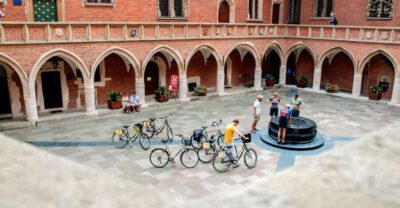
Bike Tour of Old Town, Jewish Quarter and the Ghetto
Read our review →
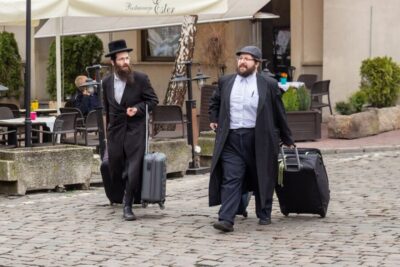
Kazimierz, Schindler’s Factory & Ghetto Guided Tour
Read our review →
Full Bike Tour – the Old Town, Jewish Qtr & the Ghetto NEW BIKES
Read our review →
Warsaw Ghetto Private Walking Tour with Hotel Pickup
Read our review →
Jewish Quarter and Ghetto Electric Golf Cart Tour
Read our review →Browse the lists this tour appears in