
Review · JEWISH HERITAGE TOURS
Jewish Warsaw
Jewish Warsaw changes fast when you see it up close. This 3-hour guided walk strings together the city’s pre-war Jewish heart, WWII-era memory, and today’s museum setting, all in one smooth route. I like how it mixes real street-level scenes with landmark stops you can actually connect to.
What I really like is the way the guide makes the story feel local. You get context that starts at Grzybowski Square and then turns street corners, backyards, and buildings into something you can picture, not just something you read. I also love that the route is practical, with plenty of short stops (often 10 to 15 minutes) and an air-conditioned vehicle included for the moving parts.
One thing to plan for: some key sites charge separate admission, including Nozyk Synagogue and the Jewish Cemetery. Add that cost to the €5.00 Jewish Warsaw entrance fee, and you will want small change or a plan for on-site payments.
In This Review
- Key highlights worth your attention
- Jewish Warsaw in three hours: what this tour is really like
- Grzybowski Square to Prozna Street: the pre-war city in your head
- Nozyk Synagogue: a surviving place of worship you can still visit
- Krochmalna and Chlodna: Singer’s Warsaw and the feel of backyards
- Keret House: the narrowest house, framed by the neighborhood
- Jewish Cemetery: burials, traditions, Esperanto, Korczak, and theater
- Pomnik Bohaterow Getta: the memorial moment by Willy Brandt’s knee
- POLIN Museum of the History of Polish Jews: finishing with a museum you can extend
- Price and logistics: is $89.35 good value?
- What it’s like with the guide: the difference maker
- Who should book this Jewish Warsaw tour
- Should you book Jewish Warsaw?
- FAQ
- How long is the Jewish Warsaw tour?
- How much does the tour cost?
- Is pickup available?
- Where does the tour start and end?
- Is the tour in English?
- What is included in the price?
- What is not included?
- Do I need tickets for each stop?
- Is the ticket mobile?
- What if the weather is bad?
Key highlights worth your attention
- Nozyk Synagogue: the only synagogue described as surviving WWII and still operating today
- Streets that still feel like scenes: Prozna Street, Krochmalna, and Chlodna Street stops focused on the feel of daily life
- Isaac Bashevis Singer connections: Krochmalna linked to his prose, so you read the neighborhood with new eyes
- Keret House: a quick look at the narrowest house in the world and why it matters in the streetscape
- Jewish Cemetery time: a longer stop where burials and traditions connect to topics like Esperanto and Janusz Korczak’s orphanage
- Finish at POLIN: you end at the Museum of the History of Polish Jews building, with audio guides available
Jewish Warsaw in three hours: what this tour is really like
This is a short, focused walking tour with just enough movement to cover major themes without frying your feet. Expect a guide to pace you through central Warsaw, then wrap things up at POLIN, where you can continue at your own speed with audio guides.
The big value here is how the tour is built like a guided map of meaning. You are not only seeing places, you are hearing why those places matter. The route runs through pre-war Jewish Warsaw, moves to surviving landmarks and memorial stops, and then lands at a museum designed to carry the story forward.
You should come with a basic curiosity, not necessarily a textbook background. If you want your Jewish Warsaw experience to feel organized, this format helps you avoid wandering in circles on your own.
Also, English is offered, and pickup is available, which helps a lot if you are staying outside the tight center.
More Jewish Heritage Tours in Warsaw
- Warsaw: Warsaw Ghetto Private Walking Tour with Hotel Pickup
★ 4.9 · 369 reviews - Warsaw: Jewish History Guided Walking Tour in English
★ 4.7 · 324 reviews - Private Tour: Warsaw’s Jewish Heritage by Retro Fiat
★ 5.0 · 208 reviews
Grzybowski Square to Prozna Street: the pre-war city in your head
The tour kicks off at Grzybowski Square, where you get your first impression of pre-war Jewish Warsaw. This is where the guide typically sets the stage, connecting you to the idea that Warsaw held the largest Jewish community in Europe until World War II.
From there, you move to Prozna Street (Ulica Prozna), described as a preserved Jewish commercial street. This is one of those stops where you can feel the difference between seeing ruins and seeing structure that still looks like a place where people shopped, worked, and lived their routines.
The practical side: each stop is short, around 10 to 15 minutes, so you keep momentum. The downside of that same approach is that you only get a snapshot. If you like deep, slow looking, you will likely want extra time after the tour.
If you are the kind of traveler who likes to build a mental picture early, this opening sequence does that fast.
Nozyk Synagogue: a surviving place of worship you can still visit
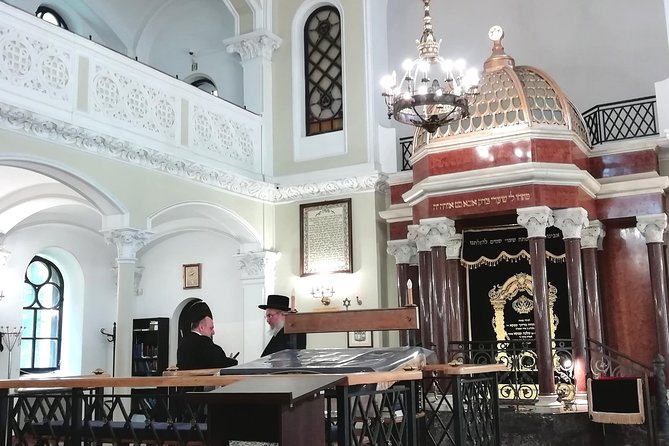
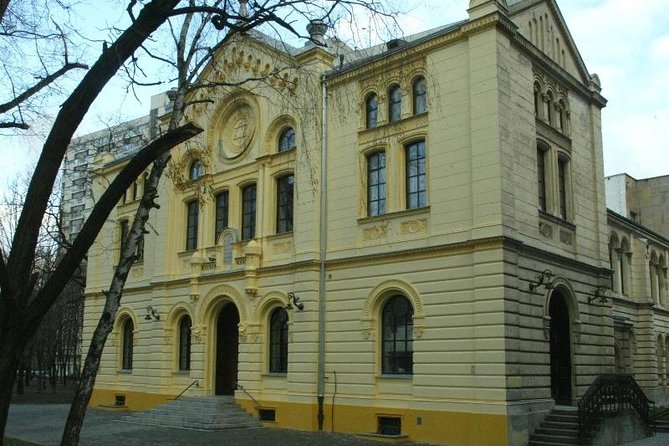
At Nozyk Synagogue, you visit the synagogue described as the only one that survived WWII and is still in operation. Even if you do not know the full story before you arrive, the guide’s framing turns the visit into more than a quick exterior photo.
This is also one of the “budget” moments. Admission is not included for this stop, so you should expect to pay at the site. You will get the most out of it if you go in ready to listen rather than just taking pictures.
Why it works on a 3-hour tour: it gives you one anchor location tied to continuity. Many city walks are either history through ruins or history through monuments. This one includes a living site, which changes how the story lands.
If you have any interest in how communities persist through trauma and change, this stop is a key reason to book.
Krochmalna and Chlodna: Singer’s Warsaw and the feel of backyards
Next comes a quieter, more sensory stretch of streets. At Krochmalna, you pass the places so vividly described in the prose of Isaac Bashevis Singer. That literary connection is not a gimmick, it is a way to read the neighborhood. Instead of just walking down a street, you are learning how writers turned daily life into story.
Then you go to Chlodna Street, where you look at houses that are still in original condition and explore Warsaw backyards. That backyard focus matters because it pulls you away from only grand streets and into the spaces where ordinary life tends to happen.
What I like about these stops is that they make the past feel spatial. You start imagining movement, entrances, and the tight geometry of old streets, not just dates.
Potential drawback: because this section emphasizes atmosphere and small-scale detail, it helps to wear comfortable shoes. The streets are not described as a full-on long hike, but you will still be walking, and the detail is in the side streets and smaller settings.
More Jewish heritage walks in Warsaw:
- Warsaw: Ghetto, Jewish Cemetery & POLIN Museum Private Tour
★ 4.8 · 132 reviews - Tour of the Warsaw Ghetto
★ 5.0 · 119 reviews - Warsaw: Jewish Heritage & Holocaust Walking Tour
★ 4.7 · 119 reviews - Jewish Warsaw Walking Tour
★ 5.0 · 95 reviews
Keret House: the narrowest house, framed by the neighborhood
At Keret House, you learn about the history of the narrowest house in the world. Even in a very short time, this stop gives you a breather from the heavier themes and brings you back to architecture and the surprising quirks that make a city memorable.
This is not just a “look at this weird building” moment. The guide is there to connect it to the broader setting, so you understand why something so narrow belongs in this kind of neighborhood story.
You get a short visit, about 10 minutes, so it functions like a palate cleanser. If you love odd architecture and mini-city facts, you will likely enjoy how quickly you get something distinct.
If you dislike being rushed, you can still slow down on your own after the stop, but on a tight tour window, the guide keeps the pace.
Jewish Cemetery: burials, traditions, Esperanto, Korczak, and theater
The longest stop is the Jewish Cemetery (Cmentarz Zydowski), set at around 40 minutes. This is where the tour turns more reflective, focusing on famous rabbis and zaddiks, along with Jewish families resting there. You also learn about Jewish burials and traditions.
What makes this stop especially interesting is the set of linked topics the guide introduces. You get connections to the history of the Esperanto language, Janusz Korczak’s orphanage, and the Jewish theater. These are not separate from the cemetery theme, they are presented as part of a cultural thread that ran alongside community life and memorial practices.
Because admission is not included, plan for additional on-site payment. I recommend you keep some cash or be ready with the payment method accepted at the entrance, especially if you are doing this as part of a busy day.
One caution: cemetery visits can feel emotionally heavy, and this tour includes other WWII-era memory moments nearby. If you prefer lighter travel experiences, you may want to pace yourself mentally. If you are okay with thoughtful reflection, this stop is one of the most meaningful parts of the route.
Pomnik Bohaterow Getta: the memorial moment by Willy Brandt’s knee
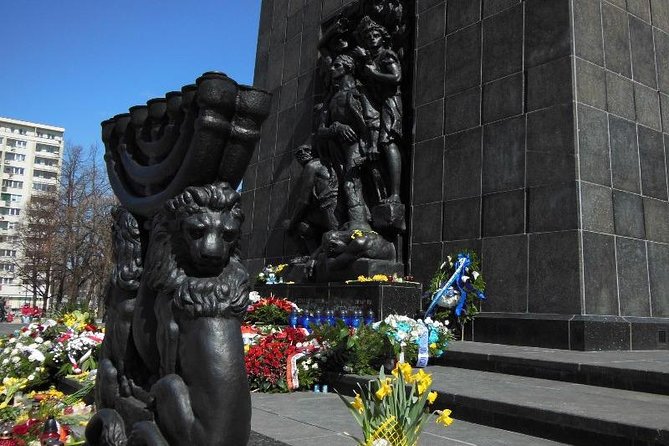
You then stop at Pomnik Bohaterow Getta where you learn about a moment made famous by Willy Brandt, who famously went down on one knee there. This is a quick stop at about 15 minutes, but it carries a lot of symbolic weight.
What I appreciate about including this memorial is that it bridges personal action and public remembrance. The guide’s explanation helps you connect why a physical gesture matters in a city’s memory.
This part is short, but it can land hard if you stop for a second and actually look around. Do not treat it like a photo stop only. Take a moment, listen, then move on.
If you tend to skim memorials, this is the stop where you will benefit from slowing down just a bit.
POLIN Museum of the History of Polish Jews: finishing with a museum you can extend
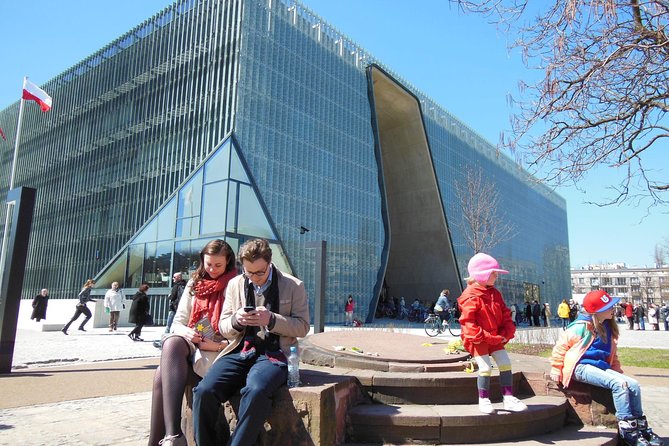
The tour ends at POLIN Muzeum Historii Zydow Polskich, the Museum of the History of Polish Jews. You hear about the symbolism and architecture of the building, which gives you a reason to look beyond the entrance sign.
Importantly, the tour does not try to replace the museum with rushed inside time. Instead, the walking portion ends near the museum, and you can visit afterward with audio guides.
This ending is a big part of the value, because you get two layers. First is the guided street-level story. Second is a deeper museum experience that you control, at your own speed.
Practical tip: if you want to keep the museum visit manageable, decide ahead of time whether you will do the audio guide only, or add extra galleries. Since the tour itself is around 3 hours, you can build a half-day plan without feeling stuck.
Also, the stop is in the central area and is well aligned with public transit, so it is easy to continue your day after the tour.
Price and logistics: is $89.35 good value?
The price is $89.35 per person for an approximately 3-hour experience. That is not “cheap,” but it is not overpriced for a guided, organized route with pickup options and an air-conditioned vehicle included.
The best value angle is that the tour groups several major learning moments into one guided flow. You do not have to coordinate multiple tickets, handle mapping, or stitch together history from different locations. Instead, the guide does that structure for you, then points you toward POLIN where you can deepen the story.
But you do need to factor in extra costs. The tour data notes an entrance fee of €5.00 per person for Jewish Warsaw, and it also says admission is not included at Nozyk Synagogue and the Jewish Cemetery. So your total spend might be higher than the base price depending on current site fees.
Timing also matters. On average, this is booked about 76 days in advance, which suggests it can sell out or at least fill up in popular windows. If you are traveling during peak weeks, lock it in early.
If you like clear meeting points, this tour helps. You start at Grzybowski Square (Pl. Grzybowski 2) and finish at POLIN (Mordechaja Anielewicza 6).
What it’s like with the guide: the difference maker
The success of this kind of tour is usually the guide. Here, the story quality seems to be a strong point. One highlight from a top rating is praise for a guide named Mary, described as very competent at sharing both known and newer details. The same feedback notes that the tour helped people see places in Jewish life they would not have found on their own.
That fits how the tour is designed. The stops are spaced to keep you moving, but the payoff depends on how well the guide connects those stops into a single narrative. When the guide does it well, you leave with a route you remember, not just random photos.
If your priority is conversation and clarity, this is the kind of tour that supports it. The short stop durations also mean you can ask questions before you move on, instead of getting lost in a single long lecture.
Who should book this Jewish Warsaw tour
I think this works best for you if:
- you want an organized 3-hour overview of Jewish Warsaw without planning each stop
- you like learning from street-level details, not only big monuments
- you want a museum ending at POLIN with audio guides as an optional add-on
It may not be ideal if:
- you want a slow, deep, quiet visit with lots of free time at each site
- you dislike paying multiple site admissions during a tour day
It’s also well suited for visitors who are staying in central Warsaw, because the route is planned around easy access to key areas.
Should you book Jewish Warsaw?
Yes, I would book it if you want a smart, guided way to understand Jewish Warsaw in a limited time window. The route is built to move from pre-war street scenes, to surviving landmarks and memorials, and then finish at POLIN, where the story continues without you rushing.
The main reason to say yes is the guide-focused value. When the guide is strong, as one review suggests with Mary, the tour becomes more than a checklist. You get new connections, and you see places that would be hard to find or interpret on your own.
Just go in with two expectations managed upfront: plan for site admissions, and wear shoes you can walk in for a few hours. Do that, and you will come away with a clearer sense of the city, and a better reason to spend extra time at POLIN.
FAQ
How long is the Jewish Warsaw tour?
It runs for approximately 3 hours.
How much does the tour cost?
The price is $89.35 per person.
Is pickup available?
Yes. Pickup is offered, either from your hotel reception with a PolinTours sign or waiting in the car in front of your hotel.
Where does the tour start and end?
It starts at Grzybowski Square (Pl. Grzybowski 2) and ends at the POLIN Museum of the History of Polish Jews (Mordechaja Anielewicza 6).
Is the tour in English?
Yes, the tour is offered in English.
What is included in the price?
The tour includes an air-conditioned vehicle.
What is not included?
Lunch is not included. Admission fees are not included for stops like Nozyk Synagogue and the Jewish Cemetery, and there is a Jewish Warsaw entrance fee of €5.00 per person.
Do I need tickets for each stop?
Some stops have free admission, while others note that admission is not included. You may need to pay for those specific site entries.
Is the ticket mobile?
Yes, the tour offers a mobile ticket.
What if the weather is bad?
If the tour is canceled due to poor weather, you will be offered a different date or a full refund.
Fresh listings from Warsaw
- Wolf’s Lair & Treblinka Tour in 1 day from Warsaw★ 5.0 · 37 reviews
- Tour from Warsaw: Wolf’s Lair, Hitler’s HQ Zones I and II★ 5.0 · 32 reviews
- Wolf’s Lair Private Day Trip from Warsaw★ 5.0 · 50 reviews
- Warsaw’s Old Town A Self-Guided Audio Tour★ 4.5 · 10 reviews
- Wilanow Royal Palace : SMALL GROUP /inc. Pick-up/★ 4.5 · 16 reviews
- Warsaw Must-See Local City Tour with Antek and Tomek★ 5.0 · 51 reviews
- Private 3-, 5-, or 7-Hour Warsaw Tour by Car★ 5.0 · 7 reviews
- Off the Beaten Track in Warsaw: Private City Tour★ 4.5 · 9 reviews
Jewish Heritage Tours, compared.
Bike Tour of Old Town, Jewish Quarter and the Ghetto
Read our review →
Kazimierz, Schindler’s Factory & Ghetto Guided Tour
Read our review →
Full Bike Tour – the Old Town, Jewish Qtr & the Ghetto NEW BIKES
Read our review →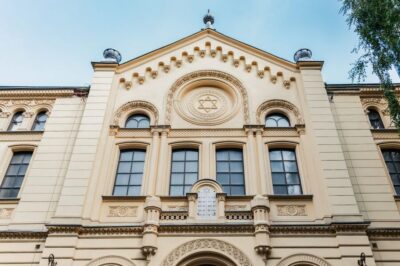
Warsaw Ghetto Private Walking Tour with Hotel Pickup
Read our review →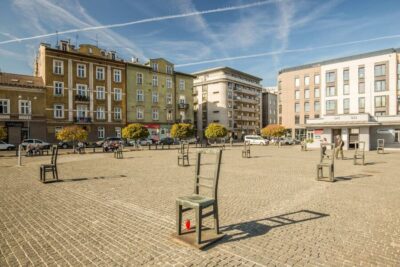
Jewish Quarter and Ghetto Electric Golf Cart Tour
Read our review →Browse the lists this tour appears in