
Review · JEWISH HERITAGE TOURS
Past Meets Present in Warsaw’s Jewish Ghetto
Warsaw’s Jewish Ghetto story is close-up and human. This 2.5-hour walk connects key sites in the Jewish quarter to today’s memorial landscape, with a guide who keeps the tone honest, respectful, and clear. I love how it moves at a walkable pace while still hitting the big turning points, from everyday community life to forced deportations.
Two things I especially like: the stop-by-stop explanations make the geography feel understandable, and Mona brings a rare mix of compassion and straight talk. I also like the built-in flow, from documentary and street history to memorials you can actually sit with for a moment.
One drawback to plan for: the route is not recommended for visitors with mobility or walking problems, since you’re on your feet for most of the experience.
In This Review
- Key highlights you will feel right away
- A 2.5-hour Warsaw walk that connects past and present
- Start point on Bankowy, then a route built for meaning
- Zydowski Instytut Historyczny: Jewish documentary as a starting point
- Długa and Nalewki: seeing how streets held daily life
- Ogrod Krasinskich: an oasis that was off-limits during WWII
- Warsaw Ghetto Square at Polin and the Monument to the Ghetto Heroes
- Mordechaja Anielewicza mound at Mila 18: resistance with a face
- Umschlagplatz: the departure point and the Treblinka connection
- Pomnik Willy’ego Brandta: remembrance that reaches beyond the ghetto
- Ending at Willy Brandt Square, then planning your next coffee
- Price, group size, and why Mona’s guide style is the real value
- Who should book this Warsaw Jewish Ghetto tour, and who should skip it
- Should you book?
- FAQ
- How long is the tour?
- What language is the tour offered in?
- How much does it cost?
- Is the tour guided?
- Where does the tour start and end?
- Do the stops require admission fees?
- Is it suitable for everyone?
- What is the group size?
- What is the cancellation policy?
Key highlights you will feel right away
- Mona’s storytelling keeps the emotional weight grounded in facts and location.
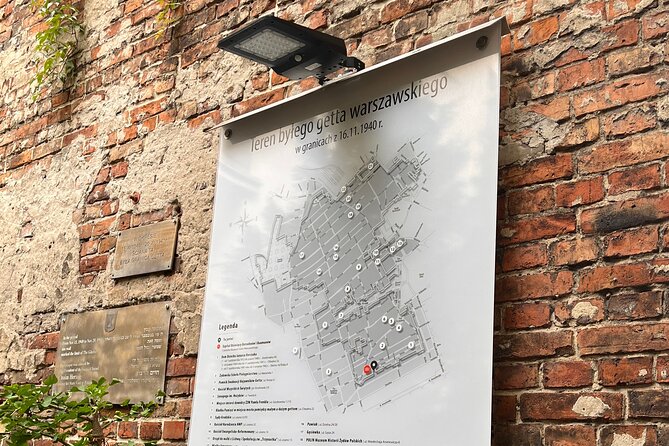
- Zydowski Instytut Historyczny sets the tone with Jewish documentary and archival context.
- Długa and Nalewki Street helps you visualize where daily commerce and community energy lived.
- Umschlagplatz is explained as a real departure point tied to Treblinka.
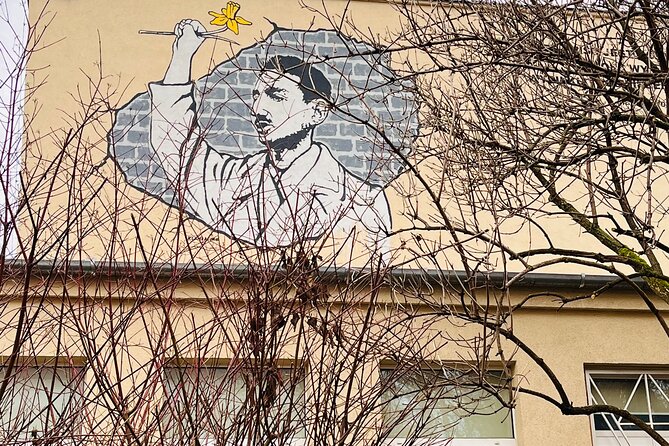
- Ghetto Heroes Square daffodils shows how Warsaw remembers in lived, ongoing ways.
- Small group size (max 10) makes it easier to ask questions without feeling rushed.
A 2.5-hour Warsaw walk that connects past and present
This tour is designed like a guided geography lesson, not a checklist. You move through a handful of meaningful places, and each one adds a new layer: how life worked, what got cut away, and how remembrance is carried forward in the city.
Because it runs about 2 hours 30 minutes, you get time to think without burning your whole day. And since it ends with local recommendations around Willy Brandt Square, you can keep the momentum going instead of suddenly being dropped in the middle of nowhere.
Price-wise, you are paying for a certified guide plus a focused route that includes stops where admission is listed as free. At $112.43 per person, the value is less about entry tickets and more about interpretation, pacing, and the human tone Mona brings to difficult material.
More Jewish Heritage Tours in Warsaw
- Warsaw: Warsaw Ghetto Private Walking Tour with Hotel Pickup
★ 4.9 · 369 reviews - Warsaw: Jewish History Guided Walking Tour in English
★ 4.7 · 324 reviews - Private Tour: Warsaw’s Jewish Heritage by Retro Fiat
★ 5.0 · 208 reviews
Start point on Bankowy, then a route built for meaning
You begin at the Monument of Slowackiplac Bankowy, and the whole experience is structured so the places relate to one another. That matters in the Warsaw Ghetto story, because the area can feel like a map of tragedies unless someone helps you connect the dots.
This tour is offered in English, with a mobile ticket, and it’s set up for small groups with a maximum of 10 travelers. You’ll also find it near public transportation, so you can usually get there without a long taxi hop.
Zydowski Instytut Historyczny: Jewish documentary as a starting point
Your first stop is Zydowski Instytut Historyczny, a building that once supported Jewish social life in the ghetto years. Today, it functions as a documentary and archival space, which is a smart first move because it frames what you are about to see.
In practice, this stop works like a reset for your brain. It helps you understand that you are not only touring monuments. You are entering a story that was recorded, debated, and preserved, which changes how you look at everything afterward.
The visit time is short, about 15 minutes, so you are not meant to become an expert on day one. But you leave with context that makes later places feel less abstract.
Długa and Nalewki: seeing how streets held daily life
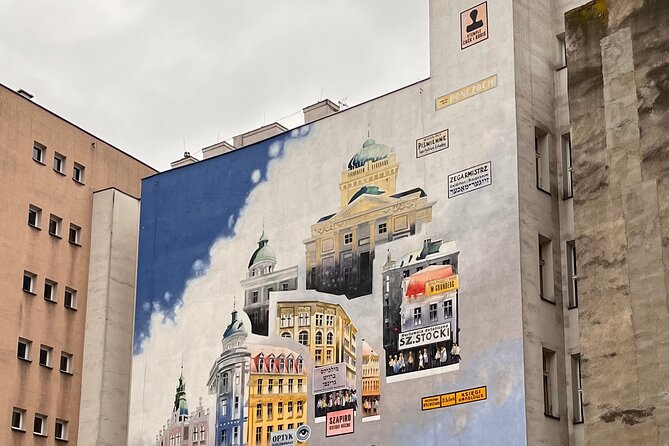
Next you head to Długa Nalewki Street area, at the crossing with Długa Street, where this quarter was known for activity. You’ll spend around 10 minutes here, but the point is big: you are visualizing the part of the neighborhood where shops, small industries, and stalls supported daily survival and community life.
What I like about this stop is how it corrects a common mistake. Many visitors remember only the ending. This kind of street-level context reminds you the ghetto contained ordinary patterns of work and social contact, even under impossible conditions.
If you are the type who likes to understand how a city functions, you’ll appreciate this segment. It helps you look at Warsaw’s modern streets and still picture the older rhythms.
More Jewish heritage walks in Warsaw:
- Warsaw: Ghetto, Jewish Cemetery & POLIN Museum Private Tour
★ 4.8 · 132 reviews - Warsaw: Jewish Heritage & Holocaust Walking Tour
★ 4.7 · 119 reviews - Tour of the Warsaw Ghetto
★ 5.0 · 119 reviews - Jewish Warsaw Walking Tour
★ 5.0 · 95 reviews
Ogrod Krasinskich: an oasis that was off-limits during WWII
Ogrod Krasinskich is a different kind of stop, about 20 minutes, and that contrast is important. During WWII, this area was excluded from the ghetto, meaning it offered a kind of separation from what was inside.
It can feel quiet compared to the other stops, which is exactly why it lands well in the itinerary. You get a breath of calm, but you also get a lesson about how boundaries were drawn and enforced, even around green space.
This stop is not just scenic. It’s a reminder that control was physical, and it shaped who could go where, and who had access to rest.
Warsaw Ghetto Square at Polin and the Monument to the Ghetto Heroes
At Polin Museum’s area, you reach the Warsaw Ghetto Square and the Monument to the Ghetto Heroes. This is one of the most important commemorative places for the Jews of Warsaw, and the guide helps you understand it as a public space for remembrance, not only a historical marker.
In Warsaw, daffodils are placed there on the anniversary of the Ghetto Uprising. That detail matters because it shows you remembrance is practiced, not frozen.
You spend about 30 minutes in this area, which is long enough to absorb the atmosphere and still move on thoughtfully. I like that the tour doesn’t rush past this kind of place. It treats it as a moment to respect, and it gives you language to understand what you’re looking at.
Mordechaja Anielewicza mound at Mila 18: resistance with a face
Then you head to Mordechaja Anielewicza, the Anielewicz mound at Mila 18, linked to the leaders of the Warsaw Ghetto Uprising. This stop takes about 30 minutes, and it hits hard, but it’s framed with care.
What you should expect here is a mix of personal and collective meaning. The mound commemorates deaths of leadership during the uprising, and the guide ties it to the larger story of resistance under brutal pressure.
One reason this works so well is that the history is not presented as a distant headline. You are guided to treat the people as people, with choices made in a situation where options were not equal.
If you want the story to be emotionally honest without turning melodramatic, this stop is a good sign that Mona’s approach fits.
Umschlagplatz: the departure point and the Treblinka connection
Umschlagplatz is next, and it is one of the most difficult places you’ll visit. The monument marks the departure point for Jews transported to the Treblinka Extermination Camp, where about 300,000 Jewish people died.
You spend about 15 minutes here, which might sound short, but the emotional weight is heavy and time often works differently in spaces like this. The guide’s job is to keep it clear: where people were taken from, what transport meant, and why this site is central to Warsaw’s memory.
I appreciate tours that explain these places with precision and without trying to add sensational drama. If you come expecting a somber, fact-grounded explanation, you’ll match the mood perfectly.
Pomnik Willy’ego Brandta: remembrance that reaches beyond the ghetto
After Umschlagplatz, you visit the Pomnik Willy’ego Brandta, a memorial to Brandt’s tribute to the murdered Jews of Warsaw and all victims of World War II. You’ll be there for around 15 minutes.
This stop widens the lens without losing the focus. It connects the local tragedy to a broader act of recognition, which helps you understand how Warsaw’s story is honored in the public realm.
In a city where many layers of history overlap, this kind of marker can help you orient what you are seeing. You’re not only looking at a ghetto map. You are seeing the way one history shaped the memory of Europe after the war.
Ending at Willy Brandt Square, then planning your next coffee
The tour ends at Willy Brandt Square, in the area listed as Skwer Willy’ego Brandta Mordechaja Anielewicza. From there, you get recommendations for where to go for coffee in the neighborhood.
That ending matters because it gives you a safe landing after difficult content. You’ll likely want something warm, something familiar, and a chance to digest what you learned without feeling like you must rush into your next stop.
Price, group size, and why Mona’s guide style is the real value
Let’s talk value in plain terms. You are not paying mainly for entry fees, since the stops are listed as free admission tickets. You are paying for a guided route that connects locations, provides context, and keeps the story emotionally grounded.
At a maximum of 10 travelers, you also get more breathing room for questions. That is useful on a topic where you may need clarification, and you don’t want to ask something basic and feel like you are slowing everyone down.
Mona’s approach, based on what you can expect from how the tour is described, is gentle and human, while still brutally honest about what happened. That balance is rare. It helps if you want to learn without turning away from the truth, and it helps if you are traveling with a relative or friend who needs the story explained clearly.
Who should book this Warsaw Jewish Ghetto tour, and who should skip it
This is a great fit if you:
- want a guided walking route that connects multiple sites with clear explanations
- care about understanding where daily life existed before it was destroyed
- prefer a guide who can handle emotional material with sensitivity and accuracy
- like small groups and the chance to ask questions
You should think twice if you have significant mobility or walking challenges. The tour is not recommended for travelers with walking problems, so you may struggle with the constant movement from stop to stop.
Also, if you want a long sit-down museum experience with lots of time to read at your own pace, this might feel too focused. It’s designed for walking and guided context, not for extended independent study.
Should you book?
If you are looking for a Warsaw Jewish Ghetto experience that feels grounded in place, and if you want to understand the story from everyday life to memorial meaning, I think you will be happy booking this tour. The small group size and Mona’s thoughtful, honest tone are the main reasons it works.
Book it if you want your learning to feel human, not just informational. If walking is a problem or you want long independent time, then you might be better off choosing a different format. But for most visitors who can handle a steady walk, this is a strong way to make Warsaw’s Jewish Ghetto history readable and real.
FAQ
How long is the tour?
It lasts about 2 hours 30 minutes.
What language is the tour offered in?
The tour is offered in English.
How much does it cost?
The price is $112.43 per person.
Is the tour guided?
Yes. It includes a certified guide.
Where does the tour start and end?
It starts at the Monument of Slowackiplac Bankowy, 00-142 Warszawa, Poland, and ends at the area of Skwer Willy’ego Brandta Mordechaja Anielewicza, 01-999 Warszawa, with recommendations for nearby coffee.
Do the stops require admission fees?
Admission is listed as free for the stops included in the itinerary.
Is it suitable for everyone?
Most travelers can participate, but it is not recommended for travelers with mobility or walking problems. Service animals are allowed.
What is the group size?
The tour has a maximum of 10 travelers.
What is the cancellation policy?
Free cancellation is available. You can cancel up to 24 hours in advance for a full refund, and cut-off times are based on local time.
Fresh listings from Warsaw
- Wolf’s Lair & Treblinka Tour in 1 day from Warsaw★ 5.0 · 37 reviews
- Tour from Warsaw: Wolf’s Lair, Hitler’s HQ Zones I and II★ 5.0 · 32 reviews
- Wolf’s Lair Private Day Trip from Warsaw★ 5.0 · 50 reviews
- Warsaw’s Old Town A Self-Guided Audio Tour★ 4.5 · 10 reviews
- Wilanow Royal Palace : SMALL GROUP /inc. Pick-up/★ 4.5 · 16 reviews
- Warsaw Must-See Local City Tour with Antek and Tomek★ 5.0 · 51 reviews
- Private 3-, 5-, or 7-Hour Warsaw Tour by Car★ 5.0 · 7 reviews
- Off the Beaten Track in Warsaw: Private City Tour★ 4.5 · 9 reviews
Jewish Heritage Tours, compared.
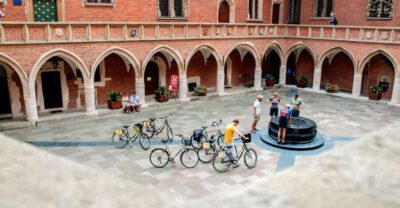
Bike Tour of Old Town, Jewish Quarter and the Ghetto
Read our review →
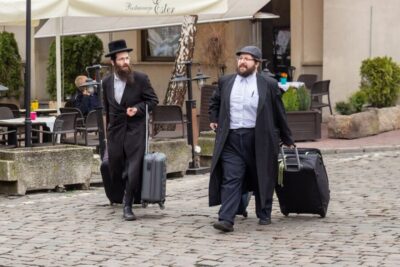
Kazimierz, Schindler’s Factory & Ghetto Guided Tour
Read our review →
Full Bike Tour – the Old Town, Jewish Qtr & the Ghetto NEW BIKES
Read our review →
Warsaw Ghetto Private Walking Tour with Hotel Pickup
Read our review →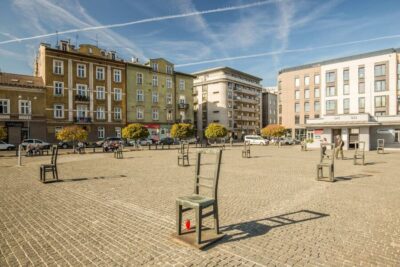
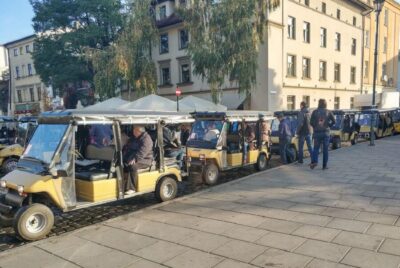
Jewish Quarter and Ghetto Electric Golf Cart Tour
Read our review →Browse the lists this tour appears in