Review · JEWISH HERITAGE TOURS
Historical Walking Tour of Jewish Warsaw
Warsaw can feel like a city of layers, and this walk puts the Jewish story on top of everything else. In about 3 hours, you’ll see the surviving Nozyk Synagogue, a surviving scrap of ghetto wall, and the ground where deportations began. I like how the tour keeps the focus on specific, visitable places, not vague ideas, and it explains why each one matters in the wider story of WWII Warsaw. The main drawback to plan for is the walking distance and the fact that the ghetto was largely destroyed, so you’ll spend time on memorials and sites rather than restored old streets.
Two things I really like: first, the tour uses visual aids and a pre-tour info pack so you can follow along and even keep studying after. Second, it ends at Umschlagplatz, which gives the final stop real weight without dragging you into a long museum day. The one consideration I’d flag is pace, cobblestones, and weather, since you’ll be moving for most of the 3 hours.
A small-group format helps a lot. With a maximum of 10 travelers, you get time for questions and a guide who can keep everyone together. I’ve heard guides like Aga and Olivia in this program described as friendly, factual, and careful with the emotional tone, which matters on a subject like this.
In This Review
- Key highlights you should care about
- A 3-hour Jewish Warsaw route that starts with context
- Start at Sienna 53, then get oriented fast at Baguette Mi
- Nozyk Synagogue, the surviving landmark you can still enter
- Ghetto wall fragment: standing where the city kept a scar
- The big stretch through the former Warsaw Ghetto area
- Why these specific places matter
- Laweczka Jana Karskiego: a quieter stop with big meaning
- Umschlagplatz: the deportation point that ends the story
- The walking reality: wear shoes, plan for weather
- What your $28.87 buys, and what to budget extra
- Who should book this tour, and who might skip it
- Should you book Historical Walking Tour of Jewish Warsaw?
- FAQ
- Where does the tour start and end?
- How long is the walking tour?
- What is the price per person?
- Is the tour in English?
- Do I need to pay an entrance fee during the tour?
- Is a mobile ticket provided?
- How big is the group?
- Is public transportation nearby?
- Is the tour suitable if I have trouble walking?
Key highlights you should care about
- Nozyk Synagogue, the only Warsaw synagogue that survived the war and is still here today
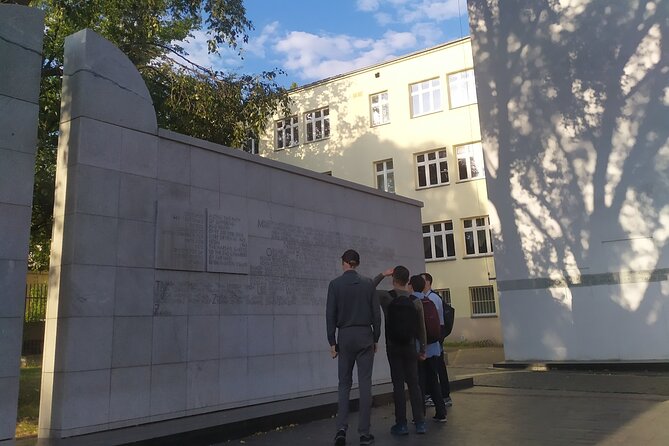
- Fragment of the Ghetto Wall, a rare physical remnant you can stand next to
- Umschlagplatz, the deportation site linked to transports to Treblinka
- Miła 18 (Anielewicz’s Bunker) and the Heroes of the Jewish Ghetto memorial, not just names, but place-based reminders
- Up to 10 people, so the route stays focused and questions do not get pushed aside
A 3-hour Jewish Warsaw route that starts with context
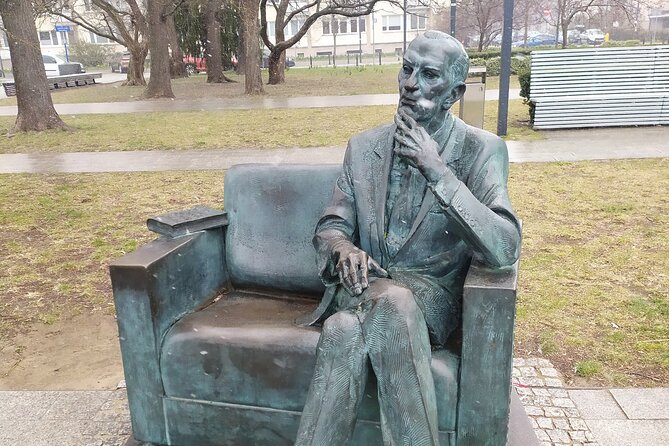
This is the kind of tour that helps you see Warsaw the way locals do, by pointing out the exact corners, buildings, and memorials that carry Jewish memory. You begin at Sienna 53, right by the corner with Jana Pawla II Avenue, where the guide gives a short intro before you head out. That first moment matters, because it sets expectations for what you can and cannot see in the former ghetto area today.
At $28.87 per person, the price is modest for a guided walking experience with a structured route, visual materials, and a full info pack. And the small group size makes the value feel even better, because you are not just being marched through 6 stops. It’s about 3 hours, and you’ll cover multiple sites that would be hard to connect on your own without the guide’s explanations.
More History Tours in Warsaw
- Warsaw: POLIN Museum of the History of Polish Jews Ticket
★ 4.7 · 1,142 reviews - Warsaw: Chopin Concert at Historical Venue in Old Town
★ 4.7 · 445 reviews - Small-Group Historical Guided Tour of Warsaw with pick up/drop off. Public Tour.
★ 4.5 · 343 reviews
Start at Sienna 53, then get oriented fast at Baguette Mi
Your tour meets at Sienna 53 on the corner of Jana Pawla II Avenue. The route begins with Baguette Mi – Banh mi bistro as a practical meeting point, then you get your first orientation chat.
Even if you do not plan to eat, this opening stop is useful. It gets you grounded in the location grid of Warsaw before the walking ramps up. Also, starting near a busy main avenue usually makes it easier to arrive on time, especially if you are using public transit.
One practical tip: if you are the type who relies on navigation apps, double-check the meeting corner. A couple of visitors have noted confusion around mapping, and arriving late can throw off the group’s timing.
Nozyk Synagogue, the surviving landmark you can still enter
Next comes Nozyk Synagogue. This stop is short on paper, around 10 minutes, but the payoff is huge: you see the only Warsaw synagogue that survived the war and remains until today. The architecture and sheer survival of this building is the point. It is proof that Jewish Warsaw did not exist only as a tragedy in hindsight.
There’s one cost to plan for: the Nozyk Synagogue entrance fee is 20 PLN and is not included in the tour price. If you want to get the most from this stop, set aside time and money for the visit portion. Even if your overall plan is tight, this is the one ticket detail you should treat as non-optional.
The synagogue stop is also where you’ll feel the tour’s tone shift from general context to lived place. The guide’s job here is to keep you anchored in what you are seeing, while also explaining why survival is rare in this part of Warsaw’s story.
Ghetto wall fragment: standing where the city kept a scar
After Nozyk Synagogue, you’ll move to the Fragment Of Ghetto Wall. This is one of those stops that looks small until you understand what you are looking at. The tour frames it as one of the few remaining parts of the ghetto wall, which is exactly why the stop matters.
When so much was destroyed, the physical remnants become your anchor points. You can’t measure the whole ghetto by eye today, but you can at least stand next to a surviving section of what defined the area.
Expect this stop to be mostly about interpretation: the guide points out what the fragment represents and how it helped shape daily life during the war years. It’s a quick stop, around 15 minutes, but it is emotionally dense in a way that feels different from a typical sightseeing photo stop.
More Jewish Heritage Tours in Warsaw
- Warsaw: Warsaw Ghetto Private Walking Tour with Hotel Pickup
★ 4.9 · 369 reviews - Warsaw: Jewish History Guided Walking Tour in English
★ 4.7 · 324 reviews - Private Tour: Warsaw’s Jewish Heritage by Retro Fiat
★ 5.0 · 208 reviews - Warsaw: Ghetto, Jewish Cemetery & POLIN Museum Private Tour
★ 4.8 · 132 reviews
The big stretch through the former Warsaw Ghetto area
The main block of walking is where you get the full narrative of the former ghetto. This part takes about 2 hours 5 minutes, and it is where you see the largest number of named sites.
Here’s what you’ll encounter in the ghetto area focus:
- The Jewish Ghetto memorial
- The courthouse on Solidarności Street
- The Muranów residential district
- The location of the discovery of Ringelblum’s archive
- The Church of St. Augustine
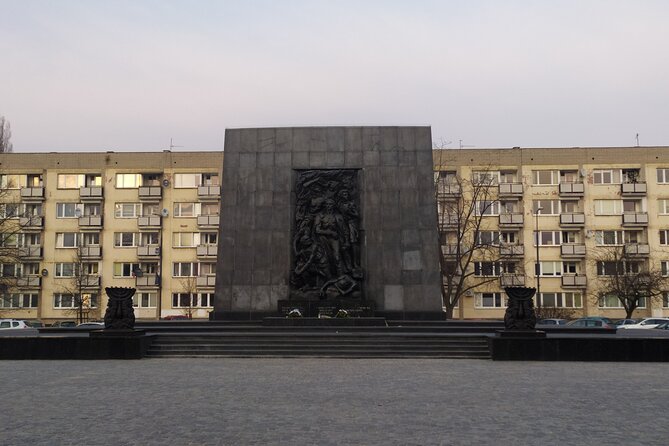
- The Heroes of the Jewish Ghetto memorial
- Miła 18 (Anielewicz’s Bunker)
What makes this segment valuable is that it connects roles in one place. You are not only looking at memorials. You’re also seeing the urban setting around them, including districts and buildings that help explain how the ghetto sat inside Warsaw rather than isolated from the rest of the city.
Why these specific places matter
The Jewish Ghetto memorial and the Heroes of the Jewish Ghetto memorial are a reminder that this story is not only about suffering. They also point to resistance and determination, and the guide connects those themes to the real neighborhoods and streets you are standing on.
The courthouse on Solidarności Street adds a hard edge to the story. It’s one more reminder that systems, institutions, and official actions were part of what destroyed Jewish life.
Muranów is included because it helps you understand the residential geography of the area. Instead of imagining the ghetto as a flat concept, you learn how it was woven into Warsaw’s real city fabric.
You also stop at the location of the discovery of Ringelblum’s archive. Even without turning this into a museum stop, this reference helps you grasp that documentation and testimony mattered, and that parts of that record resurfaced through real-world discoveries.
And then there is Miła 18 (Anielewicz’s Bunker), which is one of the stops that can feel like a turning point. Named for Anielewicz, it signals the story of armed resistance tied to the final phases of the ghetto uprising. If you want the tour to feel like a guided timeline rather than a list of points, this is where it helps you feel that structure.
The Church of St. Augustine adds another layer, showing how different buildings and religions occupy the same urban space over time. The guide’s explanations connect what you see now to what was happening then, without treating the area like a frozen set.
Laweczka Jana Karskiego: a quieter stop with big meaning
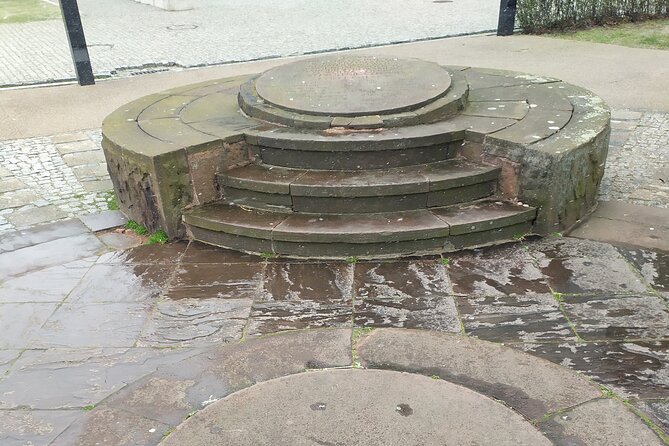
After the heavy ghetto segment, you’ll head to Laweczka Jana Karskiego. This stop is about 15 minutes, and it focuses on monuments that remind you of the Jews’ heroic struggle within the Warsaw Jewish Ghetto.
This is a good place to slow down mentally. The walk so far can feel like it accelerates through tragedy and memorial. Here, the guide gives you time to read what the monuments are trying to communicate, and to connect that to the names you just heard around the uprising sites.
If you’re someone who likes to photograph monuments and then later study what each element refers to, this stop is set up for that. The walking rhythm here tends to feel a bit lighter, but the content stays serious.
Umschlagplatz: the deportation point that ends the story
The final stop is Umschlagplatz. This is around 10 minutes, but it is the most important ending on the route.
You’ll visit the place from where 300,000 Jews were transported to Treblinka. That number, and the specificity of the location, makes the stop land with real clarity. It’s not an abstract lesson. It’s a place in the city where you can stand and understand what the end stage meant.
The tour ends in front of the Umschlagplatz Monument on Stawki 10. Ending here is smart. It prevents the story from dissolving into general city wandering. You leave with a clear last image: the deportation hub.
If you are planning dinner after, give yourself a short buffer. Even if you feel okay during the walk, this ending can still hit later when you sit down.
The walking reality: wear shoes, plan for weather
This tour is simple in concept, but the walking is real. It’s a 3-hour walk, most of it outdoors, and the former ghetto streets include cobblestones in parts. That’s why sturdy shoes are not optional.
Bring a rain layer too. Warsaw weather can switch fast, and you’ll appreciate having an umbrella option. Also, consider how tired you’ll be if you stack this with another day plan that involves museums or lots of indoor time. Three hours sounds short until you remember how much mental attention this subject demands.
On the upside, the pace is managed. Because the group is capped at 10, you’re less likely to feel stretched out. The guide can keep everyone together without racing you through stops.
What your $28.87 buys, and what to budget extra
The base price is $28.87 per person for about 3 hours in English, with a mobile ticket. You also get:
- a full info pack about Warsaw (FAQ, useful links, and more)
- visual aids
- recommendations about other places to visit, plus where to eat and drink
That info pack and the visuals are not fluff. They help you place the ghetto sites in your mind so the route stays coherent, not just tragic. If you want to explore more on your own afterward, those built-in recommendations can save time.
The one clear extra cost is the Nozyk Synagogue entrance fee: 20 PLN. If you plan to enter, budget for it right away so you are not surprised on site.
Finally, consider booking timing. This tour is often booked about 46 days in advance on average, so reserve early rather than waiting for the last week.
Who should book this tour, and who might skip it
This is a strong fit if you want:
- a place-based Jewish Warsaw story, centered on surviving sites and memorials
- a route that ends at Umschlagplatz so the narrative does not drift
- a guide-led walk with visual aids and a useful pre-tour info pack
- a small group setting, maximum 10 travelers
It may be less ideal if:
- you do not do well with long walking distances
- you need frequent, extensive breaks
- you want mostly intact buildings rather than memorial sites (the area was largely destroyed, so there is limited pre-war street fabric to see)
If you’re visiting for only a short time and you want one focused guided route through the Warsaw ghetto area, this can be an efficient choice. But if you are doing multiple Holocaust-related stops, plan your day so your feet and your mind have enough room.
Should you book Historical Walking Tour of Jewish Warsaw?
I’d book this tour if you want to see the key surviving markers of Jewish Warsaw and the former ghetto area in a tight 3-hour walk, with clear guidance and helpful materials. The value at $28.87 is strong because you get more than just directions, you get interpretation tools that help the sites make sense, especially at the synagogue and the ghetto memorial cluster.
I would think twice if you are sensitive to walking on cobblestones or you’re worried about the emotional weight of an ending at Umschlagplatz tied to deportations. In that case, you might still appreciate a lighter day plan, or you could pair this with a museum day and keep the rest of the schedule gentle.
If you book, wear good shoes, bring weather protection, and give yourself time after the tour to decompress. This is the kind of walk that stays with you, in the best way.
FAQ
Where does the tour start and end?
The tour starts at Sienna 53, 00-820 Warszawa, Poland, at the corner with Jana Pawla II Avenue. It ends in front of the Umschlagplatz Monument on Stawki 10, 00-178 Warszawa, Poland.
How long is the walking tour?
The tour lasts about 3 hours.
What is the price per person?
The price is $28.87 per person.
Is the tour in English?
Yes, the tour is offered in English.
Do I need to pay an entrance fee during the tour?
Yes. The Nozyk Synagogue has an entrance fee of 20 PLN, which is not included in the tour price. Other listed stops are marked as free.
Is a mobile ticket provided?
Yes, the tour includes a mobile ticket.
How big is the group?
The tour has a maximum of 10 travelers.
Is public transportation nearby?
Yes. The meeting area and the tour are noted as near public transportation.
Is the tour suitable if I have trouble walking?
Most travelers can participate, but it is not recommended for travelers who have problems with walking long distances.
More Jewish Heritage Walks in Warsaw
- Warsaw: Jewish Heritage & Holocaust Walking Tour
★ 4.7 · 119 reviews - Tour of the Warsaw Ghetto
★ 5.0 · 119 reviews - Jewish Warsaw Walking Tour
★ 5.0 · 95 reviews - Jewish Heritage and Holocaust Memorial Tour of the Former Ghetto
★ 5.0 · 17 reviews
More Walking Tours in Warsaw
- Warsaw: Old Town Highlights Walking Tour in English
★ 4.7 · 1,516 reviews - Warsaw: Old Town Guided Walking Tour
★ 4.9 · 599 reviews - Half-Day Polish Food Walking Tour with Guide and Dinner
★ 4.5 · 381 reviews - Old Town Warsaw Walking Tour
★ 4.5 · 333 reviews
Fresh listings from Warsaw
- Wolf’s Lair & Treblinka Tour in 1 day from Warsaw★ 5.0 · 37 reviews
- Tour from Warsaw: Wolf’s Lair, Hitler’s HQ Zones I and II★ 5.0 · 32 reviews
- Wolf’s Lair Private Day Trip from Warsaw★ 5.0 · 50 reviews
- Warsaw’s Old Town A Self-Guided Audio Tour★ 4.5 · 10 reviews
- Wilanow Royal Palace : SMALL GROUP /inc. Pick-up/★ 4.5 · 16 reviews
- Warsaw Must-See Local City Tour with Antek and Tomek★ 5.0 · 51 reviews
- Private 3-, 5-, or 7-Hour Warsaw Tour by Car★ 5.0 · 7 reviews
- Off the Beaten Track in Warsaw: Private City Tour★ 4.5 · 9 reviews
Jewish Heritage Tours, compared.
Bike Tour of Old Town, Jewish Quarter and the Ghetto
Read our review →
Kazimierz, Schindler’s Factory & Ghetto Guided Tour
Read our review →
Full Bike Tour – the Old Town, Jewish Qtr & the Ghetto NEW BIKES
Read our review →
Warsaw Ghetto Private Walking Tour with Hotel Pickup
Read our review →