
Review · JEWISH HERITAGE TOURS
Warsaw Daily Jewish Ghetto Guided Tour with Jewish Cemetery
Warsaw’s ghetto story is close to the sidewalk. This 3-hour walk in the Moranow district turns WWII tragedy into something you can actually see, from surviving street-level buildings to the former ghetto walls. I especially liked the way our licensed WWII-focused guide made the sequence of events clear, and the stop at the Nozyk Synagogue, still standing in a way that feels quietly powerful. The main drawback to plan around is that the Jewish Cemetery is closed on Saturdays, so your last stop changes.
The group size stays small, up to 15, which matters when you’re hearing hard history. I also like that you get cemetery entrance included, so you are not juggling ticket desks while your guide is steering the story forward.
In This Review
- Key points before you go
- Where the Warsaw Ghetto story feels real in 3 hours
- The meeting point at InterContinental, and why being on time helps
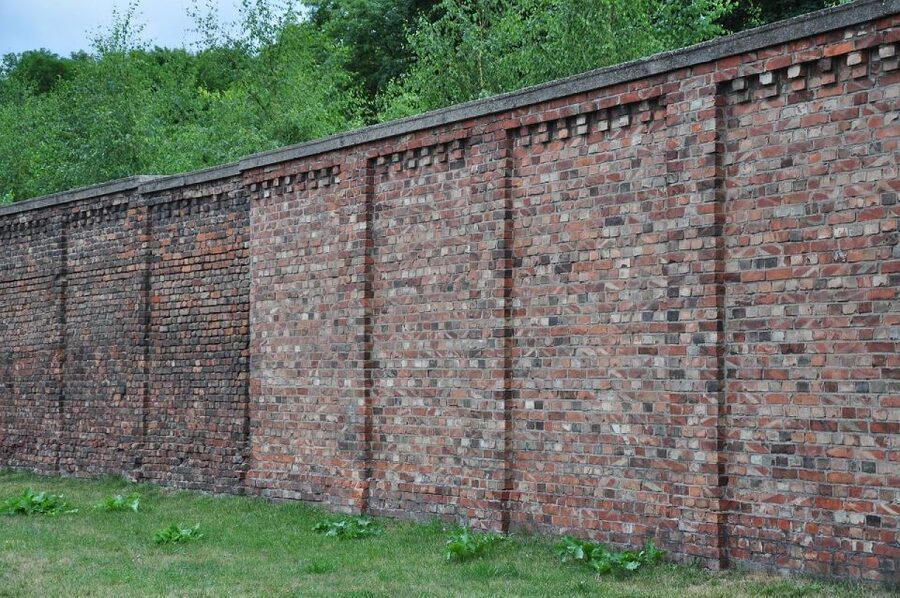
- Moranow district: seeing the ghetto walls and old houses up close
- Nozyk Synagogue: why the one surviving prewar synagogue matters
- The Warsaw Ghetto Uprising context, explained along the walk
- Jewish Cemetery stop: honoring names, leaders, and the unnamed
- Saturday closure: All Saints Church becomes your last stop
- What the small-group format changes for you
- Guide quality: what to look for in a tour like this
- Price and value: what $131 gets you, and when it’s worth it
- Accessibility and getting around during the walk
- Tips to make the tour land better
- Who this tour suits best
- Should you book this Warsaw Ghetto and Jewish Cemetery tour?
Key points before you go
- Moranow district walk through the former ghetto area, including visible reminders like old walls and houses
- Nozyk Synagogue visit, noted for being the only surviving prewar synagogue in Warsaw
- Jewish Cemetery included with entrance tickets, plus context on Polish-Jewish heritage
- Small group size (up to 15) for a more personal pace than big-bus tours
- Saturday switch: cemetery is closed, so you visit All Saints Church instead
Where the Warsaw Ghetto story feels real in 3 hours
This tour is built for people who want more than a lecture. You start with the geography, the streets, and the boundaries that shaped daily life. In Warsaw, that matters because the physical layout helps you understand what “forced into a closed area” really means.
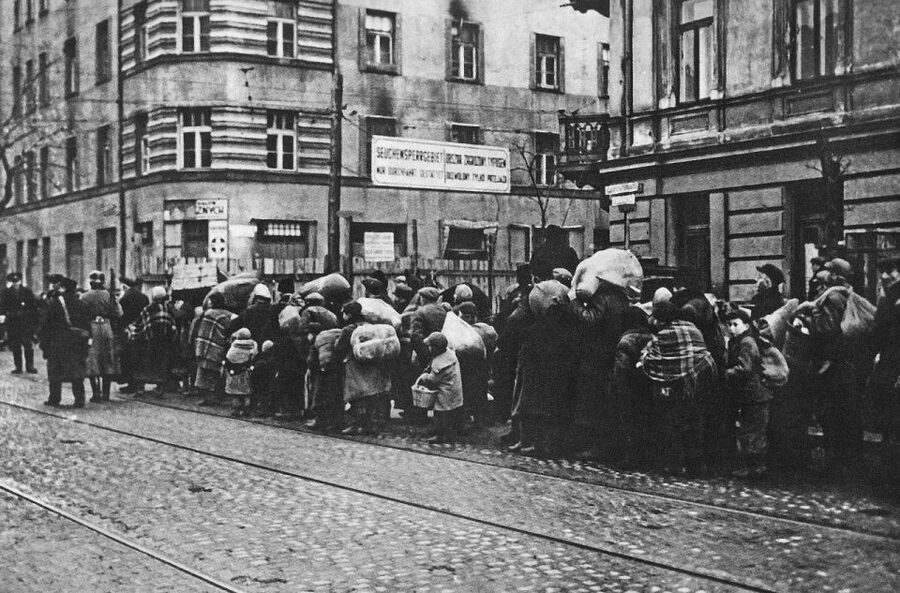
In WWII, the Warsaw Ghetto grew out of Nazi plans that targeted Poland’s Jewish population. During the war, the ghetto housed more than 400,000 Jews in an area of about four square kilometers. Your guide connects those numbers to what you see around you, including what remained after the war and what later rebuilding did to the streets.
You also hear the wider arc of the Holocaust as it applied in occupied Poland: persecution, the creation of the ghetto, and the Nazi Final Solution plan. The guide’s job is to keep the story organized as you walk, so you leave with a clearer timeline, not just sad facts.
Why 3 hours works: it is long enough to cover major locations in Moranow and then reach the cemetery, but short enough that you are not stuck in “endless walking with no focus.” Just remember this is emotionally heavy history, so build in time to decompress afterward.
More Jewish Heritage Tours in Warsaw
- Warsaw: Warsaw Ghetto Private Walking Tour with Hotel Pickup
★ 4.9 · 369 reviews - Warsaw: Jewish History Guided Walking Tour in English
★ 4.7 · 324 reviews - Private Tour: Warsaw’s Jewish Heritage by Retro Fiat
★ 5.0 · 208 reviews
The meeting point at InterContinental, and why being on time helps
You meet your guide in front of the InterContinental Hotel at Emilii Plater 49, 00-125 Warsaw. You do not need to enter the hotel, it is only a meeting landmark.
Why punctuality matters here: the tour is only 3 hours, and you are moving through specific stops. If you arrive late, you might miss the intro that sets up the entire walk. Also, the tour includes a cemetery entrance component, so the schedule is designed to keep the pacing smooth.
If you are coming from central Warsaw, give yourself a little buffer for city-walking time and for finding the exact spot outside the hotel.
Moranow district: seeing the ghetto walls and old houses up close
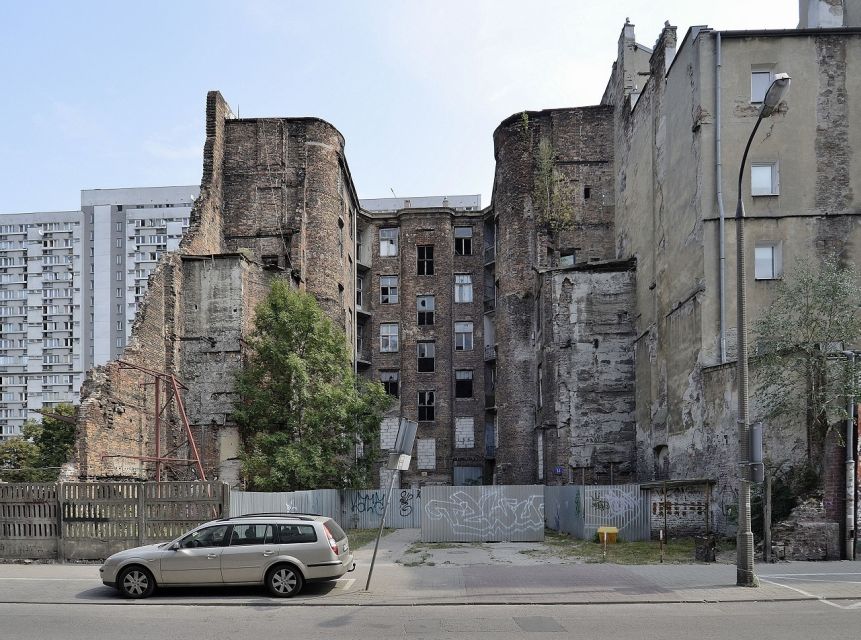
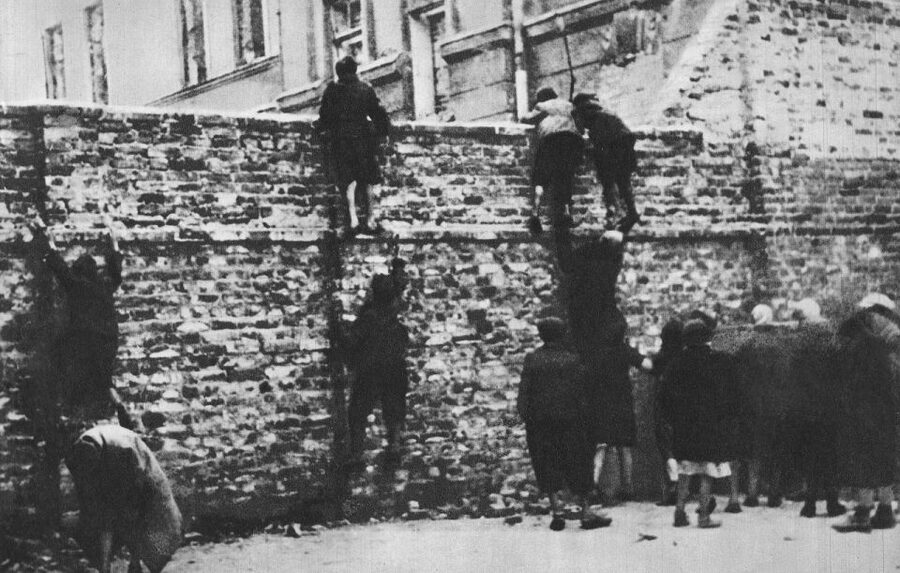
Once you get going, you will spend the bulk of the tour walking in the Moranow district. This area is closely tied to the largest Warsaw ghetto zone during WWII, when Jews from Warsaw were forced to live in a severely restricted space.
Your guide points out the most meaningful things to look for: remnants that give you a sense of the old streetscape, and the physical idea of confinement. Even when buildings have changed over time, the walking route helps you “map” the ghetto into your head. That is the big value of the tour format. A museum can explain, but streets can make you slow down and notice.
You will also hear key ghetto statistics, shared in a way that connects to lived experience rather than turning numbers into a trivia list. The tour includes the grim reality that around 100,000 people died in the ghetto from exhaustion, hunger, disease, and other conditions of persecution. Then your guide connects that to the nearby Treblinka extermination camp, where more than 300,000 people were killed.
One practical note: this tour is a walking experience. Bring comfortable shoes and expect an active pace, even though the group stays relatively small.
Nozyk Synagogue: why the one surviving prewar synagogue matters
A major highlight is a stop at the Nozyk Synagogue. The tour treats it as more than a building, and that is exactly why it feels memorable.
The synagogue is described as the only surviving prewar synagogue in Warsaw. That distinction is huge. It means you are seeing a place that still carries continuity from before the war, rather than only looking at postwar reconstructions or memorial sites.
Your guide uses that stop to help you understand what religious and community life meant before the ghetto period, then how those lives were attacked and reshaped. In a tour like this, one surviving prewar site can act like a time anchor, pulling you back to the idea that Jewish Warsaw did not begin in 1939.
It is also a good pause point, mentally and physically. After hearing about ghetto formation and mass killing, seeing a standing synagogue helps you remember that communities have identity, traditions, and daily routines that Nazis tried to destroy.
More Jewish heritage walks in Warsaw:
- Warsaw: Ghetto, Jewish Cemetery & POLIN Museum Private Tour
★ 4.8 · 132 reviews - Tour of the Warsaw Ghetto
★ 5.0 · 119 reviews - Warsaw: Jewish Heritage & Holocaust Walking Tour
★ 4.7 · 119 reviews - Jewish Warsaw Walking Tour
★ 5.0 · 95 reviews
The Warsaw Ghetto Uprising context, explained along the walk
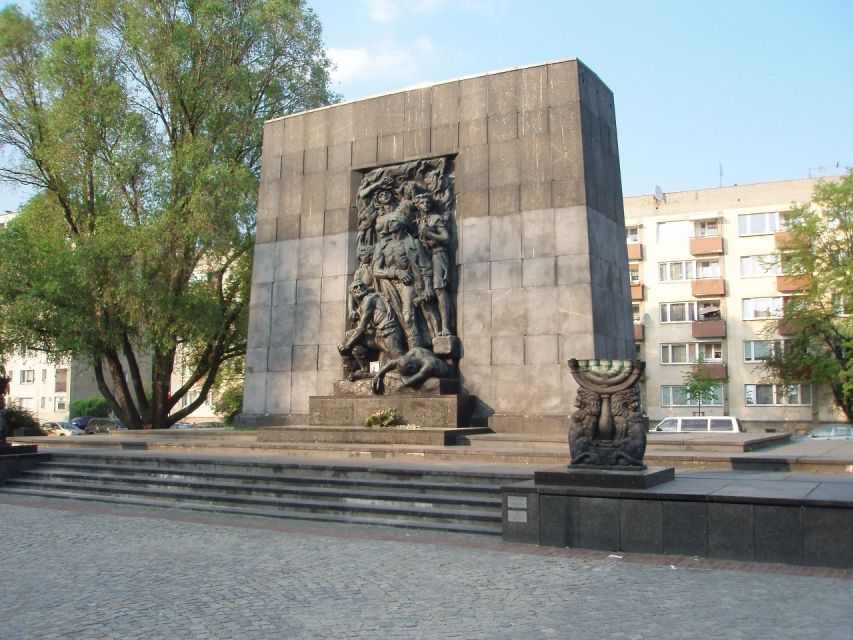
You will learn about the heroes and events connected to the Warsaw Ghetto Uprising of 1943. You do not just get a name list. Your guide explains how the uprising fit into the larger Nazi plan and the worsening conditions inside the ghetto.
This is where a great guide makes a real difference. In the reviews, people specifically praised guides for being both highly informed and personable, and that matches what you want in this subject. When the story includes resistance, tragedy, and betrayal, clarity helps. It keeps you from getting lost in details and lets you grasp the human choices at the center of the uprising.
There is also something practical here: if you understand the “why” behind the uprising, you will read memorial and commemorative context with more meaning later in the cemetery visit.
Jewish Cemetery stop: honoring names, leaders, and the unnamed
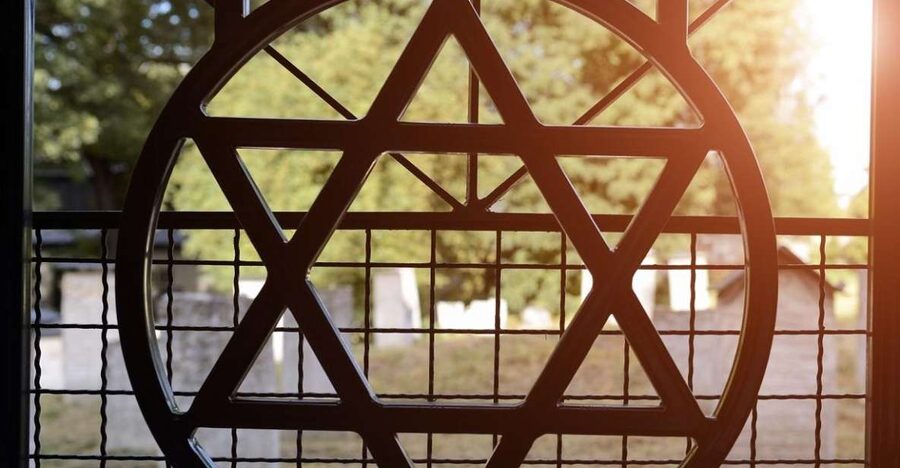
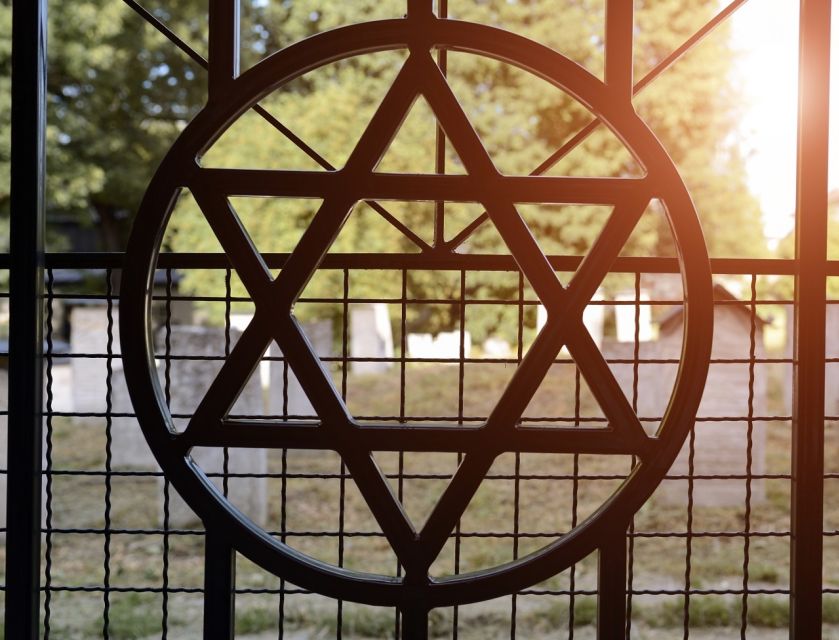
The final stop is the Jewish Cemetery, with entrance tickets included. This part is handled as a history lesson with a strong emphasis on memory.
You learn stories connected to Polish-Jewish spiritual leaders, political activists, honored creators of Jewish culture, and also thousands of nameless victims from the ghetto. That mix matters. It avoids turning the cemetery into only a monument of sorrow. It also highlights continuity and contribution, including people whose cultural and public life shaped Poland beyond the war years.
Why this stop is often the most impactful: it shifts your perspective from “what happened here” to “who was taken.” A guided cemetery visit can feel quiet, but it is not passive. Your guide keeps tying symbols and sections back to broader themes like persecution, community identity, and survival.
If you are the kind of traveler who likes to understand how people are remembered, you will likely appreciate the way the tour frames the cemetery visit as more than a photo stop.
Saturday closure: All Saints Church becomes your last stop
Plan for a real schedule change. The Jewish Cemetery is closed on Saturdays. On those days, you visit All Saints Church instead.
Your guide explains the connection between the church and Jewish history, so you still get meaningful context rather than a missed component. This also explains why some people end up not seeing the cemetery, even when they expected it. If your dates include a Saturday, treat All Saints Church as the alternate experience, not an inconvenience.
If you are choosing between dates, ask yourself what you care about more: the cemetery itself or the equivalent alternative stop on a Saturday. Either way, you will still be in a historically relevant environment with guided interpretation.
What the small-group format changes for you
This tour runs with a small group of up to 15 people. In practice, that usually means two things.
First, your guide can set a steady pace. In bigger groups, you often get “one size fits all” time pressure. Here, it feels easier to pause and ask a question, especially when you are processing difficult material.
Second, it can make the guide feel more like a conversation than a monologue. In one set of comments, people highlighted how guides like Anna and Ewa were not only knowledgeable but also personable, and that personal tone can help you stay engaged when topics are heavy.
Also, skipping the ticket line is a real time-saver. It is one less stress point so you can focus on the guided story.
Guide quality: what to look for in a tour like this
You are promised a licensed guide fluent in English, and in the reviews, people called out specific guides by name and praised their approach. That lines up with what you need for this kind of tour: a guide who can hold a clear narrative while staying respectful, and who can answer follow-up questions without rushing.
When I think about guide value for Holocaust and ghetto history, I look for organization. You should expect the story to flow, from the creation of the ghetto, through the living conditions, to the larger extermination timeline, then to resistance and commemoration. The best tours make those connections feel logical, not random.
If you are someone who prefers structure, this format is likely a strong match.
Price and value: what $131 gets you, and when it’s worth it
At $131 per person for a 3-hour small-group tour, the cost is not low. But it is also not just “pay for walking.” You are paying for a licensed, English-speaking guide, group pacing that keeps things manageable, and cemetery entrance tickets.
The value equation looks like this:
- You get guided interpretation in key locations tied to ghetto life and Jewish memory.
- You get cemetery ticket inclusion, so you do not have to add a separate purchase.
- You get skip-the-line convenience, which saves time in the real world.
This price makes the most sense if you want context and interpretation in English and you plan to prioritize the cemetery stop. If you are traveling with someone who can read and explore independently, the cost might feel higher than a self-guided walk. But for many visitors, the narrative and pacing are exactly what justify it.
If your goal is to understand the story in a connected way, I think the price is fair for what you get.
Accessibility and getting around during the walk
The tour is listed as wheelchair accessible. That matters because a cemetery stop plus street-level walking can be tricky on other tours.
Still, bring realistic expectations: this is a walking-oriented itinerary through an urban area. Even if paths are accessible, you will be moving for part of the tour. If you use a wheelchair or mobility aid, consider emailing or checking details from the operator before you go, so you are not surprised by surface conditions.
Tips to make the tour land better
Here are practical moves that help you get more from the 3-hour experience.
1) Dress for walking and for quiet indoor moments
You will be outside through the Moranow portion, then you will be in a historic setting for the synagogue and cemetery or the church alternative.
2) Treat it like a focused history session, not a sightseeing loop
You will hear hard facts and emotional stories. Plan something calmer afterward.
3) If you travel on Saturday, adjust expectations early
The cemetery is closed, and All Saints Church is your last stop. Knowing this before you go helps you stay oriented.
4) Read your email the day before
You are asked to check email the day before the tour for important information. Do it. You will get reminders that help you arrive ready.
Who this tour suits best
This tour is a great fit if:
- you want a guided walk through the former Warsaw ghetto area, not just a stop-and-go sightseeing day
- you care about understanding WWII history and the Warsaw Ghetto Uprising with structure
- you want the cemetery visit with entrance included
- you prefer a small group to keep the experience personal and easier to follow
It may be less ideal if you:
- want mostly light sightseeing
- are looking for a long, slow pace with lots of free time to wander on your own
- are visiting on a Saturday and strongly want the cemetery specifically, since you will instead go to All Saints Church
Should you book this Warsaw Ghetto and Jewish Cemetery tour?
I recommend booking if your trip to Warsaw includes time for meaningful history and you want it explained clearly by a licensed English-speaking guide. The combination of Moranow district walking, the Nozyk Synagogue stop, and the Jewish Cemetery (or the All Saints Church alternative on Saturdays) gives you a complete arc: place, community life, persecution, uprising context, and remembrance.
If you are deciding between dates, use the Saturday cemetery closure information to choose what matches your priorities. And if you like tours where guides are both structured and personable, this one looks like a strong bet based on the praise for named guides like Anna and Ewa.
Go in with comfortable shoes, an open mind, and the understanding that you are stepping into a story that still deserves careful attention.
Fresh listings from Warsaw
- World War II Warsaw Old Town, Military Cemetery Walking Tour★ 4.7 · 3 reviews
- 3-hour: Palace of King Jan Sobieski in Wilanow/inc. Pick-up/★ 4.7 · 27 reviews
- Wilanów Palace: 2-Hour Guided Tour with Entrance Tickets★ 4.8 · 8 reviews
- Warsaw: Wolf’s Lair & Swieta Lipka Small-Group Tour + Lunch★ 5.0 · 3 reviews
- Warsaw Zoo Skip-the-Line Entry Ticket with Private Transport★ 4.8 · 3 reviews
- Warsaw Private Wilanow Palace & Garden Tour★ 4.6 · 30 reviews
- 4 hour: Warsaw Uprising Museum and POLIN Museum/inc.Pick up/★ 4.9 · 4 reviews
- Warsaw Wolf’s Lair with St. Lipka and Mamerki Private Guided★ 4.2 · 3 reviews
Jewish Heritage Tours, compared.
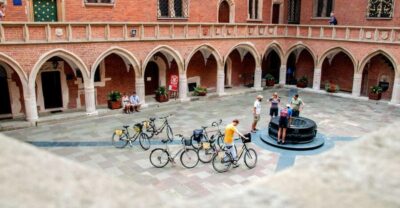
Bike Tour of Old Town, Jewish Quarter and the Ghetto
Read our review →
Kazimierz, Schindler’s Factory & Ghetto Guided Tour
Read our review →
Full Bike Tour – the Old Town, Jewish Qtr & the Ghetto NEW BIKES
Read our review →
Warsaw Ghetto Private Walking Tour with Hotel Pickup
Read our review →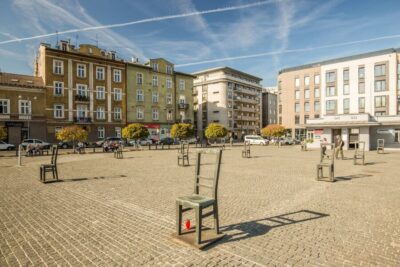
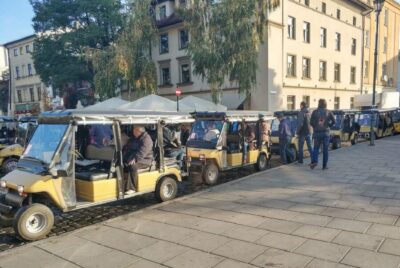
Jewish Quarter and Ghetto Electric Golf Cart Tour
Read our review →Browse the lists this tour appears in