
Review · HISTORICAL TOURS
Wrocław: Historical Tour with Tablets and Guide
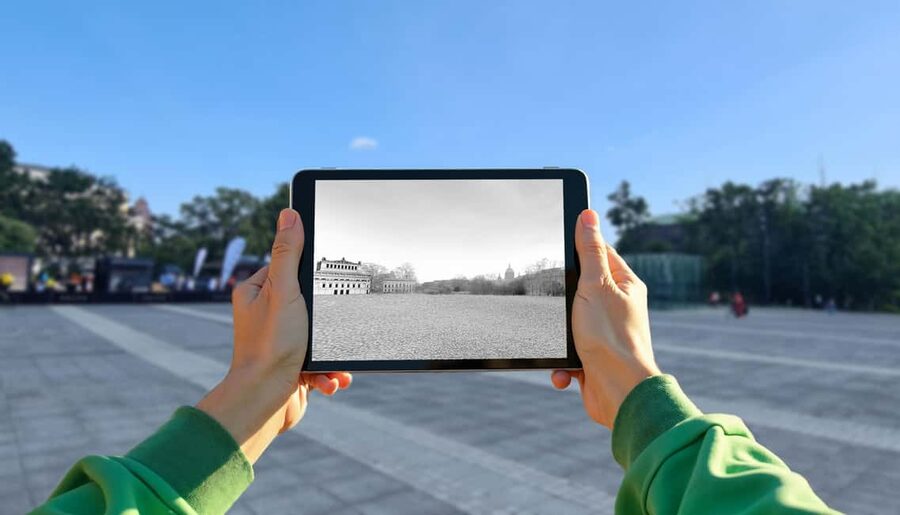
Time travel in Wrocław for the price of lunch. This 2-hour historical tour uses a rental tablet to show you what key places looked like around the early 1900s. You literally turn around and watch the scene snap back in time.
I especially love the combo of a live guide plus the tablet visuals. You do not just hear stories from the street corner, you see photos, videos, and even spherical views that match the spots you are standing in. I also like that there is no app download or login, everything is preinstalled on the tablet.
One drawback to plan for: it is a walking experience built around city-center streets, so you will want comfortable shoes and you should pace yourself if you do not love long, continuous strolls.
In This Review
- Key highlights to know before you go
- Why this Wrocław tablet tour feels practical, not gimmicky
- The tablet time travel trick, and how to use it smoothly
- Pręgierz to Przejście Żelaźnicze: your first time-jump at the pillory
- Market Square and the northern side view: compare the city you know
- Freedom Square and Museum Square: history in civic-sized doses
- Kościuszko Square and Świdnicka Street: the story becomes a walk
- Wrocław Opera: when architecture is the main character
- Hotel Monopol finish: a fitting ending point with options to linger
- Price, pacing, and practical planning for a smooth 2 hours
- Who should book this Wrocław tour, and who might skip it
- Should you book the Wrocław Historical Tour with Tablets and Guide?
- FAQ
- How long is the Wrocław Historical Tour with Tablets and Guide?
- Where does the tour start and where does it end?
- What is the price per person?
- Do I need to download an app or log in to use the tablet?
- What languages are available for the guide?
- Is the tour wheelchair accessible?
- What happens if the weather is bad?
Key highlights to know before you go
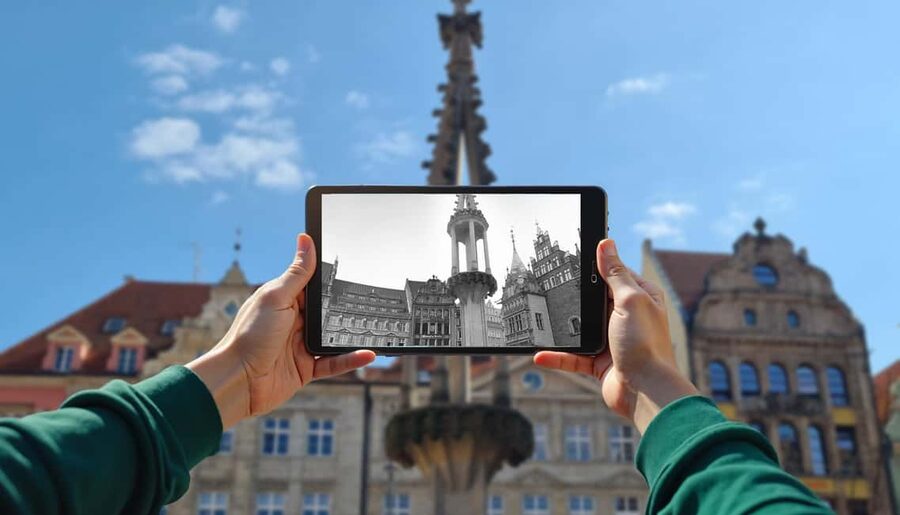
- Turn-and-see time travel: switch your view 100 years back just by turning around.
- 10 focused stops: the route connects major squares and streets in a logical loop.
- No app fuss: the tablet has the time-travel content ready to use.
- Guide in your language: Polish, English, or German, plus Spanish is also mentioned as an option for the professional guide.
- Crisp compare-and-contrast: you can line up past views with today’s buildings on the same street.
Why this Wrocław tablet tour feels practical, not gimmicky
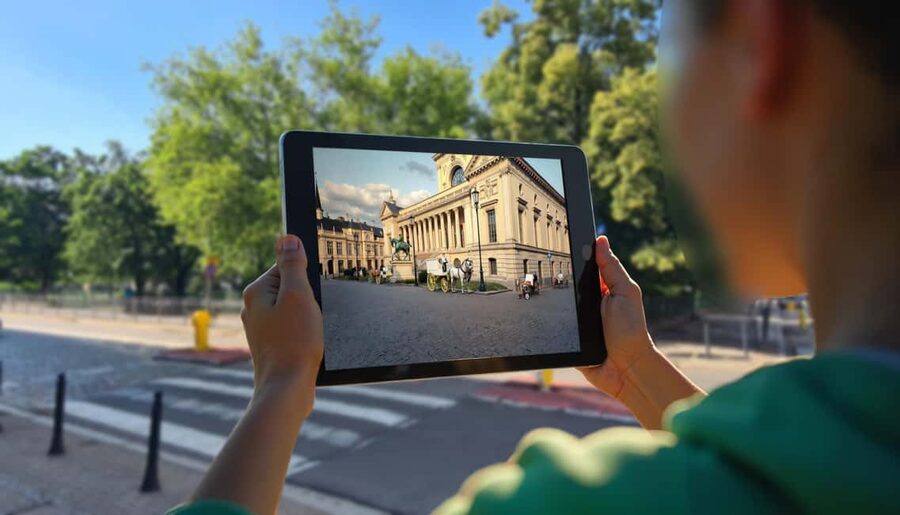
Wrocław is a city where layers stack up. The problem is, on your own, it can be hard to remember what used to be where. This tour solves that with a simple rhythm: walk, stop, listen, then use the tablet to compare the present with the early 20th century.
The price, about $26 per person for 2 hours, makes sense because you are getting a professional guide and the tablet rental in one package. You are not paying extra for an audio app, and you are not spending your time hunting down exact viewpoints. That matters in a compact old-city loop where you want your energy to go toward seeing, not figuring out.
It is also built for different comfort levels. You can do private or small-group options, and the route is listed as wheelchair accessible, which helps if you need a slower pace. Still, it is a walking tour, so think of it as an efficient city-center experience rather than a sit-and-stroll tram ride.
More History Tours in Wroclaw
- Best of Wroclaw 3-Hour History and Culture Walking Tour
★ 4.9 · 49 reviews - Wroclaw: Third Reich and World War Two Historical Tour
★ 4.9 · 43 reviews - Wroclaw: Private Tour by smal Historic Tram 1,5h 13-16 seats
★ 4.9 · 24 reviews
The tablet time travel trick, and how to use it smoothly
The core technology is surprisingly simple. You get a tablet with a dedicated, preinstalled time-travel application. No download. No login. When you reach a stop, you activate the time travel feature and then turn around.
That turning action is the magic cue that transports you to the past, about 100 years back. You do not just get a flat photo. The tablet can show historical photos, historical videos, and spherical visualizations that recreate the look and feel of that era.
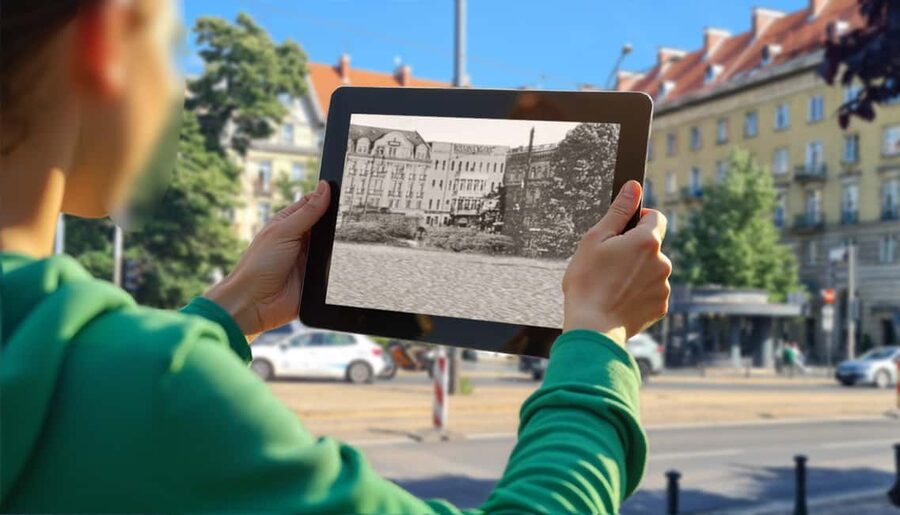
Here is a practical tip: the visuals are meant to line up with your real surroundings, but you might need to make small manual adjustments to match the tablet image to what you see around you. That is not a dealbreaker, and you should expect a minute or two of fiddling so the view locks in.
The best way to enjoy this tech is to keep your expectations simple. Think of the tablet as a comparison tool, not a perfect GPS overlay. When you treat it like that, you get the value fast: you start noticing architectural changes, street angles, and how public spaces evolved.
Pręgierz to Przejście Żelaźnicze: your first time-jump at the pillory
You start at Pręgierz, the historic pillory in the Market Square area. It is an attention grabber because it anchors the tour in law, punishment, and public life, not just pretty façades. At this stage, you are basically setting the historical theme: people were seen, judged, and recorded right here.
From there, you move into Przejście Żelaźnicze (Iron Gate Passage). You get a guided moment there, about 20 minutes, which is enough time to learn why this kind of passage matters. Passages like this often act like urban shortcuts, and over time they collect layers of trade routes, daily movement, and shifting surroundings.
What I like about the start is the way the guide sets you up to see context. The tablet then becomes a lens. Instead of treating each stop like a separate photo op, you start building a mental map of how the same spaces served very different city needs in the past.
One small caution: because the first stop is so central, it can feel busy around you. Give the tablet a moment before you overthink it, then let the guide’s story snap you into the right frame.
Market Square and the northern side view: compare the city you know
Next up is the Market Square (Wrocław) stop, with about 15 minutes of guided time. This is where the tour gets genuinely satisfying because you can compare the present and the early 1900s look at the scale that matters.
You are not stuck in one angle either. You stroll through the Market Square area and explore the northern side as your guide shares the stories tied to what you are seeing. That pacing matters. When you move a little between tablet activations, the changes feel more real, not just like a slideshow.
Then you continue toward Plac Solny (Salt Square) for a shorter guided stop, around 10 minutes. Salt Square may sound like a niche topic, but it is the kind of place that tells you how daily commerce shaped the city. In these kinds of squares, the buildings around you often matter as much as the open space.
This is also where I recommend keeping your ears open for the guide’s small “why it changed” explanations. The tablet visuals help you see the what. The guide helps you understand the why, like trade patterns, civic priorities, and how events can reshape a skyline.
A few more Wroclaw outings to weigh up
- UNESCO World Heritage-listed Church of Peace Day Tour from Wroclaw
★ 4.5 · 14 reviews - Wrocław’s Old Town: A Self-Guided History Tour
★ 4.5 · 10 reviews - Culinary Microcosm – Food, Drinks, & History of Wroclaw
★ 5.0 · 4 reviews - Gdansk: City Cruise on Historical Polish Boat
★ 4.8 · 2,913 reviews
Freedom Square and Museum Square: history in civic-sized doses
Then you hit plac Wolności (Freedom Square) for about 15 minutes. By this point, the tablet feature should feel familiar, so you can focus more on meaning. Freedom Square is an example of how political and cultural shifts show up in city planning. Even if you do not know the full timeline, the comparison visuals give you clues to spot changes in style and layout.
After that comes plac Muzealny (Museum Square), also about 15 minutes. A museum square is a funny thing, because it almost dares you to think it is all about the past. The trick here is that this tour makes the square feel active. You are watching the past reappear while you stand in the present, and you are guided to notice the surroundings that make a museum area more than a landmark.
This is one reason the tablet format works better than many audio tours. You do not just get dates. You get a visual contrast you can measure with your own eyes. If you like architectural comparisons, this is one of the best “learn by seeing” parts of the loop.
Kościuszko Square and Świdnicka Street: the story becomes a walk
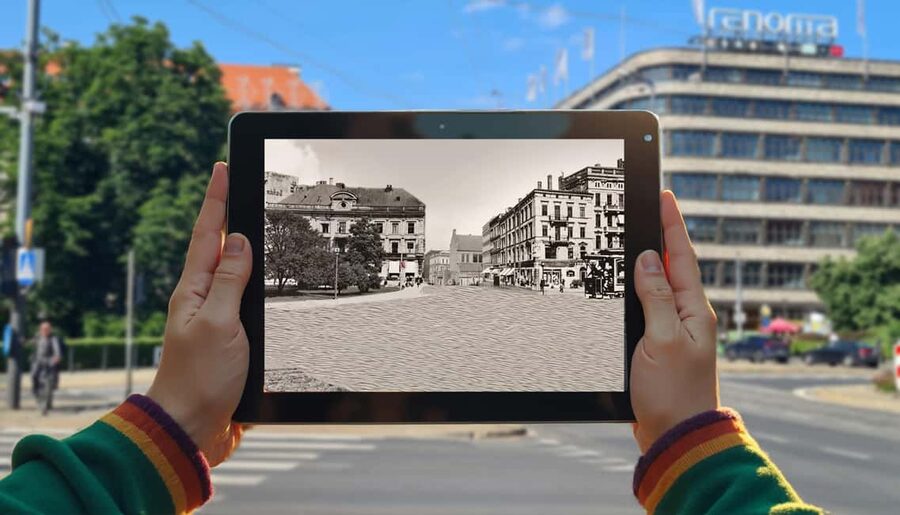
After the larger squares, you move into a more street-and-scene rhythm at plac Tadeusza Kościuszki (Kościuszko Square), around 15 minutes. This stop helps you connect the public-space story to how people moved through the city.
Then you go to Świdnicka Street for about 15 minutes. Street stops are where a time-travel tool can feel either fantastic or frustrating, depending on clarity. Here, the value comes from the mix of guided interpretation and the tablet’s visual replay, so you can follow how a corridor of buildings and storefronts would have felt in a different era.
Świdnicka is also a chance to spot what stays stable and what transforms. The guide helps you interpret the cues, while your tablet view lets you verify them. You start to understand why Wrocław’s city center does not read like one single “old town” layer. It reads like changes stacked on changes.
And if you like details, keep looking slightly away from the tablet image. Often the most interesting comparisons happen in the surrounding edges, not only where the tablet wants you to focus.
Wrocław Opera: when architecture is the main character
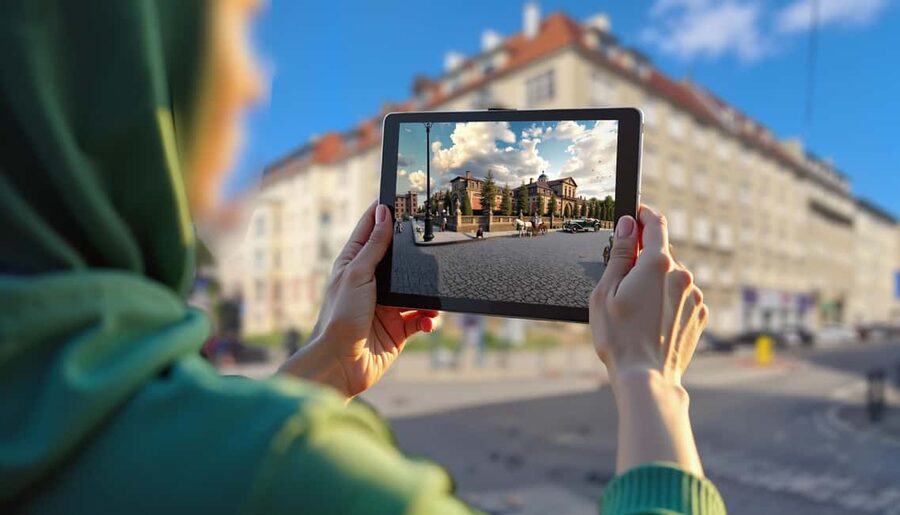
Next comes the Wrocław Opera, about 15 minutes guided. This stop is smart for two reasons. First, opera buildings are built to signal prestige. Second, they sit in urban neighborhoods that evolve around them.
A tablet tour works well here because performance spaces carry strong visual identities: the façade, the approach, the neighboring structures. With the time-travel feature, you can compare the opera area’s look in the early 1900s with how it appears now.
I also like that this stop is not just about the building. The guide uses it as a story pivot, helping you tie civic culture to the changes you have already seen in squares and streets.
If your group keeps moving and listening, you will leave this stop with a clearer sense of how Wrocław’s identity developed. It is not only about surviving buildings, it is about the city deciding what it wants to look like when people gather.
Hotel Monopol finish: a fitting ending point with options to linger
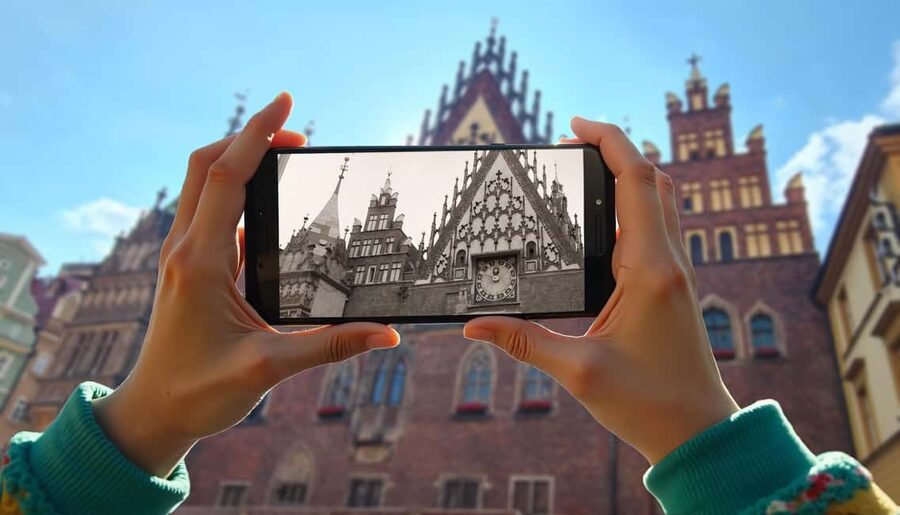
The tour ends at Hotel Monopol. That finish point feels intentional because it is located in a spot that lets you wrap your head around the route you just walked. By the time you arrive, the comparisons should click: the city you recognize is still here, but the layers underneath it are no longer invisible.
One fun bonus you might hear from your guide is how to stay oriented for your next move. Some people like to finish by stepping out for a wider view of the surroundings, especially if you can access a higher vantage point around the hotel area.
Even if you do not hunt for extra viewpoints, you will still have something practical when you finish: you now know the shape of the city center in a way that pure sightseeing often fails to deliver.
Price, pacing, and practical planning for a smooth 2 hours
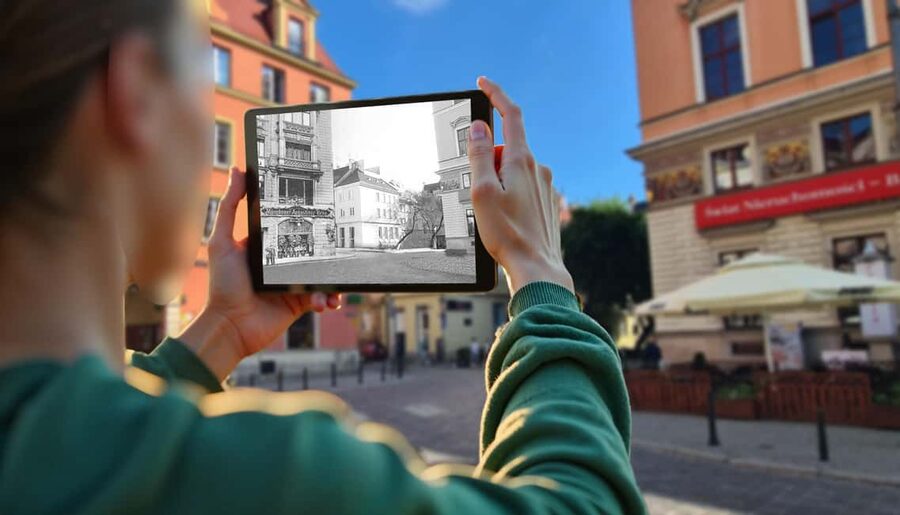
This tour is priced around $26 and runs about 2 hours, which is a realistic window for a walking route with tablet interaction. The big value is that you get guided storytelling plus the technology in one shot. If you were to replicate the experience yourself, you would likely spend extra time searching for exact viewpoints, and you would still miss the “compare while learning” structure.
Pacing-wise, most stops get 10 to 20 minutes. That is short enough to keep your attention, long enough to absorb at least one good story per location. You can also switch between listening and looking without feeling dragged through a lecture.
Wear comfortable shoes. City center pavement is not always forgiving. And dress for the weather. The tour runs in all weather conditions, but in extreme weather the provider can cancel or reschedule and will inform you in advance.
For language comfort: the guide works in Polish, English, or German, with Spanish also mentioned as part of the professional guide options. If you care about your comfort level, choose the language that lets you ask questions and not just catch phrases.
Who should book this Wrocław tour, and who might skip it
Book this if you like guided walking tours and you want more than names on plaques. The time travel feature is strongest when you actively compare what you see right now with what used to be there.
You should also book if you enjoy small-group dynamics. Private or small groups are available, and the tour benefits from interaction, especially when you are aligning the tablet view to your surroundings.
Skip it if you want a mostly seated experience, because it is a walking loop. Also skip it if you dislike using a device in crowded spaces, since you will be activating the time travel feature at each stop.
If you are traveling as a wheelchair user, the tour is listed as wheelchair accessible, but I suggest you still consider whether the pace and surfaces will work for you personally.
Should you book the Wrocław Historical Tour with Tablets and Guide?
Yes, if you want an efficient way to understand how Wrocław changed and you enjoy learning with your eyes. This is one of those rare city-center tours where the technology is not the gimmick, it is the bridge between stories and place.
If you care about architectural evolution and you like structured stops through major squares and streets, this format pays off fast. The guide’s live storytelling, plus the tablet’s early 1900s views, helps you connect the dots in about two hours.
If you hate walking or prefer unguided exploration, you might be happier with a slower self-paced route. But for most visitors, this tour is a smart value play: a guided comparison lesson, with no app headaches.
FAQ
How long is the Wrocław Historical Tour with Tablets and Guide?
It lasts about 2 hours, covering 10 key stops.
Where does the tour start and where does it end?
It starts at Pręgierz and finishes at Hotel Monopol.
What is the price per person?
The price is listed as $26 per person.
Do I need to download an app or log in to use the tablet?
No. The tablet has the time-travel application preinstalled, and there is no app download or login required.
What languages are available for the guide?
The tour lists Polish, English, and German for the live guide, and Spanish is also mentioned for the professional guide.
Is the tour wheelchair accessible?
Yes, it is listed as wheelchair accessible.
What happens if the weather is bad?
The tour generally runs in all weather conditions. In extreme weather, the provider may cancel or reschedule and will inform you in advance with an alternative solution.
Fresh listings from Wroclaw
- Wrocław: World War II and the non-existent city of Breslau★ 3.6 · 3 reviews
- Wrocław University: Tour with Audio Guide & Admission★ 4.8 · 45 reviews
- Wroclaw : Walking Custom Tour with a Local Guide★ 4.8 · 3 reviews
- Wroclaw To Church of Peace and Project Riese Tour★ 4.8 · 4 reviews
- Wroclaw: Spy-Themed Walk & Game with Host★ 4.6 · 14 reviews
- Wroclaw: 3-Hour Bike Tour in English or Polish★ 4.8 · 66 reviews
- Wroclaw: Solar Catamaran Cruise on the Odra River★ 4.8 · 9 reviews
- Wroclaw: Secrets of Wroclaw Walking Tour (2 hours)★ 5.0 · 14 reviews
Historical Tours, compared.
POLIN Museum of the History of Polish Jews Ticket
Read our review →
Gdańsk City Sights & History Guided Walking Tour in English
Read our review →


Tipsy Polish Food Tour With History, Pierogi & Shots
Read our review →
Browse the lists this tour appears in