
Review · WALKING TOURS
Krakow: Plaszow Concentration Camp Guided Walking Tour
Plaszow is heavy, and this tour explains why. It links Krakow’s ghetto machinery to what happened next, using on-site stops and clear context at key memorial locations. Płaszów Concentration Camp becomes easier to understand because the guide connects each surviving trace to how the camp worked.
I love the Ghetto Heroes Square start, because it sets the stage with the square’s role in control, registry, and deportations before you ever reach the camp. I also love how the walk doesn’t stop at grim facts, it ties in Oskar Schindler in a way you can actually picture, including why work permits mattered and how prisoners were moved to Brünnlitz.
One consideration: it is a fair amount of walking over camp grounds, so wear comfortable shoes and keep a moderate pace if your legs get tired easily.
In This Review
- Key highlights you will not want to miss
- Why this Płaszów tour starts at the Square of Ghettos Heroes
- Square of Ghettos Heroes, from Plac Zgody to remembrance
- Płaszów Concentration Camp: what this place was, and what survives today
- The guided walk through camp remains, Grey House and roll-call routes
- Schindler at Płaszów: work permits and the Brünnlitz link
- Timing, getting there, and how the 2 hours actually feel
- Price and value: what $30.04 gets you at Płaszów
- Who should book this tour, and who might want to think twice
- Should you book the Kraków Plaszow Guided Walking Tour?
- FAQ
- How long is the Kraków Płaszów concentration camp guided walking tour?
- What is the price per person?
- Is the tour offered in English?
- What kind of ticket do I receive?
- How many people are in the group?
- Where does the tour start and end?
- Can I cancel for a full refund?
Key highlights you will not want to miss
- Three connected stops that build a story from deportation logistics to camp organization
- On-site surviving clues like the Grey House, the roll-call square, and traces of the former Jewish cemeteries
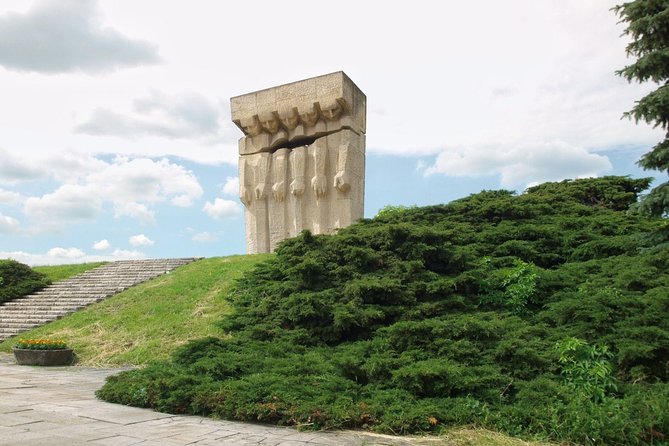
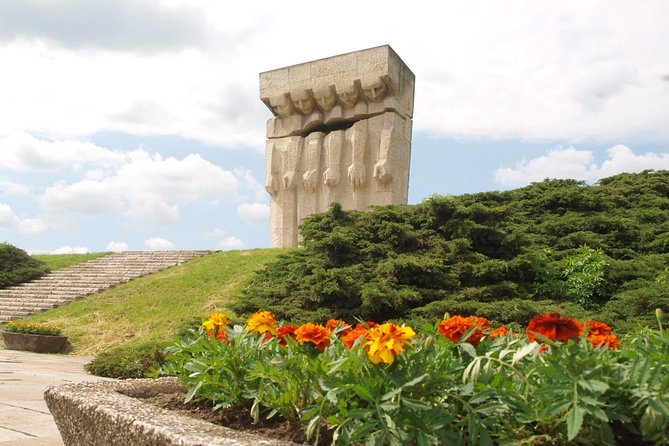
- Memorial moments including the Monument of Torn-Out Hearts
- Schindler explained on location, including the work-permit idea and the Brünnlitz transfer
- Small groups with a maximum of 25 travelers, keeping questions realistic
- English-guided with a mobile ticket, making it low hassle
Why this Płaszów tour starts at the Square of Ghettos Heroes
This isn’t just a camp walk where you arrive, look around, and leave. You start at a place that tells you how the process began, and that makes the later sites hit harder in a clearer way. The tour runs about 2 hours, so it stays focused instead of wandering.
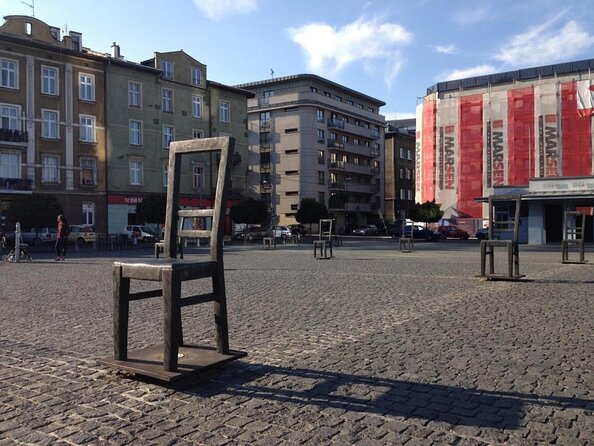
The opening stop, the Square of Ghettos Heroes (formerly Plac Zgody), acts like a historical bridge. You learn it was the logistical heart of the Kraków ghetto, tied to control, registry, and departures for transports. Once you understand that, the camp stop becomes more than ruins. It becomes a system.
More Walking Tours in Krakow
- Old Town Krakow & Wawel Castle Walking Tour
★ 5.0 · 1,508 reviews - Creepy Krakow: 2-Hour City Walking Tour
★ 4.7 · 1,131 reviews - Krakow: The Old Town Walking Tour
★ 4.8 · 794 reviews
Square of Ghettos Heroes, from Plac Zgody to remembrance
This stop is short, around 15 minutes, but it matters. You are introduced to the square’s earlier role as a control and departure point, not just a location with memorial plaques. After the war, it was renamed to remember the victims, and that renaming is part of the story too.
What I like about this setup is how it helps you frame everything you will see later. Many visitors arrive at Płaszów with only a general sense of tragedy. Starting at Plac Zgody gives you a sharper mental map: registry leads to transport, transport leads to imprisonment, and the camp develops as the next step in the machinery.
There is also a practical upside. This is a good place to get your bearings and settle into the tour tone, so you are ready when the guide points out traces of what remains at Płaszów.
Płaszów Concentration Camp: what this place was, and what survives today
The camp stop is the core, about 1 hour. You learn that Płaszów was created in October 1942 by Nazi German occupiers on land that included two Jewish cemeteries in Kraków. It began as a forced-labor camp for Jews from the liquidated Kraków ghetto, and later included Poles in a penal-labor section.
The timeline is brutal and fast-moving. By January 1944, it was redesignated a concentration camp, and later that year it also functioned as a transit camp for Hungarian Jews being sent onward to Auschwitz. Over the camp’s existence, more than 35,000 people were imprisoned there, and around 6,000 were murdered.
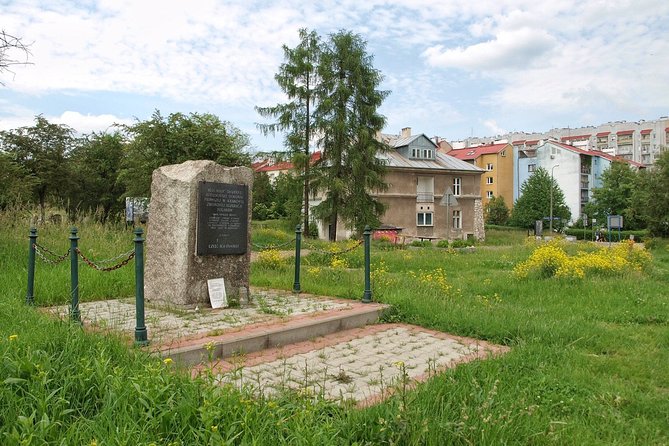
Then comes the key point: this tour explains that what you see today is incomplete on purpose. The guide pieces together the camp’s layout from surviving features and visible traces, including mass graves and memorials. That matters because ruins can feel confusing if you are left to guess what you are looking at.
If you handle heavy topics with care, this is one of the most clarifying ways to visit. The guide helps you connect the numbers and categories to physical space, instead of keeping them as abstract facts.
The guided walk through camp remains, Grey House and roll-call routes
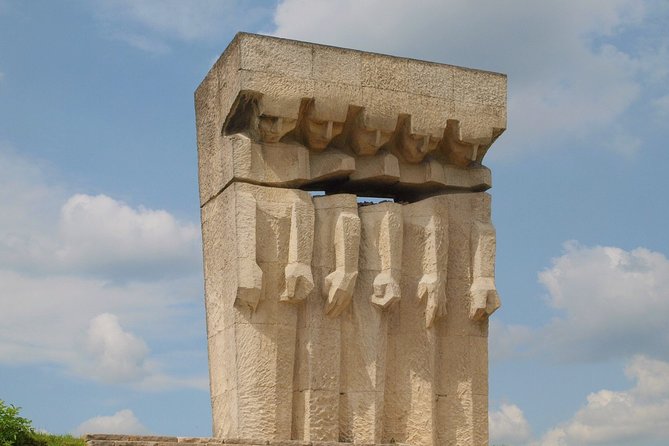
The second camp segment continues for about 45 minutes, and it is where the camp starts to feel like a place, not just a memorial. The guide uses what survives to “assemble” the story: the Grey House, ruins of the pre-burial hall, and traces tied to the former Jewish cemeteries.
You’ll also hear about the roll-call square, and paths where fragments of gravestones were used to pave roads. That kind of detail can feel shocking, but it is also the reason an on-site guide is so important. These aren’t random oddities. They are evidence of how everyday space was reorganized and repurposed.
The tour also highlights how the camp was organized into living areas, plus hospital, administrative, and industrial sections. That breakdown helps you follow the logic of control. It is not just one location of suffering, it is a structured environment where people were sorted, moved, and processed.
A major memorial stop is the Monument of Torn-Out Hearts. Moments like this can feel overwhelming, but they help ground the tour’s facts in a shared place of remembrance. If you want time to reflect, this is a good point to slow down and take it in without rushing.
In the reviews that match this experience, guides such as Bartholomew, Barbara, and Phil are noted for explaining clearly and taking their time. One practical tip you will want to copy from that approach is to ask questions, especially about camp layout. The guide is built for that.
More memorial site visits:
- Krakow: Plaszow Concentration Camp Guided Walking Tour
★ 4.8 · 50 reviews - Guided Tour in Kraków-Płaszów Former Concentration Camp
★ 5.0 · 19 reviews - 2-Hour Guided Tour in Kraków-Płaszów Concentration Camp
★ 4.8 · 15 reviews - Guided Tour of Plaszow Concentration Camp, Kraków
★ 4.8 · 7 reviews
Schindler at Płaszów: work permits and the Brünnlitz link
One of the most valuable parts of this tour is how it explains the Oskar Schindler connection without treating it like a side story. Schindler’s enamelware business becomes part of the camp story, because his actions show how survival could depend on paperwork and access.
You learn that Schindler sought work permits for Jewish prisoners registered through Płaszów. The goal was to shield people from further transports. Later, he organized transfers to his wartime plant in Brünnlitz, saving over a thousand lives.
Why this section is so helpful for you is simple. If you only know the film version of the story, you may still wonder how it would have worked in real life. Here, the guide connects Schindler’s efforts to the specific registration and camp system you heard about at the start. The thread clicks into place.
Also, this tour often brings the Schindler connection down to what you can see and compare on foot. In one version of the experience, the group even rides a tram between Heroes Square and Płaszów, then compares current traces with what used to be there, using guide photos to show vanished structures. You should expect a similar focus on “then versus now,” which is a good way to understand a place where buildings are missing.
If you want a Kraków day that is more than sightseeing, this is the part that makes the trip feel like a real story you can track from start to finish.
Timing, getting there, and how the 2 hours actually feel
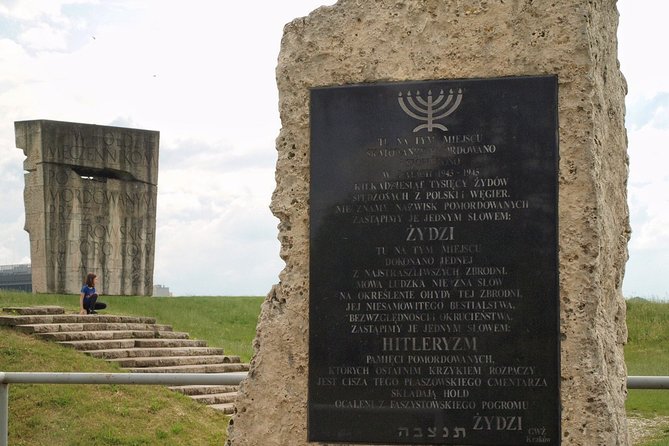
The whole experience runs about 2 hours. You have three main segments: the Ghetto Heroes Square introduction, the core Płaszów camp visit, then the longer on-site camp assembly and Schindler focus.
Because the tour covers camp grounds, you should plan for steady walking. The tour asks for moderate physical fitness, so it is not meant for a no-walking day. Even if you can handle the distance, uneven ground and standing time can add up fast, so comfortable footwear is not optional.
Language is straightforward. It is English only within the group, and the tour uses a mobile ticket. That is useful in Kraków, where you often need to move between stops quickly and keep your day tidy.
You also get a sense of how the tour manages groups. With a maximum of 25 travelers, your guide can keep explanations tight while still allowing questions. This is especially important at a site like Płaszów, where people naturally want context.
One more practical note: arrive 10 minutes early. Once the group leaves, latecomers cannot join and tickets cannot be refunded. For a tour like this, you really do not want to start behind or feel rushed at the first stop.
Price and value: what $30.04 gets you at Płaszów
At $30.04 per person for a roughly 2-hour experience, the price is quite reasonable when you consider the cost of a guided educational visit in a major European city. The big value point is that the stop admissions are ticket free, so you are not paying extra on site just to follow the route.
What makes this worth your money is the structure. You are paying for interpretation, not just movement. A walk through Płaszów without explanation can turn into a mix of memorials and guesswork. With a guide, the surviving features like the Grey House, roll-call square, and cemetery traces become readable. The guide also threads in the Schindler story so you leave with a clearer connection between registration, work permits, and survival.
In other words, you are not buying facts as a list. You are buying a guided way to see the place and understand it. For many visitors, that is the difference between a difficult day you remember and a difficult day you actually understand.
Who should book this tour, and who might want to think twice
This tour is best if you want a serious, structured introduction to Płaszów tied to specific on-site places. It works well if you watched Schindler-related stories and want to place the film narrative into real geography and real camp mechanics.
It is also a strong pick if you like learning from a guide who takes time and answers questions. In the experiences linked to this tour, guides are consistently praised for being very informative and for making the camp story clear, even when much of it is gone.
Consider thinking twice if you know you struggle with extended standing and walking on uneven ground, or if you prefer lighter, more recreational city days. This is not a relaxed stroll through a nice neighborhood. It is a visit to memorialized trauma, and it is emotionally intense.
Should you book the Kraków Plaszow Guided Walking Tour?
If you want to understand how Kraków’s ghetto system moved into the structure of Płaszów, I think you should book this. The tour’s best idea is that it starts with the departure and registry context at Ghetto Heroes Square, then builds toward what the camp looked like and how it was organized. That makes Schindler’s actions feel connected instead of pasted on.
Book it if you can handle a serious day, you wear comfortable shoes, and you show up a few minutes early so you do not miss the opening framing. You are paying for interpretation, and this tour is set up to help you read a difficult site in a way that sticks.
If you are short on time in Kraków and want one focused history experience that does not waste your hours, this is a smart choice.
FAQ
How long is the Kraków Płaszów concentration camp guided walking tour?
It lasts about 2 hours.
What is the price per person?
The price is $30.04 per person.
Is the tour offered in English?
Yes. The tour is offered in English.
What kind of ticket do I receive?
You get a mobile ticket.
How many people are in the group?
The group size is limited to a maximum of 25 travelers.
Where does the tour start and end?
It starts at Apteka pod Orłem, Plac Bohaterów Getta 18, and ends at Henryka Kamieńskiego 57.
Can I cancel for a full refund?
Yes, cancellation is free. You can cancel up to 24 hours in advance for a full refund.
Fresh listings from Krakow
- Zakopane & Gubalowka Funicular – Private Winter Tour from Krakow★ 5.0 · 10 reviews
- ZALIPIE – painted village, unique PRIVATE tour from Krakow★ 5.0 · 20 reviews
- stag dog chase Krakow prank★ 5.0 · 4 reviews
- ZALIPIE – painted village, unique small group tour from Krakow★ 5.0 · 7 reviews
- Full-Day Zalipie Painted Village Guided Tour★ 4.0 · 3 reviews
- Sleigh Ride & Bonfire in Zakopane with Funicular – Private Trip★ 5.0 · 48 reviews
- Zakopane PRIVATE TOUR from Krakow★ 5.0 · 18 reviews
- Zakopane Funicular Hill & Thermal Springs regular tour★ 5.0 · 9 reviews
Walking Tours, compared.
Gdańsk City Sights & History Guided Walking Tour in English
Read our review →
Browse the lists this tour appears in